Vaccine

Are Germans losing faith in the European project?

From our UK edition

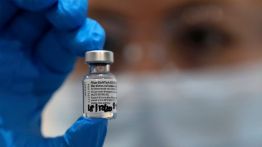
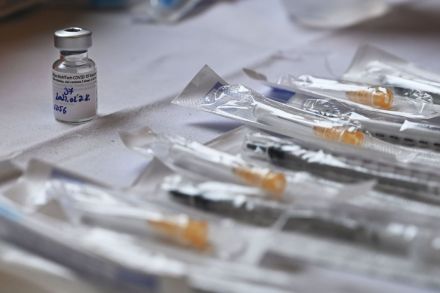
Germans are increasingly losing faith in the European Union due to its bungled handling of the vaccine roll-out. Germany and the other member states have assigned Brussels to organise and oversee the procurement and distribution of Covid jabs. But, so far, the roll-out has been a logistic mess. According to a poll by Civey, commissioned by the German newspaper Der Spiegel, more than 60 per cent of German citizens said their view of Brussels had worsened in light of the disastrous vaccination management. Almost 70 per cent laid the blame at the feet of fellow German Ursula von der Leyen, the President of the European Commission, who admitted last week that ‘mistakes were made’ in the bloc’s approach to the procurement of jabs.
Covid cases have collapsed

From our UK edition

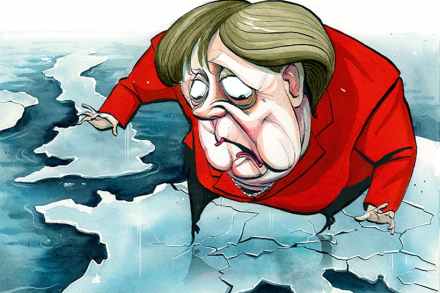
Last month, Imperial College’s React study claimed that new cases of Covid were static or even rising slightly. This contradicted the figures for confirmed new cases, obtained through the Test and Trace system, which had shown a sharp fall in new cases from the second week of January onwards. Given that React tests a randomised sample of the population to arrive at an estimate for prevalence of the disease — and is therefore not capable of being skewed by the number of tests being performed — some were more inclined to believe that this, and not the number of confirmed cases, showed the genuine picture. However, February’s React study, published this morning, shows a very different picture.

The need for speed: can we outpace Covid?

From our UK edition

The Spanish flu pandemic a century ago resulted in around 50 million deaths worldwide. Its second wave was over ten times more deadly than its first. History is repeating, with the global death toll from Covid-19 this second winter already three times that of the first. In the UK, the number of deaths in this second wave is close to double the number we suffered in the first wave. The death toll in the first wave, while tragic, is somewhat understandable. A deadly pandemic came out of the blue, and we had to work out the best way of responding. But we cannot use this excuse to explain the higher death toll in our second wave, as we have had months to prepare this time.

Where will vaccine passports take us?

From our UK edition

Desperate to find someone to commemorate with a statue for having done great things, but who isn’t a white male, some people in Devon want to honour a couple of lesbian pirates. A statue of Anne Bonny and Mary Read has been proposed for the beauty spot of Burgh Island, to salute their important work in ‘breaking gender boundaries’ in the 18th century. Their long careers of psychotic violence and theft are easily eclipsed by the suggestion that they liked a spot of how’s your mother from time to time. A problem here is that there is no proof that they were actually lesbians.

Why Eastern Europe is looking to Russia and China for vaccines

From our UK edition

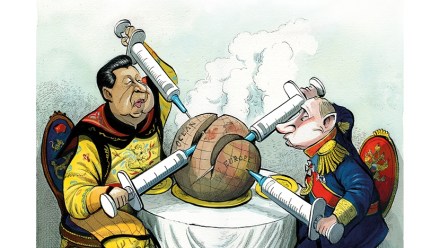
With Central and Eastern European countries still gripped by Covid-19, the EU’s slow vaccine rollout has offered little solace in the region. The light at the end of the tunnel seems far away, leading many to wonder whether the answer to vaccine shortages lies not in Brussels, but to the East. Interest in Russian and Chinese vaccines is certainly fast becoming a diplomatic issue for the region. Czech Prime Minister Andrej Babiš recently caused a stir with two international visits. The first was to his Visegrád Four ally Hungary, the second to non-EU Serbia, far and away mainland Europe’s vaccine leader: Babiš suggested both trips were made with the intention of working out what these countries’ vaccine programmes got right.

Test and Trace was an expensive failure

From our UK edition

Before we had vaccines, NHS Test and Trace was supposed to be the breakthrough that would return us to a normal life. After all, testing, tracing and isolating contacts of infected people was credited with keeping Covid infections down in South Korea, Taiwan and elsewhere, so why wouldn’t it work here?  Instead, we had a second wave and the return to normality was reversed. In September, Sage, the government’s scientific advisory committee on emergencies, was dismissive, saying Test and Trace was having only a 'marginal effect’. A report by the National Audit Office in December, by which point the system had already cost taxpayers £22 billion, was equally scathing.

Even Guy Verhofstadt has seen through the EU’s vaccine fiasco

From our UK edition

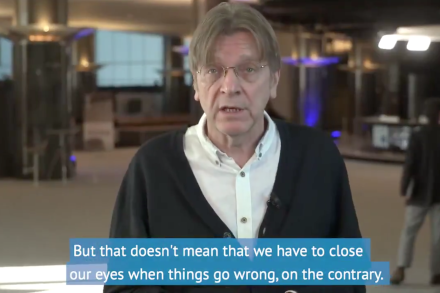
It is a rant worthy of Nigel Farage in his pomp. One of the leading figures within the European Parliament has launched a blistering tirade against the Commission's ineptitude in securing vaccines. The EU is a world leader in making inoculations, he points out. And yet there is a shortage of supply in every country within the Union. The measures taken to fix that so far have been ‘symbolic,’ ‘insufficient’ and sometimes even ‘counterproductive’. Worse, there has been a shocking lack of accountability, with no one held responsible for the failure. The critic? None other than the arch federalist, scourge of Brexiteers, and hero of Lib Dem party conferences, Guy Verhofstadt.

Boris Johnson hints at Covid exit strategy

From our UK edition

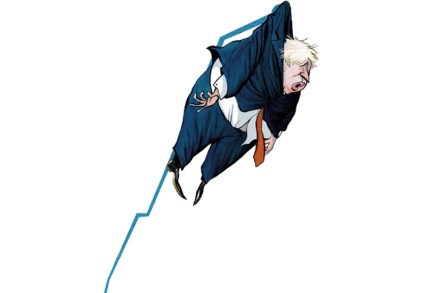
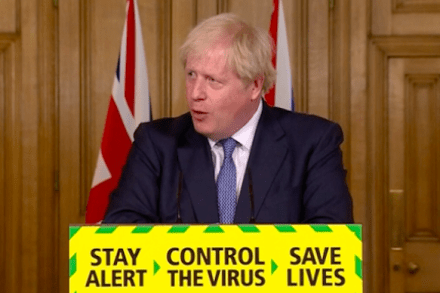
What will the government's roadmap out of lockdown look like? That's a question being asked frequently as ministers get to work on a plan for easing restrictions. Given that Boris Johnson isn't due to announce the details until next Monday, it's a moving picture — with new data continuing to inform the proposals. Speculation aside, the Prime Minister spoke in a broadcast interview today over his strategy for easing the lockdown.  Johnson said that he would be pushing for a 'cautious but irreversible' approach — in the hope that a cautious approach would mean that a fourth lockdown was avoided.

Why are so many health workers turning down the vaccine?

From our UK edition

On Saturday the government hit its target of administering a first vaccine dose to 15 million of the highest-risk groups for Covid 19. By now, everyone over the age of 70, all healthcare workers and vulnerable groups should have been offered a vaccine. It is an impressive achievement which stands in contrast to many of the other things that have gone wrong over the past year. But there is a rather large fly sitting in the ointment. While 90 per cent of eligible members of the general public have turned up for their appointments (97 per cent in the over-80s), the same is true of only 80 per cent of healthcare workers. In some places, the take-up among healthcare workers is even lower.

Hancock’s vaccine passport confusion

From our UK edition

Will they, won't they? Only yesterday the Foreign Secretary Dominic Raab was saying vaccine passports were 'under consideration' — going directly against what Nadim Zahawi said just days before when he ruled out vaccine passports as discriminatory and un-British.  Raab was clear that the UK was looking at both domestic and foreign passports: that as well as looking at the possibility of their use for flights and international travel, the British government is also investigating whether such a document could be used for vaccinated individuals wanting to go into a restaurant or visit the supermarket.  So what does Matt Hancock have to say on the subject?

France’s vaccine volte face

From our UK edition

France has become the first country in the world to recommend a different vaccine regime for those who have recovered from the virus. The country’s public health authority has recommended that people previously infected with Covid-19 only receive one jab, rather than two. The advice is based on preliminary data, including two studies from the United States, that show the combination of antibodies built up from having the virus, plus one jab, creates immunity that ‘is equal to or even exceeds’ having two vaccines. It wasn’t long ago that French ministers were publicly criticising the UK’s strategy It’s too early to definitively say whether France’s strategy will work. For one thing, the government hasn't signed it off yet.

Tory nerves are growing over Boris Johnson’s Covid strategy

From our UK edition

When the third lockdown was voted on in the House of Commons last month, there was a smaller Tory rebellion than the previous two votes. A combination of the arrival of an exit strategy through vaccines, the new Kent variant and the sharp increase in hospital admissions meant that many MPs previously critical of lockdown as a tool against coronavirus, supported the measures. However, with Boris Johnson due to set out a roadmap later this month on the path out of lockdown, the mood is now beginning to change. Tensions increased this week when Matt Hancock announced new border measures. Controversially, this included a potential ten year prison sentence for those who lied about where they had travelled to the UK from.

Portrait of the week: A royal baby, Boohoo buyouts and France legalises lunch al desko

From our UK edition

Home On Sunday 7 February, as the week began, 11,465,210 people in the United Kingdom had received a first vaccination against Covid-19 and 510,057 a second. Those aged 70 or over were invited to book a vaccination online or by telephone if they had not received one. Illegal immigrants were advised to register with a GP without risking deportation. South Africa, possessing a million doses of the Oxford-AstraZeneca vaccine, decided to suspend its use after a trial of 2,000 people (42 of whom developed Covid) seemed to indicate that it offered ‘minimal protection’ against mild and moderate cases; no one in the trial was old.

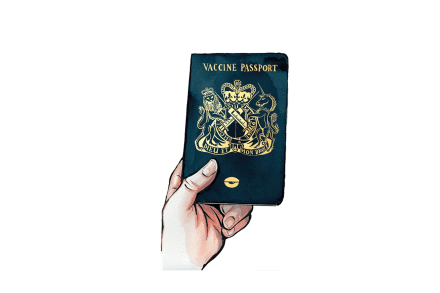
The stealthy rise of vaccine passports

From our UK edition

Do you remember normality? A busy diary. Holidays, parties, pubs. Who hasn’t looked back and wondered how we can return to that life which now seems so free. Sacrifices have been inevitable. After a year in and out of lockdown, are we ready to make some more? The Covid vaccines promise freedom, or at least some version of it according to government ministers. By the end of next month, if the vaccine rollout continues at its current rate, all over-50s will have been offered their first jab. The Prime Minister has assured us that ‘things will be very different by the spring’. Matt Hancock has promised a ‘happy and free’ summer — or, as he’s careful to say, ‘British summer’. If we want to go abroad, that might be a different matter.

Boris Johnson urges caution on summer holidays

From our UK edition

Will Brits be able to enjoy a summer holiday after the pandemic? Just a few months ago, Health Secretary Matt Hancock suggested they would, telling MPs that he had already booked his summer break to Cornwall. But today, Boris Johnson joined in with the rather less cheerful messaging coming out of government that it was 'just too soon' to say whether people could book time away, whether in the UK or abroad.

Boris Johnson sets out the new normal on vaccines

From our UK edition

Despite Keir Starmer's attempts to coax Boris Johnson into committing to a variety of economic measures, Prime Minister's Questions brought with it little clarity on what will be in next month's Budget. However, Johnson was more forthcoming when it came to vaccines.  Vaccine orders go well beyond the number of doses required to vaccinate the entire adult population Following recent comments from ministers and government scientists over the likelihood of a booster shot being required to protect the public against new variants, Johnson said the public would need to 'get used to the idea of vaccinating and then revaccinating in the autumn, as we come to face these new variants.

Von der Leyen has learnt nothing from the EU’s vaccine fiasco

From our UK edition

As non-apology apologies go, it was right up there with the best of them. Speaking to MEPs today, the president of the European Commission Ursula von der Leyen accepted that some ‘mistakes had been made’ in the procurement of vaccines against Covid-19.  Apparently the Commission had been a little too late authorising some of the shots, it had been a tad too optimistic about production, and not everything had gone according to plan. But, heck, these things happen, she went on to argue. And perhaps most crucially of all, the alternative would have been far, far worse.  'I can't even imagine if a few big players had rushed to it and the others went empty-handed,' she said.

How effective are the Covid vaccines?

From our UK edition

Reports have filtered through this morning about Public Health England’s assessment of the efficacy of the two vaccines so far administered to the public. The results have not yet been published, but the efficacy rates quoted in the Sun suggest that the Pfizer vaccine has proved to be between 79 and 84 per cent effective at stopping symptomatic infection after two doses. After one dose – which is all that most people have had so far – efficacy is reported as 65 per cent. Among the over 80s it is very similar, at 64 per cent. No figures are given for the AstraZeneca vaccine but it is suggested that the efficacy is 'similar'.

Hungary’s vaccine strategy risks showing up the EU

From our UK edition

You have to admire Hungary’s chutzpah. Not only has it bypassed Brussels to pursue its own vaccine procurement strategy, it is also backing two of the most controversial horses in the race: Russia’s Sputnik V and China’s Sinopharm jab. It has just secured enough Sinopharm doses to vaccinate 250,000 people a month while its Sputnik V deal will mean 1 million Hungarians are vaccinated – a tenth of the population. The Sputnik V vaccine may start being rolled out as soon as next week. Hungary’s strategy may appear reckless but its hand has been somewhat forced by EU policy, which prohibitively states that individual member states may only enter into negotiations with vaccine suppliers who are not in talks with the EU.