Vaccine

How much credit does the NHS deserve for the Covid vaccine rollout?

From our UK edition

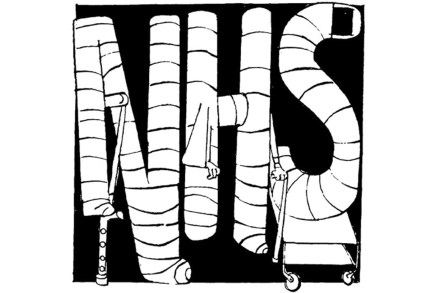
Who should we thank for our Covid vaccines? For many, the answer is straightforward: the National Health Service.  'Thank you NHS', says a profile sticker shared by thousands of Brits on Facebook. But while Britain's undoubtedly successful vaccine programme owes a great deal to the efforts of NHS staff, is it right to thank the NHS itself? Left to its own devices, would the NHS have delivered in quite the same way? And how much should we credit Boris's vaccine task force – rather than the health service – for the vaccine rollout? I am a critic of the NHS – but not for the sake of it. I criticise it when it delivers worse outcomes than comparable systems, which it often does.
Will lockdown still end on 21 June?

From our UK edition

As the penultimate lockdown easing gets under way, ministers are being asked a question: will the 21 June unlocking be delayed? On Friday, Boris Johnson warned the rise of the Indian variant could 'pose serious disruption' to the planned lockdown easing next month, when nearly all Covid restrictions are expected to go. The line from the government hasn't changed much over the weekend; ministers are keen to say they hope it will go ahead but won't guarantee it. There is unlikely to be any formal decision until the week before the 21st, when the government will be able to review all the data.

Labour are deluding themselves about Boris’s ‘vaccine bounce’

From our UK edition

That vast battalion of pinko pundits who confidently expected Boris Johnson to get a drubbing in last week’s elections has already reached a consensus on why it is that he did so well and Keir Starmer so badly. To summarise: the Prime Minister is a lucky general who benefited from a 'vaccine bounce'. He will fall straight back down to earth once this current crisis is over. The electorate will soon start concentrating on what really matters, like the cost of his curtains. In the long list of reasons why Labour keeps losing, its tendency to underestimate and misunderstand its opponents should figure large. Because the truth of the matter is that Johnson has not 'got lucky'.

A ‘cautious cuddle’? No thanks, Boris

From our UK edition

There have been some truly dystopian spectacles during the past year-or-so of lockdowns. Cops using drones to spy on dog-walkers. Park benches sealed off with yellow tape. Curtain-twitchers dialling 999 after seeing the bloke next door go for a cheeky second jog. But this headline surely tops all of that: ‘Hugs will finally be legal again from next Monday.’ Read that again. We live in a country in which the government has accrued so much power that it now gets to tell us when we may hug each other. This should send a chill down the spines of all who care for liberty. To be honest, I wasn’t even aware hugging had been outlawed. I’ve been hugging people for months.

Merkel is right to reject Biden’s vaccine patent plan

From our UK edition

She handed the vaccine procurement process over to the European Union. She didn’t invest much in new production. And she allowed an American multinational to take control of a brilliant discovery by a small German biotech company. Angela Merkel, the out-going German Chancellor, has not had much success battling the Covid-19 crisis, and her handling of vaccines has been a catastrophe from start to finish. But she has finally got one thing right: she is defending the patents that protect the pharmaceutical industry. In the last week, president Biden has signalled that the United States is ready to back suspending patents on Covid vaccines.

One hundred days in, is Biden getting a vaccine boost?

From our UK edition

Boris Johnson is set for a vaccine boost next week when local election results start rolling in. As James Forsyth explains in this week’s magazine, the vaccine rollout is forefront in voters' minds, with seven out of ten now inoculated or even fully jabbed up. For all the chaos raging around Johnson, with accusations from his former allies and long-term opponents coming in thick and fast, the PM looks set to retain his support where it matters: at the polling station.  Can the same be said for Joe Biden? Across the pond, America is experiencing an equally successful vaccine rollout, as both the US and the UK hover around the top five countries worldwide for their rates of vaccination.

The eurozone’s Covid recession has arrived

From our UK edition

The US is booming. The UK is set to grow at the fastest pace in half a century. China is expanding again at a blistering pace. Stock markets are rising. And commodity prices are racing ahead.  Across most of the world, economists are starting to worry about a runaway boom, stimulated by too much easy money. This, they fear, could easily run out of control. There is one exception, however: the eurozone. As of today, the zone is officially in a double-dip recession. The vaccine downturn has arrived. And while the consequences remain unpredictable, one thing is clear: they won’t be good.

How concerned should we be by the Indian variant?

From our UK edition

In recent weeks there has been a lot of new-found optimism in Britain with regards to Covid: case numbers, hospitalisations and deaths have dramatically fallen and the vaccine roll out continues at pace. The virus has now been overtaken as the main cause of death in England and Wales for the first time since autumn. But the pandemic continues to grow, and nowhere more so is this the case than India. Its hospitals are overrun. Crematoriums are overwhelmed and the first of nine planes from Britain set off on Sunday night to provide oxygen, ventilators and aid. Why should it be surging now? One of the theories behind this explosion is a new variant of coronavirus (B.1.617).

How Britain can really help India tackle its Covid crisis

From our UK edition

India's Covid situation is dire: hospitals have run out of beds (some hospitals are treating patients in cars), people are turning to the black market for drugs and oxygen cylinders, and mass cremations are taking place in car parks. The official daily death toll is around 2000, but the likely reality is much, much higher. Britain has offered to help by sending 600 pieces of medical equipment to support the country in its Covid crisis. But the reality is that our country could do much more to help its ally than just offer a token shipment of supplies. The UK continues to block a patent waiver designed to boost the global production of Covid vaccines.

The EU will regret suing AstraZeneca

From our UK edition

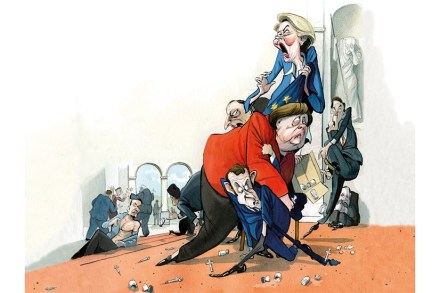
Well, that will teach them to go around manufacturing a vaccine against a global virus at cost price, and at record speed. The European Union has today said it is planning to take legal action against the pharmaceuticals conglomerate AstraZeneca for failing to deliver enough doses of the Oxford shot on time.  No doubt European Commission president Ursula von der Leyen and her team are planning to be exonerated. They will finally be able to demonstrate that the whole vaccine debacle, for which the Commission has taken so much flak, and which has already caused thousands of unnecessary deaths across continent, was all the fault of the Anglo-Swedish company. No doubt the untrustworthy British will also be implicated.

Should we give vaccines to India?

From our UK edition

Last spring, scenes in Lombardy, Italy, caused panic in Whitehall: buckling healthcare systems and tents pitched outside emergency centres played a large role in the government’s decision to implement a nationwide lockdown. It was thought that the British public could tolerate many of the consequences of Covid-19, but not the idea that the NHS would be unable to cater to those who needed it.  As it happened, the UK’s worst nightmares were never realised. The Nightingale hospitals built to increase capacity were barely used. But what the British government feared most is now taking place elsewhere. India is suffering an exponential growth in infections, with more than 349,000 cases reported yesterday, as well as nearly 3,000 deaths.

Boris’s vaccine propaganda film jumps the gun

From our UK edition

Westminster’s much anticipated summer blockbuster dropped last night: ‘A Beacon of Hope: The UK Vaccine Story’ was released on 10 Downing Street’s Twitter and YouTube accounts just after 6pm. The video was teased on Twitter on 10 March, featuring a dramatic score and a tagline ‘coming soon’, raising questions as to how ‘soon’ it would appear, what its contents might be, and whether releasing a victory video in the middle of the UK’s vaccine rollout was slightly premature. https://www.youtube.com/watch?v=xiCq-SkiYAY Now we have some of those answers.

The nationalists’ vaccine fallacy

From our UK edition

The trouble with nationalism of any and every sort is that, in the end, it eats your brain. As evidence of this we may simply note Nicola Sturgeon’s assertions this week that the success of Britain’s vaccination programme should in no way encourage the thought an independent Scotland might have struggled to match this happy development. According to Sturgeon, there is 'absolutely no evidential basis to say Scotland would not have vaccinated as many people as we’ve vaccinated right now' if it were an independent state. This is, to use the technical term, bollocks on a tartan pogo-stick.

Need we fear a third wave after lockdown ends?

From our UK edition

When Boris Johnson revealed his roadmap out of lockdown at the end of February he promised a ‘one way road to freedom.’ Since then, it has seemed that instead of freedom we may end up with continued social distancing, perhaps Covid passports and mandatory mask-wearing. The justification offered is that the virus might come back. But does the data back up this pessimism? I’m an academic at Bristol University and have developed the Predictor Corrector Coronavirus Filter (known as PCCF) model, updated daily on The Spectator’s data hub. It confirms that we can safely return to the ‘old normal’ on 21 June with no need for extra measures. It predicts that a complete abolition of restrictions on that date will not see a third wave of any significance.

How much of a threat is the South African variant?

From our UK edition

For residents of six London boroughs, as well as those in Smethwick in the West Midlands, the partial relaxation of lockdown rules this week hasn’t quite gone according to plan. They’ve had a day out in the sun, alright, but not necessarily sitting enjoying food and drinks in a pub garden – more likely they have been standing in a long queue to get ‘surge tested’ for the South African variant of SARS-CoV-2, the virus which causes Covid-19. So how much of a threat is the South African variant? In spite of anecdotal claims from South Africa that the new variant was affecting younger people, there is no evidence that it causes more severe illness.

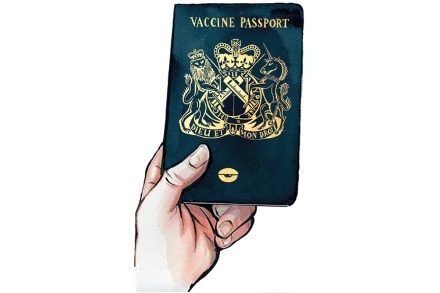
Letters: There’s nothing libertarian about vaccine passports

From our UK edition

Taking liberties Sir: I feel that Matthew Parris is absolutely wrong about liberty (‘The libertarian case for vaccine passports’, 10 April). True liberty is that each individual has the possibility to live their life how they desire (within the law), taking full responsibility for any and all the risks they incur. I am not responsible for anyone else’s health. To say that we have to stay indoors, wear masks, observe social distancing or have vaccinations because we would be killing others if we did not is blackmail. If you use the logic that the individual is responsible for the health of all other people then everyone who owns a car is directly responsible for every injury on the roads.

Why is Boris talking down Britain’s vaccine success again?

From our UK edition

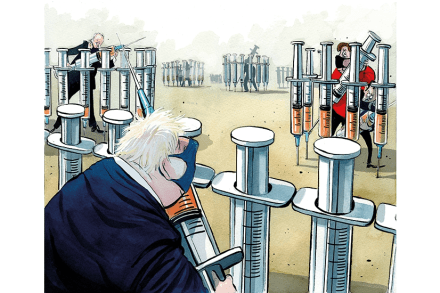
A few months ago, the Prime Minister was describing the jabs as the 'scientific cavalry’ that was on its way to save us from our Covid – and lockdown – woes. But now the cavalry has arrived in the form of a vaccine rollout of unqualified success, the rhetoric has changed. The vaccine is no longer enough, according to Boris. Today we've seen another worrying shift in the PM’s words. In an interview with the BBC, Johnson broke the link between the UK's ability to reopen and its vaccination programme success: The reductions in these numbers, in hospitalisations and in deaths and in infections, has not been achieved by the vaccination programme...

What lessons can be learnt from Britain’s vaccine success?

From our UK edition

The NHS vaccination programme has reached its latest big milestone of offering a jab to everyone in the top nine priority groups three days ahead of schedule. Everyone in government and the health service is celebrating. Boris Johnson has been busy thanking 'everyone involved in the vaccine rollout which has already saved many thousands of lives', while NHS chief Sir Simon Stevens has said:  'Thanks to our NHS nurses, doctors, pharmacists, operational managers and thousands of other staff and volunteers, the NHS Covid vaccination programme is without a doubt the most successful in our history. It's one of our tickets out of this pandemic and offers real hope for the future.

The UK’s vaccine roll-out has ended the Brexit debate

From our UK edition

The country would remain implacably divided for a generation, with Remain and Leave replacing class and geography as the new fault line in British politics. International investors would take a generation to come round to the idea. And campaigns to re-join the EU would grow in strength as the chaos deepened. Even a few months ago, it was possible to argue that Britain's tortured debate about leaving the EU would run and run without any seeming end. And yet since then something very interesting has happened. The UK’s comparative success at rolling out Covid-19 vaccines has in effect sealed the Brexit deal. The debate is now over, both here, and around the world.

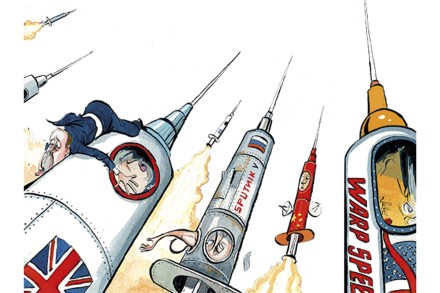
The economic cost of the EU’s vaccine catastrophe

From our UK edition

It didn’t order enough vaccines, spent too little money, dithered over authorisation and then lashed out at the companies making them. Over the last few weeks, the catastrophe of the European Union’s vaccine roll-out has become painfully clear to everyone. We are already starting to see the toll it is taking on the continent’s health, with a brutal third wave sweeping across mainland Europe as new variants hit an unvaccinated population, and with fresh lockdowns, overflowing hospitals, and death tolls still climbing as they fall dramatically elsewhere. And yet there is also a second stage to that crisis – an economic catastrophe – that is just getting started.