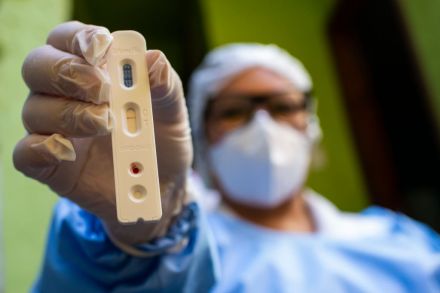
Vaccine

Macron’s vaccine passport is uniting French anti-fascists and nationalists

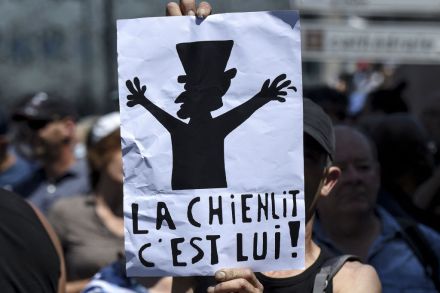
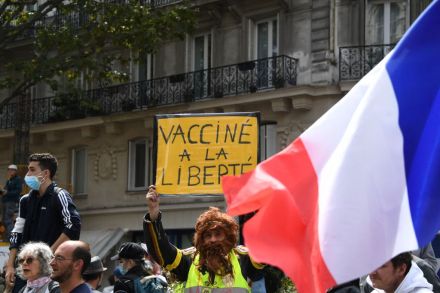
Saturday was what is known in France as the Chassé-croisé, the busiest day of the year on the roads, when those who took their holidays in July return home and those who chose August depart. By lunchtime there were 625 miles of traffic jams on the roads. The thoroughfares of many cities were also blocked, but for another reason. For the third consecutive Saturday, thousands of people marched to protest against the introduction of the government's Covid passport. Almost a quarter of a million people took to the streets in 180 demonstrations, according to the government. These numbers are disputed by the organisers, who claim they are wildly conservative. But whatever the exact figure, it was a phenomenal number of demonstrators for the final weekend of July.
Why Israel is rolling out a third Covid jab

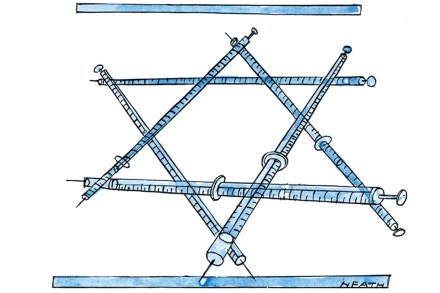
Israel has today become the first country in the world to offer a third Covid-19 booster vaccine on a large scale. Prime Minister Naftali Bennett announced that Israel will vaccinate all people over the age of 60 again, with the new Israeli President, Isaac Herzog, and his wife, the first people to receive their third shot on Friday morning. Legitimate concerns led to the decision: the number of new Covid cases in Israel has been rapidly increasing, including among the vaccinated – although to a much lesser degree compared with those who have not been vaccinated. There were 2,143 confirmed cases on Thursday, with 286 hospitalisations.

No vax, no vote? Macron’s vaccine passport plan sparks fury

Will it be necessary to produce a passe sanitaire (vaccination passport) to be allowed to vote in France? With 221 days until the first round of the next presidential election, the mere rumour of such a sinister measure is provoking near hysteria. ‘Fake news’ shrieked the media aligned with president Emmanuel Macron (frankly, most of it) tonight. Perhaps. It’s true that the government’s vaccination passport law currently being rushed through the National Assembly does not specifically mandate proof of vaccination to vote. More than 175 demonstrations against the passe sanitaire are scheduled this weekend But neither does it specifically exclude it.

Let’s make it a Hot Bartender Summer

From our US edition

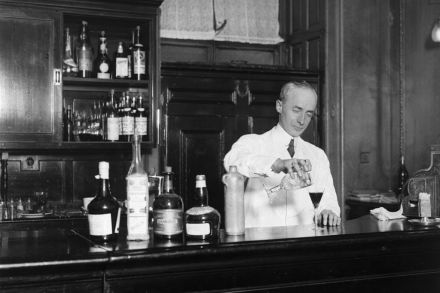
Is renaming the seasons a sign of late-stage capitalism? Or empire? Or decadence? Whatever the case, our cultural commissars have spoken and they’ve decided that seasonal epithets are back in. No longer is it acceptable to wistfully recall the summer of ’69; we must now commemorate it as Raspy Canadian Dreamboat Summer or some such thing. The Chinese have long categorized their years according to animals — dogs and rabbits and tigers and so on. Not us. What we’ve done is to head to the Narcissus pool, hold up a calendar, and demand that the months and equinoxes look a little more like us. This began two years ago when someone called Megan Thee Stallion released a rap single called ‘Hot Girl Summer’.

hot bartender summer

The right to party depends on following the party line

For most of this year, Boris Johnson’s proudest boast has been that Britain had the fastest vaccine rollout of almost any country in the world. The jabs were seen as our passport to freedom and the end of restrictions. Early indications among both old and young suggested similar excitement to get vaccinated. When Twickenham stadium opened a pop-up vaccine centre in May to offer 15,000 jabs to the over-18s it drew longer queues than the rugby. Ministers were delighted with the enthusiasm. If this was any sign of what was to come from youth uptake, they thought, the rest of the rollout would be plain sailing. But now there’s a problem. Plenty of jabs are still on offer, but fewer people want them. Vaccine rollout has slowed to a third of its former pace.

Boris is in danger of becoming the Prime Minister he once warned against

Back when Boris Johnson was on a mission to stop identity cards being used in Britain, he made a very persuasive argument: if parliament allows such expensive technology to come into existence, then the government will cook up excuses to use it. They will start to ‘scarify the population’ by saying there is a threat or an emergency. If they sink millions into an ID card scheme then be in no doubt: our liberty will be threatened. The slippery slope, he said, is one that the government is sure to go down. Boris Johnson is in danger of becoming the Prime Minister he once warned against. At first, we were told that any vaccine identity system would be used only for foreign travel.

Boris should follow New York’s example and ditch vaccine passports

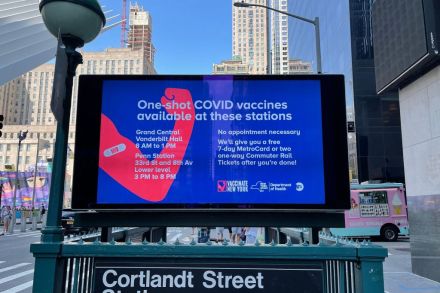
Is making young people show vaccine passports to get into nightclubs a good idea? Boris Johnson's motivation in doing so appears to be that this is a good way to entice under 30s to get their jabs. In reality, the policy is illiberal, shows no gratitude for the sacrifices young people have already made during this pandemic, and should go against all of our British sensibilities. There's also a better alternative: one demonstrated in New York.  I’ve been based in the United States for the past six months and Boris could learn a thing or two from the freedom-loving Yankees. Here, proof of vaccination is not required for entry into nightclubs, as I experienced first hand last Saturday night.

Why Israel is rolling-out third vaccine doses

It’s time to think about your third Covid vaccine dose. That might sound like a premature suggestion when many people are still waiting for their second dose, and millions have not even received one. But Israel has just become the first place in the world to start giving a third, booster dose of the vaccine, and we should watch carefully to see if we can do the same. There is growing concern that those who received the vaccine earliest in Israel could be the ones who are currently getting infected with the delta variant. Might that indicate their immunity has dropped to a lower level, and that the vaccine’s efficacy wears off over time? Experts working with the Israeli health ministry suggest it is too early to draw such conclusions.

Don’t blame young people for plummeting vaccination rates

There is a myth in football that you are always most susceptible to letting in a goal after you have just scored one. It’s probably not true but the idea is attractive. At the peak of our achievement we are vulnerable to complacency. Is a similar thing happening with the vaccine programme? The current prevailing narrative is that the declining rates of vaccination are the fault of the under 30s. Government scientists accept that the country is 'close to maximum take-up', with many young people still hesitant about vaccination, the Times reported this week. But is that right? There is probably some truth to the less-than-urgent demand amongst this lower-risk group. But focusing on uptake among young people alone obscures a more obvious issue.

Who was the first to wear a face mask?

Mask crusader Who first wore a medical face mask? — The beaked outfits worn by plague doctors aside, the first doctor to wear a mask was the French abdominal surgeon Paul Berger in 1897. His mask, made from six layers of gauze, was inspired by the work of German microbiologist Carl Flugge, who had revealed what a good breeding ground saliva is for bacteria. Berger delivered a paper on masks to the Surgical Society of Paris in 1899, after which they were adopted in other countries. Penalty points How many penalties are scored in the European Football Championship and World Cup? — The overall scoring rate is 75%. In shootouts to decide the outcome of drawn matches, the first player to take a penalty has scored 80% of the time.

How many people are self-isolating when they’re told to?

Isolated cases Large numbers of people are still being ordered to self-isolate in spite of having been vaccinated — 137,560 people were identified as close contacts of positive Covid cases through the Test and Trace system between 10 and 16 June. How well have they been adhering to the rules? — 79% say they have fully conformed. — 80% claimed they had had no contact with non-household members. — Of the 21% who didn’t adhere to the rules, 90% said they had left home during the period in which they were supposed to be isolating and 21% said they had had visitors to their home. — 41% said that isolating had had a negative effect on their wellbeing and mental health. — 28% reported that they had lost income.

What can Britain learn from Israel on ending lockdown?

Israel has been the world’s whole-country experiment to establish how, and how fast, Covid vaccination can return life to normal (as much as life is ever normal in a country where there is constant tension over the rights and future of Palestinians). I am in Jerusalem, trying to understand the implications for stability in Israel and peace in the Middle East of a new government where prime minister Naftali Bennett is opposed to any kind of Palestinian state, and the alternate PM Yair Lapid passionately believes a two-state solution is the only answer.

What’s the real reason Israel’s vaccines were rejected by Palestinians?

Sipping an iced coffee in a Tel Aviv café this week, it felt like it was 2018 again. Nobody wears a face mask, tables are close together and there’s no hand gel in sight. Very few people one meets even talk about Covid-19. Though a tiny increase in the occurrence of the Indian variant has been noted in recent days, Israel is rightly proud of its vaccination and mass immunity success. It is therefore surprising that Israel’s offer to advance over one million Pfizer vaccines to the Palestinians has been rejected by the Palestinian Authority only hours after they initially accepted the deal. Many countries are still grappling with the ethical dilemma of when to offer their own supply of vaccines abroad to help others; few are expecting such offers to be rejected.

How Russia lurched from vaccine victory to Covid crisis

Russia made headlines last August when it triumphantly unveiled its pioneering coronavirus vaccine, Sputnik V. But now, nearly a year on, it has a more dubious claim to fame – as the anti-vax capital of the world. For months now, sparkling clean pop-up clinics offering jabs to the public, with no appointment needed, have been open for business in shopping centres and food halls across the country. With three domestic formulas approved and millions of vials in reserve, there is no shortage of doses for anyone who wants one. And yet, Russians just aren't signing up.  New data from research giant Morning Consult, based on 75,000 weekly interviews with people across the globe, has found the nation has the highest level of vaccine scepticism of anywhere surveyed.

Boris’s three unlocking options for 21 June

What will Boris Johnson announce on Monday? The Prime Minister is due to update the nation on whether the final stage of the roadmap out of lockdown can proceed on 21 June as planned. However, with cases on the rise and the Indian variant spreading, various government advisers have spent the past few weeks taking to the airwaves to warn of calamity ahead should Johnson lift all restrictions. There is also a push from some in the Cabinet to either delay the roadmap or opt for a more limited easing. In truth, no final decision will be made until Sunday. The Prime Minister is currently busy in Cornwall attempting to woo world leaders (and avoid a diplomatic row with the US over the Northern Ireland protocol).

Does the data justify a delay to lifting lockdown?

There are still six days to go before the Prime Minister has to decide whether or not to go ahead with the full reopening of the economy and society on 21 June. But there seems little doubt in which way the government is travelling.  It is reported this morning that, following a pessimistic presentation by Chris Whitty and Sir Patrick Vallance the likelihood is that the reopening will be delayed by a fortnight, the lifting of some measures perhaps a little longer than that. Is this yet another shifting of the goalposts? It is true that there has been an increase in cases over the past couple of weeks – not so far accompanied by a rise in hospitalisations and deaths.

Have tennis players always been expected to give interviews?

Game, set, chat Japanese tennis player Naomi Osaka withdrew from the French Open after being fined $15,000 for failing to appear for a post-match press conference. Have players always been expected to give interviews? — Wimbledon was first televised live in 1937, the year of Fred Perry’s third and final victory against Gottfried von Cramm. A photo from 1938, when Bunny Austin was beaten by the US player Donald Budge in the final, shows that the post-match interview was already part of the coverage. Vaccine clots How many people in the UK have died from blood clots related to the AstraZeneca vaccine? Up to 27 May the Medical and Healthcare Products Regulatory Agency has recorded 332 serious cases and 58 deaths.

France is paying a heavy price for Macron’s vaccine catastrophe

The United States is growing at such a blistering pace the Federal Reserve may have to raise interest rates. In Britain, retail sales grew by nine per cent this month, the fastest pace on record, as the economy opened up again. Around the world, economies are starting to bounce back strongly from the Covid-19 crisis. Except for one: France. We learned today that the country is now officially in a double-dip recession. The explanation? That is easy. It made a complete hash of its vaccination programme. In the first-quarter of this year, revised figures showed that France’s output shrank by 0.1 per cent. That followed a 1.5 per cent contraction in the final quarter of 2020, making two consecutive quarters of falling output, the standard definition of a recession.

Why I’m considering cancelling my second Covid jab

I am considering cancelling my second Covid-19 vaccination. I received my first jab in March, and at the time I happily booked the date for the second one in June, confident that by then we would be continuing to see a fall in infections. But last week the story changed. The B.1.617.2 variant, first identified in India, could, according to Sage minutes, be 50 per cent more transmissible than the variant identified in Kent. Early numbers suggest we could be at the start of an exponential growth in infections. The lesson of the past year is that if you wait to act until you’re certain of the data, you’re too late in changing your plans. Here, therefore, are four areas to consider now.

Does getting Covid-19 protect you against reinfection?

How well does prior exposure to the SARS-CoV-2 virus protect you against reinfection? It has been a hotly-debated subject since the first trickle of reported cases of reinfection with the virus began to be reported last spring. Now, a study involving 16,000 students from South Carolina has attempted to quantify the protective effect of natural infection. The students involved in the study, which is published in the journal Clinical Infectious Diseases, were each swabbed for a PCR test last autumn, as a condition of being allowed to return to campus. They were swabbed again this spring in similar circumstances.  Out of 16,101 students, 2,021 were found to be infected in the autumn. Of these, 44 – or 2.