United nations

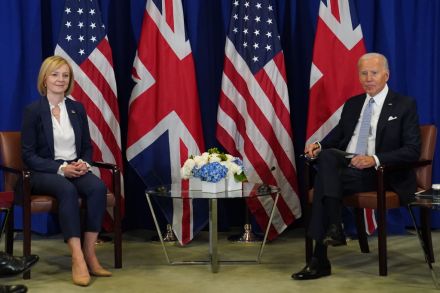
Liz Truss showed up Biden at the UN

From our US edition

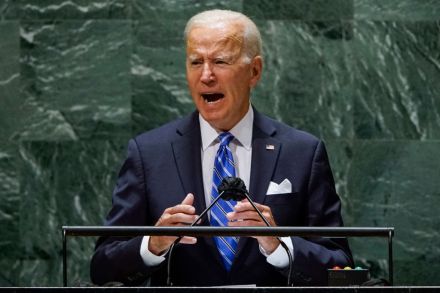
British prime minister Liz Truss’s speech at the United Nations this week was spot-on. It was clear, concise and left no question that the UK would do everything in its power to lead in the defense of the West and its values. President Biden’s address, by contrast, left you feeling overwhelmed and unsatisfied. That's not to say he failed to speak about Ukraine — he spent a reasonable amount of time on it — but the substance just was not there. Truss made a clear commitment to continue to “sustain or increase... military support to Ukraine, for as long as it takes,” a concrete and actionable statement. Though Biden issued a ringing condemnation of Putin’s war, he only made a vague pledge to “stand in solidarity against Russia’s aggression.

un matilda olofsson

My speech to the UN, by Matilda Olofsson

From our US edition

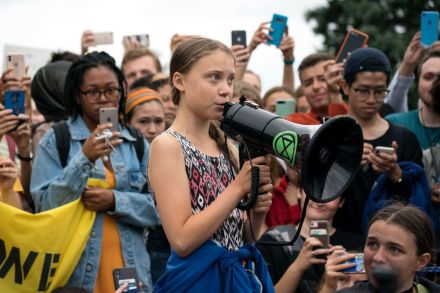
While Greta Thunberg, the 16-year-old climate activist, gave her speech at the UN Climate Summit today, I was being ruthlessly manhandled into a taxi by my parents after a failed attempt to once more sabotage her mission. Greta has long been a foe of mine ever since she messed with my plans to wreak havoc by insisting that my school take part in a strike for climate change awareness. From that day forth I swore vengeance. For every positive eco-friendly change Greta introduces, I have dedicated my time to balancing it out with an equally negative action. Unfortunately my attempt to counteract her latest stunt of sailing to New York in a carbon neutral eco-yacht ended in disaster.

The UN gets ready for hell week

From our US edition

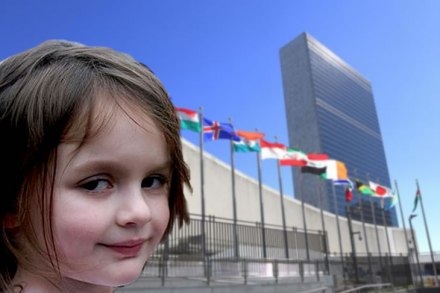
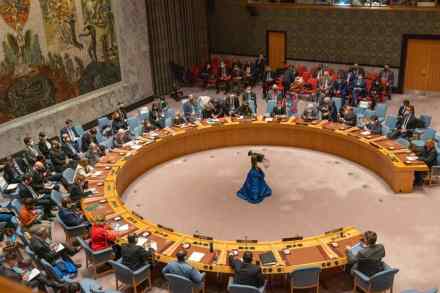
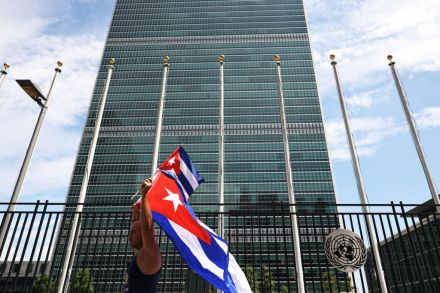
Every year in late September, the east side of Manhattan morphs into a giant sea of immovable cars. The culprit: the annual United Nations General Assembly debate, where diplomats from around the world fly to New York to shake hands, give speeches, and participate in dozens of side meetings and events throughout the city. This week’s UN General Assembly debate, however, is unique. For the first time since the UN was established after World War II, the meeting is occurring amid a large, deadly, conventional conflict in Europe. The war in Ukraine, which will cross its eight-month mark this Saturday, will dominate the session from beginning to end.

The Taliban’s rough year in power

From our US edition

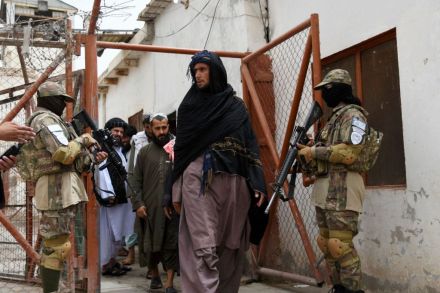
Next month will mark the first anniversary of the Taliban’s second stint in power in Afghanistan after a twenty-year insurgency against the US-backed government. In August 2021, Taliban fighters, flush with captured American military equipment and the jubilation of victory, were openly walking the streets of Kabul. While the disgraced Afghan president, Ashraf Ghani, was preparing for a life of exile in the United Arab Emirates, Taliban officials were converting his offices into their headquarters. The Taliban’s first year in power, however, hasn’t been pretty. The group has quickly come to understand that administering a poor and faction-prone country is a lot more difficult than taking up arms against a deeply unpopular, corrupt, foreign-dependent government.

What is the point of the UN?

When all this is over, we will have to hold a grown-up and perhaps very difficult conversation about the United Nations. No institution is perfect, or has supernatural powers to stop war or despotism, and perhaps nothing could have dissuaded Vladimir Putin from invading Ukraine. But the UN’s failure to prevent one fifth of its permanent security council from overrunning another member state should give us pause. There are the hard realities of realpolitik, of course, but there is also the question of endemic institutional failure. It may be that we will either have to change how we think about the UN or change the UN itself.

America has few good options in Haiti

From our US edition

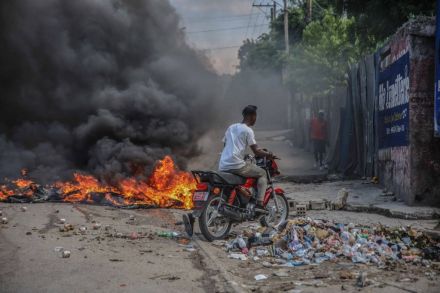
Haiti has never been known as a beacon of stability and tranquility. Most of its politicians are feckless, in league with criminals, or too consumed with trying to stay alive themselves. America not so long ago intervened on the island twice in 10 years — the first time in 1994, when President Clinton’s threat of an invasion compelled the junta to reverse its coup three years earlier, and the second in 2004, when the Bush administration participated in an international stabilization force after Haiti’s president Jean-Bertrand Aristide resigned. But this year has been an especially tough one for the Western Hemisphere's poorest nation.

haiti

Biden’s big UN whopper

From our US edition

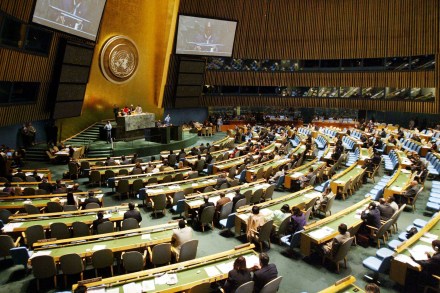
President Joe Biden walked into the grand UN General Assembly chamber this morning with a list of asks, an appeal for greater cooperation among the world’s great powers and a bit of controversy trailing behind him. Biden’s first UN address came at a difficult time in American diplomacy. The European Union, led by an irate France, is livid over a $60 billion US-Australian nuclear submarine deal that European leaders view as skeevy and duplicitous. And last month’s American troop exit from Afghanistan remains a sore point for contributing nations in the Nato coalition, some of which wanted more time to evacuate their own nationals. Biden, however, sidestepped all of these disputes.

un

Afghanistan and climate change: the West’s twin failures

From our US edition

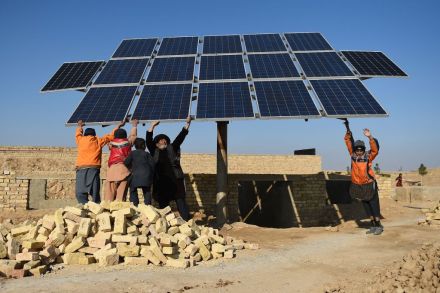
The West’s humiliation in Afghanistan has an older brother: climate change. As siblings, the two share characteristics, most obviously an inability to confront unwelcome facts. In Afghanistan, there was a large constituency led by the Pentagon invested in the mantra of proclaiming progress in the fight against the Taliban. Climate has its own industrial complex of NGOs, climate scientists, renewable energy lobbyists profiting from the energy transition, eager helpers in the media, and politicians posing as world saviors. Energy experts tell us renewable energy is cheaper than building new fossil fuel power stations. If they’re right, why did China build the equivalent of more than one large coal plant a week last year?

climate change

Iran’s president is a mass murderer

From our US edition

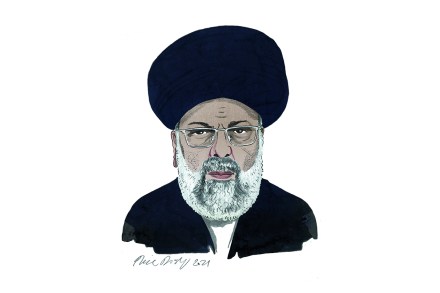
The US and other western countries are faced with a dilemma: how to bring to justice a man with the blood of thousands on his hands when you have to do business with him. Ebrahim Raisi’s path to the presidency of Iran is strewn with corpses. He comes to office this month already under American and European sanctions for the mass murder of prisoners in 1988. Some 5,000 may have been killed, though we can only guess at the true number of dead. It was a crime against humanity in the strict legal meaning of that term. At an earlier stage in his career, Raisi is said to have personally supervised the torture of dissidents, but in the 1988 case his responsibility was bureaucratic. He was a grim fanatic, eager to carry out orders. He was — and remains — Iran’s hanging judge.

raisi

The American descent into madness

From our US edition

Nations have often gone mad in a matter of months. The French abandoned their supposedly idealistic revolutionary project and turned it into a monstrous hell for a year between July 1793 and 1794. After the election of November 1860, in a matter of weeks, Americans went from thinking secession was taboo to visions of killing the greatest number of their fellow citizens on both sides of the Mason-Dixon line. Mao’s China went from a failed communist state to the ninth circle of Dante’s Inferno, when he unleashed the Cultural Revolution in 1966. In the last six months, we have seen absurdities never quite witnessed in modern America. Madness, not politics, defines it. There are three characteristics of all these upheavals. One, the events are unsustainable.

madness

Getting UN help on American civil rights is a great idea

From our US edition

The small-minded people who believe in freedom and democratic self-government have their shorts in a bunch over the Biden administration’s invitation to the United Nations to review our country’s civil-rights record. What a superb idea. Long overdue. The countries filling the human rights bodies at the UN have the kind of expertise you can’t get by reading books or following the rule of law. You have to get that kind of experience in the streets. Police brutality? All you have to do is ask the leading members of the UN Human Rights Council like Cuba, Libya, Pakistan, the Philippines, Russia, Somalia, Sudan and Venezuela. They know a thing or two about protecting civil rights. But why stop there?

un

The UN’s anti-racism mission excludes Jews

From our US edition

António Guterres, the UN's secretary-general, has described rising anti-Semitism as a ‘multi-headed monster' of intolerance that's creating a ‘tsunami of hatred’ across the world, and the UN proclaims ‘anti-racism’ as its defining ideology. But the UN is failing to confront discrimination and violence against Jews — and at times even nurturing it. The UN special rapporteur on racism, E. Tendayi Achiume, ought to be among the leading global voices speaking out against Jew hate. Last year, she called on Bulgaria to stop hate speech and discrimination against the Roma, she urged the Human Rights Council to address abuses against people of African descent and she appealed to world leaders to confront 'structural forms of racial and ethnic injustice’.

united nations

Cancel Linda Thomas-Greenfield!

From our US edition

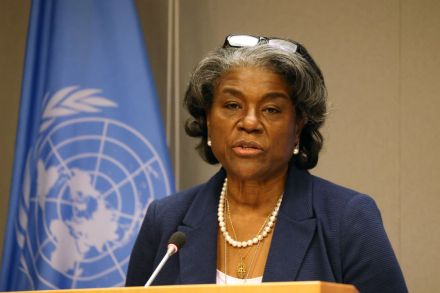
Two weeks ago, while speaking to Revd Al Sharpton’s National Action Network, America’s ambassador to the United Nations said ‘When we raise issues of equity and justice at the global scale, we have to approach them with humility. We have to acknowledge that we are an imperfect union – and have been since the beginning — and every day we strive to make ourselves more perfect, and more just.’ She said that she had recently spoken to the UN General Assembly about growing up in the segregated South adding ‘I shared these stories and others to acknowledge, on the international stage, that I have personally experienced one of America’s greatest imperfections.

thomas-greenfield

The United Nations race report hypocrisy

Oh dear. Four weeks after the government's Sewell report on race relations was released, a group of United Nations experts has decided to weigh in, claiming that it attempts to 'normalise white supremacy' and could 'fuel racism' in the UK. According to a lengthy press release issued today, the UN Working Group of Experts on People of African Descent on Monday 'strongly rejected' the 'stunning' report, arguing it 'repackages racist tropes and stereotypes into fact, twists data and misapplies statistics.

Buying power: how China co-opts the UN

It was one of those forgettably historic moments at the United Nations. The year was 2015, the UN’s 70th anniversary, and China’s President Xi Jinping was in New York, speaking in person to the UN General Assembly. In festive spirit, Xi announced that China would set up a $1 billion trust fund to be dispersed over ten years to ‘support the UN’s work’ and ‘contribute more to world peace and development’. So began the Peace and Development Trust Fund, one of China’s more insidious projects to co-opt the UN, its logo and its global networks.

President Trump’s support for Taiwan is welcome

From our US edition

Over the coming weeks, a battle between Washington and Beijing over the inclusion of Taiwan as an observer at the World Health Organization will rage, reflecting the struggle between the People’s Republic of China and the United States over control over international institutions. Yet it also reveals the reality of the new cold war between the two countries, and the shift in focus of attention to ground-level tactics at the expense of grand strategies. Long forgotten in the shadow of China’s rise and the intensification of both contact and competition between the PRC and the United States has been the island nation of Taiwan.

taiwan

The UN should be ashamed of its anti-Israel boycott list

I knew if we waited long enough, the United Nations would make itself useful. The Office of the High Commissioner for Human Rights (OHCHR) has produced a handy catalogue of companies that supporters of Israel can give their business to. Of course, this was not Michelle Bachelet’s intention. Bachelet is the commissioner and before that she was an exquisitely unpopular Chilean politician and head of UN Women, the all-girl Ghostbusters of UN agencies that fights global mistreatment of women by putting out hashtags and putting Saudi Arabia on its executive board. Now Bachelet has released ‘a database of all business enterprises involved in certain specified activities related to the Israeli settlements in the Occupied Palestinian Territory’.

Voices of import

By the age of eight Vaira Vike-Freiberga had learnt that life was both ‘very strange and very unfair’. Her baby sister had died from pneumonia the previous year because of the harsh conditions of life in a refugee camp in Germany (this was late 1944 and her family had fled their native Latvia for fear of the communists). Her mother soon had another child but when Vaira went to see her new brother in hospital she observed the young woman in the next-door bed turning her face to the wall against her wailing baby, product of a gang-rape by Russian soldiers. The nurses had given this unwanted baby girl the same name as Vaira’s much-mourned sister.

Greta Thunberg’s arch-nemesis, Matilda Olofsson, foils her plans once more

From our US edition

So, Greta Thunberg has declared her intention to sail to New York for the UN climate summit on a hi-tech eco-friendly racing yacht. The boat is owned by German property developer, Gerhard Senft, is based in Brittany and sponsored by the Yacht Club de Monaco. It has been fitted with solar panels and underwater turbines to generate zero-carbon electricity on-board. Greta’s transport will produce zero-emissions and is the ultimate carbon-neutral solution to long-distance journeys...or so she hopes. Greta has long been a foe of mine ever since she messed with my plans to wreak havoc by insisting that my school take part in a strike for climate change awareness. From that day forth I swore vengeance.

matilda olofsson greta thunberg

Remembering Srebrenica

It’s almost 25 years since the atrocity at of Srebrenica, the last massacre on European soil. It’s not the kind of event that anyone will be too keen to remember: we quite rightly salute D-Day veterans, a reminder of those whose sacrifice led to the freedom we have today. But it’s worth remembering Srebrenica too - it offers a shocking case study in how a perfectly peaceful community could be almost destroyed when forces of xenophobia, racism and imperialism are allowed to proceed unchallenged. I was in Sarajevo recently to listen to the stories about that massacre.