Unemployment

Have unemployment fears subsided?

From our UK edition

Over the past few months, each labour market update from the Office for National Statistics has suggested forecasts predicting mass unemployment were wide of the mark. In the three months leading up to February, unemployment was estimated to hover at 4.9 per cent, 0.9 per cent higher than the previous year but down 0.1 per cent from the previous month. Where credit is due is debated – and likely shared. The jobs retention scheme continues to shield five million workers, who cannot yet return to their jobs, from unemployed status. That GDP has not taken anywhere near the same tumble this winter as it did last spring speaks to innovative businesses that have managed to adapt to extremely strict lockdown conditions.

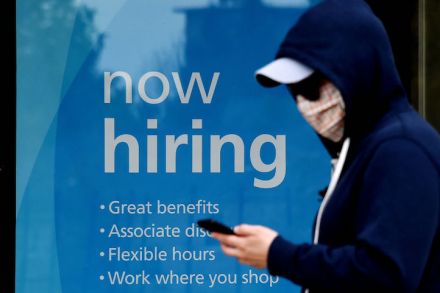
Why did unemployment dip as Covid restrictions tightened?

From our UK edition

Slowly but surely, forecasts for unemployment in the UK have been revised downwards. Alongside Rishi Sunak’s Budget earlier this month, the Office for Budget Responsibility significantly changed their prediction for peak unemployment: from the 11.9 per cent predicted in the July forecast down to 6.5 per cent. This was spurred on by an extension of the furlough scheme, a growing economic resilience to lockdowns and, of course, the spectacular rollout of the vaccines (over half the adult population has now been vaccinated with at least one dose). But the latest update from the Office for National Statistics, published today, has provided an early surprise. The headline unemployment figure has fallen slightly again: from 5.

When will unemployment peak?

From our UK edition

Unemployment continues to rise. Today’s update from the Office for National Statistics estimates that unemployment in the three months to November hit 5 per cent — that’s an estimated 1.7 million people out of work, a 0.6 per cent rise on the previous quarter.    Not every figure is as positive as the surface data would suggest The gradual climb suggests that the furlough scheme continues to hold off mass redundancies and provides further evidence that England’s second national lockdown didn’t hit as hard as the first. But the unemployment rate is set to worsen before it improves, with more optimistic forecasts estimating a peak of around 6 per cent later this year, while others (including the Bank of England) estimate around 8 per cent.

The looming Covid unemployment catastrophe

From our UK edition

Just how widely is the economic pain from Covid-19 being felt? Still surprisingly little, according to the latest employment figures from the Office of National Statistics (ONS). The absence of an explosion in unemployment goes some way to explaining why the lockdowns and restrictions have been accepted so meekly by the population at large. That said, unemployment is beginning to rise significantly now. There are now 819,000 fewer payroll employees compared with the start of the crisis in February. The employment rate stands at 75.2 per cent, 0.9 per cent down on a year ago, and the unemployment rate is 4.9 per cent, up 1.2 per cent.

Britain’s unemployment crisis is closing in

From our UK edition

Unemployment is creeping up. For months it remained stagnant, as the combination of the furlough scheme and people keeping out of the jobs market kept the rate deceptively low. But over the past few months, it has started to increase, with today’s labour market overview from the Office for National Statistics revealing a 4.5 per cent unemployment rate — the highest level in three years. There’s a sliver of hope in today’s data, which shows job vacancies are up Still, at first glance you’d expect the unemployment rate to be much worse. After the largest economic contraction in three hundred years, an increase from 3.9 per cent at the start of the year to 4.5 per cent now would give the impression we’ve avoided catastrophe.

Why unemployment figures haven’t budged

From our UK edition

Look past the headline statistics and you’ll see economic reality starting to infiltrate the labour market. Today’s employment figures from the Office for National Statistics mark very little movement from the previous quarter, with employment at 76.4 per cent (down 0.2 per cent on the previous quarter) and unemployment at 3.9 per cent (unchanged from the previous quarter, still hovering at a record-low level). Yet today also marks the biggest decrease in UK employment for a decade, since May 2009 in the wake of the financial crash. For many workers, being temporarily away from paid work is likely to become permanent How can this be?

Is the jobs cliff-edge fast approaching?

From our UK edition

As ‘Eat Out to Help Out’ kickstarts this month – giving customers 50 per cent off their meals (up to £10) at restaurants and pubs that have signed up to the scheme – the centrepiece of the Treasury’s Covid-19 policy package starts to wind down. From this month, employers will be asked to pay a small part of their employees’ wages: 5 per cent now, 10 per cent next month, and 20 per cent in October, before furlough officially comes to an end. A policy that was initially expected to have take-up from 10 per cent of businesses has become the crutch of more than one million businesses across the UK, as nearly ten million employees have been furloughed for some length of time over the past four months.

Trump’s African American ‘silent minority’ could swing the election

Donald Trump’s efforts to broaden his appeal to the African American community are bearing fruit. Rasmussen polling noted in early June that Trump’s approval rating among African Americans stood at 41 percent, far above the 8 percent of votes he received from that community in 2016. While approval ratings don’t necessarily translate to votes on Election Day, it mathematically would be very hard for Joe Biden to win in the key battleground states should Trump double his vote to 16 percent of African American voters. Trump’s opponents are convinced that his record as president and his response to the Black Lives Matter protests mean his popularity with black voters will go down. But the truth may well be the opposite.

african american

Are Britain’s employment figures too good to be true?

From our UK edition

Lining up graphs of the UK’s growth figures last week and its employment figures this week, you would struggle to believe the data was from the same decade, let alone the same month. Despite the economy contracting by a quarter in March and April, unemployment figures haven’t budged: 3.9 per cent ending the month of April, unmoved from the quarter before, and more remarkably only up 0.1 per cent from the previous year.  The employment rate remains surprisingly high too: 76.4 per cent, down 0.1 per cent on the previous quarter. Despite the shuttering of the economy, employment and unemployment continue to hover at record highs and lows, like they did before the crisis began.

Can America’s 2.5 million jobs miracle be replicated in Britain?

From our UK edition

The US economy created 2.5 million jobs last month – the biggest monthly jobs gain since records began a century ago, albeit only a partial recovery from the 22 million jobs lost during lockdown. These figures have blown expectations out of the water. Economists were predicting yet more unemployment: the consensus was unemployment reaching 8.3 million, or 20 per cent in May, up from 14.7 per cent in April. Defying the odds, unemployment actually fell to 13 per cent, signalling an unexpectedly early start in the rebounding of the American economy. The biggest winners were workers in hospitality, who made up almost half of the new jobs, followed by construction.

Dear politicians, life must go on

The worst day of my childhood was in 1995 when my father lost his job. He worked close by as a cook in a local restaurant, just a mile or two from our modest home in Cranston, Rhode Island. I recall what it felt like when he broke the news:  I felt my legs start to go under me. I still see him walking up the small hill that led to our home: his head down, his spirit crushed. I still see the look on his face, a man whose purpose had been taken away. My mother cried. We had to sell our house. Nothing would ever be the same. I suspect many American families know what I’m talking about. Nearly 30 million have lost their jobs in just six weeks alone. Millions more will follow.

life unemployment job

What about flattening the unemployment curve?

Over the last month, most of America has been shut down to reduce the spread of the coronavirus. For the most part, efforts to prevent our medical system from being overloaded have been successful. Now it’s important to focus on another important issue: the employment curve.  In the first week of April, over 6.6 million Americans claimed unemployment benefits, the highest amount in history. That figure nearly doubled from week-to-week. As businesses shutter to combat the virus, experts believe that unemployment has nowhere to go up but up. The St Louis Federal Reserve predicts that unemployment could ultimately peak at 32 percent: that amounts to 47 million Americans out of work.

unemployment

Coronavirus has already caused a huge spike in unemployment

From our UK edition

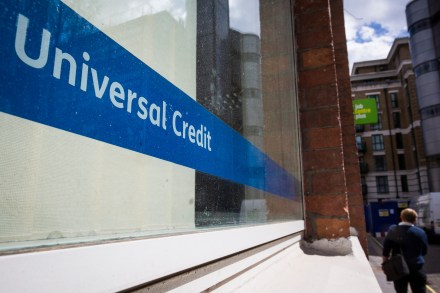
In Britain and America, the employment news is grim. Nearly a million Brits – 850,000 more than usual – have applied for Universal Credit in the last fortnight. While in the United States, unemployment has reached an historic high. As of the end of last week, 6.6 million people claimed for out-of-work benefits. This is the highest increase in adjusted seasonal claims on record and is made even more astonishing when you consider that just four weeks ago fewer than 200,000 people applied for jobless benefits.  With every day that goes by, the health implications of Covid-19 are becoming clearer, as are the economic effects.

Surge in US welfare claims shows the devastating impact of Covid-19

From our UK edition

No one has modelled an economic lockdown before: no one knows what to expect. But the daily data is shocking, and points to a huge economic effect. In Britain, nearly 500,000 people applied for welfare (Universal Credit) over the last nine days. In America, the number of people applying for unemployment benefits surged to an unprecedented three million last week.  What has yet to be calculated (but urgently needs to be) is the human cost of all this We simply have not seen anything like this before, not even during the financial crash: the Covid crash has led to 3,283,000 claims - quadruple the previous record-high of around 700,000 in 1982.

In normal times, the government would be boasting of falling unemployment

From our UK edition

At any other time, news that Honda intends to close its Swindon plant in two years’ time with the loss of 3,500 jobs would have been seen for what it is: a tragedy for those affected, their families and businesses it supports. But the story was used by both sides in the Brexit wars to prove their point. Certain Remainers saw it as proof of what leaving the EU will bring, while some Leavers were almost callous in the way they shrugged off the closure. When news like this is being exaggerated for effect, it’s hard to form a clear view of what’s going on. But through the fog, a pattern is discernible. The car-making industry is in great difficulties worldwide, as Ross Clark argued in our cover piece a fortnight ago.

Falling unemployment marks another black day for Project Fear

From our UK edition

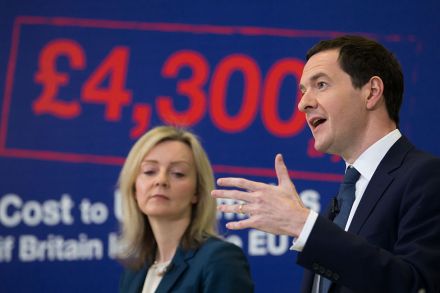
It is another black day for Project Fear. The latest employment figures from the Office of National Statistics (ONS) show yet another fall in unemployment, to 1.36 million or 4 per cent of the adult population. There have never been more people employed in the UK economy, and the unemployment rate is at its lowest since early 1975. It wasn’t supposed to be this way, according to George Osborne’s crystal ball. In May 2016, a month before the referendum, he warned us all that should we vote to leave the EU we could expect unemployment to rise by up to 500,000 within two years. Admittedly, George himself has bagged a few jobs since then, but I don’t think his work ethic is wholly responsible for the rise in employment.

Spain’s lost generation

From our UK edition

Spain’s recent economic expansion means little to young Spaniards. Many are angry with the country’s tirelessly corrupt politicians, and are unable to pursue rewarding careers in their own country. Despite three-and-a-half years of GDP growth at one of the fastest rates in the eurozone, Spain still has the second highest unemployment rate in the EU, at 18 per cent. More than 40 per cent of Spaniards aged between 16 and 25 are without jobs, while others struggle on temporary contracts with low salaries — or move abroad to find better work. Does this all mean that Spain suffering is from a ‘lost generation’ of youngsters who are struggling to fulfil their potential?

Families under further pressure as earnings growth slows

From our UK edition

There's more doom and gloom for households today as new figures reveal the first decline in real earnings since September 2014. According to the Office for National Statistics (ONS), earnings growth slowed in the three months to March, at 2.1 per cent, compared to previous data which showed wages, excluding bonuses, grew at 2.2 per cent. This compares to inflation which jumped to 2.7 per cent in April. Meanwhile, the unemployment rate dropped to 4.6 per cent in the three months to March, and is now at its lowest rate since 1975. It was previously 4.7 per cent. It means that 1.54 million people are currently unemployed.

What the papers say: The good and bad news about Britain’s booming jobs market

From our UK edition

More Brits then ever are now in work, with the proportion of the working age population in jobs hitting 74.6 per cent at the end of 2016. Good news such as this about Britain’s job market has become ‘almost mundane’, says the Daily Telegraph. But even in this climate of healthy jobs figures, these latest numbers are worthy of attention. For the Telegraph, this is a 'vivid reminder that Britain’s flexible labour market has weathered all the recent storms’. Talk about joblessness and unemployment used to dominate the headlines. But no more; ‘the conversation’ now is more ‘about the nature of those jobs’. Talk of the ‘gig economy’ in particular is much discussed.

What the papers say: Boris’s ‘indiscreet’ way with words and Project Fear comes unstuck

From our UK edition

In the run-up to the referendum, the Treasury warned that unemployment would rise by half-a-million. Today, this prophecy comes in for criticism in the papers following yesterday’s news that the number of Brits out of work had tumbled to an 11-year low. It’s not only Project Fear which gets a hard time in the editorials though. The moaning ‘anti-Brexit mob’ are also criticised - while the Guardian savages Boris Johnson for making a ‘fool of himself’. The Sun launches an attack on the moaning ‘anti-Brexit mob’ in its leader this morning, saying that it seems that the better the economic outlook since the referendum ‘the louder the caterwauling’ from those unhappy with the result.