Unemployment

Far from Naples

From our UK edition

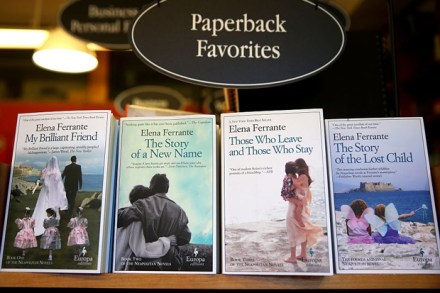
It’s a brave dramatist who would seek to adapt for radio the hit novels of the Italian writer Elena Ferrante. As soon as her quartet of novels set in Naples from the 1950s onwards began appearing in English translation a few years ago they created a bestselling stir because of the unusually bold flavour of the writing and the brutal honesty with which Ferrante is prepared to expose the dark underside of female friendship and motherhood, its jealousies and bitterness, the betrayals and self-centredness. It was even rumoured that Ferrante must be a man (she has never given an interview) because no woman, surely, would be so critical of her own sex (which doesn’t explain why she is not kind to men either).
Continental drift | 2 June 2016

From our UK edition

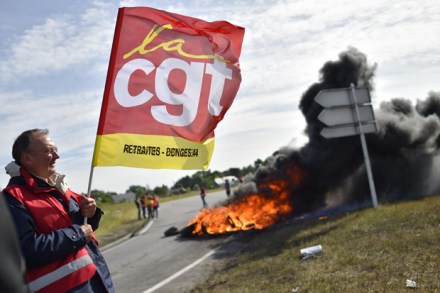
It is a long time since the term ‘sick man of Europe’ could be applied to Britain. France is now a worthier candidate for the accolade — it -increasingly resembles a tribute act to 1970s Britain. A package of modest labour-market reforms presented by a socialist president has provoked national strikes on the railways and Air France. This week, the streets of Paris resembled one big Grunwick or Saltley Gate — the trials of strength between employer and union in which so many of Britain’s most bolshy trade unionists cut their teeth. This week is not a one-off: in recent years France has had a strike rate more than twice that of Denmark, its nearest European competitor. Britain now looks a paradigm of -industrial virtue by comparison.

A civilisation under siege

From our UK edition

[audioplayer src="http://rss.acast.com/viewfrom22/thedeportationgame/media.mp3" title="Douglas Murray and Don Flynn from the Migrants' Rights Network discuss deportation"] Listen [/audioplayer]There are two great deportation games. One is the carousel which Rod Liddle describes — but even this, for all its madness, pales alongside the border-security catastrophe unfolding on the continent. Thanks to geography and a few sensible decisions by our government, Britain has so far been spared the worst of the migrant crisis. But we should pity most of the other European countries, because they are losing control not just of their borders but of their civilisation and culture — the whole caboodle.

Unemployment falls – but so does pay growth

From our UK edition

The unemployment rate fell to 5.1 per cent in the three months to November, putting it at the lowest level since 2006 – and back to its average over the six years before the crisis. Back to what the Bank of England regards as the "equilibrium" rate. [datawrapper chart="http://static.spectator.co.uk/DUFV6/index.html"] The other side of the coin is that pay growth is down too. Excluding bonuses it's fallen to a sluggish 1.9 per cent year-on-year, around half its pre-crisis rate. Workers’ spending power is still growing – but that's driven by low inflation. [datawrapper chart="http://static.spectator.co.uk/u0fNr/index.

Ministers need to admit that benefits problems are linked to food bank use

From our UK edition

David Prior (Lord Prior of Brampton) is no toff, he’s a modest man. He had a career in merchant banking then another in the steel industry. In his previous Parliamentary incarnation he was a diligent constituency Member for a not very affluent part of Norfolk. Like most Parliamentarians, he was a good deal closer to ‘real people’ than any departmental officials, journalists, special advisers or spin-doctors. Leaving The House hors de combat in 2001, he pursued a thoughtful and blameless life in the NHS and in education. Now he is a Health Minister. He knows about statistics. David Freud (Baron Freud of Eastry) is also a modest man. Great grandson of Sigmund, he carved a career first in journalism – as Lex in the FT for four years.

The new benefits trap: why I’m proposing an amendment to the Welfare Bill

From our UK edition

One of the government’s big achievements has been helping people off benefits and back into work. But the latest stage in the reforms – the proposed changes to the Employment and Support Allowance (ESA) – would be a mistake. Far from encouraging sick people back to work, it might encourage them to stay on benefits. That’s why I’m proposing a change to the Welfare Reform and Work Bill. At the moment, ill people who might gradually return to work receive the Work Related Activity Group (WRAG) payment of £102.15. This is a little bit higher than the standard Job Seekers’ Allowance (JSA): the extra money pays for the additional costs which hit people with long-term illnesses – higher energy bills, for instance.

Jobs miracle or low-pay disaster? Andrew Lilico and David Blanchflower debate

From our UK edition

Dear David, From Q2 1979 to Q1 1981, quarterly real GDP fell in the UK by 5.5%. Unemployment rose rapidly, from 1.4m in Q2 1979 to 2.4m by the end of the recession, then continued rising through to its peak of 3.3m in 1984 – 12% of the workforce. Unemployment stayed above 3m for 51 straight months. This is the pattern economists expect in a serious recession. Unemployment rises, then stays persistently high, falling back only well into the recovery. It has also been the experience of much of the developed world since the Great Recession of 2008/09. So, for example, whereas US unemployment was below 5% in 2007, it rose to about 10% in 2010, falling back only gradually over several years thereafter. Similarly, in Spain unemployment rose from 8.4% in 2007 to 27% in 2013.

Come on, prime minister: a peerage for our peerless folding bike designer

From our UK edition

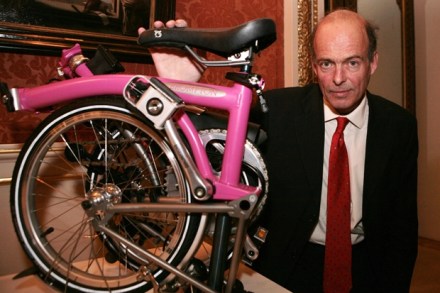
Asked to name Britain’s greatest living industrial designer, most people might cite Sir Jony Ive of Apple or Sir James Dyson of the bagless vacuum cleaner. I’d certainly shortlist Ive, but I traded in my unreliable Dyson for a brutally efficient German machine called a Sebo and I’ve always thought Sir James was overhyped. I might also mention Dumfries-born Ian Callum, the director of design for Jaguar cars responsible for the sleek F-Type. But surely the top prize must go to Andrew Ritchie, the former landscape gardener whose one perfect product, the Brompton folding bicycle, first sketched in his South Kensington flat 40 years ago, has never been bettered or even precisely replicated by any other manufacturer around the world.

Portrait of the week | 13 August 2015

From our UK edition

Home The Metropolitan Police encouraged people to celebrate VJ Day despite reports in the Mail on Sunday (picked up from an investigation by Sky News) of plans by Islamic State commanders to blow up the Queen. The RMT union announced two more strikes on the London Underground for the last week in August. Network Rail was fined £2 million by the rail regulator for delays in 2014-15, many of them at London Bridge. A tanker carrying propane gas caught fire on the M56 motorway near Chester. England won the Ashes series after beating Australia by an innings and 78 runs at Trent Bridge; Australia had been bowled out for 60 before lunch on the first day. Unemployment rose by 25,000 in the second quarter to 1.85 million.

Portrait of the week | 16 July 2015

From our UK edition

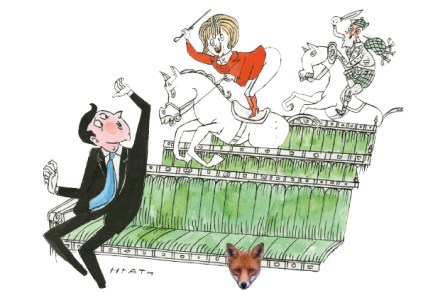
Home The government postponed a Commons vote on relaxing the Hunting Act in England and Wales after the Scottish National Party said it would oppose the changes. Scottish police admitted that a crashed car off the M9, reported to them on a Sunday, was not examined until the Wednesday, when one of the two passengers inside it was still alive. She died three days later. A case of H7N7 bird flu was found at a poultry farm near Preston, Lancashire, where 170,000 chickens were slaughtered. British people were being urged by the Foreign Office to leave Tunisia because ‘a further terrorist attack is highly likely’. Up to 5,000 were flown home.

Dick Whittington for the 21st century

From our UK edition

Novels of such scope and invention are all too rare; unusual, too, are those of real heart, whose characters you grow to love and truly care for. The Year of the Runaways has it all. The action spans continents, taking in a vast sweep of politics, religion and immigration; it also examines with tenderness and delicacy the ties that bind us, whether to family, friends or fellow travellers. Judges of forthcoming literary prizes need look no further. Rose Tremain’s The Road Home described the experience of an Eastern European immigrant arriving to look for work in England. The book (which is among Tremain’s finest) was a powerful corrective to the notion that such migrants have an easy time of things.

Osborne’s slick PMQs performance

From our UK edition

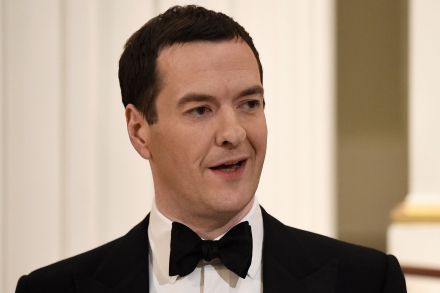
PMQs was not the normal, partisan slug-fest today. Instead, there were a slew of serious questions on the challenge of Islamic extremism at home and abroad and the migrant crisis. George Osborne, standing in for David Cameron, turned in a solid performance. He seemed unfazed by the occasion. His only misstep was persisting with a pre-scripted joke in response to Hilary Benn’s sombre opening question. But other than that, Osborne’s answers were crisp and politically confident. The themes he chose to emphasise were very Osborne. In response to a Labour question on welfare, he had a British version of Angela Merkel’s warning about how Europe can’t afford not to reform its welfare state.

Unemployment down again as the jobs miracle continues

From our UK edition

Ahead of his PMQs debut, George Osborne is boosted by the news that unemployment is down again. As the chart above shows, the government’s jobs miracle continues with just over 31 million now in work. Between February and April this year, unemployment fell by 43,000 to 1.81 million. With inflation low and pay packets growing, the declining cost of living, the government is feeling vindicated with its economic plan. Employment minister Priti Patel said this morning: ‘Today's figures confirm that our long-term economic plan is already starting to deliver a better, more prosperous future for the whole of the country, with wages rising, more people finding jobs and more women in work than ever before.

Demob unhappy

From our UK edition

After all the carousing and flag-waving that followed VE day in 1945, millions of young men fortunate enough not to be still fighting the Japanese faced a problem. Having spent five or six years in uniform, they needed jobs. For those who lacked explicit civilian skills, which meant most, it was hard to persuade employers that a talent for flying a Spitfire, commanding a gun battery or navigating a destroyer qualified a man to run a factory or even sell socks. For years after the shooting stopped, newspapers bulged with small ads placed by demobilised officers. Many such entries exuded unconscious pathos. That quirkily brilliant writer Richard Usborne had the notion of investigating the responses received by such men, who had risked much and borne life-and-death responsibilities.

A jobs miracle is happening in Britain, thanks to tax cuts. Why don’t the Tories say so?

From our UK edition

Feeling the genitals of freshly hatched chickens may not be the most glamorous job in the world but at £40,000 a year it’s not badly paid. It requires some stamina: you pick up hundreds of chicks a day and check their ‘vent’ for boy parts. If it’s a baby hen, then she’s sent off for a life of corn and egg-laying. If it’s a baby rooster — well, best not to ask. Almost nobody in Britain wants to do it, so vacancies go unfilled. The poultry industry, in desperation, has asked the government to add ‘chicken sexer’ to its growing list of seemingly unfillable jobs. This fits a trend. In five short years, Britain has gone from having mass unemployment to jobs galore.

How Cameron’s jobs miracle ate his immigration target

From our UK edition

The embarrassing truth is that David Cameron did not think carefully about this pledge to take net immigration into the 'tens of thousands'. The pledge originated in a Thick-of-It style farce: it was an aspiration mentioned by Damian Green, then immigration spokesman, that caught media attention. The Tories didn’t want to make a fuss by disowning it, so this pledge ended up becoming party policy and then government policy. Absurdly so: a country can only control who comes in, not who goes out. So immigration, not ‘net immigration’, should have been the target. And even then, it should have been immigration from outside the EU – which Theresa May has done a reasonable job controlling. But the not-so-embarrassing truth is that this is a problem of success.

Guardian journalists might not like the Work Programme but jobseekers (like me) do

From our UK edition

The government’s Work Programme, launched in 2011 to help long-term unemployed people into work, has been widely condemned in the media. It has been portrayed alternately as greedy, cruel or incompetent, and sometimes all three. Yet one of these providers, Ingeus, helped me. Many journalists, who have no experience of such places, have maligned this scheme as well as others. This infuriates me. How dare they dismiss as a failure the scheme which saved me and many others (Ingeus has helped 215,000 into work) from long-term unemployment, benefits and the dismalness that entails? Following a nine-month period on Jobseeker’s Allowance I was referred to Ingeus in 2011. As well as claiming JSA I volunteered at an arts cafe in return for a meal at the end of each shift.

The British economic recovery, in 12 graphs

From our UK edition

Everything seems to be falling into place ahead of the election for the Tories. Today’s data shows high street spending rising at the fastest rate for more than 13 years – and this is not a freak. In fact, it’s part of a broader picture which is more impressive (and promising) than George Osborne seems to realise. The Chancellor is a wee bit slow off the mark when it comes to recognizing the radical effect of his own tax cuts. He is still banging on about fiscal position when the consumer story is the one he should be telling. Here’s why: 1. Shops are busier than ever. Brits spent £331bn in the shops in 2014 (excluding fuel) – more than they've ever spent before. And sales were up 2.

Labour might not like to admit it but economic growth has created an employment boom

From our UK edition

With 105 days to go until the General Election, politicians of all sides will be slugging it out between now and 7 May. The starting gun has been fired and the policy battles have begun. Unfortunately, we are starting to hear a lot of misinformation from the Opposition. When the Labour Party continually talk down the UK’s employment opportunities, it has a negative impact on the confidence of jobseekers across the UK.  On a day when we have seen a new set of milestones - the unemployment rate falling to a six year low of 5.8 per cent, jobs vacancies at a 14-year record high, 30.8 million people in work and a further fall in unemployment - it’s important to get the facts straight.

Want babies? Get a job, lose the Lycra – and other fertility tips

From our UK edition

Did you know that one in six couples in the UK have difficulty conceiving? That’s roughly 3.5 million not very happy people. A healthy diet, not smoking and not being too overweight or too underweight can all improve your chances of having a baby. Here are some other ideas worth a try. Take care with technology. Both mobile phones and laptops have been implicated in reducing sperm quality. Research has found that while using a phone increased testosterone, it also reduced levels of luteinising hormone, important in male fertility. Carrying your phone around in your trouser pocket is not great either and, as for laptops, using one on your lap if you’re a man should be considered a no-no – increasing scrotal temperatures over a long period is bad for your sperm.