Unemployment

Spotify logs losses and cuts jobs after splurging on Meghan

Being friends with Meghan Markle may cost you socially, but now it’s looking like it’ll ruin you financially as well. The streaming service Spotify has logged $230 million in losses, after the CEO has admitted to getting "carried away" with major investments in the past year. This includes Spotify’s lightbulb moment of throwing $18 million at Meghan and Harry for, checks notes, twelve hours of content, where Duchess Difficult invents more things to complain about. Prince Harry mustered up as much brain power as he could for the podcast, which saw him telling tennis star Serena Williams, “I like what you've done with your hair. It's a great vibe.” Enlightening, Haz.

meghan spotify

A nation of quitters

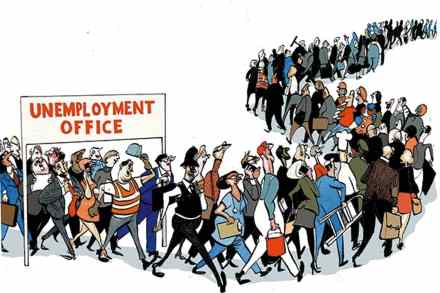
America’s post-pandemic employment picture is an unsettling paradox. On the one hand, job totals are finally back above pre-pandemic highs — and unemployment rates skirt fifty-year lows. But at the same time, overall work rates are lower than they have been since the 1980s — and millions of workers who dropped out of the labor force during the Covid-19 lockdowns have yet to return. A peacetime labor shortage has erupted, yet vast numbers of men and women are still sitting on the sidelines of the economy. America is renowned for its work ethic — and rightly so. The average worker in the United States clocks more hours each year than those in Canada, Australia, Western Europe and now even Japan. But those are the work patterns of US men and women holding down a job.

work

Stop trying to make the four-day workweek happen

Growing up in my little Pennsylvania hometown, most businesses would close early on Wednesdays around lunchtime. The idea was that they would re-open in the evening or on Saturday mornings to give people who couldn’t get away from their nine-to-five jobs the chance to shop, go to the bank, etc. To this day, a few places (the ones that are left) adhere to this tradition. They shut their doors at noon or so mid-week, everyone knows they do, and we plan our lives accordingly. It works in Philipsburg, a rural place with a few thousand loyal customers who have known for decades that Larry’s Saw Shop won’t be open Wednesday afternoon. So we get our chainsaws dropped off for service on Tuesday or first thing Thursday morning. That’s just the way it is. Life goes on.

Enough with the 1970s comparisons

The media are abuzz these days about a purported “return to the 1970s.” Generally speaking, such chatter is not intended kindly, for many today would likely agree with the sardonic assessment of the Seventies made by the editors of New West magazine as that decade wound down: “It was the worst of times, it was the worst of times.” And not just because of the popularity of bell-bottom pants, platform shoes, and disco music. In the Seventies, we had problems far more troubling — more troubling even than the pop group ABBA. For starters, we saw a quadrupling of real oil prices between 1973 and 1979. We suffered high rates of both inflation and unemployment, which hitherto varied inversely, leading to the creation of the portmanteau “stagflation.

1970s

Supply chain for dummies: a fairy tale

Joe Biden cheerfully told Americans that most of them are too thick to understand what a “supply chain” is. Naturally, he understands it thoroughly. You can see with your very own eyes how well he has handled it. Since, as Joe said, you must be wondering why so many shelves are empty, I’m here to explain. Following the president’s wise advice, I will use small words and a simple story. Let’s begin in the good ol’ days, not too long ago, when the shelves were magically full. The story begins in a land ever so far away, where happy people worked and worked to make Christmas toys for children in Kansas. When they finished making the toys, they placed each one in a little box and then placed lots of them in a great big box.

supply chain

Biden’s vaccine order is about power, not health

Sometimes a thing can be two things at once, one good and one bad. That requires a choice. And in a free society, that choice is usually best made by the individual directly affected. If not, then by an open, democratic process. Yet that is not what's happening with Joe Biden's vaccine mandate and it's why the cure is worse than the disease. I am, by my choice, thrice vaccinated. I understand the COVID vaccine prevents me from getting sick, and it is only a day-by-day smaller population of unvaccinated people who are actually still at risk of dying. We each make a choice. Now the government wants to make that choice for us. Vax mandates are an unhealthy thing for our democracy and represent a willful effort by government to exert additional control over an already cowed population.

vaccine

Biden’s dismal jobs report

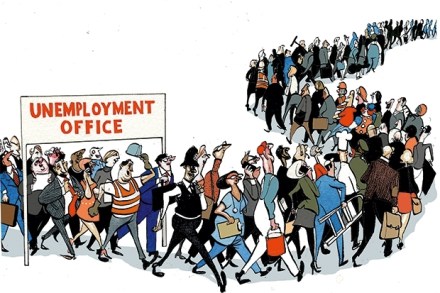
The Bureau of Labor Statistics issued its August jobs report this morning and the numbers are pretty dismal. While the unemployment rate dropped 0.2 percent to 5.2 percent, the number of new jobs created was only 235,000, far below expectations of about 700,000. In June the number was 962,000 and in July a whopping 1.1 million. And the unemployment was not spread evenly across the population. Unemployment went down for adult men and whites, but black unemployment went up significantly, from 8.2 percent in July to 8.8 percent in August. The surge in the Delta variant of the coronavirus is widely thought responsible.

Incentives matter

Sometimes, just below the surface lie some very powerful connections among seemingly unrelated problems. That’s true for the seemingly unrelated problems of rising crime, the year-long closure of public schools, acute employee shortages, and parents’ outrage at kids being taught critical race theory. Substantively, these issues are vastly different. Conceptually, they are united by the crucial importance of incentives.  Bad incentives produce bad outcomes, and that’s exactly what is creating many of these problems.

incentives

New day, same message: Biden again downplays jobs report

It wasn’t the exact same speech, but the words were familiar and the message was identical. President Biden addressed the disappointing April jobs report on Monday, just as he did on Friday. Economists had expected the economy to create as many as one million jobs in that month, but employers added just 266,000. Biden insists that everything will be all right. It takes time to recover from a once-in-a-century pandemic, he said, urging patience both days and no doubt sensing the political danger a slowing economy puts on his ambitious infrastructure package and other spending proposals. On Friday, the president asserted that his $1.9 trillion stimulus package was a long-term play: 'We never thought that after the first 50 or 60 days everything would be fine.

jobs

Trump’s African American ‘silent minority’ could swing the election

Donald Trump’s efforts to broaden his appeal to the African American community are bearing fruit. Rasmussen polling noted in early June that Trump’s approval rating among African Americans stood at 41 percent, far above the 8 percent of votes he received from that community in 2016. While approval ratings don’t necessarily translate to votes on Election Day, it mathematically would be very hard for Joe Biden to win in the key battleground states should Trump double his vote to 16 percent of African American voters. Trump’s opponents are convinced that his record as president and his response to the Black Lives Matter protests mean his popularity with black voters will go down. But the truth may well be the opposite.

african american

Dear politicians, life must go on

The worst day of my childhood was in 1995 when my father lost his job. He worked close by as a cook in a local restaurant, just a mile or two from our modest home in Cranston, Rhode Island. I recall what it felt like when he broke the news:  I felt my legs start to go under me. I still see him walking up the small hill that led to our home: his head down, his spirit crushed. I still see the look on his face, a man whose purpose had been taken away. My mother cried. We had to sell our house. Nothing would ever be the same. I suspect many American families know what I’m talking about. Nearly 30 million have lost their jobs in just six weeks alone. Millions more will follow.

life unemployment job

What about flattening the unemployment curve?

Over the last month, most of America has been shut down to reduce the spread of the coronavirus. For the most part, efforts to prevent our medical system from being overloaded have been successful. Now it’s important to focus on another important issue: the employment curve.  In the first week of April, over 6.6 million Americans claimed unemployment benefits, the highest amount in history. That figure nearly doubled from week-to-week. As businesses shutter to combat the virus, experts believe that unemployment has nowhere to go up but up. The St Louis Federal Reserve predicts that unemployment could ultimately peak at 32 percent: that amounts to 47 million Americans out of work.

unemployment