Ukraine

So much for Trump’s peace push

From our US edition

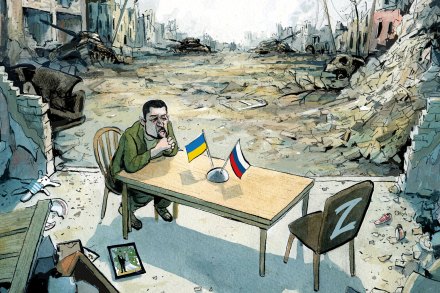
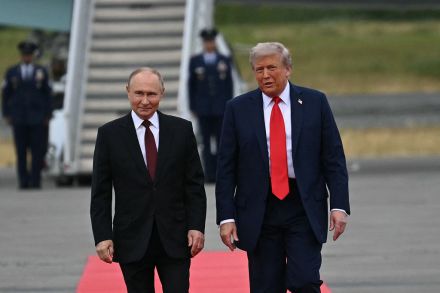
Here we go again. Now that Russian president Vladimir Putin has resumed his bombardment of Ukraine, President Donald Trump is responding by sanctioning the oil giants Rosneft and Lukoil. So much for the vaunted peace push that Trump has been engaging in since he met with Putin in August in Alaska.  The atmosphere has turned distinctly frostier since they held their pow-wow. Budapest was supposed to be a reprise of the brief thaw that took place in August but Trump has got cold feet after the Kremlin indicated that it was in no mood to compromise over the actual boundaries between it and Ukraine.

Ukraine

Should the Nord Stream saboteurs be extradited to Germany?

From our US edition

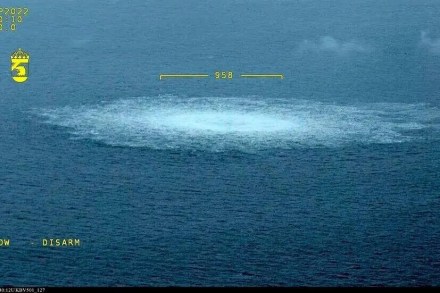
The identity of the saboteurs who blew up the Nord Stream pipelines in September 2022 was for years the western security establishment’s worst-kept secret. Just two weeks after a series of explosions within the economic zones of Sweden and Denmark crippled three of the four undersea natural-gas pipelines linking Russia to Germany, Scandinavian diplomats in Brussels were already being quietly briefed that the most likely culprits were Ukrainian. By January 2023, a forensic investigation by German police had discovered traces of the explosives on board the charter yacht Andromeda and found that the vessel’s movements aligned exactly with the location of the blasts.

Nord Stream

Trump, the foreign policy president?

From our US edition

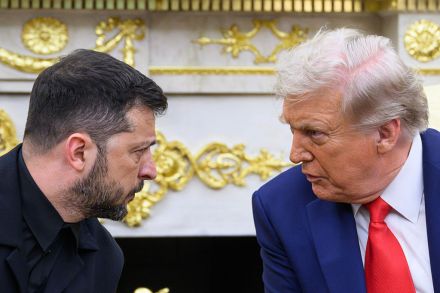
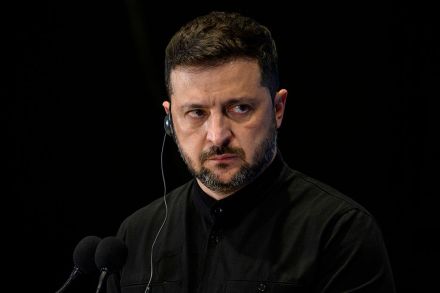
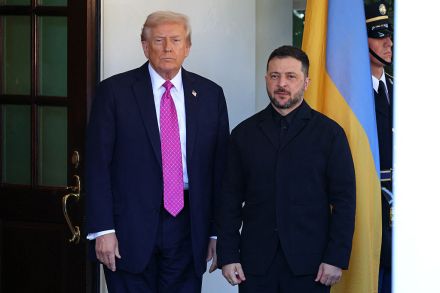
President Volodymyr Zelensky of Ukraine continued his excellent sartorial adventure at the White House, appearing in an elegantly cut black suit and shirt on Friday as he met with President Donald Trump in the Cabinet Room. But while they may have helped avoid any emanations of wrath from his host, his habiliments did not appear to prompt Trump to approve the dispatch of Tomahawk missiles to Kyiv, a coveted item indeed. “We’d much rather not need Tomahawks,” Trump said. “We’d much rather get the war over. It could mean a big escalation. It could mean a lot of bad things could happen.”  Back to square one, in other words. In August, Trump had claimed that his summit meeting with President Vladimir Putin would lead to a breakthrough. It never happened.

Trump

Nick Boles, James Ball, Andrew Rosenheim, Arabella Byrne & Rory Sutherland

27 min listen

On this week’s Spectator Out Loud: Nick Boles says that Ukraine must stand as a fortress of European freedom; James Ball reviews If Anyone Builds It, Everyone Dies: The Case Against Superintelligent AI, by Eliezer Yudowsky and Nate Sores; Andrew Rosenheim examines the treasure trove of John Le Carre’s papers at the Bodleian; Arabella Byrne provides her notes on skip-diving; and, in the battle of the sexes, Rory Sutherland says the thing to fear is not feminisation, but emasculation. Produced and presented by Patrick Gibbons.

Ukraine must stand as a fortress of European freedom

It is 35 years since I was last in Warsaw and the city is unrecognisable. Back then it was grimy and depressing, full of buildings still pockmarked by bomb damage. Nothing worked and nobody smiled. Now it gleams. The historic Old Town has been lovingly rebuilt and restored. Everything else is new: the cars, the shops, the office blocks and apartment buildings. The fashions are sharp and the teeth are white. It is a powerful tonic for beleaguered liberals. Don’t let the democracy-in-decline-mongers deceive you. Economic and political freedom work. And what the world needs is more of both.

Would taking back lost territories make Ukraine whole again?

From our US edition

For many of Ukraine’s supporters, Donald Trump’s recent declaration that Ukraine “is in a position to fight and WIN all of Ukraine back in its original form” came as a welcome – and unexpected – turnaround in US policy. “Ukraine would be able to take back their Country in its original form and, who knows, maybe even go further than that!” wrote Trump in a Truth Social post in late September. “Putin and Russia are in BIG Economic trouble, and this is the time for Ukraine to act.” But would taking back the lost territories of the Donbas, Zaporizhzhia, Kherson and Crimea make Ukraine whole again – or could a reconquest instead condemn Ukraine to perpetual civil war against itself and prolong the conflict with Russia indefinitely?

Ukraine

No, Trump has not changed course on Ukraine

From our US edition

President Trump has once again played the global foreign-policy commentariat for fools. They have taken a startling statement from Trump’s Truth social-media account on Tuesday as a sign of a new policy – or at least a new attitude – toward the Russia-Ukraine war. Yet what Trump actually wrote says nothing of the sort.  If Trump really were newly committing himself to Ukraine, why would say, as he’s so often said before, “I wish both countries well”? One country has invaded the other; wishing one of them well means wishing defeat on the other. Wishing them both well indicates indifference.

Trump Ukraine

Tim Shipman, Colin Freeman, Rachel Clarke, Michael Gove & Melanie Ferbreach

40 min listen

On this week’s Spectator Out Loud: Tim Shipman interviews shadow justice secretary Robert Jenrick (plus – Tim explains the significance of Jenrick’s arguments in a special introduction); Colin Freeman wonders why the defenders of Ukraine have been abandoned; Rachel Clarke reviews Liam Shaw and explains the urgency needed to find new antibiotics; Michael Gove reviews Tom McTague and ponders the path that led to the UK voting to leave the EU; and, Melanie Ferbreach provides her notes on made-up language. Produced and presented by Patrick Gibbons.

Ukraine’s Foreign Legion was doomed from the start

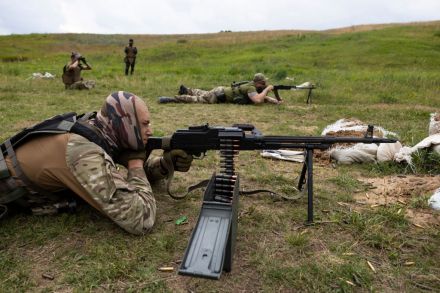
It seems that people would rather fight for a death cult than a democracy. At most, 15,000 foreigners have fought in Ukraine over the past three years. By contrast, an estimated 35,000 foreign fighters joined Islamic State, despite the risk of prosecution when they returned home. Why have so few westerners joined up, given that Ukraine’s Polish border is just a £50 Ryanair flight away? The answer is that despite having a master showman like Volodymyr Zelensky as its recruiting sergeant, Ukraine’s International Legion was a disorganised shambles from the start. Zelensky announced the Legion’s creation just three days into the invasion. ‘This is the beginning of a war against Europe,’ he said, ‘against democracy, against basic human rights.

Ukraine’s own Wagner Group

From our US edition

As peace in Ukraine seems still far and the conflict is witnessing a new escalation of violence, a new breed of private military companies is already emerging, ready for a post-conflict Ukraine. Rooted in a draft legislation “On International Defense Companies” proposed on April 2024, the Ukrainian government aims to channel combat-seasoned veterans into regulated, transparent security firms rather than leave them adrift or, worse, turn them into mercenaries for hire in distant conflicts from the Sahel to the DRC.

Ukraine

Europe is a paper tiger

From our US edition

“The purpose of NATO,” Lord Hastings Ismay, the alliance’s first secretary general, once quipped, was “to keep the Americans in, the Russians out, and the Germans down.” That formula defined Europe’s security for decades, and it worked because US power anchored the alliance. But as President Donald Trump’s administration demands its European allies carry their share of the burden, shows little appetite for sending troops to Europe and worries more about the Southeast Asian theater, Europeans are being forced to confront their lack of political will for their own security, underinvestment in defense and dwindling public appetite to fight for their country.

europe

Letters: Bring back the hotel bath!

Moore problems Sir: Many years ago a colleague warned me that I was so impossibly uncool that one day I was bound to become hip. Has this moment arrived? Charles Moore (Notes, 23 August) informs me that there is a ‘currently fashionable conservatism’ which is ‘militantly against Ukraine’. By this he presumably means not regarding Ukraine as a sort of lovely Narnia, full of birdsong, democracy and honesty, which – as it happens – it isn’t. Even so, I wonder where this ‘fashionable conservatism’ is to be found? After more than a decade of suggesting the Ukraine issue is not as simple as many believe, I have – as far as I know – failed to change a single mind.

Svitlana Morenets, Michael Simmons, Ursula Buchan, Igor Toronyi-Lalic, Richard Morris & Mark Mason

37 min listen

On this week’s Spectator Out Loud: Svitlana Morenets says that Trump has given Zelensky cause for hope; Michael Simmons looks at how the American healthcare system is keeping the NHS afloat; Ursula Buchan explains how the Spectator shaped John Buchan; Igor Toronyi-Lalic argues that art is no place for moralising, as he reviews Rosanna McLaughlin; Richard Morris reveals how to access the many treasures locked away in private homes; and, Mark Mason provides his notes on bank holidays. Produced and presented by Patrick Gibbons.

Putin’s trap, the decline of shame & holiday rental hell

50 min listen

First: Putin has set a trap for Europe and Ukraine ‘Though you wouldn’t know from the smiles in the White House this week… a trap has been set by Vladimir Putin to split the United States from its European allies,’ warns Owen Matthews. The Russian President wants to make a deal with Donald Trump, but he ‘wants to make it on his own terms’. ‘Putin would like nothing more than for Europe to encourage Ukraine to fight on… and lose even more of their land’. But, as Owen writes, those who count themselves among the country’s friends must ask ‘whether it’s time to choose an unjust peace over a just but never-ending war’. Have European leaders walked into Putin’s trap? Owen joins the podcast alongside Gideon Rachman of the Financial Times.

Where have all the upper-class Tories gone?

A currently fashionable conservatism is militantly against Ukraine and, by more cautious implication, pro-Russia. We who disagree are, I quote Matthew Parris in these pages last week, ‘prey to the illusion that the second world war was a template for future conflict, and Hitler a template for Putin’. Others put it more unkindly, speaking of ‘Ukraine brain’ as a mental affliction among the Cold War generations. One should not project the entire second world war on to now, but some similarities with the 1930s are undeniable.

Trump has given Zelensky cause for hope

On Volodymyr Zelensky’s last visit to the White House, he brought a gift: a championship belt from one of Ukraine’s boxing legends. But talks collapsed before the gift-giving stage. This time, he brought a golf club from a wounded soldier and a letter from Olena Zelenska, Ukraine’s first lady, to Melania Trump. Donald Trump not only accepted them but reciprocated with symbolic ‘keys to the White House’. The exchange signalled that Trump, who once slammed the door on Ukraine, is now willing to listen, if the approach is right. Just six months ago, Trump was ruling out any American role in guaranteeing peace in Ukraine. This week, such guarantees are at the centre of negotiations in Washington.

Portrait of the week: Ukraine talks, inflation rises and a new house for the Prince and Princess of Wales

Home Sir Keir Starmer, the Prime Minister, joined President Volodymyr Zelensky and the leaders of France, Germany, Italy, Finland, the EU and Nato in a visit to Washington three days after the Trump-Putin summit in Alaska. On his return he chaired a virtual meeting of a ‘coalition of the willing’ to discuss security guarantees for Ukraine. Asylum seekers were to be removed from the Bell Hotel, Epping, Essex, after the High Court granted an injunction sought by Epping Forest district council against their being housed there. The ten councils controlled by Reform would try to emulate Epping. The number of migrants arriving in England in small boats in the seven days to 18 August was 968.

Putin’s trap: how Russia plans to split the western alliance

Though you wouldn’t know from the smiles around the table at the White House this week, a trap has been set by Vladimir Putin designed to split the United States from its European allies. In Washington on Monday, Europe’s leaders, plus Sir Keir Starmer and Volodymyr Zelensky, agreed with Donald Trump that the killing in Ukraine should and can be ended as soon as possible. They lavished praise on Trump for reaching out to the Kremlin, despite having themselves treated Putin as a pariah for the past three years. And they even enthusiastically applauded the notion of security guarantees similar to Nato’s Article Five ‘all-for-one and one-for-all’ mutual defence clause as a way to safeguard Ukraine’s borders in the future.

The Trump-Zelensky meetings offered a show of Western unity

From our US edition

Did President Trump make any progress toward ending the war in Ukraine after successive meetings with Vladimir Putin, Volodymyr Zelensky and key NATO partners?  The short answer is “yes – but it’s very slight, and there are still formidable obstacles, which could block a final deal.” The biggest obstacles are Ukraine agreeing to cede sovereign territory and Russia agreeing to the presence of a combined European-American military force within Ukraine, meant to prevent another Russian attack.  The joint military force is the most important proposal to emerge from Monday’s meeting. We already knew Ukraine would have to cede territory – or “swap it” as Trump delicately puts it.

western alliance nato ukraine