Ukraine

Portrait of the week: Welfare rebellions, Glastonbury chants and Lucy Letby arrests

Home Sir Keir Starmer, the Prime Minister, in the face of a rebellion by 120 backbenchers over the welfare bill, undertook to limit to new claimants restrictions on personal independence payments (Pip). Modelling by the Department for Work and Pensions predicted that 150,000 people might be pushed into ‘relative poverty’ by the revised welfare cuts, compared with 250,000 before. Still fearing defeat, the government made more last-minute concessions, postponing changes to Pip rules until after a review by Sir Stephen Timms, the disability minister. The government then won the second reading by 335 to 260, with 49 Labour MPs voting against. It was not clear that the eviscerated bill would reduce spending.

Putin’s stranglehold on the Russian press

Since Vladimir Putin came to power in 2000, the Russian press has been slowly, methodically strangled, which has forced existential choices on newspaper and TV journalists. Twenty-one have been killed – beaten, poisoned or gunned down. Others, such as Andrei Soldatov and Irina Borogan, highly regarded investigative reporters, have been forced into exile. Yet others, like the ‘dear friends’ of this book’s title, have chosen a different path – to cleave ever closer to the regime. The authors tell the fascinating story of those choices and allow us a glimpse of why they were taken.

Portrait of the week: Spending review, LA protests and Greta Thunberg deported

Home Yvette Cooper, the Home Secretary, was the last minister to agree funding in the government spending review. Once the NHS and defence were settled there wasn’t enough to go round. The police wanted more. Everyone over the state pension age in England and Wales with an income of £35,000 or less will receive the winter fuel payment after all, at a cost of £1.25 billion, Rachel Reeves, the Chancellor of the Exchequer, announced. Capital spending included £39 billion on social housing over the next ten years. The government also committed £14.2 billion for the new Sizewell C nuclear power station, but did not say where the money was coming from. Rolls-Royce was selected as the preferred bidder to build the country’s first small modular reactors. Unemployment rose to 4.

Portrait of the week: Liverpool parade crash, Starmer sacrifices Chagos Islands and an octopus invasion

Home Sir Keir Starmer, the Prime Minister, announced that ‘more pensioners’ would qualify for winter fuel payments, but did not say how many or when. Nigel Farage of Reform said he would scrap net zero to fund things like abolishing the two-child benefit cap and reversing the winter fuel cut in full. Millions of public-sector workers such as doctors and teachers were offered rises of between 3.6 and 4.5 per cent. From July, typical household energy costs will fall by £129 a year, still higher than a year earlier. South Western Railway was renationalised. Thames Water was fined £122.7 million by Ofwat for breaching rules on sewage and shareholder dividends. Devon fishermen complained of Mediterranean octopuses eating crabs in their pots.

Putin orders new offensive

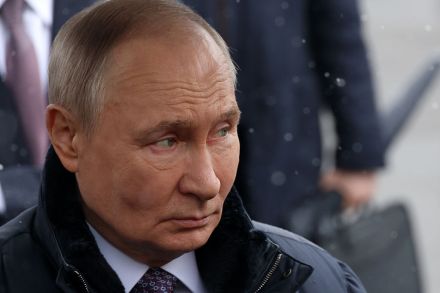
‘You want a ceasefire? I want your death,’ said Russia’s chief propagandist Vladimir Soloviev during prime time television, the camera zooming in on his face. His message was aimed at both Ukrainians and Europeans urging the Kremlin to stop the war. Soloviev, alongside a chorus of other Kremlin loyalists and military experts, has lately been gloating about how Vladimir Putin weathered western pressure and secured Donald Trump on his side. There will be no peace, they say, until Ukraine capitulates to Russian demands. Putin, as if to prove the point, announced yesterday that he had ordered the military to begin creating a ‘security buffer zone’ along the Ukrainian border – which is not quite the peace process Trump has been calling for.

Putin only wants to talk to one man

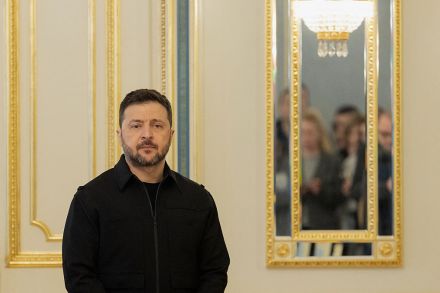
A week of diplomatic manoeuvring, ultimatums and psychological gambits has ended with a sadly predictable result: Vladimir Putin will not be coming to the negotiating table in Istanbul. Nor will he be sending a single cabinet-level negotiator. Instead the Russian delegation will be headed by former culture minister Vladimir Medinsky – the same low-level minion that Putin sent to the last round of talks in Istanbul in March-April 2022. Instead of a breakthrough, the great diplomatic effort led by Zelensky and the combined leaders of Europe have elicited nothing beyond a calculated insult from a defiant Kremlin.

Putin and Zelensky just want to appease Trump

Ceasefire then talks, or talks then ceasefire? This has emerged as one of the pivotal issues in the diplomacy around the war in Ukraine, even if one could question just how genuine both sides are in their respective positions. The proposed talks in Istanbul on Thursday may help clarify matters, but both sides seem more committed to appeasing the White House than talking peace. On Saturday, the usual suspects of Europe – the leaders of the UK, France, Germany and Poland – met in Kyiv and demanded Vladimir Putin call an immediate 30-day ceasefire, on pain of further sanctions. The usual pattern for peace talks is indeed a cessation of hostilities first, talks later, but there was no serious plan for negotiations in that span.

What does Putin want? Whatever he can get away with

The US general Mark Clark knew a thing or two about dealing with Russians. In the aftermath of the defeat of Nazi Germany, Clark commanded the American occupying forces in Austria. His Soviet opposite number, and nominal ally, was Marshal Ivan Konev. The two war heroes were tasked with pacifying the conquered and divided country at the dawn of the Cold War. ‘The Russians were not interested in teamwork,’ recalled Clark in his 1950 memoir, Calculated Risk. ‘They wanted to keep things boiling… They were accustomed to the use of force. They were skilled in exploiting any sign of weakness or uncertainty or appeasement. This was their national policy.’ Two things infuriated Clark more than anything.

Will the assassination of another Russian general change anything?

Friday morning, Lieutenant General Yaroslav Moskalik was heading out from his flat in Balashikha, a commuter town east of Moscow, when a car bomb exploded, killing him. There can be little doubt this is an operation by Ukrainian intelligence, another example of their capacity to launch skilful targeted assassinations in the heart of Russia. But will it actually change anything? That is more doubtful. It is hard not to assume this was another killing by the Ukrainians Moskalik was not a high-profile figure, but as deputy head of the General Staff’s Main Operations Directorate (GOU), he was a capable officer and potentially on a career track for even higher office.

Portrait of the week: Pope dies, EU cheese banned and trans women aren’t women

Home Sir Keir Starmer, the Prime Minister, no longer believes that a trans woman is a woman, his official spokesman said at a lobby briefing. He was asked about this six days after the Supreme Court of the United Kingdom ruled that a woman is defined by biological sex in equalities law. The justices unanimously allowed an appeal by the campaign group For Women Scotland in a case against the Scottish government. Sex-based protections, notably in the Equality Act 2010, the court found, only apply to people who are born in that sex, not to those whose gender is reassigned. The court emphasised that transgender people still have protections against discrimination and harassment written into the Equality Act. J.K.

There was Easter but no truce on Ukraine’s frontline

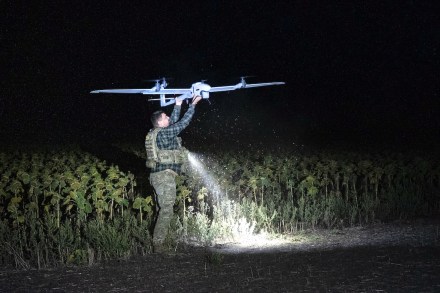
Kramatorsk, Donetsk region In a wooden Greek-Catholic church on the frontline of a warzone, encircled by red tulips and military vehicles, the priest’s sermon is woven through with the war – just like the soldiers’ Easter baskets, packed not only with paska bread, pysanky and sausages, but also with drones, waiting to be blessed. ‘This drone will be at work tonight – enforcing the ceasefire,’ a soldier whispers to me, smiling. The priest looks over a hundred soldiers in front of him, the church so packed that some must listen from the outside, and says that Ukraine will defeat evil, just as Jesus did. ‘The enemy is killing Him in our men and women, they are torturing Him in captivity, our mothers wash their faces with His tears,’ he says.

Portrait of the week: Trump’s tariffs, a theme park for Bedford and a big bill for Big Macs

Home In response to President Donald Trump’s global tariffs, Sir Keir Starmer, the Prime Minister, said: ‘This is not just a short-term tactical exercise. It is the beginning of a new era.’ He wrote in the Sunday Telegraph: ‘We stand ready to use industrial policy to help shelter British business from the storm.’ The FTSE100 fell by 4.9 per cent in a day, its biggest such fall since 27 March 2020. The government published a 417-page list of US products upon which Britain could impose retaliatory tariffs after 1 May. Figures from the Office for National Statistics showed that, although in 2023 the UK imported £57.9 billion of goods from the US (10 per cent of all goods imports) and exported £60.4 billion’s worth (15.3 per cent of all goods exports), it exported £126.

Gavin Mortimer, Colin Freeman, Lawrence Osborne, Lionel Shriver and Anthony Cummins

34 min listen

On this week’s Spectator Out Loud: Gavin Mortimer looks at how the French right can still win (1:48); Colin Freeman interviews Americans who have fought in Ukraine and feel betrayed by Trump (11:01); Lawrence Osborne details his experience of last week’s earthquake, as he reads his diary from Bangkok (18:38); Lionel Shriver defends traditional, monogamous marriage (24:07); and, Anthony Cummins examines media satire and settled scores as he reviews Natasha Brown’s Universality (31:13).  Produced and presented by Patrick Gibbons.

‘Trump is a coward’: meet the US soldiers who served in Ukraine

The Ukrainians of Alabama are not the kind of lobbyists whose visits strike fear into pro-Trump politicians in Washington. They are an ad hoc campaign group of expats and refugees who do their best to put Kyiv’s case politely to representatives of Congress and Senate. They do, however, have a secret weapon, in the form of an ex-US soldier from the town of Tuscaloosa, whose backstory is the kind the Beltway finds hard to ignore. Alex Drueke, 42, is an Iraq veteran whose ancestors served in every major American war since the War of Independence. Appalled at Vladimir Putin’s invasion, he joined Ukraine’s International Legion, only to be captured on his first mission, becoming the first American PoW in Moscow’s hands since Francis Gary Powers in 1960.

America’s involvement in Ukraine is finally being revealed

The US-led coalition to help Ukraine was always more than just a production line of arms deliveries to the Kyiv government. Much of what has been going on over the last three years has been secret: a covert collaboration between Ukraine and the West involving commanders at the highest level, and special forces out of uniform. Now the full extent of the extraordinary partnership between Ukraine and the West has been revealed after a year-long investigation by Adam Entous, a reporter at the New York Times.

Steve Witkoff is wrong to see peace in Putin’s eyes

Kyiv ‘It doesn’t surprise me that they’re abolishing the Ministry of Education,’ my old friend Dima told me. ‘Judging by what Steve Witkoff said on the Fox channel, neither history nor geography are taught in America.’ Team Trump’s energetic but purposefully misdirected attempts to push the negotiation processes forward have left Ukrainians in shock. Each day reveals new depths in the Oval Office’s inadequacy and we can only shrug when we hear things like ‘Putin is not a bad guy’ or ‘I feel that he wants peace’. President Volodymyr Zelensky said something similar after his election in 2019, when he promised to negotiate a peace deal with Vladimir Putin within 12 months or resign. Neither peace nor his resignation materialised.

Has the Assisted Dying Bill been killed off?

The reported decision to postpone the implementation of the Assisted Dying Bill until 2029 might, one must pray, turn out to be a form of legislative euthanasia. MPs, looking at the process, began to resemble a patient who, having first of all declared his wish to end it all, then begins to worry that it will not be as simple or painless as he had been led to expect. It is one thing to express a fervent wish to release people from unbearable suffering and quite another to frame safe procedures which involve the state, the judiciary and the medical profession in helping people kill themselves. It was a bad mistake, too, for Labour, under Keir Starmer’s leadership, to indicate that although MPs would have a free vote, assisted suicide was a modern, cool, Labour idea.

How many peacekeepers can Europe send to Ukraine?

We may look back to find Sir Keir Starmer partly defined by the phrase ‘coalition of the willing’. It is hard to fault the prime minister’s energy in rallying nations to implement a peace settlement in Ukraine, but there are issues to unpick. Who makes up the coalition? What is its role in Ukraine? What forces and capabilities will it need to fulfil that role, and where will it get them? The answers to these questions are both vague and subject to change, so let us see what we can establish. Only two months ago, President Zelensky told the World Economic Forum that enforcing a peace settlement would require a force of ‘at least 200,000… a minimum. It’s a minimum, otherwise it’s nothing.

Portrait of the week: Welfare war, gold prices soar and gang jailed for toilet heist 

Home Sir Keir Starmer, the Prime Minister, entertained 29 other national leaders online to seek a way of guaranteeing the future security of Ukraine. He then invited European defence leaders to meet in London. He spoke by phone to President Volodymyr Zelensky after the inconclusive conversation between President Donald Trump and President Vladimir Putin. John ‘Paddy’ Hemingway, thought to be the last Battle of Britain pilot, died aged 105. The government faced resentment in its own party against welfare cuts outlined by Liz Kendall, the Work and Pensions Secretary: the eligibility criteria for Personal Independence Payments would be tightened; incapacity benefits under universal credit would be frozen for existing claimants and those under 22 would not be able to claim it.

Ukraine is just one part of Trump’s Great Game

Washington D.C. For Donald Trump and Vladimir Putin, it’s a case of today Ukraine, tomorrow the world. In their much-hyped telephone call this week, the Russian leader didn’t appear to give much away: a step towards a sort-of ceasefire, a prisoner swap and a few other bits and bobs. But Putin knows that Trump wants a lot more than just an agreement on the Donbas. Settling the most significant conflict in Europe since the second world war is merely a prelude to a much bigger deal in the Holy Land, a truly historic arrangement that could satisfy the Donald’s desire to be thought of as a peace legend. That’s why Trump sent Steve Witkoff, his special envoy to the Middle East, to Moscow to pre-negotiate with Putin last week.