Ukraine

Biden must encourage Ukraine to negotiate

From our US edition

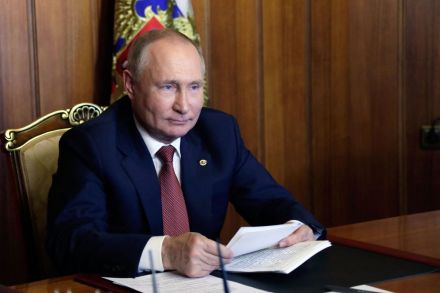
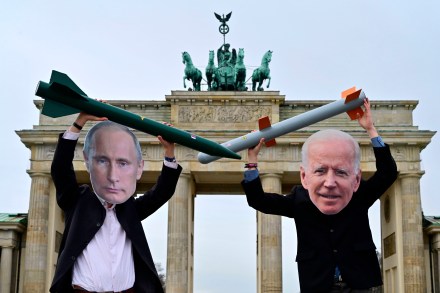
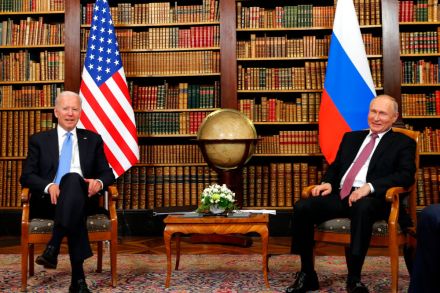
President Joe Biden spoke with Russian President Vladimir Putin today via video conference for just over two hours, the second time in six months that the two leaders have engaged in a face-to-face conversation. For Biden, the message he sought to deliver was strict and to the point: if you, Mr. Putin, go ahead and order a second invasion of Ukraine in nearly eight years, you can expect a raft of economic penalties that will negatively effect everything from Russia’s access to the SWIFT payment system to the ability of Russian banks to convert rubles into dollars. For the security-minded Putin, the meeting was an opportunity to press Biden on his principal demand: a written legal guarantee from Washington and the rest of NATO that Ukraine will not be invited into the alliance.
Why America needs a grand bargain with Russia

From our US edition

Russian is losing influence in a region it once dominated: Eastern Europe. Highlighting this newfound weakness are Ukraine and Belarus, two states that were once solidly in Russia’s sphere of influence and are now on the verge of completely falling away. In 2018, Ukraine enshrined in its constitution the goal of NATO membership and last year Belarus experienced massive pro-democracy protests; both of these events are in Russia’s eyes akin to westernization. The American foreign policy establishment acts as if Russia will ultimately accept being surrounded by Western-allied states. Instead, history shows that losing influence will cause Russia to lash out. If Ukraine moves toward NATO membership, it will incur a Russian invasion.

vladimir

Britain’s duty to the Black Sea

With Russian troops massing on Ukraine’s borders, the Black Sea is looking choppy. While that may seem to have little significance for us, in an age of globalised supply chains, international security commitments and Britain’s ‘tilt to the Indo-Pacific,’ that matters more than we might think. However, there is also an opportunity for the UK. In a report for the Council on Geostrategy that was published this week, I, James Rogers and Alexander Lanoszka, suggest that the Black Sea region is at risk of becoming an anarchic environment where insecurity reigns amid Russian domination. This matters.

Ukrainian annexation is already happening

Nato and the EU are fearing a Russian invasion of eastern Ukraine. They have reason to be concerned, given that Russia would not blink to escalate while the West is still fumbling around on how best to respond. Brussels and Washington are in firefighting mode, while Russia chooses the when and the where. Annexation in the east, meanwhile, is already happening — not by force but through civil and economic ties. Military mobilisation looks like a sideshow, a distraction from what is really happening already: a slow annexation of the eastern quasi-independent republics. The pro-Russian regions of Donetsk and Luhansk declared independence from Kiev in 2014 but have never been recognised by Ukraine.

Stop pretending Ukraine will ever be in NATO

From our US edition

Russian President Vladimir Putin is once again making the West nervous. And unlike his previous display of military might near the border with Ukraine last spring, Washington is concerned enough that it's sent CIA director (and former US ambassador to Russia) William Burns to Moscow for talks earlier this month. If Burns’s trip was meant to scare the Kremlin into halting additional military formations near the Russia-Ukraine border, then the confab didn’t work as planned. The Ukrainian government estimates that up to 100,000 Russian forces are now camped out in the area. American and European officials are sharing information with one another about various scenarios the Russians could be contemplating, the most dramatic being a second invasion of Ukraine in seven years.

ukraine

Is Russia preparing to invade Ukraine?

I can still hear the battlefields of eastern Ukraine. Just a mile or so from us, thousands of Russian troops were dug in; shells landed nearby. It was so cold my phone kept switching off. Seven years later, Ukraine is heading into another sub-zero winter. And the Russian troops have returned. Moscow has now massed more than 90,000 troops on Ukraine’s eastern border. Washington is briefing that intelligence suggests an invasion. Moscow says this is ‘alarmist’ and — as usual — accuses Nato of inflaming things. How did we get here? In truth the conflict never ended, it just froze. But it’s also true that the relationship between Kiev and Moscow has tanked this year.

Putin’s plan for Ukraine

Vladimir Putin’s message was as clear — and familiar — as his method. The Kremlin has begun another major build-up of troops along Ukraine’s border. The reason? Retaliation: last month, president Volodimir Zelenskiy flew to Washington to renew his plea that Ukraine be allowed to join Nato.  The massive show of force — the second this year — prompted US Secretary of State Antony Blinken to warn his European allies that Russia showed dangerous signs of invading its smaller southern neighbour.

Acorns and aliens: lunch with Vernon and the Ukrainians

Catriona and I were late for lunch at Vernon’s because I couldn’t get out of bed. The four of them — Vernon and the three Ukrainians — were sitting outside drinking in the sun when we walked up the path. The Ukrainians are renting Vernon’s other house. Nina is married to Andrij. Valentyna is Nina’s friend from their college days. They had been talking about me. ‘Talk of the wolf,’ said Valentyna. ‘That is what we say in Ukraine when we talk about someone and they come,’ she explained. ‘Quand on parle du loup,’ said Vernon, who is French-American, ‘on en voit la queue. That’s what we French say. When you speak of the wolf, you see its tail.

Letters: Don’t let the parish perish

Parish problems Sir: Emma Thompson draws attention to a serious problem in the Church of England (‘Power to the parish’, 25 September). Why are they trying to make it easier to close down parishes when the parish is where the people are to whom the church must minister? The parish is also the major funder of the C of E through the generosity of its many local donors. If you take away the incumbent, you take away a major portion of the income for both parish and diocese. One reason many parishes struggle to pay their parish share is because it has been swelled by the diocese to pay for the ever-growing bureaucracies. In most cases, parish share is at least 50 per cent greater than the actual cost of paying and housing an incumbent.

The return of Marty Peretz

From our US edition

Cockburn slummed it on Friday night at an elegantly appointed penthouse on Park Avenue in Manhattan. The host was Martin Peretz, a singularly influential intellectual entrepreneur for decades, notably as the publisher of the New Republic when it was worth reading. Peretz threw the party to celebrate the publication of From Odessa With Love, a new collection of political and literary essays by Vladislav Davidzon. A European cultural critic for Tablet, Davidzon, who moved to Ukraine in 2015 to found the Odessa Review, was in his element as Peretz’s protégé. Like Oscar Wilde’s, Davidzon’s credo appears to be that you can never be too overdressed or overeducated.

peretz

The Democrats damned Biden by impeaching Trump

From our US edition

Joe Biden is officially a victim of the new rules that every Democratic president is going to face from here on out. That's thanks to his party’s overzealously tying an impeachment around Donald Trump’s neck before the 2020 election. Both Biden and the Democrats are not going to like where those new rules lead when the Republican party, in all likelihood, takes back the House of Representatives in early 2023. Traveling back in time for a moment, remember that Donald Trump’s first impeachment was based on a third-party whistleblower who notified Rep. Adam Schiff of a phone call between Trump and Ukrainian president Volodymyr Zelensky.

biden

The battle for Eastern Europe’s energy sector

The fight to power eastern Europe is heating up. As Ukrainian president Volodymyr Zelensky prepares to meet Joe Biden at the White House, competition for Ukraine’s energy market is increasingly being framed as a battle between East and West. And as western investments into renewables vie with fossil fuel imports from Russia, the struggle for the nation’s energy supply is assuming a moral dimension reminiscent of the Cold War. Tens of thousands of panels at Ukraine’s huge Nikopol solar farm harvest the sun’s energy for nobody.

The EU is failing to stand up for eastern Europe

Will the EU stand up for eastern Europe? This question is now being asked by Ukraine following the announcement of a deal between Germany and the USA which paves the way for the completion of the controversial Nord Stream 2 gas pipeline between Russia and western Europe. The deal reached by Merkel and Biden may have placated critics in Washington, but it has failed to allay eastern European concerns over the security implications of the project. The state most affected by Nord Stream 2, Ukraine, has now requested urgent consultations with the European Commission and the German government, adding an air of legal weight to its complaints by invoking provisions of its ‘Association Agreement’ with the EU.

Inside a dictator’s playground

Armed soldiers guard the barbed-wire compound. Helicopters buzz around the parameter, drifting above families on tandem bicycles. Groups of giggling bridal parties flirt with camouflaged guards. They watch on, careful to spot the light-fingered. This is Mezhyhirya, the former playground of exiled Ukrainian president Viktor Yanukovych. The estate has been open to the public since the former communist fled to Russia in 2014 after a pro-western revolution. Adverts peddle the autocrat's theme park as a pleasant family day out: a museum, wedding venue, water park and zoo. It's as though a group of terrified architects asked Yanukovych, 'What style would you like? Classical? Alpine? Baroque?' and the reply had simply been, 'Yes' Top of the bill is the main house, a bizarre building.

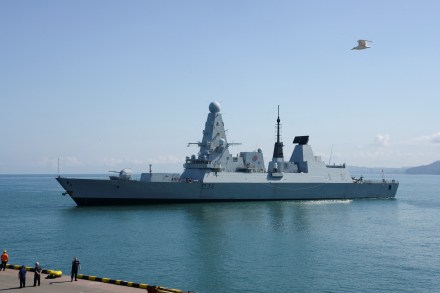
HMS Defender: What’s behind the Navy’s Russian incident?

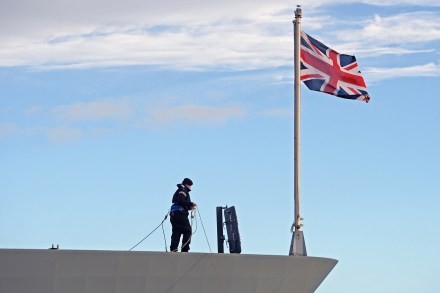
Assuming that reports are accurate, the world has just witnessed the most serious escalation between the UK and Russia since the poisoning of Sergei Skripal three years ago. Russian bombs and gunfire were reportedly discharged near HMS Defender, currently patrolling the Black Sea. The Kremlin has justified the supposed aggression by stating that the ship had strayed into Russian waters. The UK, meanwhile, has denied that any such incident took place.  https://twitter.com/DefenceHQPress/status/1407670812262518785?ref_src=twsrc%5Etfw Russia's justification, if indeed it did what it claims it did, is based on a false premise. The coastline in question does not, in fact, belong to Russia — Defender was positioned off the Crimean peninsula.

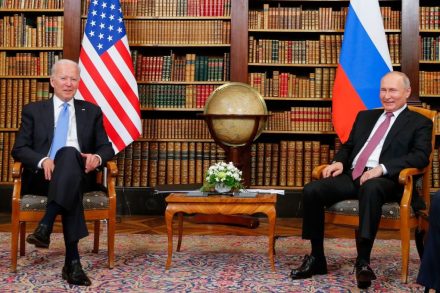
The Biden-Putin summit was a diplomatic nothingburger

From our US edition

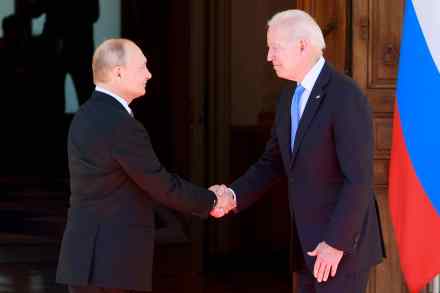
There was a time when summit meetings between the presidents of Russia and the US were world-historical events on which the balance of world peace rested. Today — not so much. Joe Biden and Vladimir Putin didn’t even manage to fill the five hours allotted for their talks in Geneva today in large part because they simply didn’t have much to talk about. Russia today threatens no US vital interests, commands no alliances or strategic resources and remains a world power in only two areas, both inherited from the Cold War — its large nuclear arsenal and its UN Security Council veto.

biden putin

Russian memoirs are prone to a particular form of angst

Perhaps the secret to understanding Russian history lies in its grammar: it lacks a pluperfect tense. In Latin, English and German the pluperfect describes actions completely completed at a definite point in the past... Early Russian had such a tense, but it was erased. This grammatical lack costs its speakers dear. Russian history never becomes history. Like a stubborn page in a new book, it refuses to turn over. Thus wrote the Soviet dissident and writer Igor Pomerantsev, my father, during his exile in London in the 1980s. When I returned to Russia in the 2000s I had the sense that beneath the Potemkin democratic veneer, Putin’s Russia was actually a case of history repeating, and retrod my parents’ route back to England.

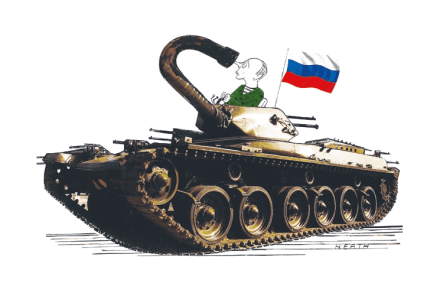
Putin steps back from the Ukrainian brink

After weeks building up forces in Crimea and close to the Ukrainian border — over 100,000, all told — Moscow is now saying it plans to pull most of them back to barracks. Is this a climb-down, mission accomplished, or mind games? Of course, we’ll have to see what actually happens. We’ve seen footage of tanks being loaded back onto railway cars and soldiers taking down tents, but until we have independent verification of substantial movements, we need to be cautious. After all, in 2008, Russian troops deployed to the Caucasus for major military exercises were just packing up when they were promptly ordered back to launch their five-day invasion of Georgia.

Von der Leyen’s latest diplomatic faux pas

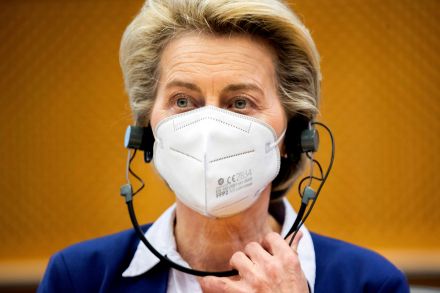
Ursula von der Leyen isn't particularly keen on diplomatic protocol. Earlier this year, in a bid to get EU hands on British bound vaccines, the Commission announced its intention to implement a hard Northern Irish border — without bothering to tell either Dublin or Belfast. (Naturally, that fit of international irreverence was blamed on a Brussels subordinate).  Then we had sofagate, which overshadowed what should have been a show of European strength in the face of Turkish President Erdogan. VdL instead decided to take the opportunity to make a fuss about a chair being offered to a man — despite Council President Charles Michel's superiority to her in the EU's order of precedence.

Biden and Putin sue for uneasy peace

In 2001, US President George W. Bush stared into Vladimir Putin’s eyes and said he saw his soul. Joe Biden, on the other hand, famously claimed to have told the Russian leader, 'I’m looking into your eyes, and I don’t think you have a soul.' Now the new incumbent of the Oval Office might have a second chance to check again in the flesh. On Tuesday, Biden held a rare and, by all accounts cordial, telephone call with his counterpart in Moscow to discuss the increasingly tense situation on the border with Ukraine. For months, Kiev's forces in the Donbass region have clashed with troops loyal to two Russian-backed breakaway republics, with numerous reports of drone strikes and civilian casualties.