Ukraine

Europe: the little kids’ table at the Ukraine talks

From our US edition

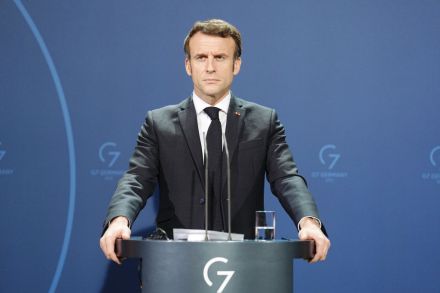
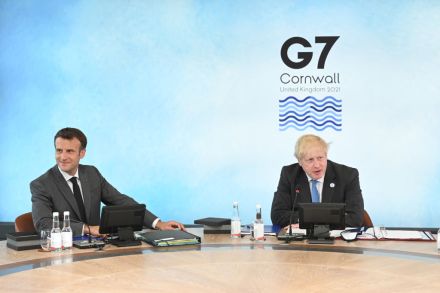
While American and Russian officials are yelling at one another in the UN Security Council chamber, another international actor has found itself at the little kids’ table: Europe. It's possible the phrase “little kids’ table” is too harsh. To be fair, French president Emmanuel Macron is at least in direct communication with Russian president Vladimir Putin and urging his European colleagues to formulate a joint European negotiating position on the Ukraine question. France is also a chief mediator of the Normandy Format, which seeks to resolve the eight-year conflict in Ukraine’s Donbas region. But Macron is largely an outlier on his own continent.

Germany’s diplomatic game doesn’t make sense

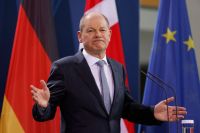
Amidst the heavy criticism of Germany’s lack of commitment in the Ukraine crisis, the German foreign minister Annalena Baerbock argued in a speech to the German parliament on Thursday that alliance systems were a bit like a football team. ‘You don’t need 11 centre-forwards who all do the same thing; you need 11 players who get on with one another and who, most importantly, have the same game plan in mind.’ In other words, western alliance systems such as Nato should assign different roles and responsibilities to member states that are best suited to their individual strengths and weaknesses – horses for courses, to stay within the sporting imagery.

The dangerous alliance between Russia and China

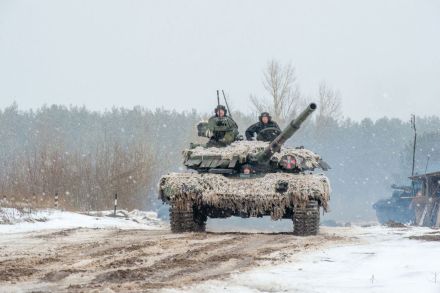
The growing alliance between Russia and China is something we shouldn’t lose sleep over, their long history of mutual suspicion runs too deep – or so we are told. Such a view is too complacent by half. China and Russia’s mutual hostility towards the West and their opportunism also run deep. And even if their burgeoning alliance is a marriage of convenience, it is still a very dangerous one. As Russia has massed more than 100,000 troops near the Ukrainian border, the nightmare for western strategists is that Vladimir Putin’s actions are being coordinated with those of Xi Jinping in and around the Taiwan Strait, where China’s military intimidation of Taiwan has reached new levels of intensity.

Save Ukraine by admitting Georgia into NATO

From our US edition

As the Ukraine crisis continues to develop, it has become impossible to avoid mentioning Georgia and its relations with the West. This is not only due to the similarities in the two countries' geopolitical circumstances, but also because Georgia is explicitly mentioned with Ukraine in President Putin's demands to the West to forego any future NATO expansion. Like Ukraine, for years, Georgia has sat in the uncomfortable position of being pro-Western without enjoying the protections afforded by membership in both NATO and the European Union. Yet a country that was once a staunch Western ally has become mired in accusations of authoritarianism, behind-the-scenes governance, and covert pro-Russian sentiment. Georgia and Ukraine have occupied a unique position in the post-Soviet space.

vladimir putin alexei navalny

Read: Tucker Carlson on Ukraine, ethno-nationalism and M&Ms

This week, Tucker Carlson spoke to Freddy Gray on the latest episode of Spectator TV. You can watch their conversation here, or read it below: Freddy Gray: It’s a great honour to be joined by Tucker Carlson, who is the host of Tucker Carlson Tonight, which is a show on Fox News, but it’s also available in the UK or through the Fox News app. We’re going to continue to be talking about Ukraine. And Tucker, I think it's fair to say you've encountered quite a lot of criticism in recent days because as far as I can figure out, you are the only mainstream host who is sceptical of the idea that President Biden needs to interfere militarily if Vladimir Putin invades Ukraine. And for that, you have been called a Russian spy and a Russian asset.

No one should celebrate the decline of America

Where is America? Like an old friend who hasn’t been in touch for years, you wonder if its silence is lost interest or if it just got too busy. America used to be everywhere, the dominant voice in world affairs, a desirable friend and a much-feared enemy. It intervened (and, yes, interfered) whenever it felt its interests or values were threatened. Often its involvement was unwanted and sometimes it didn’t improve matters, but there was a reliable solidity to it, a sturdiness born of military might, prosperity and national self-belief. It could be admired or reviled, but it had to be reckoned with. America shies away from it all now. Observe how Joe Biden alternates between stark warnings and unintelligible ramblings on the prospect of a ground war in Europe.

The phoney war: what’s really going on between Boris and Putin

What a lucky coincidence. At the start of a week that could see the ignominious collapse of Boris Johnson’s premiership, an opportunity to go fully Churchillian has appeared out of the blue. In an unprecedentedly detailed and direct memorandum, the British Foreign Office announced that it had exposed Russian plans to mount a coup in Kiev. Johnson was quick to back the alarming news with a grave warning to Vladimir Putin. ‘The intelligence is very clear that there are 60 Russian battle groups on the borders of Ukraine, the plan for a lightning war that could take out Kiev is one that everybody can see,’ Johnson told reporters on Monday. ‘We need to make it very clear to the Kremlin that that would be a disastrous step.

Letter from Odessa: life on the front line of a new Cold War

‘God Save the Queen’ trended on Ukrainian social media over the weekend. ‘As a Brit in Kiev I have never felt so popular,’ one expat tweeted. Four hundred miles to the south, however, on the once grand, now shabby streets of Odessa, the enthusiasms of the Twittersphere seem remote. There is little optimism that Britain, or indeed any other western country, can do much to halt the tidal wave that locals fear Russia is about to release on them. At first blush, life might look normal. On the main pedestrian street, Deribasovskaya, horsemen offer children rides on ponies with pink saddles. But in the city’s cafés, markets and large open squares, there is gnawing fear and growing unease. ‘How can we plan for tomorrow?

Portrait of the week: Unease in Ukraine, tensions in No. 10 and hamsters escape Hong Kong

Home Boris Johnson, the Prime Minister, told the Commons that Britain was prepared to send troops to protect Nato allies in Europe if Russia invaded Ukraine. The Foreign Office named Yevhen Murayev, a former Ukrainian MP, as a candidate that President Vladimir Putin of Russia was plotting to install in Ukraine. About half the staff at the British embassy in Kiev would come home. The Queen took a helicopter from Windsor Castle to Sandringham, where she is expected to stay for the 70th anniversary of her accession on 6 February.

‘Kamala for SCOTUS’ is a distraction Biden wants

From our US edition

No, Kamala Harris will not be Joe Biden’s nominee to replace Justice Steven Breyer when he retires from the Supreme Court later this year. “Imminent Supreme Court retirement?” ejaculated CNN legal analyst Jeffrey Toobin earlier this month. “Longshot: VP Kamala Harris,” he suggested. NBC scooped on Wednesday that Breyer would step down at the end of this term — and more cranks joined the Kamala chorus. “Kamala Harris for the Supreme Court. #KHive She cannot win election with these numbers (yes it’s unfair, but Kamala is a pragmatist) she’s young, she’d be a great justice — and she’d spend a lifetime on the bench,” tweeted Louise Mensch. “@amyklobuchar for Vice President.” “Straightforward from here,” wrote Bill Kristol.

scotus kamala
ukraine

Don’t go to war with Russia over Ukraine

From our US edition

With shocking speed, talk in Washington has shifted from disunity among the Democrats and Joe Biden’s unhappy first year to possible war in Europe. The Putin government is reinforcing units poised to invade Ukraine. Washington is sending weapons to Kyiv. The United States and United Kingdom have begun to evacuate embassy personnel. President Biden is considering sending additional troops to garrison NATO member states. But for what? Why is the United States so thoroughly entangled in a conflict not its own? Not for reasons of history Throughout most of America’s relatively short existence, Ukraine was part of either the Russian Empire or Soviet Union.

Russia may very well invade Ukraine

From our US edition

The United States is doing what it can to deter Russian President Vladimir Putin from ordering another invasion of Ukraine. Despite the cool and collected persona that Ukrainian President Volodymyr Zelensky is trying to present to his people, the White House still believes Russian military action is "imminent.” The Biden administration recently put 8,500 American troops on alert for deployment to Eastern Europe. Washington has spent the last several weeks trying to convince the Kremlin that any incursion into its neighbor would be costly. On Tuesday, the US sent a third shipment of lethal equipment to the Ukrainian military, including 300 additional Javelin anti-tank missiles. This comes on top of the 200,000 pounds of lethal aid that had already been provided by Washington.

Russia is the lost great power

From our US edition

Lost in the endless debate about whether Russia will invade Ukraine is the real reason that Moscow — armed with nuclear weapons and one of the most advanced militaries on the planet — feels so threatened by its neighbors, the NATO alliance, and ultimately the United States. While the expansion of NATO in the 1990s plays a big role, it is Russia’s everlasting internal debate about its place in the world that is the real source of tension. It's a historical black hole no one wants to get sucked into, but unless resolved it has the potential to be a source of armed conflict the likes of which Europe has not witnessed since World War II. Geography and history are both a blessing and a curse for Russia.

Will the old world order end in Ukraine?

From our US edition

As Russian troops encircling eastern Ukraine are preparing to attack, western leaders are bracing for a Russian invasion while struggling to maintain a united front. Following the fallout of peace negotiations and numerous deterrence measures that appear to be inconsequential, French President Emmanuel Macron has called on the EU to conduct its own dialogue with Russia and forge its own plan for security and stability. It’s an indication that most European nations are tired of being sidelined during negotiations and reluctant to impose harsh sanctions against Russia, especially since it could risk a gas shortage that would impact recovering European economies.

chinese meddling

The failure of hashtag diplomacy

From our US edition

The adults are back in charge! The State Department and its secretary Antony Blinken are tweeting out Spotify playlists! Spokesman Ned Price is sending hashtags and emojis in support of Ukraine! Meanwhile, nonessential American personnel have been ordered to evacuate their posts in Kiev. But surely they'll find a good hashtag to use on their way to the helicopters and airports. In all seriousness, this is a dangerously unserious administration that appears to be attempting to TikTok their way out of a crisis. Here’s hoping Vladimir Putin is checking his Snapchat for updates from Jen Psaki and the Jonas Brothers. What the Biden administration is trying to do is to recreate the wonder of the Obama years and their way-too-online Millennial social media strategy.

What does Russia hope to achieve in Ukraine?

From our US edition

President Biden said this week that a “minor incursion” of Russian troops into Ukrainian territory would not bring about the severe economic sanctions the White House threatened in response to a “significant invasion.” His counterpart in the Kremlin can probably hardly believe his luck. Effectively, Vladimir Putin has been given carte blanche by the West to launch military operations against Ukraine. Of course, the fact that there is no definition of what constitutes a “minor incursion” gifts the White House a preemptive get-out clause from having to truly confront Moscow.

ukraine

Can Putin ever be stopped?

From our US edition

Vladimir Putin has been the most effective practitioner of Realpolitik for the past two decades. With an economy about the size of Italy’s, and just as corrupt, he has accomplished his most ambitious goal: returning Russia to the status of a Great Power. Now he’s thrown his chips on the table once more, launching a massive troop build-up on the border with Ukraine and sending still more into Belarus (for “joint exercises”), positioning them just north of Ukraine’s capital of Kyiv. Although the numbers don’t appear large enough to conquer all his neighbor’s territory, they are large enough to push through the eastern region (the one bordering Russia) and form a land bridge to Crimea, which Russia conquered in February 2014.

putin

In the pipeline: would Germany side with Russia in a conflict?

If Russia were to invade Ukraine, would Germany side with the Russians? For most of our post-war history, that would have been an absurd question, but things are changing fast in Europe. In the wake of recent events, it would not be irrational for Vladimir Putin to bet that if push came to shove, he could count on German neutrality — or even support. The Ukraine crisis continues apace, with up to 100,000 Russian troops now gathered near its border. The obvious question is: what would happen if Putin were to invade? It would split the EU, exposing its energy dependence on Russia, ruin what is left of transatlantic relations and force Germany to choose sides.

Celebrating Konstantin Paustovsky — hailed as ‘the Russian Proust’

When is a life worth telling? The Soviet writer Konstantin Paustovsky’s six-volume autobiography The Story of a Life combines high drama with heroic misadventure in a comico-lyrical amalgam of history and domestic detail that enchants from start to finish. Why Paustovsky is not better known outside his native Moscow is a mystery. In the mid-1960s he was nominated for the Nobel prize. (He was pipped to the post by Mikhail Sholokhov, the author of the obediently propagandist And Quiet Flows the Don.) Denounced as a ‘counter-revolutionary’ by the Soviet Writers’ Union, Paustovsky belonged to that select band of writers who inspire true fandom.