Ukraine

Yes, Russia could use nuclear weapons

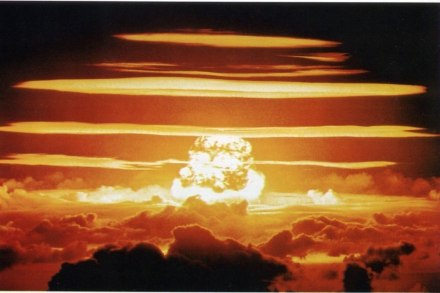
“Nuclear war is part of our strategic culture. Yes, we would start one if our homeland, our way of life, was threatened, absolutely. Why wouldn't we?” That’s what a retired Russian diplomat told me on the sidelines of a track-two dialogue between US, Russian and Chinese experts back in 2012. And to be honest, for several years, I didn’t believe him. I took his comments as bragging, atomic machismo, if you will. The context of the conversation was a response to a question to my Russian colleague on the subject of Moscow’s nuclear weapons doctrine and thinking. Russia for several years has believed in the concept of escalating nuclear tensions to deescalate tensions, or what defense scholars call “escalate to deescalate.
Biden’s confusion over sanctions

Russia’s military aggression against Ukraine requires a swift and effective Western response. But according to neoconservative and liberal internationalist pundits like columnist Walter Russell Mead, the invasion marks nothing less than an assault on the “world order” akin to Nazi aggression at the opening of World War II. “Not since Hitler attacked the Soviet Union in 1941 has a European leader committed an act of aggression as brutal or as nakedly cynical as Mr. Putin’s unprovoked attack on Ukraine,” Mead writes in the Wall Street Journal.

War in Ukraine has divided Putin’s court

From our UK edition

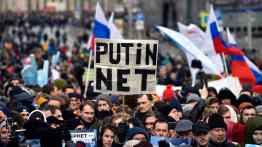
It is striking how little enthusiasm there is in Russia for Vladimir Putin’s war in Ukraine – but for some, it has become an opportunity to steal a march and curry favour with the boss. Thousands of Russians have been out on the streets protesting against the conflict, despite the heavy-handed and unstinting response of the security forces. Journalists and experts, sports stars and cultural icons have been making their opposition clear as well. Even those within the system, including senior diplomats and businesspeople, aren’t trying to hide how far they were blindsided by Putin’s decision to invade, and how little they appreciated it.

The end of the post-Cold War era

From our UK edition

Russia’s invasion is not just an effort to retake what was once part of the Soviet Union. It is a push to use military force to overturn the post-Cold War settlement. In fact, the invasion cannot be understood without first understanding what that settlement looked like and why Russia wants to overturn it, despite the high costs. In the 1980s, when Vladimir Putin was a KGB agent in East Germany, the Soviet Union had become an arteriosclerotic state. It was unable to keep up with the US in high-technology arms, unable to legitimate its rule with Marxist-Leninist ideology, and unable to afford the cost of maintaining its empire in Eastern Europe.

Our present bewilderment

Bewilderment, a novel by Richard Powers issued last September, has been praised to high heavens by Oprah Winfrey, Barack Obama, Naomi Klein, and reviewers at NPR, the New York Times, the Washington Post, and The New Republic, among others. This ought to be enough to warn any sensible reader to stay far away from its pages and to resign promptly from any reading group that nominates it for collective perusal. But I am not always sensible. The title lured me, for what better word to describe our Zeitgeist?

bewilderment

A new Europe is emerging from this crisis

From our UK edition

With every hour that Kiev holds out, the geopolitics of Europe changes more. Germany, which so values its prohibition on sending weapons into warzones, has just announced that it is sending 1,000 anti-tank weapons and 500 Stinger missiles to support the Ukrainian forces. I expect that defence spending will rise considerably in the coming years Germany is also allowing other Nato members to export arms with German-made parts to Ukraine — which will make a material difference to the supplies that the Ukrainian government receives. Yesterday evening, it was announced that Russian banks are going to be cut off from Swift.

Expelling Russia from Swift would be a massive economic shock

From our UK edition

If Russia is expelled from the Swift banking messaging system, that would be serious economic warfare against Putin. Because Thursday’s decision by the US Treasury to make it almost impossible for Russia’s two biggest banks, VTB and Sperbank, to do any business with US institutions or use US infrastructure to process dollar payments will potentially disrupt tens of billions of dollars of Russian financial transactions every day, much of it related to its huge oil and gas industry. This combined prohibition on international transfers by Russian banks and the US embargo on dollar clearing for them would in theory generate a massive negative economic shock for Russia, that would rapidly impose serious hardship on Russian people.

‘This is our land. This is our history’: my appeal to the people of Russia

From our UK edition

I come today with an appeal to all citizens of Russia. Not as President. I am appealing to the people of Russia as a citizen of Ukraine. We share more than 2,000km of border. Around it, today, is your army: almost 200,000 soldiers; thousands of military units. Your leadership has approved their movement towards us. Towards the territory of another country. This step can become the start of a huge war on the European continent. The whole world is talking about what can happen any day now. A reason can appear at any moment. Any provocation. Any spark. A spark that has the potential of burning everything down. You are told that this flame will bring freedom to the people of Ukraine. But the people of Ukraine are already free. They remember their past and are building their own future.

It’s time for Germany to stand up to Russia

From our UK edition

In his novel The Loyal Subject, which appeared on the eve of the first world war, Heinrich Mann, the brother of Thomas, satirised Wilhelmine Germany as a hotbed of chauvinistic nationalism. The servile nationalism that Mann mocked could not be further from the ethos of the Federal Republic of Germany today. So pervasive is Germany’s eirenic disposition that on Thursday, as Russian president Vladimir Putin ravaged Ukraine, Lieutenant General Alfons Mais, the head of the German army, took the unusual step of turning to LinkedIn to ventilate his exasperation at the impotence of his own fighting forces. ‘In my 41st year of peace-time service, I would not have thought that I would have to experience a war,’ Mais stated on Thursday.

Ukrainians are living through a hell on earth

From our UK edition

‘Live long enough and you watch everyone go mad,’ the man said to me gloomily. It was around 2009, and I was listening to a former senior civil servant tell me what he had learned from a life spent in diplomacy. I'm not sure even he envisioned seeing proper madness in a world leader until Putin’s televised hour-long pantomime earlier this week. Putin over those 60 minutes was a man marinating in rage and possessed of a worldview built on paranoia and ego. The performance culminated in him recognising the ‘republics’ of Donetsk and Luhansk in eastern Ukraine. The moment he did this he smashed the Minsk peace process designed – theoretically at least – to bring about resolution to the Russia-Ukraine crisis.

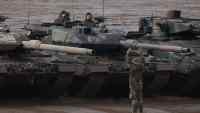
Putin’s invasion has exposed the frailty of Europe’s armies

From our UK edition

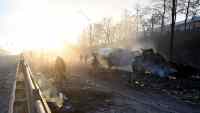
Putin’s forces are currently steamrolling Ukraine’s defences, with Russian troops circling the capital and invading from the south and east of the country. Meanwhile European leaders, neutered by their military weakness, have been unable to do little more than offer pointless sanctions and statements of solidarity. As Russian troops streamed across the border, European Commission President Ursula von der Leyen condemned the ‘unprecedented military aggression.’ When the Kremlin moved to recognise the Donetsk and Luhansk oblasts as independent states, the response in Brussels was to pass a fresh package of sanctions.

No, China isn’t about to invade Taiwan

I have a medal for winning the Cold War. And I'm not alone — they were awarded to all members of the military and federal civilian employees who served during the Cold War. That included me, at the tail end, with the State Department. Ironically, my so-called Cold War service was in Taiwan. I probably should return the thing; the Cold War is far from over. Part of the Cold War's real conclusion is playing out in Ukraine in real time. Is Taiwan, another hanging chad from that era, next? Is President Xi watching a weakened America giving in to the Russians and seeing his chance to seize Taiwan? Nope. Taiwan is not Ukraine is not Taiwan. The two places only exist next to each other in articles like this one because both are the results of American policy.

Europe’s ‘green’ transition put it at Russia’s mercy

Germany’s “halt” on the certification of the Nord Stream 2 pipeline on Tuesday is a classic case of too little, too late — a fact made all the more painfully clear in light of Russia’s invasion of Ukraine. Oil and gas still flow through Nord Stream 1 and many other Russian pipelines to Europe, and the continent has no choice but to keep importing the fossil fuels that finance Vladimir Putin’s offensive. We all saw this coming. Europe’s supposed “green” energy transition disregarded energy security and common sense, and Ukraine is now paying the price. The world will never tackle climate change if it's in a constant state of geopolitical energy insecurity, relying on authoritarian regimes like Russia and China to meet its basic needs.

Are Russians turning against Putin?

From our UK edition

One of the reasons why I judged — wrongly — that Vladimir Putin would not order an all-out invasion of Ukraine was the likelihood of a protracted war. But another was the possibility of popular protest in Russia, which could have potentially destabilising effects on the Kremlin. After sporadic protests in the hours immediately after the invasion, all of them ending in arrests or dispersal by police — citing Covid restrictions — Thursday evening sprang a surprise. Young people came out in their hundreds with homemade placards saying 'nyet voine', no to war, not just in Moscow and St Petersburg, where political engagement tends to be higher, but in nearly 50 towns and cities across Russia. https://twitter.com/ragipsoylu/status/1496905869983768581?

Macron’s posturing as a global statesman will get him re-elected

From our UK edition

It is bordering on tasteless amidst the horror of war in Europe to question the political impact of the conflict on the first round of the French presidential election in 44 days. But it’s naïve to imagine that such thoughts are not occurring to the politicians themselves, not least Emmanuel Macron. As I write this on Friday, Macron has still to declare his candidacy for the presidency. He’s been letting his opponents on the right and left fight it out amongst themselves for as long as possible. He could declare tomorrow at the Salon d’Agriculture, where he is scheduled to make the customary presidential appearance. Or maybe not.

Is Britain prepared for the cost of sanctions?

From our UK edition

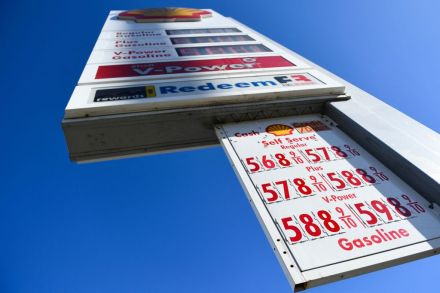
Sanctions hit both sides: this is a point that Joe Biden has made to Americans and Olaf Scholz is making to Germans. But Boris Johnson is not (so far) talking about the economic implications of this war. They will be — and in fact, already are — profound.  When Russian tanks moved into Ukraine, the price of gas for next-day delivery in the UK shot up 40 per cent. A study by Investec yesterday suggested this means typical household energy bills — already expected to approach £2,000 in April — could end up closer to £3,000. Quite a hit for a country already facing a cost-of-living crisis. And this is just one way in which the conflict could impact household budgets.

Will the West shut Russia out of Swift?

From our UK edition

You may never have heard of the Society for Worldwide Interbank Financial Telecommunications — or at least not by its full name. Even if you had you may have mistaken it for a fairly inconsequential trade body that holds rather dull conferences in hotel function rooms in places like Frankfurt.  Yet it finds itself at the centre of the West’s response against Vladimir Putin. Swift, as it is otherwise known, is the system by which banks communicate in order to undertake cross-border financial transactions. This morning the Ukrainian foreign minister pleaded with the West to cut off Russia from the system. Britain would like to do just that, as would some of the smaller EU states.

Harry and Meghan speak out on Ukraine

From our UK edition

Amid all the gloom, a sliver of light has emerged from the rubble of Ukraine. As Sun-Tzu said: 'In the midst of chaos, there is also opportunity' – and some have certainly taken the opportunity to heap ridicule on themselves. Steerpike has cast his eye over the most ridiculous, self-involved and outlandish takes on Russia's invasion as celebrities and politicians trip over themselves to proclaim their thoughts to the world. Harry and Meghan No crisis would be complete without the right royal duo involving themselves. The pair released an online statement claiming that they 'stand with the people of Ukraine' – not literally of course, given that they live in an £11million mansion in Montecito, California, some 6,000 miles away from Kyiv.