Ukraine

Putin is making the EU great again

The Europeans have been jolted awake from their deep Pax Americana slumber, when the continent was largely content to eat the spoils of economic prosperity and allow the United States to do the heavy lifting on all things security. And we have Vladimir Putin to thank for it. Russia’s nearly week-long invasion of Ukraine has shocked the conscience of many who believed Europe would never return to the dark days of large-scale land warfare.
No, Scottish independence is not like the war in Ukraine

From our UK edition

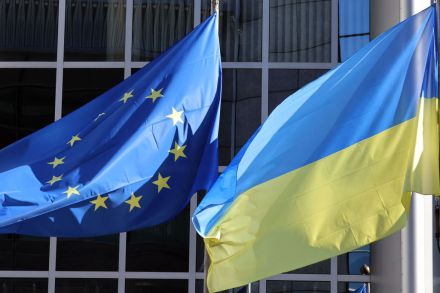
Perhaps it’s the absence of any oppression of their own country that compels Scottish nationalists to latch onto the oppression of others. On Monday, Michelle Thomson, an SNP MSP, retweeted news of Ukraine’s emergency application for EU membership, adding: ‘Delighted for Ukraine. It’s [sic] just goes to show what political will can achieve. Remember this Scotland!’ The SNP’s current position is for Scotland to secede from the UK then apply for membership of the EU, a process nationalists have previously suggested Brussels would fast-track. Thomson came in for a barrage of criticism and later deleted the tweet, admitting it was ‘insensitive’. She is taking all the flack but she’s hardly alone in dabbling in such rhetoric.

Britain is paying the price for its fracking panic

From our UK edition

Between 1980 and 2005, the UK produced more energy than it needed. Today, we import more than a third of our energy and over half of our natural gas. Households are facing an increase in their annual tax bills from £1,500 to an eye-watering £3,000. While the Business Secretary may have tweeted this week that the current situation is a matter of high prices rather than security of supply, families already struggling to heat their homes are unlikely to tell the difference as they decide whether to heat their homes or pay for food. This was never a foregone conclusion. A decade ago, the US shale gas revolution was well underway, with fracking creating hundreds of thousands of jobs and driving down gas prices.

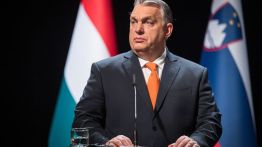
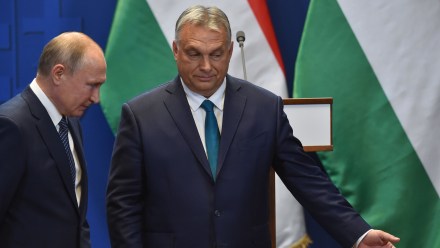
Even Hungary has soured on Vladimir Putin

As Russian tanks rolled across the Ukrainian border, the front page of the Hungarian tabloid Pesti Hírlap revived an old rallying cry to capture the national mood. “Ruszkik haza!” (“Russians go home!”) was the headline, with Budapest 1956, Prague 1968, and Kyiv 2022 listed below the fold. The line was borrowed from graffiti scrawled on Budapest street corners during the 1956 anti-Soviet uprising, a heroic but doomed effort that has since entered into Hungarian national lore. Is it 1956 all over again? Despite some eerie parallels, the political geography of Europe has changed considerably since the bad old days of the Cold War. Budapest is two hours from Vienna by train and Prague is actually further West than the Austrian capital.

llya Kaminsky

Ilya Kaminsky’s poetry in a time of war

There is currently a poem going viral on Twitter. “We Lived Happily During the War” is by the Ukrainian-American poet Ilya Kaminsky, and it is the first poem of his prize-winning collection Deaf Republic (2019). It is easy to see why it feels particularly relevant: Kaminsky was born in the former Soviet city of Odessa, which is now under attack from Russia. The poem opens: “We Lived Happily During the War” And when they bombed other people’s houses, we protested but not enough, we opposed them but not enough. It is a heart-breaking meditation on the way normal life continues despite crises. The speaker describes how “I took a chair outside and watched the sun.” But he ends with a plea: “we (forgive us) / lived happily during the war.

Yvette Cooper’s refugee record

From our UK edition

As the Ukraine crisis rages, Labour has chosen to focus on the issue of visas for fleeing Ukrainian refugees. Shadow Home Secretary Yvette Cooper went for her opposite number Priti Patel on it in Parliament yesterday, demanding 'clear answers' for those 'urgently seeking sanctuary or to rejoin relatives.'  It looks like Patel will now be forced to give a ministerial statement today, updating the government's position on the issue: a win for Cooper and those demanding more action. Still Mr S couldn't help but think back to Cooper's own record when it comes to refugees.

taiwan

What does Ukraine really mean for Taiwan?

No one should think that Vladimir Putin’s invasion of Ukraine means that Xi Jinping will decide to use force against Taiwan anytime soon, if ever. China is not Russia, nor Taiwan Ukraine. Yet neither should policymakers presume that Beijing will not be influenced by what happens on the other end of Eurasia. Washington must consider whether and how Putin’s aggression has raised the stakes in defending Taiwan from the People’s Republic of China. At the least, US strategists will seriously have to assess whether a global environment in which norms of international behavior are regressing may serve to spur Beijing to military action that once seemed unlikely.

The GOP isn’t quitting on Trump

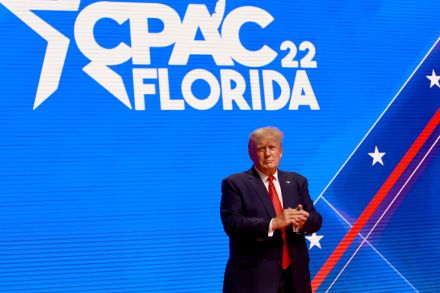
Will he or won't he? Americans tired of the rampant speculation are surely having a relief-filled two months. First Tampa Bay Buccaneers quarterback Tom Brady responded to a hasty ESPN report by announcing his retirement from the NFL. Then, former president Donald Trump told a roaring crowd at CPAC that he intends to run for America's highest office a third time. "We did it twice, and we’ll do it again,” Trump said. “We’re going to be doing it again." Trump's announcement is a gut punch for other 2024 contenders who secretly hoped he'd step back and play kingmaker.

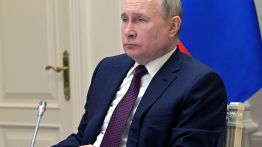
Putin’s endgame is preserving ‘his’ Russia

Vladimir Putin’s war in Ukraine does not appear to be going well, and the Russian economy is about to experience the full force of Western sanctions. American social media is already in a celebratory mood. But caution is in order — it’s never smart to underestimate your opponent. Putin was expecting sanctions, and he and his war planners could not have discounted Ukrainian resistance, even if they underestimated its intensity. Maybe they did expect the invasion to be a cakewalk and are taken aback by how difficult it’s proved to be in just these first few days. But as of now the invasion still seems to be on its timetable, and its military objectives are achievable. Russians are surrounding Kyiv.

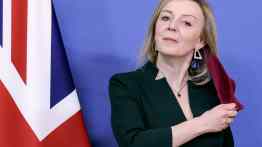
Liz Truss is having a good war

From our UK edition

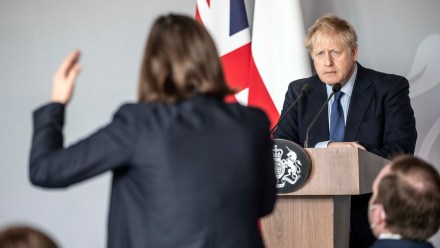
Liz Truss gave a striking statement in the Commons this afternoon on the action the government was taking to respond to the Russian invasion of Ukraine. It contrasted to the approach taken by some of her colleagues, because it contained a number of admissions about the impact of this action. For the first time, the Foreign Secretary stated that Britain would 'have to undergo some economic hardship as a result of our sanctions'. This has been implicit over the past few days, but Truss was the first to say it clearly. She added that 'our hardships are nothing compared to those endured by the people of Ukraine', and also warned that the war could last months or years.

‘Staying Switzerland’ on Ukraine is impossible

From our UK edition

The striking thing about the financial sanctions on Russia is not their severity, but just how many countries are joining in the effort. Switzerland has today announced that it will adopt the EU sanctions on Russia, particularly significant because it has been the biggest recipient of private transfers by Russians in recent years. The fact that such a traditionally neutral country is imposing sanctions will deepen the wedge between Putin and the rest of the ruling elite. Meanwhile in Asia, Japan, South Korea and Singapore have signed on to the economic measures on Russia.

volodymyr zelensky ukraine invasion

The Ukraine invasion is the first social media war

The Russian invasion of Ukraine is not only the largest European land conflict since the 1940s — it’s also the first for the TikTok and YouTube generation. As videos pour in across Twitter and Instagram and other social media platforms are leveraged for credit or propaganda, it’s become evident that we are in a brand new era, much like the one that arrived with twenty-four-hour cable news coverage of the US invasion of Iraq in 1990. Back then it was grainy night vision images of patriot missile launches and target explosions that dazzled homes all over the United States.

Will Britain welcome Ukrainian refugees?

From our UK edition

Immigration used to be the most-discussed issue in British politics. It gets less attention these days, for reasons too varied to go into here. But even though some voters have been focused on other things, there have been significant changes. Some have been good. Others bad. And the bad ones are about to collide with the Ukrainian crisis. The positive bits of the immigration story have mainly been around regulated, economically-driven migration. Britain’s post-EU migration regime is, well, not as bad as it could have been. It’s not as easy as it was for EU nationals to come here to work, but it’s a bit easier for non-EU nationals to enter. The overall effect has been less a tightening of entry rules than a rebalancing.

takes

And now the dumbest takes about Ukraine

If hot takes brought peace, mankind would never know war again. At least, that’s the impression one is left with after spending time on Twitter during Russia’s horrific invasion of Ukraine. Some social media users seem to operate under the understanding that they are legally required to put their first — and often worst — opinions immediately onto the internet for all to see. Many of these tweets reflect the understandable human tendency to grasp at an explanation for terrible events. Laurie Garrett, a Pulitzer Prize-winning writer who is considered an oracle of sorts on the coronavirus pandemic, put forth an interesting theory. “It’s been suggested that #Putin isn’t thinking properly, perhaps due to long #COVID19,” she wrote.

vlad invader empire

How to turn the tide against Russia

The abrupt eruption of the worst military conflict in Europe since World War Two has naturally left the world in a state of shock, perhaps only comparable in living memory to that felt on 9/11. But as responses are considered and argued over, there will be more blows to come — as well as recriminations over how this could have been avoided. Naturally, much depends on which side emerges victorious, and at the time of writing the end result has yet to be determined. Certainly any assumption that the might of Russia's military machine would roll into Ukraine and quickly overwhelm the defenders has been categorically proven wrong; Russia's Blitzkrieg-style offensive failed to achieve its first-day objectives in the face of fierce Ukrainian defense.

Germany has rejected Merkel’s military legacy

From our UK edition

‘We are witnessing a turning point… the world is not the same anymore,’ said German Chancellor Olaf Scholz yesterday in a speech that will be remembered as the country’s biggest military shift since 1945. Staring down the barrel of Putin’s gun, Scholz announced a massive and immediate cash injection for Germany’s armed forces as well as a long-term commitment to higher defence spending. Russia’s unprovoked attack on Ukraine has pulled Germany out of decades of complacency and misguided pacifism. Foreign minister Annalena Baerbock seemed genuinely shocked at the discrepancy between Putin’s words during her visit to Moscow last month and his actions in Ukraine. She has said she feels betrayed: ‘stone-cold lied to.

Six clips of Ukrainian heroism

From our UK edition

It's four days since the invasion of Ukraine by Russia and there's no sign of any surrender by those opposing Putin's forces. By common consensus, the spirited fightback by both Ukrainian troops and their citizens has impressed and surprised many across Europe.  It comes amid reports that the Kremlin has misjudged the extent to which Ukrainians are willing to fight and die for their country, as the west gears up to inflict massive financial sanctions on Russia. The revolution may not be televised but in 2022 conflict is being live-streamed on social media accounts. Below are six of the best examples of the ordinary men and women of Ukraine demonstrating resistance to the Putin invasion.

Has Putin resurrected the West?

From our UK edition

I think Putin will have been surprised. I mean: I was surprised. Weren’t you? Not, necessarily, that Ukraine should have been resisting as valiantly as it is; nor even that Russia’s supposedly unstoppable war machine should have found itself out of petrol on a chilly highway from which the road signs have been removed. But surprised by the sheer force and volume and unanimity of the international cry of: no, this will not stand. That is one thing, even amid the unspeakable human cost of the war in Ukraine, to feel encouraged by. If this invasion does, as many have said, mark the beginning of a new order in European security and great power politics, isn’t it a sign that it could be a stronger, better, less complacent one?