Ukraine

Diplomacy is Ukraine’s last hope

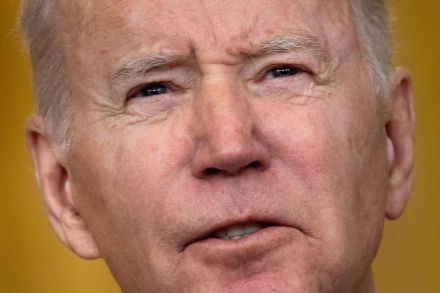
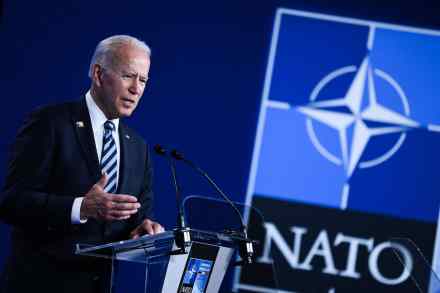
Amid a pile of Russian disinformation, a mass evacuation of civilians from the self-proclaimed separatist republic and reports that Russian commanders are preparing to execute an invasion order, diplomacy (or at least the hope of it) reared its beautiful head late Sunday night. After a frantic series of calls orchestrated by French president Emmanuel Macron, the White House released a statement confirming President Biden’s openness to a direct meeting with Russian president Vladimir Putin. Whether or not the leader-to-leader discussions happen, however, won’t be fully up to Biden or Macron. It takes two to tango, as the hackneyed phrase goes. And right now, Moscow has been habitually cryptic about its intentions.
ukraine

The seismic importance of Putin’s latest move

From our UK edition

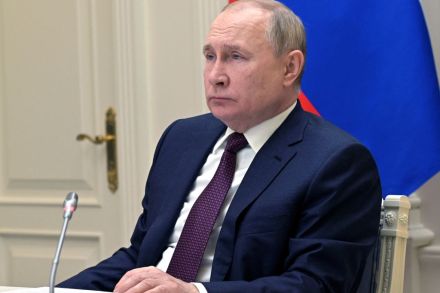
Vladimir Putin has tonight unilaterally recognised the two breakaway republics in Ukraine. In doing so, he has effectively ended the Minsk peace process. The move also begs the question of whether Putin is recognising the territory that these so-called republics actually hold, or the much larger territory that they claim. If the latter, then that raises the question of whether Russian troops will be used to take that land given that Putin immediately signed ‘friendship and mutual assistance’ treaties with them at the end of his speech this afternoon. The speech, though, went even further than recognising the break-away republics, carving off another chunk off Ukraine after the annexation of Crimea in 2014.

Is a Russian invasion now imminent?

From our UK edition

Tensions on the Ukraine border are continuing to increase. Worryingly, Russian state media has gone from mocking Washington’s warnings of an invasion to ramping up the various pretexts that the Kremlin is trying to create for one. The leaders of the two self-proclaimed breakaway republics in the Donbas have been on Russian TV today asking for Russia to recognise them and offer military assistance. Moscow is also claiming that it has killed five Ukraine troops who supposedly crossed into its territory.  The Biden administration remains convinced that an attack on Ukraine is coming in the near future.

How the Ukraine crisis ends

From our UK edition

Vladimir Putin does not think in the way the West does. Of course sanctions will hurt. But so what? He may be wrong in his strategic calculations, but he is not, as Boris Johnson claimed over the weekend, irrational. Putin is an old-school strategist. This is one of the reasons that sanctions will not have the desired impact. An import ban on Russian gas would definitely hurt the Russian economy, but that seems highly unlikely. Italian President Mario Draghi said on Friday that we should not touch gas. It is now the guy who sits in Moscow, rather than Draghi, who is willing to do ‘whatever it takes’. An import ban on the latest iPhones does not have the same deterrent effect as a continental gas shortage. Don’t fool yourself about the impact of sanctions.

Why Glenn Greenwald backs Putin

Few things are sure in life: death, taxes and Glenn Greenwald advocating whatever position happens to be in the interests of Vladimir Putin. The self-styled civil libertarian rose to prominence during the George W. Bush administration for his withering attacks on American counterterrorism policies. Later, he won a Pulitzer Prize for his role in facilitating Edward Snowden’s leak of government documents. Always a rancorous figure who bristled at attempts to place him in a partisan box, Greenwald started to upset his confederates on the left and develop a fan base on the right during the Trump years. Greenwald was one of the most vocal critics of the narrative positing that the new American president was a pawn of the Russian one.

Greenwald

Sunday shows round-up: Ukraine could see ‘biggest war in Europe since 1945’

From our UK edition

The Prime Minister has been attending the annual Munich Security Conference, where the prospective Russian invasion of Ukraine is very much at the top of the agenda. The BBC’s Sophie Raworth caught up with Boris Johnson yesterday, following a speech he made warning of the disaster that war would bring. Johnson said in the interview that he believed that Vladimir Putin was ready to orchestrate such a crisis at any moment: https://twitter.com/BBCPolitics/status/1495334713057288192?ref_src=twsrc%5Etfw ‘It is important that people should feel confident again’ Tomorrow, the government is expected to announce its plans to remove all Covid restrictions for England.

Biden is ‘convinced’ Putin will invade Ukraine. Is Putin?

From our UK edition

The only thing more sombre than President Joe Biden’s tone at his press conference on Friday afternoon was his funereal ensemble of dark suit and even darker tie. Biden made news with his declaration that the Russian president isn’t havering about invading Ukraine, if he ever really was. Instead, he’s made the decision, we were told, to attack Kyiv itself. A full blown invasion would be the big reveal, surpassing Hungary in 1956 or Czechoslovakia in 1968 If Biden’s remarks were anything to go by, Putin means business. Stories are circulating that Putin and his camarilla have drawn up extensive kill lists of prominent Ukrainians they intend to terminate in coming weeks.

Poll: UK wary of sending troops to Ukraine

From our UK edition

Another day and another wait to see what, if anything, will happen in Ukraine. Vladimir Putin still has thousands of soldiers on the Russian border, there's accusation of cyber-attacks on Kiev's banks and defence ministry while Moscow media has been ridiculing the West over yesterday's 'day of no invasion.' So, as Westminster works itself into a frenzy, Mr S thought it worth asking what the great British public makes of all this. It isn't clear yet how the stand-off will end, but for a plurality of Brits the answer is clear: war. Some 41 per cent think a Russian invasion in the next month is 'likely' or 'very likely'; only half of that – 21 per cent – think such an event 'unlikely' or 'very unlikely.

We blew our chance to befriend Putin

From our UK edition

You have the advantage over me. It may be that you are reading this now in your makeshift fallout shelter, hair falling out and bleeding from the gums as the nuclear winter descends. More likely you are saying, rather smugly, to your neighbour: ‘I knew he was taking the piss. He’s a right one, that Putin.’ Or perhaps Vlad’s forces are already in London, having swept through western Europe in about eight hours, the Germans for once outdoing the French with their alacrity to surrender. Well, that should see an end to Stonewall and the Tavistock Clinic, no? Every cloud, etc.

Taking Ukraine would finish Putin

From our UK edition

‘Never interrupt your enemy,’ said Napoleon, ‘when he is making a mistake.’ A Russian invasion and occupation of Ukraine would prove (perhaps, by the time this Spectator is published, ‘will’ prove) a terrible mistake. Were it not for the death and despoliation such a mistake would bring — an outcome one could never welcome — the response to Vladimir Putin’s implicit threats should surely be: bring it on! When we told Russia they’d only be hurting themselves, did we not mean it?

Russian roulette: is Moscow’s bluff backfiring?

From our UK edition

A bluff only works if you can carry it off convincingly. The massing of some 130,000 Russian soldiers on Ukraine’s borders has led to London and Washington declaring that a full-scale invasion is imminent, but it could still be a feint. The Russians know everything they do can be seen by satellite. On the phone from Kiev, Colonel General Ihor Smeshko says he is not inclined to read too much into the Russian army’s logistics. He was head of Ukraine’s domestic intelligence service and later a candidate for president.

The western press is giving Putin what he wants

From our UK edition

Why does Vladimir Putin need Russia Today and Sputnik News when the western media are doing such a great job on his behalf? Throughout his two decades in power, Putin has yearned for international respect. Failing that, he’ll settle for fear. And what more satisfying outcome could there be for a serial sabre-rattler like Putin to have his bluff finally taken seriously? For weeks, British papers and TV have been filled with images of scary Russian tanks, warships and artillery blasting away — mostly provided, if you check the photo credits, by Russia’s Ministry of Defence. Since November, the US and British governments have been issuing increasingly strident warnings that Putin is preparing an imminent and massive attack on Ukraine.

Theatre of war: Putin’s deadly dramatics over Ukraine

From our UK edition

Vladimir Putin now knows that the West won’t fight for Ukraine. The past few weeks have shown that. All options are open to Moscow. Russian troops could march on Kiev or stay on the border destabilising Ukraine’s economy until its government gives way. If Putin wanted a fight, he would win — at least initially. No western military force will stop Russia from crossing the border. The main question is what punishment the West would be able to inflict on Russia after an incursion. Would Nato members be able to agree on what approach to take? Tensions within the alliance have been exposed.

How do Russian and Ukrainian military forces measure up?

From our UK edition

Facing the music Police in New Zealand played Barry Manilow records to truck drivers in an attempt to persuade them to break up their protests. One of the first uses of music as a weapon was by US forces attempting to force Panamanian military leader and drug dealer General Manuel Noriega to leave the Vatican embassy, where he had sought sanctuary in December 1989. For three days over Christmas they played an eclectic mixture of music including ‘Too Old to Rock’n’Roll, Too Young to Die’ by Jethro Tull, ‘Judgment Day’ by Van Halen, ‘Born to Run’ by Bruce Springsteen, ‘Give It Up’ by KC and the Sunshine Band, ‘We Gotta Get Out Of This Place’ by the Animals and ‘Never Gonna Give You Up’ by Rick Astley.

Portrait of the week: Inflation hits 30-year high, Andrew settles out of court and Turkey changes its name

From our UK edition

Home Boris Johnson, the Prime Minister, made ready for a Russian invasion of Ukraine by cutting short a planned visit to northern England for a Cobra meeting. ‘We are on the edge of a precipice,’ he said. He said Britain was prepared to target Russian banks and companies, and stop them raising money on London’s financial markets. Sir Keir Starmer, the Labour leader, condemned an online rally called No War in Ukraine: Stop Nato Expansion, organised by the Stop the War coalition, of which Jeremy Corbyn is the deputy president. Petrol prices reached a new high of 148.02p a litre. Inflation rose to 5.5 per cent, its highest for 30 years. Unemployment fell to 4.1 per cent and job vacancies reached a record of 1.3 million; wages fell by 0.

What would Thatcher have said about Putin?

From our UK edition

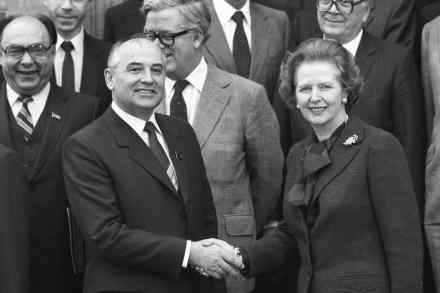
When Sir Tony Brenton writes a letter to the Times, as he frequently does, it always says at the bottom that he was British ambassador to Moscow. The uninformed reader could be forgiven for thinking the sub-editors have got it back to front and he was actually the Russian ambassador to London. Sir Tony’s message in every letter is ‘It’s all Britain’s fault’. In his latest, his particular target was the Foreign Secretary, Liz Truss, after her visit to Moscow. He said she ‘might usefully recall Margaret Thatcher’s wise message to Mikhail Gorbachev sent in 1985 as perestroika began to take off: “We know that you have as much right to feel secure as we do.

energy

Biden’s looming energy crunch

Oil and gas prices have soared since Joe Biden took office and skyrocketed further as Russian troops surround Ukraine. Prices will get worse — much worse — if Putin invades. President Biden has promised “swift, sharp sanctions” on Russia and an end to the Nord Stream II pipeline, which will supply Germany with much-needed Russian natural gas when it’s completed. The German chancellor has said little about ending the pipeline but has not publicly contradicted Biden’s threat to stop it. European analysts are confident Germany will go along with American energy sanctions, including those on Nord Stream II. In any case, the US can stop the pipeline, if it chooses.

As with Iraq, so with Russia

Against the backdrop of the Ukraine crisis, we have been bombarded with many historical analogies. Leading the list are the 1961 Berlin standoff and the 1962 Cuban Missile crisis. And then there is that all-time favorite, the 1938 Munich Agreement. Those crises should certainly not be regarded as ancient history. But then why go back 60 or 80 years when you can walk down memory lane? Like, say, when an American president was trying to rally the public and mobilize international support in the name of using military force against an alleged bloodthirsty dictator who was supposedly threatening Western geostrategic interests and challenging its liberal democratic values?

ukraine

NATO won’t bleed for Ukraine

Ask three different people whether Russian President Vladimir Putin will approve an invasion of Ukraine, and you are likely to get three different answers. Yes, a Russian land, air, and sea blitz is inevitable and will come in fairly short order, likely without warning. Yes, a Russian invasion is possible, but could still be averted with some shrewd diplomacy. Or, no, surely Putin understands an invasion would be a disaster for his legacy and his country’s economy. In the midst of all of this comes wild speculation about what Putin is thinking at any given moment, how the weather may factor into his calculations, and what the Russian government’s end goal really is. What can be said for certain, however, is that diplomacy has picked up significantly over the past week.