Ukraine

Liz Truss is having a good war

From our UK edition

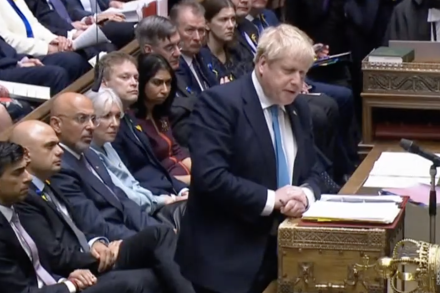
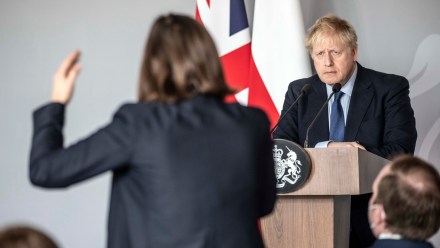
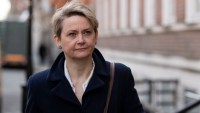
Liz Truss gave a striking statement in the Commons this afternoon on the action the government was taking to respond to the Russian invasion of Ukraine. It contrasted to the approach taken by some of her colleagues, because it contained a number of admissions about the impact of this action. For the first time, the Foreign Secretary stated that Britain would 'have to undergo some economic hardship as a result of our sanctions'. This has been implicit over the past few days, but Truss was the first to say it clearly. She added that 'our hardships are nothing compared to those endured by the people of Ukraine', and also warned that the war could last months or years.

‘Staying Switzerland’ on Ukraine is impossible

From our UK edition

The striking thing about the financial sanctions on Russia is not their severity, but just how many countries are joining in the effort. Switzerland has today announced that it will adopt the EU sanctions on Russia, particularly significant because it has been the biggest recipient of private transfers by Russians in recent years. The fact that such a traditionally neutral country is imposing sanctions will deepen the wedge between Putin and the rest of the ruling elite. Meanwhile in Asia, Japan, South Korea and Singapore have signed on to the economic measures on Russia.

Viktor Orbán has played a perfect game with Putin

From our UK edition

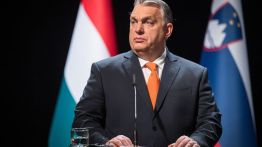
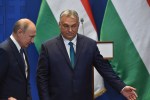
On 3 April Hungarians will have their ninth set of free parliamentary elections since the collapse of the communist dictatorship in 1989. The winner is likely to be Viktor Orbán and his Fidesz-KDNP coalition, which is leading in five of the six major polls. Russia’s invasion of Ukraine will not change that dynamic even though the opposition leader, Péter Márki-Zay has called Orbán a ‘traitor’ for his long-standing friendship with Vladimir Putin. Ever since Viktor Orbán began his second stint as Hungary’s prime minister in 2010, he has repeatedly played the provocateur within the EU, tweaking the eurocrats’ noses with his cultural conservatism and hostility to mass immigration.

The Ukraine invasion is the first social media war

The Russian invasion of Ukraine is not only the largest European land conflict since the 1940s — it’s also the first for the TikTok and YouTube generation. As videos pour in across Twitter and Instagram and other social media platforms are leveraged for credit or propaganda, it’s become evident that we are in a brand new era, much like the one that arrived with twenty-four-hour cable news coverage of the US invasion of Iraq in 1990. Back then it was grainy night vision images of patriot missile launches and target explosions that dazzled homes all over the United States.

volodymyr zelensky ukraine invasion
takes

And now the dumbest takes about Ukraine

If hot takes brought peace, mankind would never know war again. At least, that’s the impression one is left with after spending time on Twitter during Russia’s horrific invasion of Ukraine. Some social media users seem to operate under the understanding that they are legally required to put their first — and often worst — opinions immediately onto the internet for all to see. Many of these tweets reflect the understandable human tendency to grasp at an explanation for terrible events. Laurie Garrett, a Pulitzer Prize-winning writer who is considered an oracle of sorts on the coronavirus pandemic, put forth an interesting theory. “It’s been suggested that #Putin isn’t thinking properly, perhaps due to long #COVID19,” she wrote.

vlad invader empire

How to turn the tide against Russia

The abrupt eruption of the worst military conflict in Europe since World War Two has naturally left the world in a state of shock, perhaps only comparable in living memory to that felt on 9/11. But as responses are considered and argued over, there will be more blows to come — as well as recriminations over how this could have been avoided. Naturally, much depends on which side emerges victorious, and at the time of writing the end result has yet to be determined. Certainly any assumption that the might of Russia's military machine would roll into Ukraine and quickly overwhelm the defenders has been categorically proven wrong; Russia's Blitzkrieg-style offensive failed to achieve its first-day objectives in the face of fierce Ukrainian defense.

Germany has rejected Merkel’s military legacy

From our UK edition

‘We are witnessing a turning point… the world is not the same anymore,’ said German Chancellor Olaf Scholz yesterday in a speech that will be remembered as the country’s biggest military shift since 1945. Staring down the barrel of Putin’s gun, Scholz announced a massive and immediate cash injection for Germany’s armed forces as well as a long-term commitment to higher defence spending. Russia’s unprovoked attack on Ukraine has pulled Germany out of decades of complacency and misguided pacifism. Foreign minister Annalena Baerbock seemed genuinely shocked at the discrepancy between Putin’s words during her visit to Moscow last month and his actions in Ukraine. She has said she feels betrayed: ‘stone-cold lied to.

Six clips of Ukrainian heroism

From our UK edition

It's four days since the invasion of Ukraine by Russia and there's no sign of any surrender by those opposing Putin's forces. By common consensus, the spirited fightback by both Ukrainian troops and their citizens has impressed and surprised many across Europe.  It comes amid reports that the Kremlin has misjudged the extent to which Ukrainians are willing to fight and die for their country, as the west gears up to inflict massive financial sanctions on Russia. The revolution may not be televised but in 2022 conflict is being live-streamed on social media accounts. Below are six of the best examples of the ordinary men and women of Ukraine demonstrating resistance to the Putin invasion.

Has Putin resurrected the West?

From our UK edition

I think Putin will have been surprised. I mean: I was surprised. Weren’t you? Not, necessarily, that Ukraine should have been resisting as valiantly as it is; nor even that Russia’s supposedly unstoppable war machine should have found itself out of petrol on a chilly highway from which the road signs have been removed. But surprised by the sheer force and volume and unanimity of the international cry of: no, this will not stand. That is one thing, even amid the unspeakable human cost of the war in Ukraine, to feel encouraged by. If this invasion does, as many have said, mark the beginning of a new order in European security and great power politics, isn’t it a sign that it could be a stronger, better, less complacent one?

Yes, Russia could use nuclear weapons

“Nuclear war is part of our strategic culture. Yes, we would start one if our homeland, our way of life, was threatened, absolutely. Why wouldn't we?” That’s what a retired Russian diplomat told me on the sidelines of a track-two dialogue between US, Russian and Chinese experts back in 2012. And to be honest, for several years, I didn’t believe him. I took his comments as bragging, atomic machismo, if you will. The context of the conversation was a response to a question to my Russian colleague on the subject of Moscow’s nuclear weapons doctrine and thinking. Russia for several years has believed in the concept of escalating nuclear tensions to deescalate tensions, or what defense scholars call “escalate to deescalate.

Biden’s confusion over sanctions

Russia’s military aggression against Ukraine requires a swift and effective Western response. But according to neoconservative and liberal internationalist pundits like columnist Walter Russell Mead, the invasion marks nothing less than an assault on the “world order” akin to Nazi aggression at the opening of World War II. “Not since Hitler attacked the Soviet Union in 1941 has a European leader committed an act of aggression as brutal or as nakedly cynical as Mr. Putin’s unprovoked attack on Ukraine,” Mead writes in the Wall Street Journal.

War in Ukraine has divided Putin’s court

From our UK edition

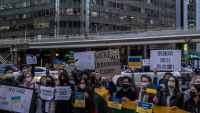
It is striking how little enthusiasm there is in Russia for Vladimir Putin’s war in Ukraine – but for some, it has become an opportunity to steal a march and curry favour with the boss. Thousands of Russians have been out on the streets protesting against the conflict, despite the heavy-handed and unstinting response of the security forces. Journalists and experts, sports stars and cultural icons have been making their opposition clear as well. Even those within the system, including senior diplomats and businesspeople, aren’t trying to hide how far they were blindsided by Putin’s decision to invade, and how little they appreciated it.

The end of the post-Cold War era

From our UK edition

Russia’s invasion is not just an effort to retake what was once part of the Soviet Union. It is a push to use military force to overturn the post-Cold War settlement. In fact, the invasion cannot be understood without first understanding what that settlement looked like and why Russia wants to overturn it, despite the high costs. In the 1980s, when Vladimir Putin was a KGB agent in East Germany, the Soviet Union had become an arteriosclerotic state. It was unable to keep up with the US in high-technology arms, unable to legitimate its rule with Marxist-Leninist ideology, and unable to afford the cost of maintaining its empire in Eastern Europe.

Our present bewilderment

Bewilderment, a novel by Richard Powers issued last September, has been praised to high heavens by Oprah Winfrey, Barack Obama, Naomi Klein, and reviewers at NPR, the New York Times, the Washington Post, and The New Republic, among others. This ought to be enough to warn any sensible reader to stay far away from its pages and to resign promptly from any reading group that nominates it for collective perusal. But I am not always sensible. The title lured me, for what better word to describe our Zeitgeist?

bewilderment

Expelling Russia from Swift would be a massive economic shock

From our UK edition

If Russia is expelled from the Swift banking messaging system, that would be serious economic warfare against Putin. Because Thursday’s decision by the US Treasury to make it almost impossible for Russia’s two biggest banks, VTB and Sperbank, to do any business with US institutions or use US infrastructure to process dollar payments will potentially disrupt tens of billions of dollars of Russian financial transactions every day, much of it related to its huge oil and gas industry. This combined prohibition on international transfers by Russian banks and the US embargo on dollar clearing for them would in theory generate a massive negative economic shock for Russia, that would rapidly impose serious hardship on Russian people.

‘This is our land. This is our history’: my appeal to the people of Russia

From our UK edition

I come today with an appeal to all citizens of Russia. Not as President. I am appealing to the people of Russia as a citizen of Ukraine. We share more than 2,000km of border. Around it, today, is your army: almost 200,000 soldiers; thousands of military units. Your leadership has approved their movement towards us. Towards the territory of another country. This step can become the start of a huge war on the European continent. The whole world is talking about what can happen any day now. A reason can appear at any moment. Any provocation. Any spark. A spark that has the potential of burning everything down. You are told that this flame will bring freedom to the people of Ukraine. But the people of Ukraine are already free. They remember their past and are building their own future.

The post-Soviet roots of the war in Ukraine

From our UK edition

In his hour-long speech earlier this week setting out why he was invading Ukraine, Vladimir Putin blamed Vladimir Lenin, the collapse of the Soviet Union, Ukrainian nationalists and the West for starting the conflict. Meanwhile, many in the West believe that the conflict is entirely the creation of one man, Putin himself. It’s worth though remembering the post-Soviet roots of the current Russian-Ukrainian war and how close the two nations came to blows 30 years ago. After the failure of a reactionary coup in Moscow in August 1991, the victorious Russian democrats led by Boris Yeltsin wanted to dismantle the Soviet Union’s ‘totalitarian empire’ and join Nato.

It’s time for Germany to stand up to Russia

From our UK edition

In his novel The Loyal Subject, which appeared on the eve of the first world war, Heinrich Mann, the brother of Thomas, satirised Wilhelmine Germany as a hotbed of chauvinistic nationalism. The servile nationalism that Mann mocked could not be further from the ethos of the Federal Republic of Germany today. So pervasive is Germany’s eirenic disposition that on Thursday, as Russian president Vladimir Putin ravaged Ukraine, Lieutenant General Alfons Mais, the head of the German army, took the unusual step of turning to LinkedIn to ventilate his exasperation at the impotence of his own fighting forces. ‘In my 41st year of peace-time service, I would not have thought that I would have to experience a war,’ Mais stated on Thursday.