Tim Ogden

Tim Ogden is a journalist based in Tbilisi, Georgia and the assistant editor of New Europe.

Ron DeSantis’s aide is no Russian agent

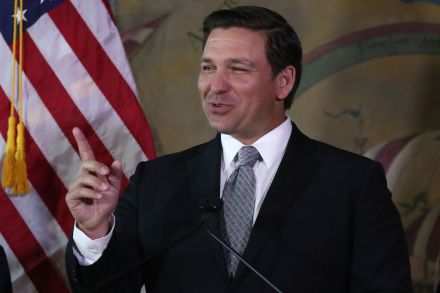
The recent retroactive registration of Christina Pushaw — Florida governor Ron DeSantis's press secretary — as a foreign agent has led to an ignorant backlash. A quick glance at any article on the story leaves readers thinking this is Cold War stuff, a "foreign agent" reaching all the way into the halls of Floridian power. The comments suggest that readers have lapped this up. “Trump + DeSantis = Russian money,” says one. “Trumpian Republicans have a fond affinity for Russians,” writes another, finishing with “such fools.” Clearly, they knew this sort of thing was going on all along: "The Kremlin have done it again!" they think, shaking their fists at the memory of the Russian interference which they've convinced themselves won Trump his election back in 2016.
ron desantis

Peace and its consequences in Ukraine

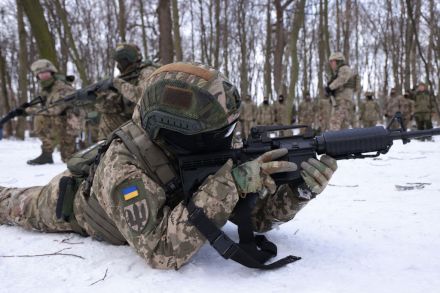
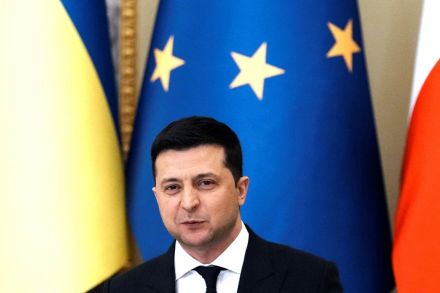
It is now a matter of consensus that Vladimir Putin never intended to fight the type of war that now faces him in Ukraine. What was plainly meant to be a blitzkrieg-style assault has devolved into a war of attrition, with death, destruction and violence on a scale unseen in Europe since the disasters of the last century. It is quite plain that the Kremlin, despite its bluster, is aware of this. The Kyiv government's claims of Putin dismissing his generals and raving in fury at his security services are consistent with events on the battlefield; indeed, after two weeks of fighting, Russia has only managed to decisively claim one Ukrainian city.

volodymyr zelensky ukraine invasion

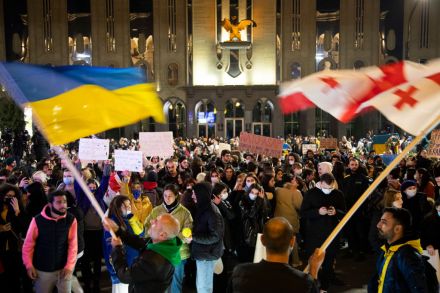
Pro-Ukraine citizens clash with authorities in Georgia

Tbilisi, Georgia After one week of fighting, Russia's invasion of Ukraine has already caused far-reaching geopolitical consequences, most of which point to gross miscalculation from the Kremlin. Following an arguably hesitant start, the Western world has united to provide Ukraine with lethal and non-lethal aid, as well as economic and humanitarian support. In addition, despite Putin ostensibly launching his war to prevent Ukraine from becoming a NATO member and curtail the alliance's easterly expansion, Kyiv's relations with the West have ironically become closer. Both Sweden and Finland appear to be closer than ever to considering joining NATO.

georgia

How to turn the tide against Russia

The abrupt eruption of the worst military conflict in Europe since World War Two has naturally left the world in a state of shock, perhaps only comparable in living memory to that felt on 9/11. But as responses are considered and argued over, there will be more blows to come — as well as recriminations over how this could have been avoided. Naturally, much depends on which side emerges victorious, and at the time of writing the end result has yet to be determined. Certainly any assumption that the might of Russia's military machine would roll into Ukraine and quickly overwhelm the defenders has been categorically proven wrong; Russia's Blitzkrieg-style offensive failed to achieve its first-day objectives in the face of fierce Ukrainian defense.

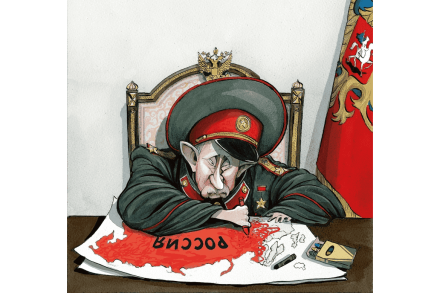
vlad invader empire

Save Ukraine by admitting Georgia into NATO

As the Ukraine crisis continues to develop, it has become impossible to avoid mentioning Georgia and its relations with the West. This is not only due to the similarities in the two countries' geopolitical circumstances, but also because Georgia is explicitly mentioned with Ukraine in President Putin's demands to the West to forego any future NATO expansion. Like Ukraine, for years, Georgia has sat in the uncomfortable position of being pro-Western without enjoying the protections afforded by membership in both NATO and the European Union. Yet a country that was once a staunch Western ally has become mired in accusations of authoritarianism, behind-the-scenes governance, and covert pro-Russian sentiment. Georgia and Ukraine have occupied a unique position in the post-Soviet space.

vladimir putin alexei navalny

What does Russia hope to achieve in Ukraine?

President Biden said this week that a “minor incursion” of Russian troops into Ukrainian territory would not bring about the severe economic sanctions the White House threatened in response to a “significant invasion.” His counterpart in the Kremlin can probably hardly believe his luck. Effectively, Vladimir Putin has been given carte blanche by the West to launch military operations against Ukraine. Of course, the fact that there is no definition of what constitutes a “minor incursion” gifts the White House a preemptive get-out clause from having to truly confront Moscow.

ukraine

Inside a dictator’s playground

From our UK edition

Armed soldiers guard the barbed-wire compound. Helicopters buzz around the parameter, drifting above families on tandem bicycles. Groups of giggling bridal parties flirt with camouflaged guards. They watch on, careful to spot the light-fingered. This is Mezhyhirya, the former playground of exiled Ukrainian president Viktor Yanukovych. The estate has been open to the public since the former communist fled to Russia in 2014 after a pro-western revolution. Adverts peddle the autocrat's theme park as a pleasant family day out: a museum, wedding venue, water park and zoo. It's as though a group of terrified architects asked Yanukovych, 'What style would you like? Classical? Alpine? Baroque?' and the reply had simply been, 'Yes' Top of the bill is the main house, a bizarre building.

HMS Defender: What’s behind the Navy’s Russian incident?

From our UK edition

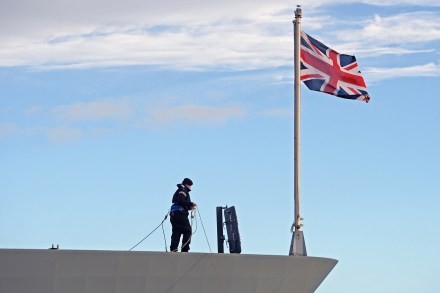
Assuming that reports are accurate, the world has just witnessed the most serious escalation between the UK and Russia since the poisoning of Sergei Skripal three years ago. Russian bombs and gunfire were reportedly discharged near HMS Defender, currently patrolling the Black Sea. The Kremlin has justified the supposed aggression by stating that the ship had strayed into Russian waters. The UK, meanwhile, has denied that any such incident took place.  https://twitter.com/DefenceHQPress/status/1407670812262518785?ref_src=twsrc%5Etfw Russia's justification, if indeed it did what it claims it did, is based on a false premise. The coastline in question does not, in fact, belong to Russia — Defender was positioned off the Crimean peninsula.

Inside the city under Russian siege

From our UK edition

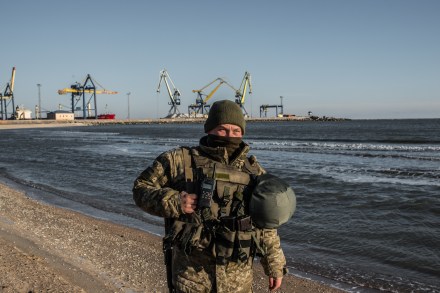
Had I been on the pier just a few days earlier, strolling past the penny arcades, I would have heard the distinctive whompf of Russian artillery fire. Ukrainian politicians are keen to turn the city of Mariupol (population 440,000) into a resort akin to those in Crimea and Turkey. Yet despite the pleasant climate, it feels more like Port Talbot than a subtropical holiday spot. The vast industrial limbs of the city’s deep water port, built by Tsar Alexander III in the 1880s, crawl across the horizon. By the time the Azov Sea reaches the town, its clear blue waters have been tinged a muddy brown. Ukraine’s most recent casualties came during the sudden build-up of Russian troops just a few miles away.

Why Lukashenko keeps getting away with it

From our UK edition

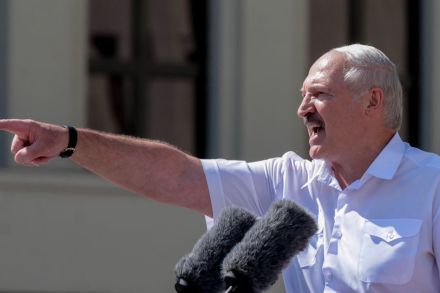
The diversion of a Ryanair flight bound for Lithuania from Athens and the arrest of passenger Roman Protasevich – an influential Belarusian blogger critical of the country’s dictatorial regime – is the latest tyrannical action to lead to expressions of grave concern and tempered outrage from the West. However, the fact that the passenger aircraft was forced to land by a Belarusian fighter jet on the pretence that the plane was carrying explosives is, arguably, a step up on the ladder of severity. Police brutality and the unlawful detention of opposition activists are quick to cause Western condemnation, but those still solely concern domestic matters – the interception of a European plane in transmit between two EU member states is unprecedented.

Is Russia about to invade Ukraine?

From our UK edition

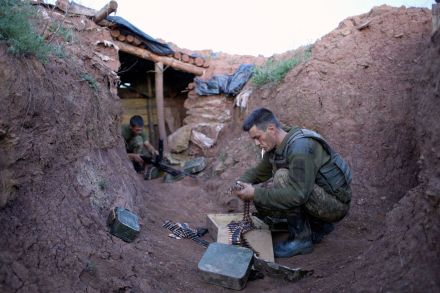
With occasional artillery duels and sporadic exchanges of small arms fire, Ukraine's long-running civil war was never quite extinguished. However, the embers of the last five years, which have seen dozens killed in skirmishes each month, could now reignite as eastern Ukraine risks becoming an open battleground once again. Around 25,000 Russian troops have been positioned on Ukraine's disputed borders, movements which were followed by artillery bombardments and firefights that have already resulted in casualties for both sides. Further escalation between Kiev and Moscow is now frighteningly possible. In previous cases, most notably Georgia in 2008, a sudden build-up of Russian forces signals the beginning of a carefully planned assault.

What does Belarus’s opposition leader want?

From our UK edition

There is an assumption that those fighting tyranny must instead want Western-style democracy, that the arc of history bends towards liberal representative government, allied inevitably to Washington and Brussels. Many former Soviet Union countries saw their politburos overthrown by young middle-class people espousing the desire for this kind of politics — from the Rose Revolution in Georgia to the Orange Revolution and Euromaiden protests in Ukraine (whether or not they eventually received that form of government is a different matter). But there is no logical imperative that connects dissatisfaction towards an autocrat with the kind of government and geopolitical order that will replace him, whether in Eastern Europe or elsewhere.

A defeated Armenia descends into turmoil

From our UK edition

Ever since its disastrous military defeat at the hands of Azerbaijan last year, Armenia has suffered from a wave of political unrest, with rallies and protests continuing sporadically. The principal demand of the protestors has been the resignation of the incumbent Prime Minister, Nikol Pashinyan, whose agreement to a ceasefire favourable to Azerbaijan following his country’s defeat in Nagorno-Karabakh was viewed as a national betrayal. However, the most serious declaration of opposition to the Prime Minister came on Thursday, when the general staff of the armed forces, Onik Gasparyan, joined in the calls for Pashinyan to resign.

The West should worry about Georgia’s broken democracy

From our UK edition

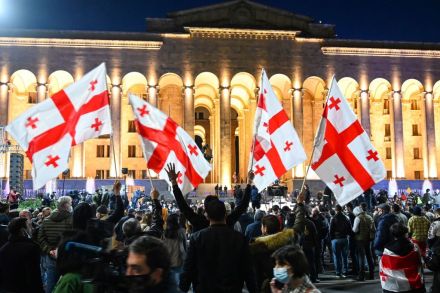
It is the first display of political instability in the Caucasus in 2021. Georgian Prime Minister Giorgi Gakharia on Thursday announced his unexpected resignation. Although his successor has yet to be confirmed, his replacement will be the country's sixth Prime Minister in eight years. All, including Gakharia, have been members of the same party, Georgian Dream, that has held parliamentary control since 2012. The founder of the party, the formerly reclusive billionaire Bidzina Ivanishvili, was the first Georgian Dream Prime Minister. He only held the post for a year, claiming he had achieved his political objectives after twelve months. This was treated with a degree of scepticism that was later proved justified.

A fractious America weakens the global order

From our UK edition

The countries that formerly composed the Soviet Union states are predominantly divided into three camps: those still strongly affiliated with Russia; those who have already ascended to EU and Nato membership; and the unfortunate remainder that strive to join the West, but which continue to struggle with domestic setbacks and a lack of resolve from Washington and Brussels. Since the fall of the USSR, countries like Georgia and Ukraine have seen the USA as the embodiment of democracy, with its liberty and freedoms standing as the antithesis of Communist darkness, which dominated both countries for a century.

It’s time to expel Turkey from Nato

From our UK edition

Even the staunchest Remainer would admit the EU is not currently the happiest ship, sailing in the waters of world politics. Viktor Orban’s self-proclaimed ‘illiberal democracy’ is growing increasingly incompatible with EU values, Poland has expressed distaste for 'the Brussels elites, blinded by political correctness', and on two occasions Greece has locked horns with the EU's upper echelons over the debt crisis. But while the EU has been a daily headline topic for years, the state of Nato has been largely neglected — despite the fact that one of its own members, Turkey, threatens to fatally undermine the alliance.

Russia’s conundrum in the Caucasus

From our UK edition

For the second time since fighting began on 27 September, a humanitarian ceasefire was agreed between the warring countries of Azerbaijan and Armenia — and, for the second time, it was quickly broken. Momentum is now firmly in Azerbaijan's favour, with Azeri forces capturing a number of towns and settlements in the disputed region of Nagorno-Karabakh. These could subsequently be used to launch an assault on the capital, Stepanakert, which has already come under multiple bouts of artillery fire. Armenia has retaliated with long-range bombardments of its own against Azerbaijan's second city of Ganja, an act that has caused outrage in Baku as the city is comfortably outside the disputed territory.

The conflict that could spark a war

From our UK edition

History repeats itself — but sometimes in reverse. Only a pessimist would have predicted a global pandemic followed by a growing regional conflict. And yet the ongoing fighting between Armenia and Azerbaijan — and its accompanying web of political ambition, ethnic tensions and territorial disputes — leads to uncomfortable comparisons with the start of the first world war. That conflict began after Austria threatened Serbia, resulting in Russia's pledge to protect its fellow Slavs against outside aggression. Germany assured the world, and Russia, that it would not tolerate hostility towards Austria. France informed Germany that it would come to Russia's defence if it came under attack.

What’s behind the conflict between Armenia and Azerbaijan?

From our UK edition

The outbreak of fighting between Armenia and Azerbaijan over the weekend is the latest episode in a saga stretching back to the waning years of the USSR. Although recognised as being part of Azerbaijan, the region of Nagorno-Karabakh is a de facto independent zone populated by ethnic Armenians. Its independence came as a result of a war between Armenia and Azerbaijan in the wake of the Soviet Union's collapse; while this ended in the mid-1990s in a victory for the Armenian-backed separatists, sporadic fighting has plagued the area ever since. This has most often taken the form of localised artillery duels, but this July witnessed the heaviest exchanges since the war itself, with shelling resulting in dozens of casualties.

Why Navalny may not be a friend of the West

From our UK edition

At first glance, Alexei Navalny seems like exactly the sort of man the West would want to sit in the Kremlin. He’s anti-corruption, anti-oligarchy, anti-ballot rigging and – most importantly – anti-Putin. Many in the West believe his election would result in a seismic shift in Russian foreign policy – and perhaps even lead to historically unprecedented positive relations with Moscow. The Western media have certainly reinforced this idea, as they’ve reported on Navalny’s attempts to break Putin's stranglehold on Russia and the many moves to silence him with a series of arrests, assaults, and poisonings – the most recent of which led to his hospitalisation last week.