Ukraine

Is Boris in denial about the looming economic crisis?

From our UK edition

The priority for the UK and other rich democracies is to protect the people of Ukraine from the depredations of Putin's forces. A close second should be protecting the poorest people in our countries and vital public services from the cancerous impact of soaring inflation, made much worse by the West's economic warfare against Putin's Russia. The most basic costs of living are soaring. And that means a devastating recession that has already begun for all those but the richest. This blow to living standards will be the worst in living memory, more pernicious than the impact of either the banking crisis or Covid. Talking to ministers and MPs, it is clear to me that they as yet fail to appreciate the scale of the economic shock that is upon us.
The SNP won’t be happy until Boris is charged with war crimes

From our UK edition

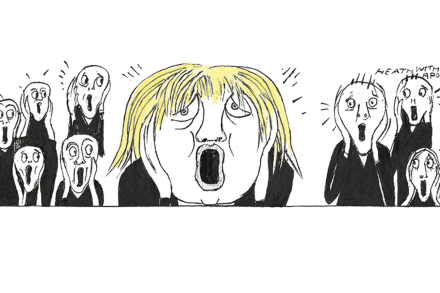
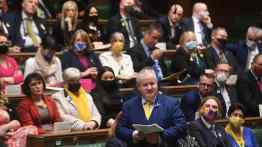
Blood streams through Ukraine. Tears run through parliament. At PMQs today, numerous members urged Boris to show more compassion towards Ukraine’s refugees. Poland has already taken 1.2 million. Barely a thousand have been received here, as Boris confirmed, but the number will rise sharply. Leading the pro-refugee campaign was the SNP’s Ian Blackford who seems to represent every region on earth apart from his own constituency. In a venomous speech he charged the home secretary, Priti Patel, with imposing a ‘hostile environment’ on refugees for ‘ideological’ reasons. Well, well. No one could accuse the SNP of embracing xenophobia for political gain. Blackford lambasted the government for ‘putting up barriers and bureaucracy’.

Sanctions on Russia will shake the world economy for years

The war in Ukraine will dominate the news for the foreseeable future. But while the bombings will eventually cease, the economic consequences for the world have just begun. That’s because in an era of increasing interconnectedness, economic impacts don’t stop at borders. Most attention has been focused on the immediate impacts of sanctions on Russia, and they are significant. In the past, sanctions have proven largely ineffective at punishing foreign enemies. President Barack Obama, for example, failed to use them effectively in 2014 during the last Ukrainian-Russian dispute. But this time, the actions taken against Russia were largely unprecedented, with even traditionally neutral countries like Switzerland and Sweden calling for restrictions that are “as big as they can be.

economy

Ukrainian ambassador: my wife couldn’t get a visa

From our UK edition

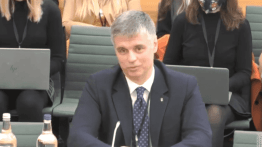
It's been a pretty dreadful few weeks for Vadym Prystaiko. Kiev's man in London has been doing his best to secure extra resources for his country's struggle against the Russian invasion, though the calls of President Zelensky for a 'no fly zone' have gone unheeded. As if he didn't have enough on his plate, Prystaiko has been summoned for a meeting of the Home Affairs Select Committee meeting, amid the ongoing crisis about visas for Ukrainian refugees. Prystaiko has become something of a familiar figure in parliament in recent days: he received a standing ovation from MPs before last week's Prime Minister's Questions and popped up again in the public gallery yesterday's before Zelensky's speech to both chambers.

Why is Britain so useless at helping Ukrainian refugees?

From our UK edition

Some MPs were in tears yesterday when President Volodymyr Zelensky addressed the House of Commons, and understandably so, given the soaring rhetoric and bravery of a man who knows his days on earth could be numbered.  One kind interpretation is that the caseworkers at the Home Office haven't been trained sufficiently for them to use the initiative But across Westminster over the past few days, MPs and their constituency teams have also been crying tears of frustration at the Home Office's handling of the visa application process. Not only has there been intense confusion between the different arms of government about how many routes there are for refugees – with Home Secretary Priti Patel claiming she was creating a third one, only for No.

British fighters in Ukraine are brave but misguided

From our UK edition

The first British volunteers have arrived in Ukraine to ‘do their bit’ in thwarting the Russian invasion. According to reports in this morning’s newspapers, four serving soldiers are among them. Liz Truss must be heartened. The Foreign Secretary recently declared her support for any idealistic Briton wishing to head east to fight ‘for democracy’. Others were less enthusiastic at the prospect of Britons joining the war, notably Ben Wallace, the Defence Secretary, himself a former soldier. Also unenthused was Admiral Sir Tony Radakin, the chief of the defence staff, who cautioned: ‘This isn't really something that you want to rush to in terms of the sound of gunfire. This is about sensible support based in the UK.

Putin is bored

From our UK edition

At the beginning of this year, Vladimir Putin was sitting comfortably in the Kremlin: his legacy so far a steady leader who had saved his people from the helter-skelter of robber capitalism in the 1990s and given them a modicum of stability and pride. He must have known that if he waged war on a country of 45 million brother Slavs, he risked losing it all. Liberty and life are now less certain. So why did he do it? Having spent four years in Moscow and more than two decades of Russia-watching, I have never believed that Putin was a chess grandmaster. While his apologists in the West lauded his cunning, I have always seen him as an improviser. Like the best at his favourite sport – judo – he prepares for combat, studies his opponent, and considers various eventualities.

Putin the reckless gambler

Vladimir Putin’s two-week-long war in Ukraine is not going as planned. What the Russian strongman thought would be a romp of the Ukrainian army in a matter of days has turned into a slow-motion train-wreck, with thousands of Russian soldiers killed in battle, images of burned-out tank husks littering the roads and Russia’s economy circling the drain. CIA director William Burns told the House Intelligence Committee today that Putin is increasingly frustrated about the level of progress achieved thus far in the campaign. "He was confident that he had modernized his military and they were capable of quick, decisive victory at minimum cost,” Burns said during his testimony. “He’s been proven wrong on every count.

vladimir putin alexei navalny

Time for Europe to man up

The End of History has ended. It officially ended with Vladimir Putin’s decision to invade Ukraine. Francis Fukuyama wrote The End of History in the early Nineties. It's a book that captures the optimistic zeitgeist of that decade — born of the fall of the Berlin Wall and the implosion of communism. The basic idea was that once communism faded away — the reality, not the ideal, which will forever exist in the minds of many intellectuals — the world would become a more liberal, democratic and commercial place. It was an argument with real legs. East Germany was digested by the West without a burp. The Baltic states prospered. Asia took off. A rising commercial tide lifted all boats.

sanctions putin russia davos oligarch

Zelensky’s address was strange, but sensational

From our UK edition

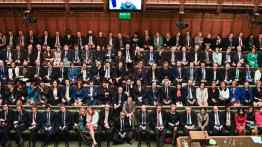
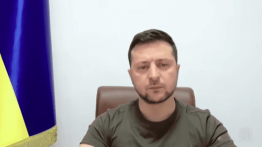
This afternoon, the Ukrainian President Volodymyr Zelensky addressed the House of Commons. A single flat-screen TV broadcast his speech to a packed chamber. Zelensky appeared in plain green fatigues next to Ukraine’s blue-and-yellow flag. He looked pale, tired, fearless and determined. Squads of foreign killers are roaming his homeland trying to find him. His words were spoken in English by a translator who probably had no advance sight of the text. The halting, ungrammatical phrases made the address strangely powerful. ‘I would like to tell you about the 13 days of war. The war that we did not start.’ Zelensky’s goal is simple. ‘We do not want to lose what is ours.

Zelensky’s Churchillian address to the Commons

From our UK edition

Ukrainian President Volodymyr Zelensky was greeted with applause and a standing ovation this evening when he appeared before the House of Commons. The Ukrainian president – who addressed MPs by video link – gave a short but impassioned speech. He said that he was addressing the UK parliament ‘as a citizen, as a president of a big country, with a dream’ – comparing his country’s fight against Russia to the British war effort against Nazi Germany: ‘You didn’t want to lose your country when Nazis wanted to take your country.’ He drew parallels between the UK’s decision to fight then with Ukraine’s now – offering an update of the circumstances the Ukrainian people now find themselves in.

Republican hawks squawk at each other

Cockburn has never been much of a hawk, unless you count his begrudging deficit hawkery over the massive tab he ran up at his local bar. But many elected Republicans are very hawkish on foreign policy, supporting "peace through strength," as Ronald Reagan put it, as well as occasionally war through strength. So how are the GOP's highest-flying hawks handling Russia's invasion of Ukraine? Cockburn was surprised to find them divided. Nearly every Republican lawmaker (and Democrat for that matter) agrees that we need to throttle Russia with economic sanctions. It's on the question of whether the United States should implement a no-fly zone over Ukraine that the cracks begin to show.

Putin miscalculated. Let’s not do the same

From our UK edition

Only the Russian people can decide how long Putin remains in the Kremlin, but the invasion of Ukraine will likely shorten his reign. In a lengthy interview when he assumed power 22 years ago, Putin answered a question about the forced resignation of German Chancellor Helmut Kohl by saying that ‘after 16 years, any people – including the stable Germans – get tired of a leader’. Russians have been more patient, but they didn’t expect to be led into pariah status. Change could come from within the political elite, many of whom are aware how counterproductive this war is for Russia, and some of whom feel shame for the suffering inflicted on Ukraine.

Russia’s war on Ukraine: the lessons so far

From our UK edition

The sheer complexity – and horror – of Russia’s war on Ukraine makes it difficult to distil the essential points. To take only one example, the battlefront north of Kiev, where the Russian convoy is stalled, is significantly different from that along the Black Sea, where Russian forces from Crimea have made substantial progress. A third front, in the east, is consolidating in Russia’s favour, though the fight was much harder and longer than Moscow expected. Amid this complexity, it is important to summarise what we know so far: 1. Vladimir Putin’s decision to invade Ukraine appears to be the most catastrophic strategic mistake since the end of the Cold War and by far the most dangerous.

How close is Russia to collapse?

From our UK edition

Russia is now as closed off to the world as the Soviet Union was before Mikhail Gorbachev made his first tentative steps towards glasnost more than 40 years ago. Pretty much all the progress that post-Soviet Russia had made towards becoming a 'normal' country has been reversed within the space of two weeks. Vladimir Putin’s presumed legacy – of stability, predictability and hugely improved living standards for the vast majority of Russians – is vanishing before their eyes. In recent days, Netflix and TikTok have joined what had already become a mass western boycott of Russia. American Express followed Barclaycard and Mastercard in leaving the Russian market.

Vladimir Putin, deep statist

Vladimir Putin's brutality in Ukraine is only going to get worse. The Ukrainians have fought valiantly, far better than anyone expected, but then that only means the Russians will have to up the slaughter in the coming days. As for Putin, he's reportedly fuming over his army's setbacks, threatening reprisals, while hunkering down in — I'm not making this up — his "mountain lair" deep in the Urals. If that makes Putin sound like a Bond villain, then that's just one of the many images of him that's emerged in recent days (the most popular is Putin as Hitler). The seemingly insane nature of his Ukraine invasion has left observers grasping for a reference point. Is Putin addled by cabin fever? Under the sway of extremists? Mentally ill? Who is this Vladimir Putin anyway?

What Erdogan is thinking about Ukraine

Turkey’s twentieth-century experience was very different from that of most European countries. During World War One, the late Ottoman Empire joined forces with Germany, a decision the sultans not only came to regret but that ultimately led to the fall of their monarchy. The Turkish War of Independence followed, touched off by Mustafa Kemal Atatürk, who transformed the Ottoman Empire into the secular Turkish Republic that still exists today. During World War Two, Turkey remained neutral, because of its previous experiences with joining a German military campaign, but also because it was in dire economic shape. In 1952, Turkey joined NATO, and has since been an ally of the West.

propaganda

Watch out for Ukrainian social media propaganda

Stop me if you’ve heard the one about the Ukrainian beauty queen who volunteered to fight the invading Russian forces. If you’ve been on social media these past few weeks, you’ve probably seen the striking photo of the woman clad in tactical gear and holding a rifle. “We are living in a materiel world, and I’m a materiel girl,” the stunner says to the viewer through her steely glare. Or the one about the Japanese ambassador to Ukraine kitted out in his ancestor’s samurai gear and ready to defend his adopted homeland? You’ve surely heard about the “Ghost of Kyiv,” a Ukrainian fighter pilot who has been terrorizing his Russian counterparts, accomplishing the feat — uncommon in contemporary air combat — of becoming an ace.