Ukraine

It doesn’t matter if Putin is mad

From our UK edition

Mike Tyson put it simply: ‘Everyone has a plan until they get punched in the mouth’. And Vladimir Putin has just experienced a blistering one-two: fierce resistance on the battlefield, trashing his plans for blitzkrieg, followed by the rabbit punch of international sanctions that will soon rock the whole of Russian society. ‘Putinism’ is not an ideology that can command intellectual or spiritual loyalty if it doesn’t deliver. It is not an ‘ism’ like Marxism. It is simply a Mephistophelean deal with the Russian people: if I can have double-glazing and a half-decent smartphone, you can have yachts and palaces. That deal is now off the table.


How to fix Britain’s broken asylum system

From our UK edition

Asylum is often seen as a simple morality tale—the generous spirited are in favour of it, the hard-hearted against. And we certainly read plenty of high moral dudgeon directed at the Home Office’s pedestrian response to the Ukraine refugee crisis. Much of that criticism was deserved. The lack of preparedness and then the inability to adapt quickly under pressure and allow in anyone with a Ukrainian passport, especially those with relatives here, while sorting out the bureaucracy once they arrived, was indeed dismaying.

Why is Putin firing a hypersonic missile in Ukraine?

From our UK edition

Putin, like many other belligerent autocrats, does like his Wunderwaffen, or ‘wonder weapons.’ Now it appears he’s even used one in an act of wasteful overkill in Ukraine: using the hypersonic Kh-47M2 Kinzhal (Dagger) missile to apparently destroy an arms depot in western Ukraine. The Kinzhal was one of the six ‘magic weapons’ Putin unveiled in a moderately-deranged section of his 2018 state-of-the-nation address, which was memorably enlivened by a computer animation of what looked like a nuclear attack on Donald Trump’s Mar-a-Lago resort in Florida.

Time for Turkey to align with the West

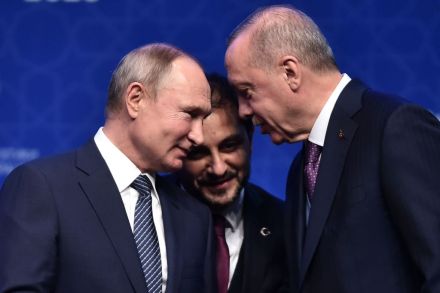
To deter Russia from invading Ukraine, the US and its Western allies vociferously vowed unified and decisive action against Russia. Countries like Hungary and Turkey, which enjoy favorable relations with Russia, were a concern, as it was not clear whether they would join US-led sanctions against Russia. Turkey’s refusal to enforce these sanctions would be a significant lifeline for Russia and show division in the Western camp. Turkey’s uncertain loyalties don’t come as a surprise. For one thing, Turkey is heavily dependent on energy imports from Russia. For another, Turkey has had a turbulent history with the Kremlin. When Putin annexed Crimea back in 2014, Turkey only expressed meek disapproval, a stark departure from its historical strategic stance regarding Ukraine.

west

The Russian army is running out of momentum

From our UK edition

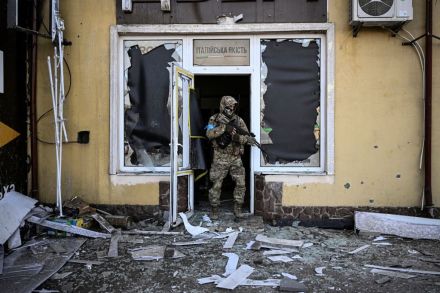
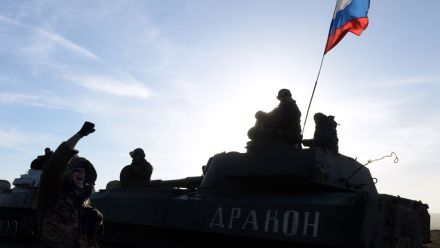
As the Russian invasion enters its fourth week it is clear that its forces are running out of momentum, although they continue to make limited territorial gains in the south and east of Ukraine. Having been denied a quick victory over Ukraine itself, Putin now needs to force the Ukrainian government to accept a ceasefire agreement that largely freezes the frontlines and allows him to claim a victory domestically. His strategy now appears to be to cut off the Ukrainian forces fighting a desperate battle to hold the line in Donbas in the east against combined Russian and separatist Donetsk and Luhansk forces from the rest of Ukraine, and to concentrate more firepower on the besieged cities of Mariupol in the south and Kharkiv, Sumy and Chernihiv in the north.

walter duranty

The reporter who covered up the Ukrainian famine

Now would seem to be an excellent time for the Pulitzer Committee to withdraw the award it bestowed on Walter Duranty in 1932 for his reporting on events in the Soviet Union. I know I am far from the first to call on the Pulitzer Committee to withdraw the award. I know as well that the Pulitzer Committee responded to one such call in 2003 by declaring that it could find no “clear and convincing evidence of deliberate deception” in Duranty’s 1931 reports from the Soviet Union published in the New York Times in 1931. Those thirteen reports on which the original award was based, admits the Pulitzer statement, amount to work that “measured by today's standards for foreign reporting, falls seriously short.” And time has moved on, etc., etc.

Why the Ukraine war might not end

One thing anyone who studies foreign policy for a living knows is that fairytale endings never happen in war. I suspect Ukraine will follow this sad trend. Why should we expect anything different? War never conforms to humanity’s desire for the good guys to defeat the bad guys. Indeed, great power politics grounded in realpolitik but shaped by mankind’s sense of morality is a mixture that yields tragic results. The demand for closure, clean endings to conflicts where the antagonists get punished, is rarely fulfilled. Wars only have happy endings in the movies. In fact, some wars never seem to end, as the combatants are left unfulfilled — or just haven't been weakened enough.

ukraine

Why was the Hunter Biden laptop story covered up?

From our UK edition

It’s now a familiar pattern – a sensational news story is dismissed by serious journalists as bogus right-wing agitprop. You’d have to be a swivel-eyed conspiracy theorist to believe that. You don’t want to be one of those. Then, a year or so later, the same important media organs, the same authorities who made you feel crazy for thinking that the story might be credible, turn around and tell you that, yep, it was true all along. It was just politically awkward to say so at the time. We saw it in the Covid years with the Wuhan lab-leak theory. We saw it to some extent with Jeffrey Epstein. And now we see it with the Hunter Biden laptop story.

Don’t cancel Russian culture

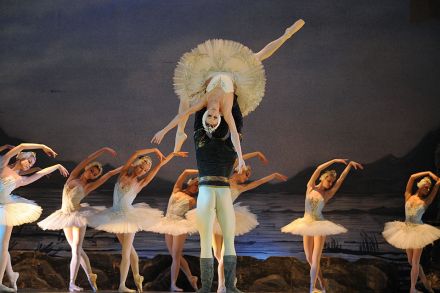
In the three weeks since Vladimir Putin launched his shocking invasion of Ukraine, the West has surprised the world with the severity of the economic sanctions it's imposed. No one has been more surprised than Putin himself, who believed the West too soft and his own nation’s oil too crucial to the global economy. How the West can further support Ukraine — while also avoiding the not-insignificant risk of a nuclear war — is a complex question. It will not be answered, however, by indulging in ugly prejudices or shunning Russian culture writ large. Since the war began, vandals have targeted businesses that are Russian-themed or owned by Russian expatriates.

merkel retirement

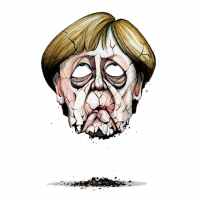
Angela Merkel’s legacy crumbles

Angela Merkel is one of the most recognizable names in modern politics and probably the only German chancellor since post-war leader Konrad Adenauer that Americans will remember. Merkel was the leader of the center-right CDU party and head of the German government for a full 16 years, making her one of the longest-serving chancellors in German history as well as the first woman to hold the post. Now the full scale of her disastrous reign is becoming clear. Following the nuclear power plant incident at Fukushima in 2011, Merkel began Germany's "Energiewende" (energy shift), intending to phase out of all of Germany's nuclear plants in favor of renewables.

tucker

Tucker torments a Republican for eighteen minutes over Ukraine

Last night, as is his custom, Cockburn was ingesting his daily dose of news in the most palatable way possible — by washing it down with a stiff drink. The television behind the bar was tuned to Fox News, and Cockburn was happy to cease sipping for a moment as the attractive visage of Florida representative Maria Salazar appeared on Tucker Carlson Tonight. The respite was short-lived, as the interview dragged on for a full eighteen minutes, and when Tucker derailed the debate toward the end of the segment with an outlandish analogy, Cockburn nearly spat out his gimlet. (Remembering his manners and the ever-inflating cost of Beefeater these days, he restrained himself.

support

Make China pay for its quiet support of Putin’s war

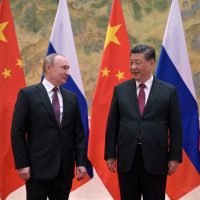
China is tacitly backing Putin’s aggression against Ukraine. The Biden administration should combat this by imposing economic costs on China through the corporate Environmental, Social and Governance disclosure requirements that are already in place. Xi Jinping and Vladimir Putin met in February at the Beijing Olympics, their thirty-eighth visit in the nine years since Xi took power. In a 5,000-word statement on February 4, Xi and Putin proclaimed their friendship with “no limits” and “no forbidden areas of cooperation.” Just weeks before the invasion, China signed agreements to buy from Russia energy and agricultural products worth over $200 billion.

Is Putin really losing?

From our UK edition

I remember my father telling me about Imre Nagy’s final broadcast before the Hungarian leader was taken by the Russians after they crushed his revolution in November 1956. He recalled listening as Nagy’s voice, often faint, came in and out of reception. He said: ‘This fight is the fight for freedom by the Hungarian people against the Russian intervention, and it is possible that I shall only be able to stay at my post for one or two hours. The whole world will see how the Russian armed forces, contrary to all treaties and conventions, are crushing the resistance of the Hungarian people.

I stink at virtue signalling

From our UK edition

The lodger looked at me blankly and pronounced wearily, as though intoning something he was tired of parroting, that I was putting vulnerable people at risk by not having the vaccine. I stifled a yawn. Can anyone really still think this? A half-hearted argument of sorts ensued while I was washing up and he was heating his microwave dinner in which neither of us could really be bothered. I tried to politely point out that it was a good job an irresponsible person like me was so foolhardy and fearless about Covid or he would not have found a room in the middle of lockdown, especially since he works at a hospital. And he put a stop to the discussion by saying: ‘Well, I’m trying to get my head around Ukraine now.

Russia had nothing to do with Brexit

From our UK edition

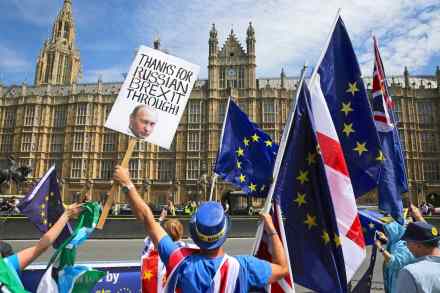
In light of Russia’s abhorrent invasion of Ukraine, certain corners of the internet have become obsessed – yet again – with Russia’s supposed involvement in the 2016 Brexit referendum. The connections are always left necessarily tenuous: there is very little in the way of logical reasoning that could really connect the two. Plenty of pro-Brexit figures have been hawkish on Russia since long before the 2016 referendum. Plenty of liberal remainers have, intentionally or not, acted as apologists to Russian wrongdoing. There is nothing to suggest Brexit enhanced Russia’s ability to invade Ukraine, either. The EU is not Europe’s primary security alliance, Nato is.

The West has to bite its lip for Saudi oil

From our UK edition

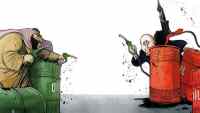
It would be ridiculous to claim that Boris Johnson’s visit to Saudi Arabia is not morally problematic. He is going to a country which held a mass execution for 81 people this weekend – a record number – and to visit a man who US intelligence blames for the brutal murder of the journalist Jamal Khashoggi. Yet, if the West wishes to reduce Vladimir Putin’s leverage – and stabilise the oil market – then it needs Saudi Arabia to pump more; no country has more spare capacity than Saudi Arabia, which could produce another 1.5 to 2 million barrels a day if it wanted to.

zelensky

Zelensky basks in the world’s spotlight

Ukrainian president Volodymyr Zelensky is flying high. The contrast between Zelensky, who virtually addressed Congress this morning, and Russian president Vladimir Putin, who rarely appears publicly, becomes starker almost by the day. Putin believed that he could launch a Blitzkrieg attack that would topple Zelensky but the very opposite has occurred. It is Putin who is cornered while Zelensky basks in the world’s spotlight. In his address, it was shrewd of Zelensky to fold Ukraine’s struggle for independence into the American saga. Essentially, he appealed to the New World to redress the balance of the Old World.

Ukrainians fear Chechen fighters. Russian soldiers hate them

From our UK edition

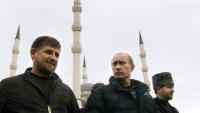
Residents fleeing the Kiev suburb of Bucha reported Chechens machine-gunning cars, even those with the word ‘children’ written in their windscreens. The arrival of Chechen strongman Ramzan Kadyrov, who claims to lead a force of 10,000 of his countrymen, will have unnerved Ukrainian volunteers defending their city. When the Chechens intervened in eastern Ukraine in 2014, they gained a reputation for undue cruelty. ‘There were stories of Kadyrov's guys castrating prisoners of war,’ one woman with family still living in the Donbas told me.  Ukrainian fighters won’t be the only ones feeling nervous. Russia’s military has had an acrimonious relationship with the Chechen leader stretching back nearly two decades.