Ukraine

The strange ideology that could be driving Putin

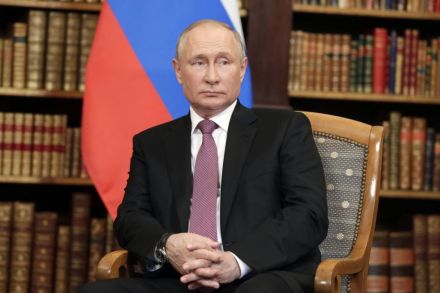
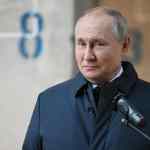
Vladimir Putin’s motives in attacking Ukraine have become the subject of many deep and searching speculations. Is he seeking a personal legacy by attempting to reassemble the parts of the Soviet Union that fell asunder? Is he pursuing Russian national security by making sure Ukraine never becomes the frontline of NATO? Is he gleefully taking advantage of a weak and incompetent US president? Is he vindicating the glorious history of the KGB? These theories are not mutually exclusive, and there are many more possibilities. I want to enter the discussion from my nearly pristine ignorance of Russian geopolitical designs.
eurasianism

When the establishment cries treason

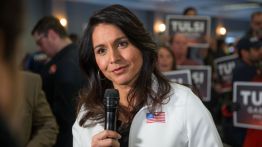
Last week, former Hawaii congresswoman Tulsi Gabbard released a video calling for a ceasefire in areas around American-funded biolabs in Ukraine. She also called for the United States to reconsider its support for these facilities, which experiment with pathogens that could be accidentally released in a time of war. For the crime of preferring that Europeans not die en masse from biological poisons, Gabbard was accused by Senator Mitt Romney of "parroting false Russian propaganda" and spreading "treasonous lies." Gabbard quickly responded with tweets of her own, citing plenty of evidence that, yes, Washington is funding these biolabs, and no, this isn't just a Kremlin talking point. And really, it was all a bit much, this accusation of treason from a sitting senator.

tulsi gabbard virginia treason

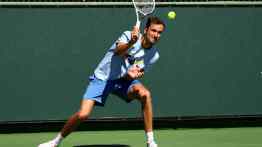
Why do Russian tennis stars need to condemn Putin?

From our UK edition

Nigel Huddleston is Under-Secretary of State for Sport, Tourism, Heritage and Civil Society, hardly the biggest job in government. Yet he seems a little inebriated on what little authority he has – at least if his latest remarks to the Department for the Digital, Culture, Media and Sport committee are anything to go by. Huddleston has taken on board the mood of the moment. He appreciates that sport must make a stand against Vlad the Invader and the invasion of Ukraine, and which sensible person would disagree? But boycotting Russia from major competitions and clamping down on dodgy oligarch football owners isn’t sufficient, apparently. Huddleston wants more.

Yes, Putin could use biochemical weapons in Ukraine

The Russian Defense Ministry held a briefing last week claiming that they have discovered US-led biological laboratories in Ukraine. Moscow stated that a rapid halt was brought to the facilities’ activities, adding that Kyiv and Washington had violated the Convention on the Prohibition of Biological and Toxin Weapons. The Kremlin did not feel the need to provide evidence of its claims, par for the course in Putin’s Russia.

biochemical weapons

Can Britain afford to spend more on defence?

From our UK edition

With rumours swirling that the Ministry of Defence will see its budget boosted in next week’s spring statement it’s hard not to wonder: was Donald Trump right? The former President repeatedly criticised Nato members in Europe for not contributing enough to support the alliance, relying instead on the US to shoulder the burden. And while the UK has met the Nato commitment to spend 2 per cent of its GDP on defence, we’ve seen a massive decrease in our defence budget over the last half century. As war returns to Europe, a consensus view has emerged – that the UK grew complacent when it came to security. We recoiled at Emmanuel Macron’s plans for a ‘true European army’, while spectacularly underestimating Russia’s disruptive potential.

crazy nuts

Is Putin nuts?

As Russian forces level Ukrainian cities with artillery, missiles and airstrikes, there's a concerted effort to get inside the mind of Vladimir Putin: from pundits, former US national security officials and current heads of government. What could possibly get the man to stop the bombardment and support a ceasefire? Is Putin intent on conquering all of Ukraine? Or is there some combination of concessions the Ukrainian government and the West could offer that would end the war and bring about a full Russian troop withdrawal? The fact is none of us know what Putin’s endgame is. Putin’s own advisors, especially those kept out of the inner circle, may not even understand what the Russian leader is planning.

How to offer a room to a refugee

From our UK edition

Michael Gove has announced that members of the public will be able to offer rooms and accommodation to named refugees through a government portal – Homes for Ukraine – which was launched on Monday. Gove said that he was confident there would be no shortage of people coming forward, although he gave a somewhat roundabout answer as to whether he himself would be hosting a refugee. The British public, however, appear to be very open to becoming hosts, with one in three saying they would offer a room, according to a poll conducted by The Observer. When Gove launched the scheme in the House of Commons yesterday, Lisa Nandy was quick to criticise the government’s policy of asking volunteers to name Ukrainians who they wished to host.

Russia is the West’s great tragedy

The books written about the tragedy of the Russo-Ukrainian War will be legion. In the meantime, there's another book that ought to have been written 20 years ago about a previous tragedy concerning Russia: how, following the collapse of the Soviet Union in 1991 and with it the demise of the communist regime, Russia and the West failed to “converge” in some way. Why did the two did not come to embrace each other politically, economically, and culturally? The rivalry between East and West has since 1917 been fundamentally an ideological and not a nationalist one. Historically, before the Bolshevik Revolution, Washington had been on cordial terms with Moscow, from which it had purchased the Russian territory of Alaska in 1867.

us-russia

Gove is clearing up Patel’s mess

From our UK edition

Michael Gove has a reputation as a minister for clearing up colleagues' messes – often the secretary of state he has replaced in a department – in a polite but very conspicuous fashion. Today it was Home Secretary Priti Patel's turn to see what it was like to get a visit from Gove and his dustpan and brush. As Levelling Up, Housing and Communities Secretary, Gove is responsible for one of the routes by which Ukrainian refugees can come to Britain, and he announced the details of the 'Homes for Ukraine' scheme in the Commons this afternoon. This has largely been passed to him because the Home Office is in such chaos over visa applications (and other matters).

What happens if Russia defaults?

From our UK edition

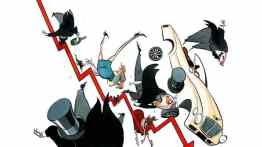
Well down the list of things to worry about as the ghastly Ukrainian tragedy unfolds is the high probability that the Russian government will stop paying its international debts. But this risk should certainly be somewhere on that list – as the fallout from past defaults has shown. We have been here several times before. Moscow also defaulted on its debt in 1998, exacerbating a sell-off across all emerging markets. It led to the collapse of a huge US hedge fund, Long-Term Capital Management, which had to be bailed out to prevent a worldwide meltdown. This came too late to save many other investors from large losses. Ten years later, apparently isolated problems in the US mortgage market did cause a global financial crisis.

Matt Hancock’s refugee embrace

From our UK edition

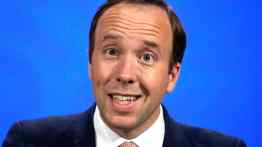
Who should be on this year's Honours' List? For Mr Steerpike, the answer is clear: Matt Hancock, MBE, for services to comedy. In recent months the rule-breaking romantic has performed a series of eye-catching antics to try and aid his bid back to power.  There was the Capital Jingle Bell Ball where he rocked up with Gina looking like a metrosexual Bond villain. There was the Serpentine swimming sesh when he ended up in hot water and the excruciating podcast interview in which he spoke about casual sex. And then of course there was the HarperCollins incident where the American publishing house had to distance themselves from reports Hancock was planning a self-justificatory Covid memoir.

Russia’s war is a global cancer

One thing I have always found fascinating about Russia is that when they tell us they are going to do something, they usually do it. So when Moscow struck a military base near the Poland-Ukraine border that was a staging ground for arms shipments, we shouldn't have been surprised. They told us that was their next plan of action just twenty-four hours before they did it. But that’s just the beginning of what Russia likely has in store for the West, NATO, and the entire world if we aren’t careful. Russian president Vladimir Putin’s plan seems simple: chaos on a scale that will extend far beyond Ukraine. You see, Putin is starting to come to grips with the fact that he can’t win the war in Ukraine — at least on paper — unless he destroys Ukraine.

cancer

The West needs to prepare for guerrilla war in Ukraine

From our UK edition

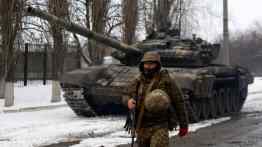
Russia's deputy foreign minister Sergei Ryabkov warned this week that convoys of weapons being sent to Ukraine would be considered legitimate military targets by Russia. It was a deliberately ambiguous and political statement more than anything else, but it is also a useful reminder of the need to think about the potential next phase in the war. It is still unclear whether the Russians will be able to recover from their unimpressive initial onslaught, but one way or another it seems likely that at least part of Ukraine will end up under Moscow’s control. It also seems pretty certain that Ukrainians behind the lines will not quietly submit, but instead wage a partisan war against the occupiers.

The fatal miscalculation that led to war in Ukraine

From our UK edition

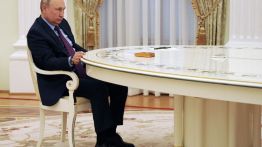
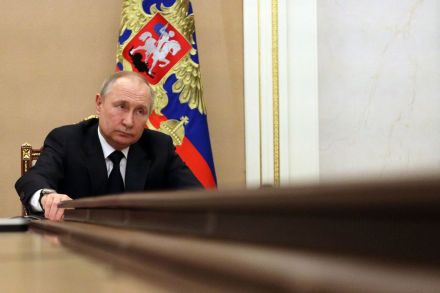
The war against Ukraine – or the ‘special military operation’ as it is compulsorily known in Moscow – has lasted over a fortnight. For weeks Putin maintained a bristling encampment of forces in western Russia, southern Belarus and Crimea. He hoped this would provoke the collapse of the ‘neo-Nazi’ Ukrainian government and its comedian-president. When this failed to occur, he invaded. Photographs show Putin sitting at the end of a long table keeping his distance from his leading associates, such as the booming-voiced foreign minister Sergei Lavrov and khaki-clad defence minister Sergei Shoigu. Gone are the days of Kremlin camaraderie: Putin now expects and gets the maximum display of deference from his followers.

Kamala Harris laughs at a war

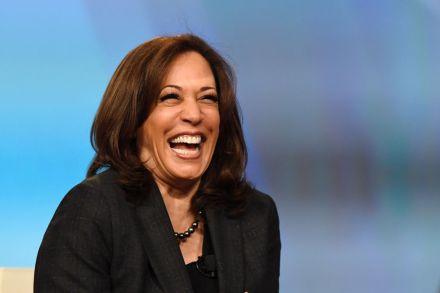
It’s nice to be prescient. On Thursday, in a column titled “Kamala Invades Poland,” I introduced the world to “cackle diplomacy.” “Silly partisan hyperbole!” I nearly heard as the social media-ites had their say. But then the vice president of the United States did me proud. Just a few hours after my column posted, there she was, holding a press conference with Polish President Andrzej Duda. Some say the people who run our government sent Kamala Harris to Eastern Europe in order to give her a chance to shine in the sphere of international relations. Watch her performance and tell me what you think. “I am here, standing here. On the northern flank...on the eastern flank...talking about what we what we have in terms of the eastern flank and our NATO allies.

Russia has been preparing for war with the US for decades

From our UK edition

The lights were blinking off. As raucous pro- and anti-Trump crowds flooded into Washington for the presidential inauguration in January 2017, the DC police department’s citywide surveillance cameras stopped recording. Within seconds, 123 of its 178 surveillance cameras, including those monitoring the streets around the White House and the headquarters of multiple federal agencies, had been ‘accessed and compromised.’ The intelligence gap lasted for three days, from January 12 to 15. Coming on the heels of Russia’s covert intrusions into the 2016 campaign, officials at first feared Vladimir Putin—or other bad actors, from China, Iran or North Korea—had dramatically upped their game to create more chaos in American society and its politics.

The reality of being ‘under siege’ in Kyiv

From our UK edition

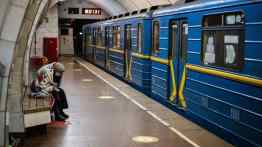
Kyiv, Ukraine I've never commuted into a warzone by train before, but I can now recommend it. The express train to Kyiv from Lviv near Ukraine’s Polish border has several advantages over coming in by car. Firstly, it avoids a 14-hour motorway drive, where fuel is short and traffic jams are long. Plus, the online booking app still works far better than any in Britain. Despite the risk of Russians-on-the-line, the train has been kept running to help Ukrainians flee Kyiv for the Polish border. But it returns to Kyiv largely empty, save for a few Ukrainians on mercy dashes to pick up relatives. We trundle through the night, the lights dimmed. Vodka is shared round. The only problem is that we arrive into Kyiv central station at 5am, three hours before curfew ends.

Putin’s dream of annexing Ukraine is over

From our UK edition

As the Russian invasion of Ukraine enters its third week, it is becoming abundantly clear that the Kremlin’s maximalist geopolitical aims of regime change and a ‘greater Russia’ which includes Ukraine and Belarus are no longer achievable. The question now is how much damage will Russian forces inflict on Ukrainian cities and their brave defenders before Putin and his advisors lower their ceasefire conditions to terms that Ukraine’s leaders and population can accept. Ukraine is in a strategically stronger position than many in the West appreciate, but the war on the ground is still stacked in Moscow’s favour in the short term.

Peace and its consequences in Ukraine

It is now a matter of consensus that Vladimir Putin never intended to fight the type of war that now faces him in Ukraine. What was plainly meant to be a blitzkrieg-style assault has devolved into a war of attrition, with death, destruction and violence on a scale unseen in Europe since the disasters of the last century. It is quite plain that the Kremlin, despite its bluster, is aware of this. The Kyiv government's claims of Putin dismissing his generals and raving in fury at his security services are consistent with events on the battlefield; indeed, after two weeks of fighting, Russia has only managed to decisively claim one Ukrainian city.

volodymyr zelensky ukraine invasion