Ukraine

A Ukrainian win is more important than ever

From our UK edition

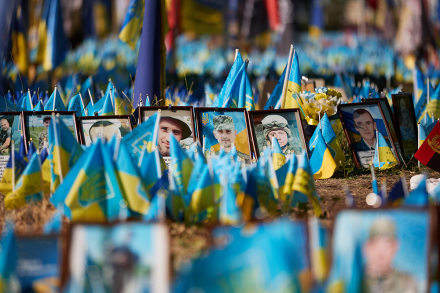
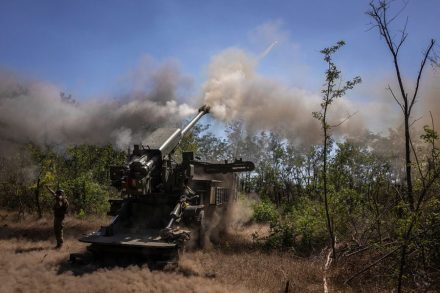
On 3 April we mark 1,500 days since Russia invaded Ukraine; on 11 June, the conflict will have lasted longer than the first world war. At that point in 1918, the German army was in complete collapse amid the success of the final Allied offensive, as the Kaiser’s disillusioned troops were forced back through the battlefields of the Somme. By contrast, the Ukrainian conflict remains locked in a bitter and bloody war of attrition. The Ukrainians have displayed an inspiring level of resilience; indeed, in recent months they have made small territorial gains. But the outbreak of war in the Middle East has, for the moment, strengthened Vladimir Putin’s hand.

With no coherent strategy, Britain seems perpetually adrift in the world

From our UK edition

The British state seems perpetually befuddled. Every international crisis catches it in its sudden glare like so many headlights trained on a nervous rabbit hopping hopelessly around a motorway. One moment Russia is invading Ukraine, then Hamas attacks Israel, Israel flattens Gaza, America knocks out Venezuela, then attacks Iran, while all the time China leers over Taiwan. Each new event leaves us spinning. Whose side are we on? What do we want? How do we get it? We use grand words to navigate our way in the confusion: ‘the special relationship’; ‘the national interest’; ‘the rules-based order’. But if these once signified some grand story we could all relate to they now feel empty and confusing.

Why Ukraine’s Russian oil strikes are backfiring

Every drone Ukraine fires at a Russian oil terminal is meant to defund Moscow's war in Ukraine. Right now, each one may be doing the opposite. Ukraine's strikes on Russian oil export infrastructure are intended to starve Moscow of the budget revenues that fund its war machine. The logic is straightforward: disrupt exports, reduce revenues, constrain the war effort. Kyiv has been explicit about this: Ukrainian officials consistently frame attacks on oil terminals as direct hits on Russia's war chest, treating every barrel that cannot be shipped as a ruble that cannot be spent on missiles or mobilization. Reuters puts the scale of that disruption in stark terms – at least 40 percent of Russia's crude export capacity, roughly 2 million barrels per day, is currently offline.

ukraine oil drone

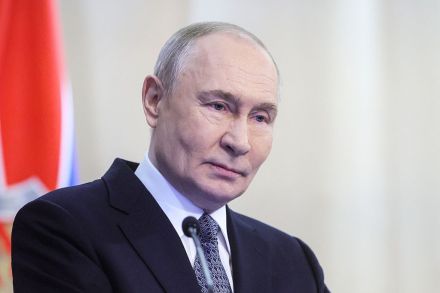
Putin is enjoying the Iran war

After Iran unleashed a torrent of missiles against its neighbors – including those with whom it had enjoyed friendly relations such as Turkey and Azerbaijan – few regional leaders are in the mood to congratulate the new Supreme Leader Ayatollah Mojtaba Khamenei. Few, but not none. "At a time when Iran is confronting armed aggression, your work in this high office will undoubtedly require great courage and dedication," wrote Vladimir Putin in an official message of congratulation to Khamenei Junior. "I am confident that you will honorably continue your father’s legacy and unite the Iranian people in the face of these severe trials.

‘More than half our squad were executed’: Inside Russia’s rotten army

The Russians are on the warpath – and Europe is Vladimir Putin’s next target. That was British Prime Minister Keir Starmer’s alarming claim at the Munich Security Conference in February. Britons "must be ready to fight, to do whatever it takes to protect our people, our values, and our way of life," Starmer warned. Britain and Germany’s top military commanders delivered the same message in a recent article. Russia’s military posture "has shifted decisively westward," wrote Air Chief Marshal Sir Richard Knighton and General Carsten Breuer. Soon the Kremlin "may be emboldened to extend its aggression beyond Ukraine." Really? According to much western coverage in mainstream and social media, the Russian army is crumbling, corrupt and inept.

How Silicon Valley is calling the shots on the battlefields of Ukraine

Sometime in the late morning of February 4, somebody at SpaceX headquarters pressed a computer key. A command line was beamed to Starlink’s 9,600 satellites in low Earth orbit. Their onboard processors, circling 550 kilometers above the Earth, instantly obeyed the command and fractionally changed their operational settings. Back down on the frozen ground, in the trenches, bunkers and ruined cities of Russian-occupied Ukraine, hundreds of Starlink terminals lost internet connectivity. As another freezing night set in, the Russian army’s drones and tactical comms went dark. “We are left without communication!” complained a frontline Russian military officer in a video posted on the Telegram channel “Voenkory Russian Spring.

‘More than half our squad were executed’: Inside Russia’s rotten army

The Russians are on the warpath – and Europe is Vladimir Putin’s next target. That was Sir Keir Starmer’s alarming claim at the Munich Security Conference earlier this month. Britons ‘must be ready to fight, to do whatever it takes to protect our people, our values, and our way of life’, Starmer warned. Britain and Germany’s top military commanders delivered the same message in a recent article. Russia’s military posture ‘has shifted decisively westward’, wrote Air Chief Marshal Sir Richard Knighton and General Carsten Breuer. Soon the Kremlin ‘may be emboldened to extend its aggression beyond Ukraine’. Really? According to much western coverage in mainstream and social media, the Russian army is crumbling, corrupt and inept.

No, Zelensky: World War Three hasn’t started

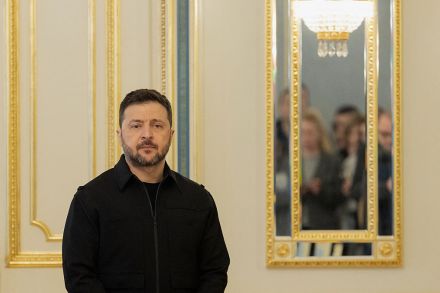
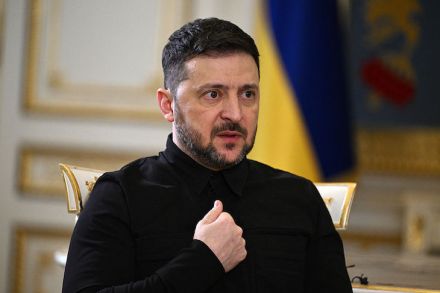
Ukrainian President Volodymyr Zelensky says that World War Three has already started. Speaking to the BBC on the eve of the fourth anniversary of the Russian invasion, it’s understandable why he would want to take this line, but he's wrong. What is striking about Putin is the lack of a messianic ideology On an emotional level, Zelensky has seen millions of his citizens flee within and out of his country, its cities and infrastructure shattered and Vladimir Putin's propagandists denounce him variously as a Nazi apologist, drug addict and western puppet. Of course he will frame this in the most apocalyptic of terms. More to the point, Ukraine is now dependent on European aid. It is European money that keeps the government solvent, and arms the troops.

ukraine zelensky

Is the war in Ukraine any closer to ending?

Is the latest round of Russia-Ukraine peace talks, sponsored by the United States and currently under way in Geneva, likely to hasten the war’s end? Donald Trump seems to believe so. On Friday, President Trump claimed that "Russia wants to make a deal, and Zelensky will have to hurry. Otherwise, he will miss a great opportunity. He needs to act." Europe, for its part, remains deeply skeptical and is urging Ukraine to fight on. As the EU's Foreign Affairs chief Kaja Kallas told the Munich Security Conference last week, "the greatest threat Russia presents right now is that it gains more at the negotiation table than it has achieved on the battlefield.

Prediction markets have turned the world into a casino

How might the ayatollahs know an American strike force is coming? Advanced radar technology, perhaps, or a mole somewhere in the Pentagon. Or they could just look at Polymarket. There is currently around $125 million wagered in the largest market predicting when the US will next strike Iran. Given the current odds, traders reckon an attack will take place in the second half of this month. If Nicolás Maduro had checked Polymarket on the night of January 2, he would have seen his odds of losing power spike from around one in ten to 66 percent, hours before Delta Force arrived. One trader has racked up $150,000 in profits in seven months, placing trades on military activity by Israel Polymarket and its competitor Kalshi are prediction markets.

prediction markets

The secrets of Putin’s shadow fleet

Of all the weapons in Vladimir Putin’s arsenal, the most strategically crucial has proved to be not hypersonic missiles but the motley fleet of oil tankers that have allowed Russian oil to keep flowing to international markets. Oil dollars have been the lifeblood of Russia’s war economy during four years of conflict. And the West’s failure to shut that export business down has, so far, been the single most important factor behind Putin’s continued military resilience. Economic sanctions were supposed to be the West’s superpower to punish the Kremlin for invading Ukraine in February 2022. So how come Russia now exports more oil by sea than it did at the beginning of the war?

Why is Ukraine trying to cancel Swan Lake?

From our UK edition

Two of Ukraine’s most famous ballet dancers face dismissal, cancellation and possible mobilisation into the army. Their crime? They dared to dance a segment of Russian composer Pyotr Tchaikovsky’s Swan Lake during a European tour. The Ukrainian Ministry of Culture slammed Serhiy Kryvokon and Natalia Matsak’s performance as ‘promoting the cultural product of the aggressor state’. The National Opera of Ukraine cancelled Kryvokon’s next scheduled performance – as well as his exemption from compulsory military service and permission to travel. If the dancer returns to his homeland, he will not be able to leave again.

Can Steve Witkoff persuade Putin to give up the Donbas?

Last week was one of realpolitik, Trump-style. Greenland was sorted, the "New Gaza" unveiled, and all that was left was Ukraine and Russia. Donald Trump went from Davos back to the US but ordered his special envoys to Abu Dhabi, armed with the president’s formula for ending the war in Europe, to get a deal to stop the killing and destruction. As the envoys from the US, Russia and Ukraine opened the talks on Friday in the capital of the United Arab Emirates, none of the pre-signaling indicated that a breakthrough was in the offing. Two days were allotted for the meetings, in the expectation that it wouldn’t just be a rehash of the same, familiar arguments.

witkoff

The Kremlin’s plan to create a new wave of Ukrainian refugees

From our UK edition

What is the limit of Ukrainian civilians’ endurance? In nearly four years of relentless war, Ukraine’s people have faced summary executions, ‘drone safaris’ where unmanned aerial vehicles hunt people down city streets and constant bombardment of cities by swarms of drones and missiles. This winter their remarkable resilience faces its severest test yet as Russian forces reach a tipping point in their systematic attempt to knock out the country’s energy infrastructure. In each of the past three winters, Vladimir Putin has attempted to render Ukraine’s cities uninhabitable by plunging them into darkness and cold, without success. But this time it looks like the Kremlin’s campaign to weaponise winter may be succeeding.

What Ukraine’s ‘Amazon-for-war’ website can teach the US

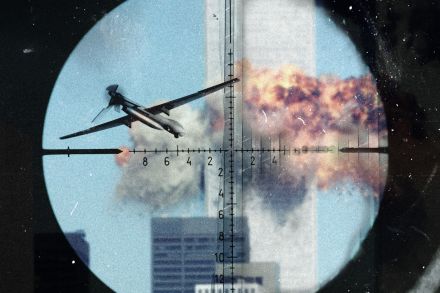
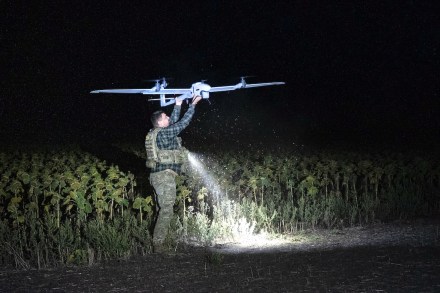
Donald Trump calls Dan Driscoll the “drone guy.” The 39-year-old Secretary of the Army – also a “total killer” with a “nice, beautiful face,” according to Trump – is on a mission to modernize the US military and firmly believes that drones are “the future of warfare.” The former Army Ranger, Yale Law School student and venture capitalist, announced last month that the Army was going to buy 1 million drones. Catch-up will be hard. Currently, the US military acquires around 50,000 a year – while Russia makes 4 million and China 8 million. In his race against time, Driscoll’s north star is Ukraine, the country he calls the “Silicon Valley of warfare,” where cheap, often garage-made drones have effectively killed tank warfare and redefined the modern battlefield.

dial a drone

International statesman or ‘never here Keir’?

From our UK edition

18 min listen

From 'regime change' in Venezuela to Russia's war in Ukraine, the Labour government is trying to navigate complicated situations across foreign affairs. Having appeared to weather the domestic reaction to the situation in Venezuela, Keir Starmer is in Paris today to discuss Ukraine alongside Chancellor Merz and Presidents Macron and Zelensky. This is undoubtably important – but to what extent will this fuel the criticism that the Prime Minister spends too much time abroad? And how can Starmer reconcile the demands of foreign affairs with his domestic priorities? James Heale and Tim Shipman join Patrick Gibbons to discuss. Produced by Patrick Gibbons.

Portrait of the week: Farm tax backdown, trail hunting crackdown and anti-misogyny courses for 11-year-olds

From our UK edition

Home The Department for Environment, Food and Rural Affairs announced plans to criminalise trail hunting ‘amid concerns it is being used as a smokescreen for hunting’; another part of the new animal welfare strategy will make it a crime to boil a live lobster. The government revised the threshold below which, from April, agricultural assets may be handed down without incurring inheritance tax, from a planned £1 million to £2.5 million. Downing Street cancelled regular afternoon lobby briefings and said it would hold more morning press conferences with limited questions from selected journalists.

Trump’s ‘peace plan’ for Ukraine is wicked

From our UK edition

It is necessary to deal with criminals. It is immoral – and, if history teaches, dangerous – to absolve them of crimes and reward them. Yet this is how Trump’s peace plan treats Putin’s Russia. In the morally inverted universe of the plan, there is no distinction between perpetrator and victim, aggressor and defender, militarised dictatorship and democracy. Invading a peaceful neighbour with no provocation whatsoever, Russia killed as many as 100,000 Ukrainian soldiers and 14,534 civilians, including over 3,000 children, who perished in incessant missile and drone bombings of residential buildings, schools, hospitals, churches, maternity wards, kindergartens and children’s playgrounds.

Europe has left Ukraine living on borrowed time

Russia started the war on Ukraine, so Russia should pay for the damage it has wrought. Such was Volodymyr Zelensky’s forceful message to European leaders last night as he pleaded for a "reparations loan" backed by the €190 billion ($222 billion) of Russian Central Bank capital frozen in a Belgian clearing bank since Putin’s full-scale invasion. "Just as authorities confiscate money from drug traffickers and seize weapons from terrorists, Russian assets must be used to defend against Russian aggression and rebuild what was destroyed by Russian attacks," Zelensky told his European allies. "It’s moral. It’s fair. It’s legal." But after negotiations that went late into the night, Europe ultimately shied away from grabbing Russia’s money.

zelensky loan ukraine

Boris Johnson: will cowardly Europe betray Ukraine again?

Boris Johnson has urged European leaders to hand $247 billion of frozen Russian central bank assets to Ukraine – but says he fears they “lack the courage” to do so, in an interview with The Spectator. The former British prime minister also warned that Trump is at risk of “morally polluting” himself if he caves to Putin’s demands in peace negotiations and encouraged his negotiating team to stop the “nauseating deals” they are discussing about joint business ventures.“I think Europe is at a very difficult point because Europe has got to do the reparations alone,” Johnson said. “And I'm worried that they lack the courage. They must do it. I think that's the only way to get the Americans to take Europe seriously.

Boris Johnson