
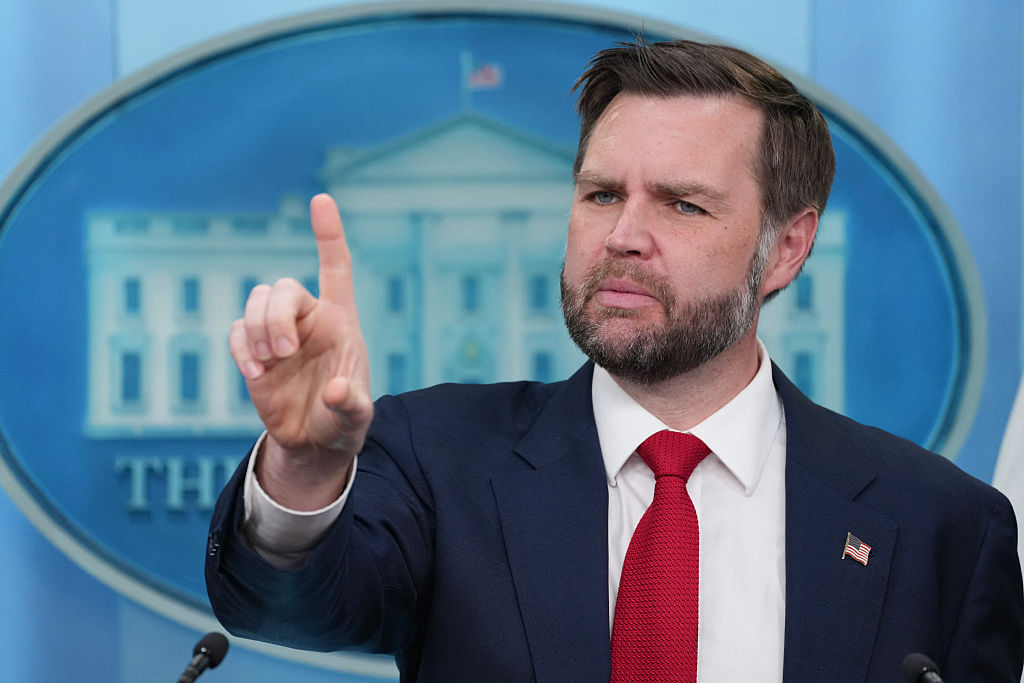
J.D. Vance didn’t call Benjamin Netanyahu out by name, but in sternly reprimanding the “Cabinet of the Israeli government” from the White House podium on Thursday, he sent Israel and its Prime Minister a clear message. In demanding more respect, raising the threat of severe consequences and ordering the country to get in line, the Vice President echoed the public fight he picked with another world leader and US ally: Volodymyr Zelensky.
It wasn’t quite as spectacular as the now infamous Oval Office blow up in February last year between Trump, Vance and the Ukrainian president. But Vance went further in his criticism of Israel than any other US President or Vice President in recent memory. He expressed his irritation with Israeli officials and Cabinet members, including Itamar Ben-Gvir and Bezalel Smotrich, who have criticized President Trump’s proto-peace deal, saying it will hand billions of dollars to Tehran and fail to guarantee Israeli security. Ben-Gvir says that Israel is not bound by it. Vance declared, to the world’s press:

What I will say, and this does bother me, is that you’ve seen people within Bibi’s Cabinet who have come out and attacked the deal and in some ways very personally attacked the President of the United States and I guess my message to them would be two-fold.
Number one, Donald J. Trump is the only head of state in the entire world who is sympathetic to the nation of Israel at this moment in time and he happens to be head of state of the world’s superpower. If I was in the Cabinet of the Israeli government I might not be attacking the only powerful ally that I have anywhere left in the entire word.
And the second message I would give to those Cabinet members, Bibi to his credit has not gone down this path, but to some of these Cabinet members in Israel who are attacking the President of the United States, the other thing that I would say is that over the last three months, two thirds of the defensive weapons that have protected your homeland have been built by American hands and paid for by American tax dollars.
The message was clear: Netanyahu must get his government in line – or else. Vance also artfully gave credit to Bibi for not kvetching publicly over the deal, which was a clever way of damning with praise.
Trump and Vance then see Israel as a junior partner that is insufficiently grateful for America’s mighty support and getting in the way of the President’s desire to end hostilities. At the time of the Trump-Zelensky clash last year, America and Ukraine’s relationship had already come under strain. Similarly, Trump has in recent weeks repeatedly made clear his displeasure with Netanyahu for derailing the peace process and being, as he put it, ‘fucking crazy’.
And, now as then, it has been the Vice President who is upping the resentment ante. When Zelensky demurred on negotiating with Russia, Vance warned him that not engaging with Trump’s peace plan for the region would result in “the destruction of your country.” He tore a strip off Zelensky for being insolent, “Mr President, with respect, I think it’s disrespectful for you to come into the Oval Office to try to litigate this in front of the American media… Have you said ‘thank you’ once this entire meeting?” he asked. “Offer some words of appreciation for the United States of America and the President who’s trying to save your country.”
After that bruising encounter, the Trump administration axed military aid to Ukraine and stopped intelligence sharing. Ukraine was forced to go cap in hand to European countries and become an arms exporter to make up the revenue shortfall. A year later, that strategy appears, at least, to have been successful. Europe has provided €160 million funding since Trump cut US aid and Zelensky has signed numerous contracts to export Ukrainian arms to other countries.
Teflon Trump, the master of the scapegoat, will have the choice of two easy victims to pin the blame on if his plan veers off the rails
But Israel – as Vance pointed out – has fewer friends than Ukraine. And if Tel Aviv’s relationship with the one country that supports it fractures further, as appears entirely possible if not likely, Israel will be on its own against the world. The Jewish state will have to fund and arm itself. Currently it receives $3.8 billion dollars of military aid from America every year – free money to spend on US arms. That deal is up in 2028 and is currently being renegotiated.
It is worth noting that Vance and Trump’s optimism over peace with Russia hasn’t fared all that well. Last August, the VP said that he believed the US could be within touching distance of a deal. Trump said a deal could be “weeks away.” Yet a Russian barrage on Kyiv on Monday killed 11 people and set the historic Dormition Cathedral alight. In response, Ukraine unleashed possibly its largest ever drone attack on Moscow, targeting oil infrastructure and turning the sky black.
Trump’s proposed peace deal with Iran may be every bit as flawed as the deal he proposed between Ukraine and Russia. But, unlike Zelensky, Netanyahu has no other choice – he really doesn’t have the cards. And if he’s not careful, Trump will maneuver Israel into a position whereby they take the blame for his flawed plan. Teflon Trump, the master of the scapegoat, will have the choice of two easy victims should the deal come undone: Israel or the face of the Iran deal, his Vice President (“If it doesn’t work out, I’m blaming J.D.” Trump joked this week).
Netanyahu might make the decision easier for Trump. Yesterday, he was tepid about the deal. He said that “additional challenges lie ahead of us,” requiring “calmness, a firm stance on our security interests, and at the same time, maintaining the important connection with our American friends.” But he also vowed that Israel would maintain “the security zone in southern Lebanon” and not withdraw as Iran has demanded. Currently, it seems as though Netanyahu thinks that security means renewed hostilities with Hezbollah, even if Iran walks away from the deal. If that does happen, Trump will have his scapegoat.
This argument with America will probably intensify as Israel heads towards an election in October. Any semblance of collective Cabinet responsibility will evaporate as ministers choose words that resonate with the electorate rather than their Prime Minister or the US President. National security is the first, second and third priority of Israeli voters.
In castigating the Israeli Cabinet, Vance is using language familiar to the MAGA movement. He’s also signaling that he is still with the America First movement, and edging slowly towards the anti-Israel positions staked out by the likes of Tucker Carlson, Megyn Kelly and Joe Kent.
A fight with Israel may be helpful for Vance ahead of 2028. America’s relationship with Israel hasn’t yet deteriorated quite as disastrously as it did with Ukraine, but it’s certainly headed in that direction. It’s all music to the ears of the Iranian regime that will consider their victory complete if it leads to a permanent fracture of US-Israel partnership.






Comments