Ukraine

The trouble with Nick Robinson’s Thoughts for the Day

From our UK edition

Thought for the Day appears every morning on BBC Radio 4. This preachy slot is hallowed by longevity, if not because of its content. But when Nick Robinson presents the accompanying Today programme, he often uses the moment after the hourly news and papers to contribute a political Thought for the Day of his own. Before he settles down to attack a government minister with his dentist’s drill, Nick likes to deliver his own wisdom about the foolishness of political leaders. ‘Making promises is easy,’ he told listeners on Tuesday. ‘Explaining how you’ll pay for them is rather harder, as the Chancellor and the Prime Minister are beginning to discover.’ What is the point of such remarks?
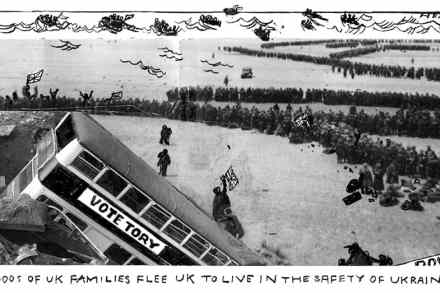
Portrait of the week: Tory party conference, gas supply warning and Denmark’s royals stripped of titles

From our UK edition

Home Liz Truss, the Prime Minister, came up with a message for the Conservative party conference: ‘Whenever there is change, there is disruption… Everyone will benefit from the result.’ Her words followed a decision not to abolish, after all, the 45p rate of tax, paid by people who earn more than £150,000 a year. Backbench Conservative MPs had let it be known they would not vote for it. ‘The difference this makes really is trivial,’ said Paul Johnson, director of the Institute for Fiscal Studies thinktank. But the pound rose and the government was able to borrow a little more cheaply. Kwasi Kwarteng, the Chancellor of the Exchequer, told the conference: ‘I know the plan put forward only ten days ago has caused a little turbulence. I get it.

Why Russia could use nuclear weapons in Ukraine

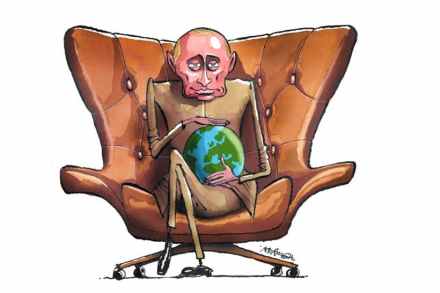
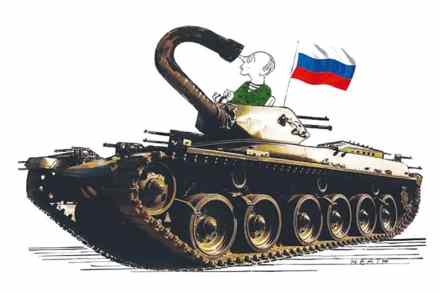
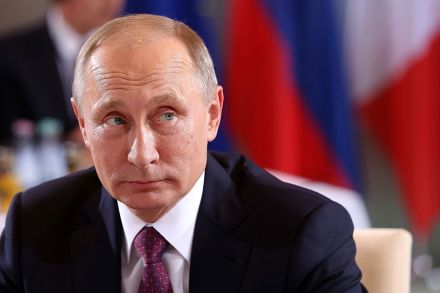
Here is one fact about the war in Ukraine you need to understand: the longer it goes on, the more advanced Western arms will flow to Kyiv. And that could mean that Russian president Vladimir Putin will feel he has no choice but to use tactical nuclear weapons to even the odds — no matter what happens as a result. You think that sounds crazy, right? Well, let me ask you this: did you ever imagine Putin would invade Ukraine? That action alone casts doubts on how rational an actor he really is. But let's take a step back for a moment. In order to understand why Putin may very well consider using tactical nukes, let's get a sense of where he thinks he stands in this war.

sanctions putin russia davos oligarch

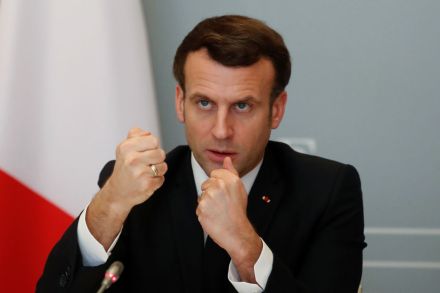
Europe is more bark than bite on Ukraine

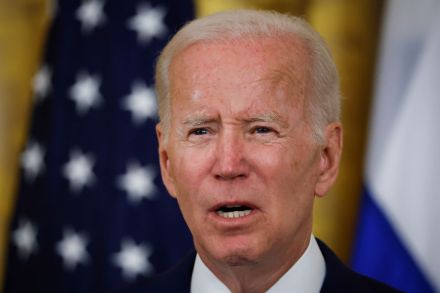
Last Friday, President Biden signed a spending bill that will keep the government’s lights on until December 16, when lawmakers will have to cobble together a funding resolution to avert a shutdown. Tucked into that law was another tranche of security and economic assistance to Ukraine, to the tune of $12.3 billion. The signing came two days after the Defense Department announced the release of an additional $1.1 billion military package for Kyiv, which will include 18 more HIMARS systems, 150 armored vehicles, and ammunition of various calibers. The Biden administration has provided the Ukrainians with over $16 billion in security assistance since Russia’s invasion in February. Washington’s hands have been cramping up from writing so many checks.

macron europe blame

A short history of language in Ukraine

From our UK edition

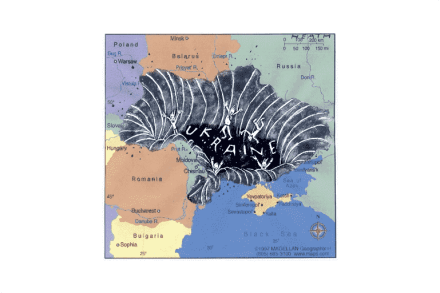
After six months of war in Ukraine, most observers agree that the roots of Russian aggression lie in the country’s deep-rooted attitudes to culture and history. In line with Russia’s nationalist traditions, Putin denies any place for a separate Ukrainian identity. The Ukrainians, in contrast, see themselves as a proud nation with their own history, culture, centuries long struggle for independence, and, of course, language. And while Ukrainian has been dismissed as a dialect of Russian in Moscow, it in fact has a long history – and is very much a language in its own right. That independence can be seen in the genesis of the word ‘Ukraine’ itself.

Will Nato accept Ukraine?

From our UK edition

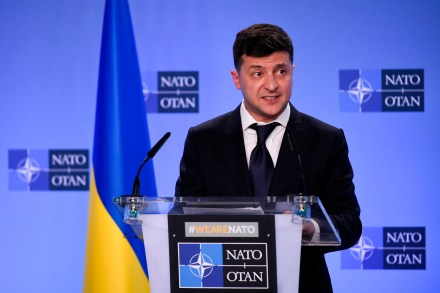
Shortly after the invasion of Ukraine, Volodymyr Zelensky made an offer to Vladimir Putin. Ukraine would drop its ambition to join Nato and would instead stay neutral, he said. It would not align with the West, in exchange for an end to hostilities. It was a sincere offer, and unpopular with Ukrainians. Yet it was significant: Putin had cited Ukraine’s Nato ambitions as the main reason for the invasion, saying it showed the West was somehow threatening Russia. But today, that offer ended and Zelensky is seeking the ‘accelerated’ Nato accession granted to Finland and Sweden this year. Will Nato accept? Jens Stoltenberg, Nato Secretary-General, dodged the question when asked today.

Why Putin might have attacked Nord Stream

As the world wonders what happened to the Nord Stream 1 and 2 pipelines, many suspect that Russian President Vladimir Putin is behind the sabotage. At first glance, it appears strange that Russia would damage pipelines that its own companies run. But Putin has several possible reasons for carrying out the attack. One reason could be that Gazprom (the Russian state-owned gas giant) wants to avoid paying penalties for failing to fulfill its contractual obligations. Since August 31, Russia has halted gas exports via both Nord Stream pipelines, which follows a similar move in July where the Kremlin cited erroneous maintenance issues as the cause of the short shutdown that month.

War has come home to Russia

From our UK edition

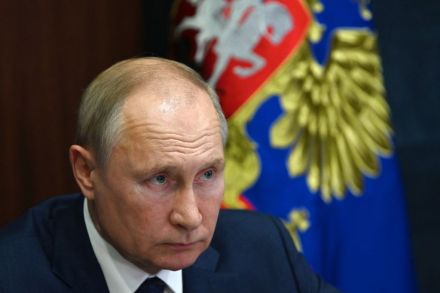
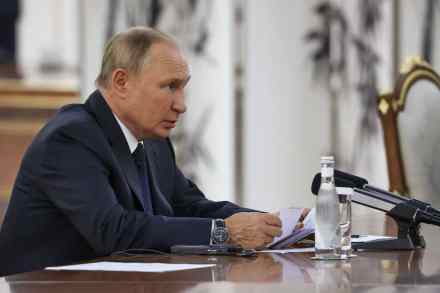
Moscow A week of somewhat mixed messages from the Kremlin. One day Vladimir Putin opened Europe’s largest Ferris wheel and presided over citywide celebrations of Moscow’s 875th anniversary, full of calm and good cheer and mentioning the war only in passing. A few days later he appeared on national TV telling the world that he was ‘not bluffing’ about using nuclear weapons and announcing a partial mobilisation. Putin has never fought a contested election in his life, so he’s never been a great one for the common touch. But in his latest address he looked as pale and dead-eyed as Nosferatu. Russians know better than most that the more strenuously something is officially denied, the more likely it is to happen.

Life among the Russian refuseniks

From our UK edition

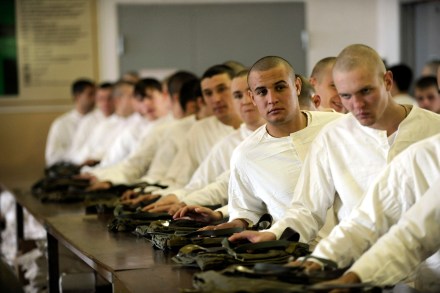
Yerevan, Armenia It was getting dark outside Yerevan Airport when I arrived, but there were still a dozen flights from Russia yet to land. Groups of young men in their twenties and thirties were milling around the terminal building, stacking suitcases onto trolleys, changing money and working out what to do next. Armenia is one of the few countries they can still fly to since much of the western world closed its skies to Russian planes; it is almost alone in not requiring them to have visas. ‘I’m just here for a holiday,’ one weary traveller carrying four heavy bags insists, ‘everything is fine in Moscow.’ Others are more up front about their reasons for leaving.

Liz Truss showed up Biden at the UN

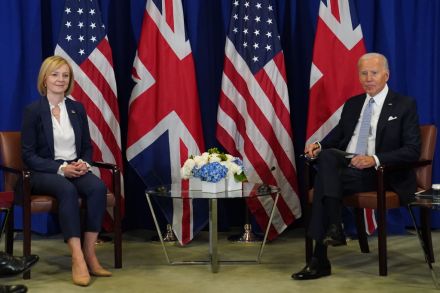
British prime minister Liz Truss’s speech at the United Nations this week was spot-on. It was clear, concise and left no question that the UK would do everything in its power to lead in the defense of the West and its values. President Biden’s address, by contrast, left you feeling overwhelmed and unsatisfied. That's not to say he failed to speak about Ukraine — he spent a reasonable amount of time on it — but the substance just was not there. Truss made a clear commitment to continue to “sustain or increase... military support to Ukraine, for as long as it takes,” a concrete and actionable statement. Though Biden issued a ringing condemnation of Putin’s war, he only made a vague pledge to “stand in solidarity against Russia’s aggression.

Russia isn’t just losing influence in Ukraine

If Vladimir Putin’s goal is to reestablish Russian influence, his ambitions are on track for another major setback. Far less high-profile than the war in Ukraine, a slow and quiet revolution has been brewing south of Russia’s borders in Central Asia and the Caucasus. These nations, members of the former Soviet Union, have traditionally been in Russia’s sphere of influence. That, however, is now changing. At the start of the year, it looked like Russia was ascendant. Putin had over 150,000 troops waiting to invade Ukraine, and was receiving a steady stream of Western visitors pleading with him to step back. When Kazakhstan was engulfed in popular protests, Putin stepped in and deployed about 2,500 Russian troops after an appeal by the Kazakh president to help quell the unrest.

Exhilarating, frightening and hilarious: Made in Leeds – Three Short Ballets reviewed

From our UK edition

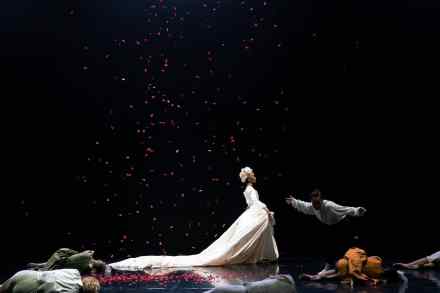
Good, better, best was the satisfying trajectory of Northern Ballet’s terrific programme of three original short works, which moves south to the Linbury Studio at the Royal Opera House at the beginning of November. The company has a new director in the amiable Federico Bonelli, formerly a principal with the Royal Ballet, and he has several problems to address, not least the shortage of richly characterful dancers among the senior ranks. But this triple bill should boost everyone’s morale, and the audience at the Leeds Playhouse was enthralled. First up was Wailers, Mthuthuzeli November’s elegiac return to the world of his childhood in a parched South African township.

What’s behind Putin’s no-show?

From our UK edition

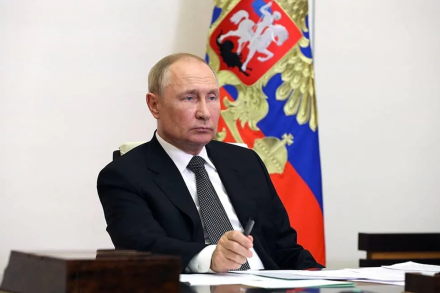
Has Vladimir Putin carried out a cynical stunt, or ducked out of a seismic decision? That’s the debate among Kremlinologists tonight, as the Russian President failed to show up for a planned 8 p.m. address to the Russian people. Faced with catastrophic losses of territory in north-east Ukraine, a weaker Putin has been considering his options. One that has been suggested is fully mobilising the population to fight, and introducing martial law, which the State Duma (parliament) proposed today. Men aged between 18 and 65 would be banned from leaving the country. Today also saw the announcement of referendums on Russian annexation for the Luhansk and Donetsk regions of Ukraine, as my colleague Lisa Haseldine reported.

More mad than Vlad: Russia’s ultra-nationalist threat

From our UK edition

‘Russia without Putin!’ was the cry of Muscovites who turned out to protest against Vladimir Putin’s return to the presidency for a third term in December 2011. Crowds 100,000 strong chanted their opposition on Moscow’s Academician Sakharov Prospect – as symbolically named a venue as you could wish for – as riot police stood calmly by. There was anger in the crowd. But there was hope, too, not least because the massive protest was officially sanctioned. One after another, prominent opposition politicians such as Ilya Yashin, Boris Nemtsov and Alexei Navalny denounced Putin from a stage provided by the city authorities. Today the memory of those protests seems to belong to a different age of Russia. Yashin and Navalny are in jail.

How Russia is forcibly relocating Ukrainian civilians

With the stunning, rapid advance of its military against the Russians, Ukraine has shot back into the headlines. The focus is, understandably, on the battlefield, but the happenings behind the lines deserve attention too. Since the first weeks of the war, information has trickled in about Russia’s massive, criminal attempts to relocate Ukrainian civilians. While much of the situation in the Russian-occupied regions of Ukraine remains murky, what is known provides a rough outline. Russia’s attempt at social control in Ukraine consists of two key elements: filtration and forced relocation.

Vladimir’s no good, very bad week

The Ukraine war’s first seven months have been a long slog, with high costs in both men and material. Then, over the last week of combat, that suddenly changed. While casualties undoubtedly remained high on both sides, the Ukrainian army’s surprise counteroffensive in the northeast shattered Russia’s defensive lines and culminated in the most humiliating Russian tactical defeat since its forces were pushed out of Kyiv in April. While Russian President Vladimir Putin was celebrating the opening of a new Ferris wheel in Moscow, his troops 534 miles to the south were dropping their weapons and retreating.

russia realities
kharkiv

Ukraine’s incredible success turns the tables on Russia

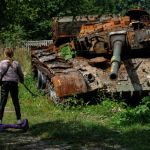
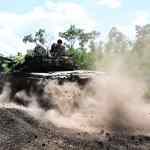
Ukraine’s swift counter-offensive has captured more territory in four days than Russia’s huge army did in six months. The victories go beyond the 3,000 kilometers of liberated land. The Ukrainians have managed to break and scatter the enemy army across city after city in Kharkiv (in the country’s northeast) and are now moving swiftly into Luhansk (in the north Donbas region). Russian commanders have abandoned major cities and supply hubs, forfeited their hard-won control of vital rail lines and highways, and fled eastward for their lives. Their soldiers have dropped their guns and abandoned vast stores of heavy weaponry, from tanks to anti-aircraft batteries. It has been a complete rout. How did Ukraine accomplish this swift and unexpected victory?

I’ve become a war addict

From our UK edition

It is an almost unquestioned orthodoxy that war is hell, and that every needless death in a needless war diminishes our common stock of humanity. It’s curious, though, how we're able to hold that conviction alongside a positively visceral excitement at watching the Ukrainian counter-offensive carve its way through the Kharkiv Oblast. Some 3,000 square kilometres have been recaptured: Ukrainian troops are moving through their own land at such a clip that they’ve made more progress in three days than the massed might of the Russian invaders have since April. I’ve been eating it up. Haven’t you? The images of abandoned armour, the fuel dumps, the sullen faces of Russian commanders rounded up as prisoners of war.

The missing Biden foreign policy

What is Joe Biden's foreign policy? It's a trick question, because he has no actual policy, no plan, no careful set of chess moves a step ahead of his adversary. America suffers for it. Biden's foreign policy initially began and ended in Afghanistan with the disastrous withdrawal that left refugees strewn across the globe. There were years, then months, then weeks, then days to plan the NEO — the noncombatant evacuation order — and plenty of planning books for one sitting on desks in places like Seoul.

Ukraine turns the tables on Russia

Russia’s brutal war on Ukraine has moved into a new phase, a very encouraging one for Ukraine and its western allies. In Phase 1, Russia tried — and failed — to seize the capital city of Kyiv with a blitzkrieg assault. The idea was to decapitate the Zelensky government quickly and install a puppet regime, subservient to Moscow. After that failed, Russia focused on taking the Donbas region of eastern Ukraine and forming a “land bridge” to Crimea, which Russia seized in 2014. Russia has had some success in this Phase 2 of the war, at very high cost, but movement along that front has now stalled.