Ukraine

Welcome to the age of nuclear blackmail

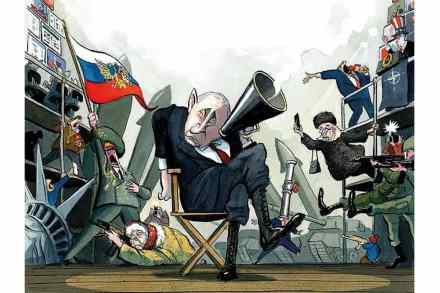
Vladimir Putin’s recent announcement that he was not bluffing about using nuclear weapons against the West in his war on Ukraine is one of the strongest indications yet of the risks the liberal world now faces in opposing authoritarian aggression. In the face of Russian aggression, or in committing the United States to defending Taiwan, as President Joe Biden did yet again recently, Washington and its partners face the possibility of direct confrontation with the world’s most powerful, nuclear-armed militaries. For the first time in a generation, Western powers risk being checked by adversaries willing to threaten massive conventional and nuclear warfare. The era of cost-free intervention to uphold the liberal world order is over.
nuclear
crimea

What price must the West pay for Crimea?

For centuries before Vladimir Putin arrived on the scene, Russian foreign policy has been shaped by the country’s need for warm-water ports. To be a great power in Europe and the Near East, Russia must have access to the Mediterranean. Commercial as well as military considerations dictate this. In the eighteenth century Russia conquered the khanate of Crimea and acquired a splendid location for a new Black Sea port — what is now the city of Sevastopol. The Crimean peninsula had been a gateway from Asia to the Mediterranean since the days of the ancient Greeks, who built some of their northernmost colonies there. Russia made Sevastopol the permanent home of its Black Sea Fleet.

The US knows the main threat is China

From our UK edition

China's President Xi Jinping opened the CCP’s 20th party congress by doubling down on four key issues: no let up on zero-Covid; no renunciation of force when it comes to Taiwan; a promise to build up China’s military strength; and no tolerance of any opposition to his rule. As he enters his third term, the most important new challenge he has to address are the export controls announced by the US on the eve of the congress that threaten to undercut China’s ability to develop semiconductors and supercomputers. Xi remains defiant: he promised to ‘resolutely win the battle in key core technologies.

What does Russia really want?

From our UK edition

The question of ‘why’ Russia invaded Ukraine has been forgotten amid war’s fog. Greed and malice partially explains it. History, geopolitics and culture reveals more. A country which has more land than anyone else on Earth is not grabbing territory for territory’s sake. Logically, Russia should be giving away land to anyone who might manage it better. But that’s not how Putin thinks. He is pursuing a dogged policy of annexations – first in Georgia, then in the Crimea, and now of four further Ukrainian districts.

Why Israel won’t give lethal aid to Ukraine

Israeli defense minister Benny Gantz announced this week that Israel would maintain its policy of not supplying weapons to Ukraine. This drew criticism, including charges that Israel has a moral obligation to help Ukraine and is instead foolishly prizing its relations with Russia. Critics also note that Israel’s archenemy Iran is providing weapons and advisors to Russia. They further point out that Israel’s Ukraine arms embargo puts it out of step with Israel’s most important partners in the West, especially the United States. Yet aiding Kyiv is a far riskier bet for Jerusalem than for most Western capitals. This is no easy call, and the one Israel made is probably the right one.

Homage to Kyiv

It was 11:15 p.m. in Kyiv, just after the curfew, and the military had set up its checkpoints on the city streets. Finding your way home after hours can be a hazardous business. The city is paranoid about assassins and saboteurs, and in wartime few are above suspicion. Things were looking ominous until my friend Sasha declared: “we are late for breakfast.” The guards waved us through. This was the daily password, shared with those important enough to move around after curfew. Checkpoints and curfews were a few reminders of the war in Kyiv, where I was just before last week’s deadly air strikes. In the capital city, life was approaching some form of normalcy.

kyiv

Tsar Vladimir brings in martial law

From our UK edition

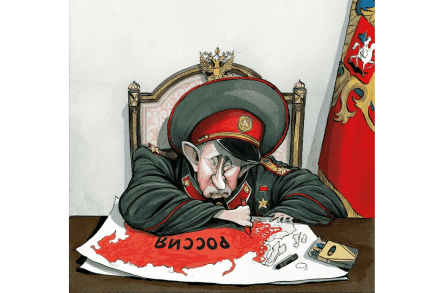
Martial law can arrive with a bang: tanks on the streets, Swan Lake on the TV. It can also creep up on a country in the guise of a presidential edict with the title ‘The Decree On Measures taken in the Constituent Entities of the Russian Federation in Connection with the Decree of the President of the Russian Federation of October 19, 2022 No. 756’. Either way, Vladimir Putin has just moved Russia one step closer to totalitarianism. What is interesting is just how long and half-hearted a process this has been. When Putin invaded Ukraine in February, the sharpest-beaked hawks in his entourage were urging total war, and with it an imposition of tight state control over much of the economy.

How long can Europe’s support for Ukraine last?

Can Ukraine sustain a war effort that is proceeding far better than most military analysts ever expected? Part of that answer, of course, depends on the extent to which the Ukrainian army can keep their troops in the field equipped, supplied, and motivated. That challenge comes as the Russian military increasingly relies on so-called “kamikaze drones” to strike deep into Ukrainian territory (on October 17, a Russian drone attack killed four people in Kyiv during the morning rush hour). But another factor that will determine success or failure is whether Europe remains onboard — or, more to the point, whether Europe’s support to Kyiv will continue as the war enters a dreary, unforgiving winter.

The Russia-Iran axis that’s menacing Ukraine

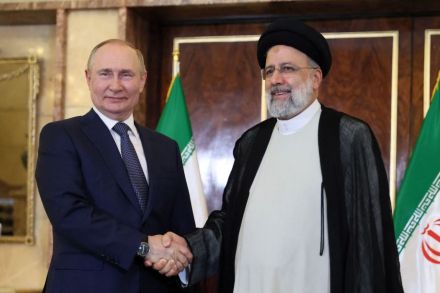
Russia’s brutal war in Ukraine is coming up on its eighth month, and the costs to the Kremlin’s military have been immense. Increasingly isolated on the world stage, Vladimir Putin has joined the world’s club of pariah states, the only group willing to give him support. Chief among his allies is the Islamic Republic of Iran, a state with similarly imperialistic designs and global isolation. This axis has been brewing for some time — the two nations worked together extensively in Syria, for example — but the relationship has reached new heights as the Russian armed forces buckle under the strain of war. Perhaps the most potent symbols of this relationship are the hundreds of Iranian drones flooding into Ukraine to fill a gap in Russia’s weapons inventory.

elon musk ian bremmer

Elon Musk vs Ian Bremmer: who’s telling the truth?

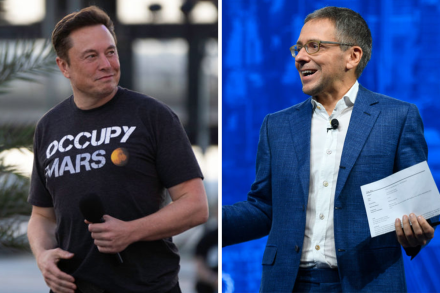
Cockburn wasn’t surprised to hear that Elon Musk had found himself in yet another spat, but he was somewhat shocked to hear that this one was a matter of national security. This week's he-said-she-said involved political scientist Ian Bremmer. In a newsletter sent to his Eurasia Group subscribers, Bremmer wrote that Tesla CEO Musk had told him that Putin was “prepared to negotiate,” but only if Crimea remained Russian, if Ukraine accepted a form of permanent neutrality — and Ukraine recognized Russia’s annexation of Luhansk, Donetsk, Kherson and Zaporizhzhia. So, not asking too much then. Musk hit back in response to a tweet asking whether Bremmer's statement was true, replying: “No, it is not. I have spoken to Putin only once and that was about eighteen months ago.

Russia’s brutal strategy of war is failing

Ukraine’s devastating attack on the Crimean Bridge and Russia’s sickening response — deliberately targeting civilians — perfectly encapsulate how these adversaries are fighting this war. Ukraine has a coherent strategy, effective operational design, and close coordination among its forces. Russia is failing because it has none of this. The centerpiece of Ukraine's strategy is eviscerating Russian combat power without getting into a raw slugfest that would sacrifice its own troops. That means knocking out Russian combat power without a head-on battle, wherever possible. How does Ukraine do that?

penguin

A haunting novel remembers 1990s Ukraine

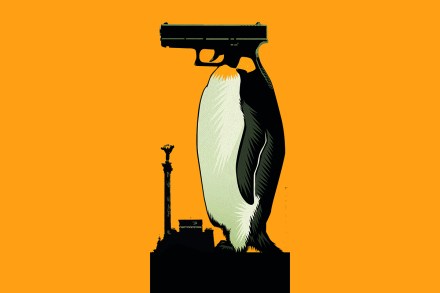
"They don’t treat people nowadays, let alone penguins.” When Americans ask what went wrong after the fall of the Berlin Wall, this wry comment on the state of Ukrainian healthcare in the 1990s isn’t a bad place to start. It’s also typical of the darkly funny Death and the Penguin, an account of a young writer in Kiev and his pet penguin, Misha, formerly of the city zoo. Did I say Kiev? Of course I meant Kyiv. It has lately become unfashionable to mention the commonalities between Ukraine and Russia, lest you give aid and succor to Vladimir Putin. But Putin’s propaganda resonates because it contains a grain of truth. Despite war and ethnic conflict, Russia and Ukraine have a great deal of shared history.

Why is Biden giving up on nuclear deterrence?

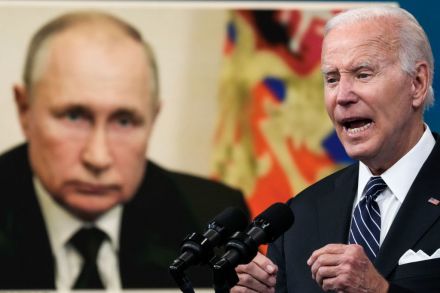
What’s more alarming than President Trump trying to frighten Kim Jong-un with “fire and fury”? President Biden trying to frighten Americans with Putin. “I don’t think there’s any such thing as the ability to easily [use] a tactical nuclear weapon and not end up with Armageddon,” the president riffed at a New York fundraiser, while fretting to supporters about his need to find that elusive off-ramp for the Russians. Biden’s loose talk about Putin’s formidability contrasted with US handwringing fits a pattern. Pervasive throughout Putin’s war has been far too much focus on what the United States should do to help Putin find these mythical off-ramps, and on how to restrain Ukraine to prevent it from getting nuked.

putin

How the Ukrainians personally humiliated Putin

The Russian army has been the source of an endless list of shortcomings and embarrassments over the last eight months. There are simply too many of them to count, from the failure to move through Kyiv’s suburbs in March to the sinking of the flagship Moskva in April to the loss in September of more than 3,000 square kilometers of territory in just days. But by far the most humiliating to Vladimir Putin personally was last weekend’s attack on the twelve-mile bridge that connects mainland Russia with Crimea, the peninsula Moscow annexed in 2014. That bridge, which cost more than $7 billion to build, was one of Putin’s pet projects, a visible signal to the world about Moscow’s staying power in the region.

Vladimir Putin is simply mad

Vladimir Putin is mad: not in the cognitive but in the emotional sense of the word. He is an odd mixture of the cold, the plotting, the calculating, and the bloodless; the emotional, the impulsive, the hotblooded, and the sentimental. He is mad, in other words, in precisely the way that Adolf Hitler was mad. And like Hitler, Putin is disconnected from the world of fact but not of logic. This is a fundamental truth about the man that I think the West had never experienced before February. His condition became apparent in the diatribe against the West that he gave on Friday, which corresponded almost exactly to Hitler’s customary rants.

nuclear tactical putin war

What Elon Musk doesn’t get about peace

From our UK edition

The power one person can hold should never be underestimated. They can take people’s lives, as Vladimir Putin does, or save them as Elon Musk did in Ukraine. Two days after Putin’s invasion, Ukraine’s minister for digital transformation, Mykhailo Fedorov, tagged Musk on Twitter and asked him to help Kyiv with Starlink. The communication centres were one of the first targets for Russian missiles. ‘While you try to colonise Mars, Russia tries to occupy Ukraine! While your rockets successfully land from space, Russian rockets attack Ukrainian civil people!’ tweeted Fedorov. The answer was immediate. Musk tweeted: ‘Starlink service is now active in Ukraine. More terminals en route.’ It was stunning – and transformative.

Biden goes nuclear

At a swanky fundraiser in Manhattan, President Joe Biden alluded to the prospect of “Armageddon.” The biblical reference was not intended to woo the Christian evangelicals who form part of the base of the Republican Party, but to alert bien-pensant liberal opinion that something a trifle more threatening than global warming looms large in world politics. For the “first time since the Cuban missile crisis, we have a direct threat of the use [of a] nuclear weapon if, in fact, things continue down the path they are going," Biden said. For anyone with lingering memories of the Cold War, his remarks about the prospect that Russian president Vladimir Putin might reach for the nuclear button was bound to stir alarm coupled with — dare I say it? — a smidgen of pleasure.

Putin at 70: How The Spectator has covered his life

From our UK edition

Vladimir Putin turns 70 today. Since he became Prime Minister of Russia in 1999, some of The Spectator's greatest contributors have asked the perennial questions: who is Putin, and what does he want? We've compiled the following pieces from our fully-digitised archive.  ‘Joking with a nine-year-old boy at a televised awards ceremony by the Russian Geographical Society, President Vladimir Putin said: ‘The Russian borders don’t end anywhere.’’ Portrait of the Week, 1 December 2016 Appointment as Prime Minister  ‘Not surprisingly, given his background, Putin has a lugubrious and somewhat sinister manner.

Will guns from Ukraine end up on the streets of Britain?

From our UK edition

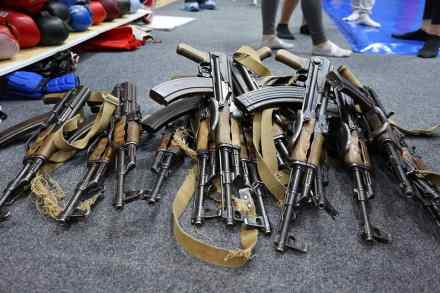
While visiting a Ukrainian militia this summer, I nearly trod on an anti-tank mine which was being used as a doorstop at the entrance to their HQ. ‘Don’t worry, it’s a broken Russian one that we found,’ said my breezy host, Eduard Leonov. ‘We’re trying to fix it so we can use it.’ Eduard’s militia isn’t exactly the SAS of Ukraine’s forces. It’s a volunteer army and he himself is a folk-singer-turned-fighter in his fifties. Eduard’s dozen-odd comrades are Dad’s Army age, yet even so they still have a formidable arsenal – everything from grenade launchers to Kalashnikovs.

How should the West respond to Putin’s threats?

From our UK edition

Vladimir Putin clearly wants us to worry that he is crazy enough to use a tactical nuclear weapon in Ukraine. This fear was intensified this week when images surfaced that some – possibly in error – believed showed a train operated by the secretive nuclear security forces moving towards Ukraine. Despite this, many believe the likelihood of a nuclear attack remains extremely low. Yet it is a plausible enough threat for the West to be considering how it should respond if Putin were to unleash one. Russia has an estimated 1,900 non-strategic nuclear weapons (NSNWs), from artillery shells to warheads for missiles; their yields range from a mere 0.5 to 100 kilotons, more than twice the power of the bomb that devastated Nagasaki.