Ukraine

Why the Baltics fear Russia

From our UK edition

In the historic heart of Riga, Latvia’s lively capital, there is a building that reveals why the Baltic States remain so wary of the Russian Bear. From the street, it doesn’t look like much – just another apartment block on a busy boulevard full of shops and cafes. Only the discreet sign outside gives the game away: ‘During the Soviet occupation the KGB imprisoned, tortured, killed and morally humiliated its victims in this building.’ Most passers-by barely give it a second glance. They know this story all too well. The KGB vacated this apartment block in 1991 when Latvia regained her independence, but over 30 years later the memories remain raw. As we step inside my Latvian guide, Edgars, tells me his father was summoned here twice for interrogation.
What young Ukrainians will learn from reading Joseph Roth

From our UK edition

As Russia’s assault on Ukraine continues, Volodymyr Zelensky’s ministry of education has just announced changes to the national curriculum that include removing almost all the Russian authors on the foreign literature syllabus. In last week’s Spectator, Svitlana Morenets revealed the new names: we see Robert Burns, whose inclusion may be a nod to Britain’s support during the conflict. Then there is Joseph Roth, a master of German prose, whose writing about interwar Europe speaks to Ukraine’s modern upheavals. Roth was born in 1894 in Brody, a town that now stands in western Ukraine but then lay in what was known as Galicia, the eastern Austro--Hungarian crownland.

What did Nasa achieve last time it visited the Moon?

From our UK edition

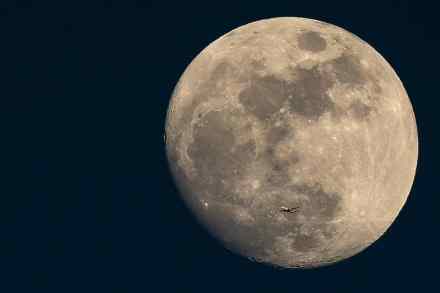
Of mice and Moon What did Nasa achieve last time it visited the Moon? Apollo 17, in December 1972, involved putting two astronauts, Eugene Cernan and Harrison Schmitt, there for 75 hours. They used a lunar roving vehicle to collect 254lb of rock and dust samples from areas up to 4.7 miles from the landing site. Among them was some orange dust believed to have originated in a volcanic eruption 3.5bn years ago. Experiments were also conducted into the flow of heat from the centre of the Moon to the surface, into minor changes in gravitational force, and the effect of cosmic rays on mice. At the end, Cernan said that he thought humans would return ‘not too long into the future’. North Sea hopes Can the North Sea avert the energy crisis?

From Moscow to Kyiv and back again

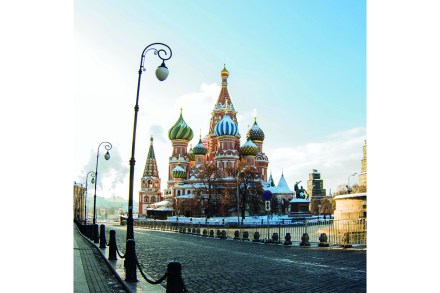
During the best of times, I left New York for gonzo journalism in Moscow; and during the worst of times, I fled a jingoistic wartime Moscow for the post-Covid euphoria of a resurgent New York City. My life in a sense has come full circle: I left New York for Russia in my freewheeling, bohemian twenties in search of future adventure and returned in my fifties when the rose-tinted dreams of the future that fueled Russia’s hedonistic capital were snuffed out in a murderous rage. That rage of a crumbling empire also engulfed lovely Ukraine in flames, battering its gorgeous capital Kyiv, where I had spent a blissful decade. With two of the three cities that I had called home caught up in a fratricidal zero-sum war, New York is once again King of the Hill.

Moscow

Ukraine stuns Russia with a counter-offensive in Kherson region

From our UK edition

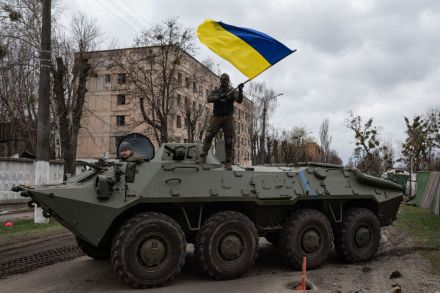
The southern city of Kherson, which fell to Russian forces in the first few days of the war, is one of the places Ukraine would need to liberate if Putin’s army is to be repelled. But what realistic chance is there? Many argued that the Russian occupation is a one-way process: that having taken Crimea, Putin would extend his reach northwards and westwards – with the only question being how long Ukraine could hold off an offensive from its far-bigger enemy.  But that conversation is changing, and fast. This morning, the Ukrainian army broke through the first line of the Russian defence in Kherson region – a move that was only recently seen to be beyond the capability of Ukrainian troops.

Why Crimea could be key to Ukraine winning the war

From our UK edition

Over the six months since Russia invaded Ukraine, the ambitions of President Zelensky and his compatriots have only grown. From an early readiness to engage in talks – first in Belarus and then in Istanbul – Kyiv has progressed to an insistence that Ukraine can win, and from there to a definition of victory that includes not just a return to the status quo before the war, but the restoration of Ukraine’s post-independence borders, and now also the recovery of Crimea. Zelensky himself has often seemed slower than some in his entourage to expand the mission. But he has been adding his voice to those calling for the recovery of Crimea for a few weeks now, with Independence Day prompting these ringing words: ‘Crimea is Ukraine. And we will return it.

Are sanctions against Russia actually working?

Six months ago this week, the United States and its European allies enacted one of the most comprehensive, stringent sanctions regimes against a major economy in history. Russia’s unprovoked invasion of Ukraine on February 24 not only shocked the West’s sensibilities, but pushed Washington and Brussels to take actions that would have been unthinkable only a few weeks prior. As far as the West is concerned, Vladimir Putin’s Russia is nothing less than a dangerous pariah state — and its aggression against a neighboring country meant it had to be treated as one.

What’s on Ukraine’s new school syllabus

From our UK edition

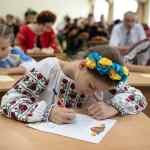
For the first time since Russia’s invasion, schools in Ukraine are starting to re-open. For many parents, including my own, this presents a dilemma. Is it safe for pupils to return? My brother is seven and has spent the past year doing ‘remote learning’, which is hard enough in countries at peace, let alone those fighting an invasion. A return to school would be good for his education, but then again, might there be the danger of Russian air strikes? Parents at my brother’s school have been asked to vote on whether they would prefer pupils to continue with online learning, or return, with all the risks involved. It’s estimated that at least 3,000 of Ukraine’s 12,800 schools will reopen their doors.

Portrait of the week: Drought in Europe, property crisis in China and barristers and binmen strike

From our UK edition

Home Inflation would reach 18.6 per cent by January and the energy price cap £5,816 in April, according to a forecast by Citi, the investment bank. An annual National Grid exercise simulating a gas supply emergency has been extended from two days to four in September. Workers at Felixstowe, Suffolk, Britain’s biggest container port, handling 48 per cent of traffic, went on strike for eight days. Strikes by Scottish dustmen spread from Edinburgh. Barristers belonging to the Criminal Bar Association voted to go on an indefinite strike in England and Wales after their demand for a 25 per cent increase in pay for legal aid work was denied. A man was charged with the murder of Rico Burton (a cousin of the boxer Tyson Fury), who was stabbed to death in Altrincham at 3 a.m.

The stalemate in Ukraine won’t last forever

From our UK edition

Addressing the vexed question of who is winning the war in Ukraine, six months on, is a task to challenge military strategists, geopolitical analysts – and semanticists, because so much depends on what ‘winning’ means. On one level, after all, one could suggest everyone is losing. That said, we cannot escape the fact that both Moscow and the West had essentially written Ukraine off at the start of the war. The conventional wisdom was that it would take perhaps a fortnight for Vladimir Putin’s much-vaunted war machine, the product of two decades of heightened military spending, to defeat its Ukrainian counterpart.  Instead, the Ukrainians proved determined and disciplined in the defence, and imaginative and impassioned in the attack.

Ukraine is the first streaming service war

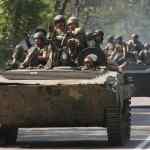
Russia has invaded Ukraine, and the images are all over the news. CNN has gone to round-the-clock coverage of bombs falling near Kyiv, refugees pouring into Hungary, Putin’s war machine rolling down a misty highway. We’re outraged by this, roused to action, as we righteously hang a blue-and-yellow Ukrainian flag off the porch and learn to spell the names of places like Kherson and Mariupol. The West, listless and fractured, seems suddenly united again as opposition to Russian imperialism grows and... ...and it’s summer. The weather is warm and a gentle breeze is tinkling through the chimes. The kids are off from school, horsing around the kitchen, and the lawn isn’t going to mow itself.

war

The strange morality of sponsoring weapons

From our UK edition

Forget fund-raising concerts donating spare clothes and offering your spare room to a refugee family. There’s a better way of showing your sympathy for Ukrainians: you can now sponsor weapons, and arm it with your very own message. For up to £2,500, Brits can send a personalised message to the crowdfunding site Sign My Rocket, who will then write it on a missile destined for the Russian army. Sending hostile messages to the enemy, of course, is not new, and may be as old as war itself. Dropping black propaganda leaflets from planes for the benefit of the enemy beneath has long been standard practice. Nor was it unusual for those on the production line at armaments factories or even those loading the ammunition to add their own special something.

How Ukraine is sabotaging Russia’s army

From our UK edition

Ukrainian Special Operations Forces (SOF) or possibly partisan fighters have conducted successfully attacks on three significant targets in occupied Crimea since 10 August. An initial attack on the Saki airbase caused a fire that quickly spread to stored ammunition and fuel, resulting in multiple huge secondary explosions. These destroyed at least nine Russian fast jets and inflicted extensive damage to the base’s facilities and surrounding buildings. On 16 August further attacks were carried out on a large ammunition and equipment depot at the strategic railroad junction town of Dzhankoiskyi and another Russian airbase at Gvardeyskoye causing further fires and secondary explosions.

ukraine

Is the Ukraine conflict a civil war?

The strategic Ukrainian port city of Mykoliav, that has been under constant Russian bombardment since the onset of war, was locked down for an entire weekend in early August as troops searched for Russian collaborators that had been calling in locations of Ukrainian troops and ammunition. The government arrested scores of traitors during their house-to-house search. Meanwhile in the capital Kyiv, President Volodymyr Zelensky has also been sounding the alarm over Russian collaborators after firing both his prosecutor-general and head of the intelligence agency for treason. The former spy chief was a close childhood friend of the president. There are allegations that the entire intelligence agency is riddled with spies, with many defecting to Russia in the early days of the invasion.

Can Zelensky afford to freeze Ukraine’s gas prices?

From our UK edition

This morning, Volodymyr Zelensky signed a moratorium on energy prices – so while gas bills are rising all over Europe, Ukraine will remain unaffected. This honours a pledge he made on his election. Freezing energy bills is a standard populist policy in Ukrainian politics (in a country where temperatures can reach -25ºC and the elderly can’t afford to buy medicine, it’s hard to win without making such promises). But there are now serious worries about whether it could bankrupt a government that needs all the money it can get to fight a war. Energy prices will be frozen until six months after martial law ends in Ukraine: the pledge is good for as long as the war lasts.

Ukraine is convinced that time is on its side. So is Russia

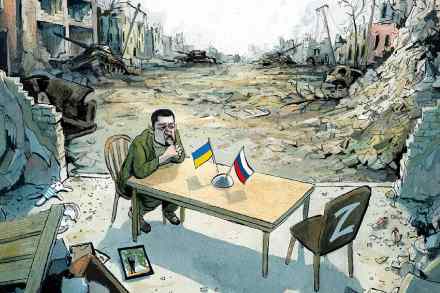
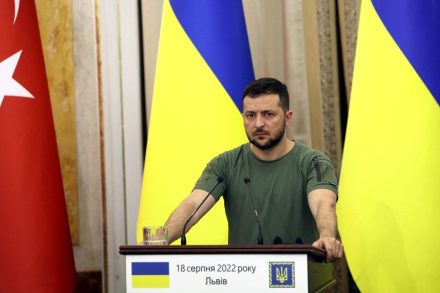
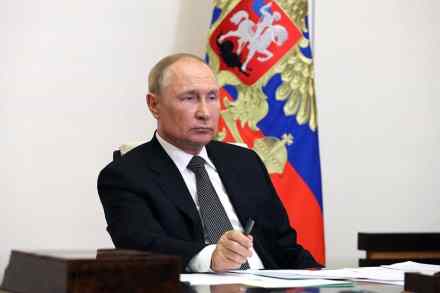
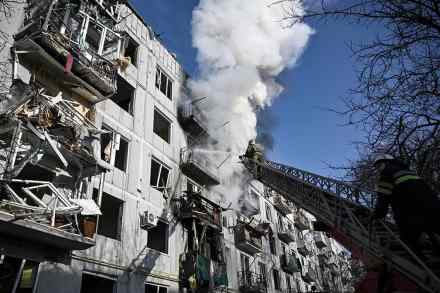
As the war in Ukraine approaches its six-month anniversary this coming Wednesday, the fighting shows no sign of stopping. Peace talks are a figment of the imagination, as Russian president Vladimir Putin and Ukrainian president Volodymyr Zelensky remain just as committed to achieving their objectives today as they were when the war first broke out. The Russians continue to pound residential areas with artillery in the Donbas, hoping to slowly capture more territory after months of slow, high-cost maneuvering in the Donetsk region. The Ukrainians, meanwhile, are settling on a new strategy in the south, harassing Russian supply lines deep into Russian-occupied territory.

ukraine

Nothing is certain in Russia, where the past is constantly rewritten

From our UK edition

Enforced brevity focuses the mind wonderfully. And when the minds in question are two of the West’s most interesting historians of Russia, the result is a distillation of insight that’s vitally timely. Sir Rodric Braithwaite was Britain’s ambassador to Moscow from 1988-92 during the collapse of the USSR (where he was the boss of Christopher Steele, of Trump dossier fame), then chaired the UK’s Joint Intelligence Committee. He went on to write the brilliant Afgantsy, a history of the USSR’s disastrous Afghan war and its impact on the Soviet Union’s collapse, and Moscow 1941, a people’s history of the heroic Soviet fight against Nazism.

The five stages of Mar-a-Lago grief

Another week, another silver bullet misses Donald Trump. Once more we suffered through the same endless roll of waves of crimes, accusations, near-indictments and just bad words to which we'd become accustomed during the Trump presidency. We went from "Trump has classified material under lock and key at Mar-a-Lago" to a group of people paying $1,800 to fly a banner reading "ha ha ha ha" over the resort to mock a Trump staying 3,000 miles away in New York. On cue, the regulars on MSNBC and CNN brought out their running-dog former CIA and FBI officers to tell us tick-tock, the walls are closing in, this time it will stick, Trump is going down, he'll be in jail before he runs again for office. If we can't stop him with the electoral system, we'll use the judicial system. This. Is. The.

Celebrities embark on a Ukraine safari

The saying goes that there is nothing that celebrities can’t make about themselves. As it turns out, that includes a war in Ukraine caused by an invasion of Russia that's already seen thousands of casualties. It's almost as though there are two wars happening at once: one on social media, where guerrilla clips from the front lines show bodies, shelling, and damage to homes, and one playing out in the pages of Vogue magazine. This week, it was revealed that Oscar-winning actress Jessica Chastain had visited with Ukrainian president Volodymyr Zelensky. The photo was posted to his official Telegram account and was taken from his presidential palace. There were also several shots of Chastain seated at a table with Zelensky having a discussion of some sort.

Ukrainians aren’t surprised by Amnesty’s victim-blaming

From our UK edition

Is Amnesty International victim-blaming? The Ukrainian military has been endangering civilians, it said, by establishing military bases and putting weapons systems in residential areas. Agnès Callamard, the organisation's secretary-general, remarked that ‘being in a defensive position does not exempt the Ukrainian military from respecting international humanitarian law’. It was a bizarre statement. Russian forces are attacking villages and large cities with dense populations. The Ukrainian armed forces can’t sit in a field, or put their weapons on a boat and sail away from coastal cities. As well as the morality of shifting the blame on to the aggressor, Amnesty’s statement doesn’t recognise the realities of the war situation.