Ukraine

Trump survives second assassination attempt

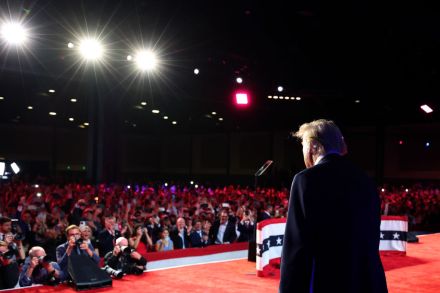
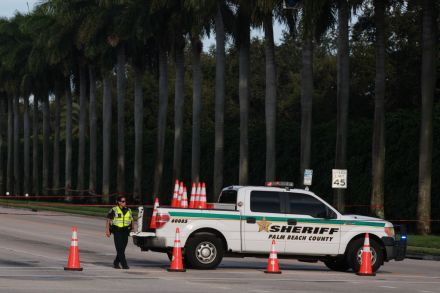
Former president Donald Trump survived a second assassination attempt on Sunday, this one at his golf course in Palm Beach, Florida. Trump reportedly decided yesterday morning to play a round of golf at the Trump International Golf Club and, as the president arriving on the fifth hole, Secret Service officers noticed a gun muzzle sticking out through a chain-link fence between 300 and 500 yards away. Secret Service exchanged fire with the suspect, who fled in a black Nissan and was later captured and charged. He left behind a scoped AK-47 and a GoPro camera.

The end of the Orbán era

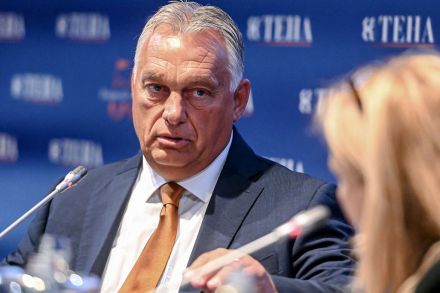
Over the headline “Peace Mission,” a recent cover from the conservative Hungarian periodical Mandiner shows an awkwardly photoshopped Viktor Orbán mediating between a bemused-looking Vladimir Putin and a grim Volodymyr Zelensky. Behind Orbán, a map of the world connects Kyiv, Moscow, Beijing, Washington and Budapest. One of these capitals, as they say, is not like the others. Even before Ukraine’s Kursk offensive, the chances of Orbán’s July trips to Kyiv and Moscow producing a peace settlement were slim. The Mandiner cover, however, is a revealing window into the mindset of Orbán’s conservative fans. The idea of a Hungarian prime minister mediating between squabbling great powers is both attractive and plausible to many of Orbán’s fervent supporters.

Orbán

What China wants from Russia

From our UK edition

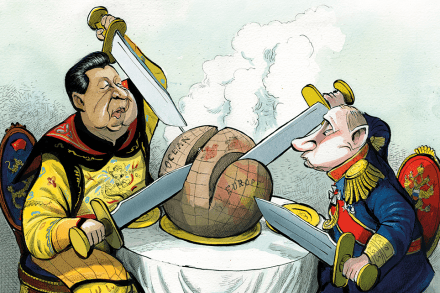
On the face of it, the ‘no limits’ partnership between Russia and China declared weeks before Vladimir Putin invaded Ukraine in February 2022 appears to be going from strength to strength. Last week, Chinese Premier Li Qiang spent four days in Moscow and signed off on what Putin described as ‘large-scale joint plans and projects’ that would ‘continue for many years’. Russia’s trade with China has more than doubled to $240 billion since the invasion, buoying the Kremlin’s coffers with oil money and substituting goods sanctioned by the West. Moscow and Beijing have also stepped up joint military exercises.

Portrait of the week: Sir Keir’s tax warning, Russian air attacks and another prisons crisis

From our UK edition

Home Sir Keir Starmer, the Prime Minister, speaking in the garden of 10 Downing Street, warned that the Budget in October is ‘going to be painful’, and that ‘things will get worse before they get better’. ‘I didn’t want to means-test the winter fuel payment, but it was a choice we had to make,’ he said. ‘A garden and a building that were once used for lockdown parties are now back in your service.’ Meanwhile, it was discovered, a pass to Downing Street had been given to Lord Alli, the Labour peer and party fundraiser, who gave £10,000 to the Beckenham and Penge constituency party; the seat was won by Liam Conlon, the son of Sue Gray, Sir Keir’s chief of staff.

Portrait of the week: prisoners are freed, Ted Baker closes and train drivers announce strikes 

From our UK edition

Home Emergency measures, known as Operation Early Dawn, were brought in to ease prison overcrowding. Defendants would be summoned to a magistrates’ court only when a space in prison was ready for them, the government said, and would be kept in police holding cells or released on bail while they awaited trial. The measures at first affected the north and the Midlands. By the beginning of the week, 472 people had been charged with offences arising from the recent public disorder; 300 had appeared in court in the preceding week. Donna Conniff, aged 40, the mother of six children, was jailed for two years for throwing a brick at police during a disturbance in Hartlepool.

Portrait of the week: riot justice, Olympic success and Ukraine’s Russian advance

From our UK edition

Home Riots subsided after 7 August, a night when many were expected but only empty streets or demonstrations against riots eventuated. By 12 August there had been 975 arrests and 546 charges in 36 of the 43 police force areas in England and Wales. Rioters could be released from jail after serving 40 per cent of their sentence, as part of the early release scheme to ease prison overcrowding, Downing Street said. Ricky Jones, a councillor for Dartford, now suspended from the Labour party, was remanded in custody after being charged with encouraging violent disorder in Walthamstow.

What’s the real aim of Ukraine’s Russian offensive?

From our UK edition

On Monday morning, Vladimir Putin was briefed about Ukraine’s audacious invasion of Russian territory. With his military chiefs in front of him, he announced that Kyiv had been doing the bidding of its western masters but would succeed only in the ‘annihilation’ of the troops it had sent to Kursk. All this was, as usual, broadcast live by the Kremlin to reassure Russians that the President was in control of the situation – then everything started to go wrong. Alexei Smirnov, the acting governor of the invaded Kursk region, had been expected to give details of the successful evacuation of citizens. Instead, he began to reel off the extent of the defeat. The Ukrainians, he said, had captured territory eight miles deep and 25 miles wide.

Zelensky’s new offensive could push Putin to the brink

From our UK edition

A Russian friend speaking from Kursk tells me the latest war joke. Vladimir Putin summons Stalin’s ghost. ‘Comrade Stalin!’ asks Putin. ‘German tanks are in Kursk again. I need your advice.’ Stalin’s ghost ponders before answering. ‘Do what I did. Get hold of as much American military aid as you can, and make sure to send in the Ukrainians at the vanguard of your army.’ In 1943, the battle-scarred fields of Kursk were filled with troops of the Red Army’s First Ukrainian Front, riding American-supplied aircraft and tanks as they advanced westwards towards Berlin. Today, Ukrainian troops – some in German-supplied vehicles – are fighting Russians less than 50 miles from where my friend is. He chuckles at the bitter irony of his own wisecrack.

Does bitcoin fit the definition of good money?

From our UK edition

Three philosophers walk into a crypto-currency. Resistance Money: A Philosophical Case for Bitcoin, I’d argue, is a slightly inaccurate title. Messrs Bailey, Rettler and Warmke have composed a book that is a meticulous and unphilosophically lucid examination of the origins and properties of bitcoin. No Hegel, no Husserl, no fuss. ‘We don’t prophesy,’ they state. ‘We don’t preach.’ They plead a Socratic humility. ‘We’d forgive you for thinking that three philosophers aren’t up to the task.’ They describe themselves as ‘epistemic trespassers’ in matters of economics and cryptography. Access to bitcoin has changed from a muddy country path to a six-lane highway The editorial sessions for Resistance Money must have been hell.

Sarah Rainsford joins the long list of foreign correspondents banned from Russia

From our UK edition

Goodbye to Russia is an elegy for a lost country – the warm, chaotic Russia of unlimited possibility that welcomed the 18-year-old Sarah Rainsford in 1992. She stayed on, studied, worked in an Irish bar in St Petersburg, joined the BBC in 2000 and, after spells in other parts of the world, returned to Moscow as a Russian correspondent from 2014. Her memoir’s 30-year period covers an entire cycle in Russian politics – as Anna Akhmatova might have put it, from vegetarian to carnivore. In August 2021, Rainsford was stopped at the Russian border and refused entry as a ‘threat to national security’. A few weeks later, she was expelled with no right of return, one in a rollcall of foreign journalists banned from Russia.

The tragic fate of Ukraine’s avant-garde

From our UK edition

In a recent interview Oleksandr Syrskyi, the new commander-in-chief of the Ukrainian army, said that he spends his time off reading books on the country’s ‘difficult history’. If even he finds it difficult, where do us non-Ukrainians start? In the introduction to its new exhibition, the Royal Academy makes a brave attempt at explaining the political background to Ukrainian modernism, developed in a brief window of creative opportunity before it was slammed shut by Soviet repression.

Letters: You can grow to hate Wagner

From our UK edition

Disappearing England Sir: Rod Liddle’s reference to Labour’s intention to build 1.5 million new houses (‘The great bee-smuggling scandal’, 13 July), even though there is not a shortage, leads one to worry where they will be located. The green belt was introduced for London in 1938 and the Town and Country Planning Act of 1947 extended powers with local authorities for self-designation. In 1937, John Betjeman wrote for one of his BBC talks: ‘England is disappearing and there is growing up, where the trees used to be and where the hills commanded blue vistas, another world that does not seem to be anything to do with England at all. This new world lives in ill-shaped brick horrors, for which it has had to pay through the nose.

A visit to the world’s worst capital city

From our UK edition

Nouakchott in Mauritania is often referred to as the ‘worst capital city in the world’. That may be a little harsh, but it is difficult to recommend it to Spectator readers as a must-visit destination. The heat is savage, the poverty endemic, corruption is off the scale and this west African country is one of the last on Earth where you can still find hereditary slavery. Which is why I’m here. Troubles begin on arrival. A succession of three police officers grill me in the airport. Why have I come to Nouakchott, who am I working for, who am I planning to meet, why, what are their telephone numbers, what am I going to talk to them about, where am I staying? They are flummoxed by the word ‘historian’.

Portrait of the week: IT meltdown, riots in Leeds and the wrong kind of pandemic

From our UK edition

Home Britain enjoyed its share of the worldwide failure of 8.5 million computers reliant on Microsoft, through a faulty update of the CrowdStrike antivirus software. On the first day, 167 air departures were cancelled in the United Kingdom – 5.4 per cent of those scheduled. (Worldwide it was 5,078 – 4.6 per cent of those scheduled.) Doctors’ appointment systems stopped working and customers at Gail’s bakery could not pay for their pains au chocolat. BT was fined £17.5 million for a ‘catastrophic failure’ on 25 June last year that led to 14,000 999 calls not being connected. National debt, which fell from 251.7 per cent of GDP in 1946 to 21.6 per cent in 1990, had risen by June this year to 99.5 per cent.

Kate Andrews, Adam Frank, David Hempleman-Adams, Svitlana Morenets and Michael Beloff

From our UK edition

40 min listen

On this week’s Spectator Out Loud: Kate Andrews argues vice-presidential nominee J.D. Vance is more MAGA than Trump (1:27); Adam Frank explains how super-earths could help us understand what life might look like on another planet (5:15); David Hempleman-Adams recounts his attempt to cross the Atlantic on a hydrogen ballon (14:31); from Ukraine, Svitlana Morenets reports on the battle to save Kharkiv (20:44); and, Michael Beloff takes us on a history of the Olympics (30:12).  Presented by Patrick Gibbons.

Vapid and pretentious: Visit From An Unknown Woman, at Hampstead Theatre, reviewed

From our UK edition

Visit From An Unknown Woman, adapted by Christopher Hampton from a short story by Stefan Zweig, opens like an episode of Seinfeld. A playboy writer enjoys a fling with a black-clad beauty – but when he kisses her goodbye, he can’t remember her name. It feels like a set-up for a gag, but the script is very short of jokes. A year passes and the mysterious beauty, named Marianne, returns to the playboy’s pad and delivers a series of astonishing revelations. At this point, the show turns into a memory play as Marianne starts to yammer about her childhood, her family struggles and a mass of other details which sound like an over-emotional shopping list. Not everyone found this show vapid and pretentious.

Could Ukrainians ever trust a Putin peace deal?

From our UK edition

Last week at the Buxton International Festival I joined a big audience for an onstage interview with Anna Reid. She’s a writer who specialises in Eastern European history, was once the Economist magazine’s correspondent in Ukraine, and made her name with a brilliant book, Borderland, which was both a portrait, a history and an appreciation of that country long before it entered the western public consciousness. It’s still worth reading today. But at Buxton she was introducing her latest book, A Nasty Little War: the Western Intervention into the Russian Civil War, which opened the eyes of many in the audience (including me) to an almost forgotten but serious and grisly conflict straddling the end of the first world war.

From the front line of the battle to save Kharkiv

From our UK edition

Moonlight shines on the wings of the reconnaissance drone as it glides over the field. Within minutes, the Leleka – Ukrainian for ‘stork’ – crosses the border into Russia’s Belgorod region. The soldiers monitoring it wait in their car, hidden in the undergrowth. Soon the image on their laptop freezes: the Russians are jamming the signal. They manoeuvre the Leleka back and forth, eventually finding a gap in the enemy’s electronic defences. The drone is back in contact, sending footage of Russian roads and towns. The hunt for enemy troops begins. Some 30,000 Russian soldiers are amassed north of Vovchansk, a Ukrainian border town that was attacked two months ago.

James Heale, Svitlana Morenets, Philip Hensher, Francis Beckett and Rupert Christiansen

From our UK edition

38 min listen

On this week’s Spectator Out Loud: James Heale analyses the state of the Conservative leadership race (1:09); Svitlana Morenets reports from the site of the Kyiv children’s hospital bombed this week (5:56); Philip Hensher examines the ‘Cool Queer Life’ of Thom Gunn (12:13); Francis Beckett reviews ‘The Assault on the State’ arguing in favour of bureaucracy (21:20); and, Rupert Christiansen reveals why he has fallen out of love with Wagner (27:05).  Presented by Patrick Gibbons.

What I saw at the Okhmatdyt bomb site

From our UK edition

Kyiv For weeks, Kyiv had felt relatively safe compared with just about everywhere else in Ukraine. People had adjusted to wartime life as the city’s air defences managed to intercept most of Russia’s missiles and drones. There had been a sense that things were improving. This was shattered on Monday morning when a missile struck a children’s cancer hospital in the capital. Okhmatdyt is the largest paediatric clinic in Ukraine, the equivalent of London’s Great Ormond Street. Each year, it treats more than 20,000 children with the most serious health conditions. That Russia had targeted it came as a shock but not a surprise: some 1,700 medical facilities in Ukraine have been hit since the start of the full-scale invasion.