Ukraine

The endgame: Biden’s quest for a foreign policy legacy

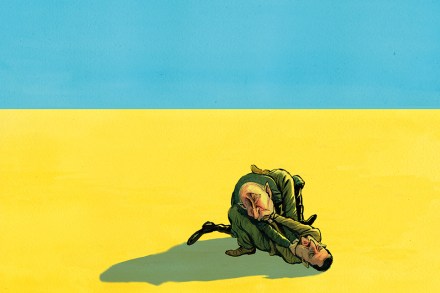
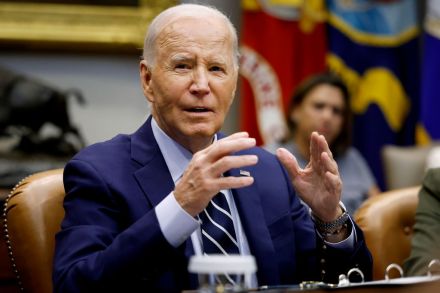
President Joe Biden only has a few more months before he steps out of the White House, hands over the keys to his successor and spends his remaining days soaking in the Delaware sun. But before he enjoys retirement, the lifelong public servant has a big piece of unfinished business: scoring a major foreign policy win that will secure his place in the history books. Unfortunately, dreaming about being a statesman is one thing; being one is quite another. The two conflicts that would give the president that coveted status — the wars in Gaza and Ukraine — aren’t presently amenable to diplomatic resolution. And while Biden and his advisors may be committed to doing the impossible, all the commitment in the world won’t do much if the combatants are intent on slugging it out.

Biden
Rebel

How music can be weaponized

A noise booms from a downtown district of Kyiv. It’s not the screech of a piercing siren or a building collapsing into rubble but the pumping beat of electronica. Throughout the deafening clamor of the Russia-Ukraine war, Gasoline Radio has kept broadcasting, mixing contemporary electronic music with traditional folk to fortify Ukrainian national identity. Whether pumped out by electronica DJs, violinists playing for families in shelters or singers performing in the shelled-out carcasses of cities, all is far from quiet on the cultural front of Ukraine. Wherever there is oppression, there is resistance, and music has long been a weapon for these war-weary civilians.

art

War, one artwork at a time

The chaos of the conflict in Ukraine is difficult to track, let alone to reflect on a human scale. After ten years of destruction and occupation, analyzing the situation from afar is a challenge. For many in Ukraine, art provides a way to communicate about a culture under siege, a sense of identity and a concrete way of engaging with people outside the country. While art can speak for itself, it requires human cultural ambassadors. To this end, Ukrainian nationals and their allies have been working tirelessly to promote the voices of a people under siege through museum exhibitions and events the world over.

Why won’t David Lammy help Jimmy Lai?

From our UK edition

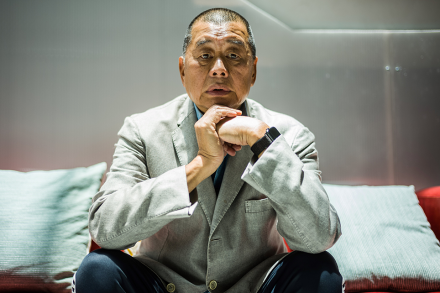
As I write, the Foreign Secretary, David Lammy, is flying to China. So I am only guessing when I say that I expect he will ‘raise’ the case of Jimmy Lai, the newspaper publisher, businessman and Democratic party supporter, a British citizen. Mr Lai has now been imprisoned in Hong Kong for four years with his numerous trials not yet completed. ‘Raise’, yes, but not as in ‘do anything about’ the situation. So far, the best the Foreign Office has done is to ‘request consular access’ to Mr Lai.

Ukraine’s Nato fantasy

From our UK edition

Ukraine’s President Zelensky was in Downing Street last week – as well as Paris, Rome, Berlin and Dubrovnik – asking for Nato membership. In every city, he heard the same ‘not yet’ as he’d received in Washington last month. Some of Kyiv’s western allies believe membership is the only way to guarantee Ukraine’s independence. Russia has never attacked a Nato country, because of the Article 5 guarantee that an attack against one is an attack against all. Therefore, Ukraine will never be safe from Russia unless it joins. The US government wants to avoid the war that Ukrainian membership would oblige it to fight But there’s a fundamental flaw to this logic: Ukraine cannot join Nato in the foreseeable future.

Portrait of the week: Sue Gray resigns and the Chagos Islands are handed back 

From our UK edition

Home Sue Gray resigned as chief of staff to Sir Keir Starmer, the Prime Minister. She will become Sir Keir’s envoy for the nations and regions of the United Kingdom. She was replaced by Morgan McSweeney, 47. James Lyons, a former political journalist who has more recently worked for the NHS and TikTok, was brought in to take charge of strategic communications. Sir Keir paid back more than £6,000 for gifts and hospitality, including six Taylor Swift tickets, four tickets to the races and a clothing rental agreement with his wife. More people in the United Kingdom died than were born in the year to mid-2023, according to the Office for National Statistics. Nonetheless, the population grew by 1 per cent to 68.3 million, because net migration was 677,300.

Ukraine becomes another battlefront in the American election

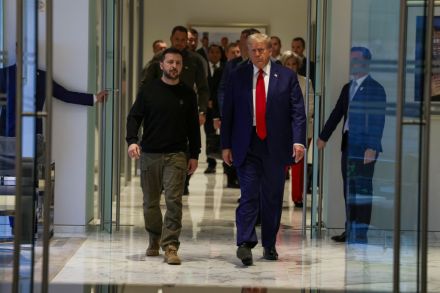
They were the odd couple, one lumbering in his trademark oversized Brioni suit, the other ripped in his olive green military attire. The two had been engaged in a kind of mano-a-mano verbal combat before their official meeting in Manhattan at Trump Tower. It was getting ugly. Ukrainian president Volodymyr Zelensky suggested that J.D. Vance’s plan, such as it was, for ending the war between Ukraine and Russia was “too radical.” Add in Zelensky’s visit to an armaments factory together with Pennsylvania governor Josh Shapiro, and Trump and his flunkeys went nuts. House Speaker Mike Johnson wrote a sniveling letter demanding the ouster of Ukrainian ambassador Oksana Marakarova.

zelensky

Slating Nato won’t help Donald Trump

From our UK edition

Reacting to Volodymyr Zelensky’s visit to Scranton, Pennsylvania, earlier this week, Donald Trump reiterated his long-standing ambition to bring Russia’s war in Ukraine to a quick negotiated settlement instead of continuing with open-ended military support to Kyiv. If he wins the election, Trump said, ‘the first thing I’m gonna do is call up Zelensky and call up President Putin and I’m gonna say, “You gotta make a deal, this is crazy”.’ Trump is often seen as mercurial and unpredictable – an impression he revels in – but his desire to solve conflicts with real estate-like deals forms a consistent pattern of his foreign policy.

What does ‘victory’ for Ukraine look like?

From our UK edition

This week in New York Volodymyr Zelensky will present Joe Biden with a ‘Victory Plan’ for Ukraine. But how to define what ‘victory’ actually means? A fundamental and fast-widening distance is opening up over that question between Zelensky and his western allies – as well as inside Ukraine itself. Zelensky insists that the bottom line of a Ukrainian victory remains ‘the occupation army [being] driven out by force or diplomatically, in such a way that the country preserves its true independence and is freed from occupation’. He has also rejected the idea of a ceasefire, saying that any ‘freezing of the war or any other manipulations… will simply postpone Russian aggression to a later stage’.

It’s time to let Ukraine join Nato

From our UK edition

Kyiv The young amputee had a question. We were sitting once again in the rehab centre in Kyiv, and I was looking at the same sort of injuries I saw last year: the missing limbs, the cranial scars, the withered hands and feet that no longer obeyed their owners’ commands. The difference was that Vladimir Putin’s carnage had been inflicted on a new group of Ukrainians – noticeably younger than last year’s victims, and now including a woman. Once again, I shook their hands (where possible) and put my arms around them, and did my best to be reassuring to all, including the young man on the bed, who had lost his left leg up to the hip. ‘When are you going to let us use the Storm Shadow?’ he asked – amid a general murmur of agreement.

Trump survives second assassination attempt

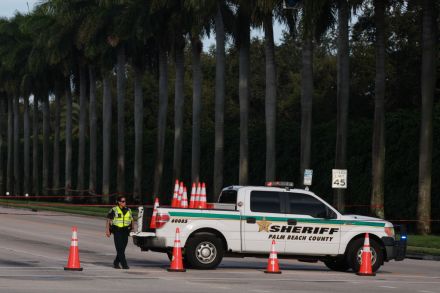
Former president Donald Trump survived a second assassination attempt on Sunday, this one at his golf course in Palm Beach, Florida. Trump reportedly decided yesterday morning to play a round of golf at the Trump International Golf Club and, as the president arriving on the fifth hole, Secret Service officers noticed a gun muzzle sticking out through a chain-link fence between 300 and 500 yards away. Secret Service exchanged fire with the suspect, who fled in a black Nissan and was later captured and charged. He left behind a scoped AK-47 and a GoPro camera.

The end of the Orbán era

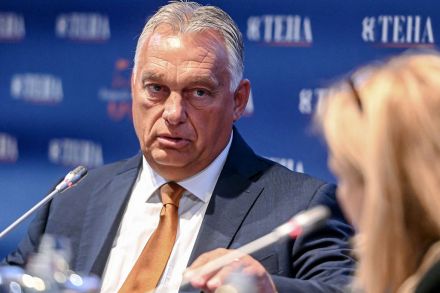
Over the headline “Peace Mission,” a recent cover from the conservative Hungarian periodical Mandiner shows an awkwardly photoshopped Viktor Orbán mediating between a bemused-looking Vladimir Putin and a grim Volodymyr Zelensky. Behind Orbán, a map of the world connects Kyiv, Moscow, Beijing, Washington and Budapest. One of these capitals, as they say, is not like the others. Even before Ukraine’s Kursk offensive, the chances of Orbán’s July trips to Kyiv and Moscow producing a peace settlement were slim. The Mandiner cover, however, is a revealing window into the mindset of Orbán’s conservative fans. The idea of a Hungarian prime minister mediating between squabbling great powers is both attractive and plausible to many of Orbán’s fervent supporters.

Orbán

What China wants from Russia

From our UK edition

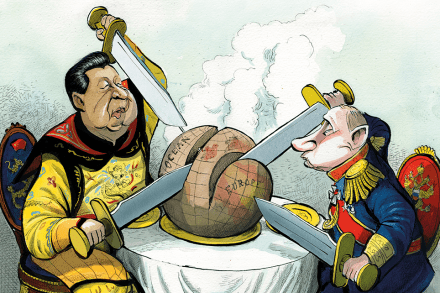
On the face of it, the ‘no limits’ partnership between Russia and China declared weeks before Vladimir Putin invaded Ukraine in February 2022 appears to be going from strength to strength. Last week, Chinese Premier Li Qiang spent four days in Moscow and signed off on what Putin described as ‘large-scale joint plans and projects’ that would ‘continue for many years’. Russia’s trade with China has more than doubled to $240 billion since the invasion, buoying the Kremlin’s coffers with oil money and substituting goods sanctioned by the West. Moscow and Beijing have also stepped up joint military exercises.

Portrait of the week: Sir Keir’s tax warning, Russian air attacks and another prisons crisis

From our UK edition

Home Sir Keir Starmer, the Prime Minister, speaking in the garden of 10 Downing Street, warned that the Budget in October is ‘going to be painful’, and that ‘things will get worse before they get better’. ‘I didn’t want to means-test the winter fuel payment, but it was a choice we had to make,’ he said. ‘A garden and a building that were once used for lockdown parties are now back in your service.’ Meanwhile, it was discovered, a pass to Downing Street had been given to Lord Alli, the Labour peer and party fundraiser, who gave £10,000 to the Beckenham and Penge constituency party; the seat was won by Liam Conlon, the son of Sue Gray, Sir Keir’s chief of staff.

Portrait of the week: prisoners are freed, Ted Baker closes and train drivers announce strikes 

From our UK edition

Home Emergency measures, known as Operation Early Dawn, were brought in to ease prison overcrowding. Defendants would be summoned to a magistrates’ court only when a space in prison was ready for them, the government said, and would be kept in police holding cells or released on bail while they awaited trial. The measures at first affected the north and the Midlands. By the beginning of the week, 472 people had been charged with offences arising from the recent public disorder; 300 had appeared in court in the preceding week. Donna Conniff, aged 40, the mother of six children, was jailed for two years for throwing a brick at police during a disturbance in Hartlepool.

Portrait of the week: riot justice, Olympic success and Ukraine’s Russian advance

From our UK edition

Home Riots subsided after 7 August, a night when many were expected but only empty streets or demonstrations against riots eventuated. By 12 August there had been 975 arrests and 546 charges in 36 of the 43 police force areas in England and Wales. Rioters could be released from jail after serving 40 per cent of their sentence, as part of the early release scheme to ease prison overcrowding, Downing Street said. Ricky Jones, a councillor for Dartford, now suspended from the Labour party, was remanded in custody after being charged with encouraging violent disorder in Walthamstow.

What’s the real aim of Ukraine’s Russian offensive?

From our UK edition

On Monday morning, Vladimir Putin was briefed about Ukraine’s audacious invasion of Russian territory. With his military chiefs in front of him, he announced that Kyiv had been doing the bidding of its western masters but would succeed only in the ‘annihilation’ of the troops it had sent to Kursk. All this was, as usual, broadcast live by the Kremlin to reassure Russians that the President was in control of the situation – then everything started to go wrong. Alexei Smirnov, the acting governor of the invaded Kursk region, had been expected to give details of the successful evacuation of citizens. Instead, he began to reel off the extent of the defeat. The Ukrainians, he said, had captured territory eight miles deep and 25 miles wide.

Zelensky’s new offensive could push Putin to the brink

From our UK edition

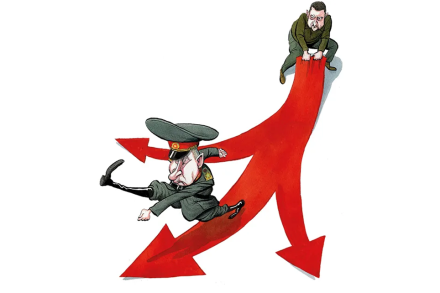
A Russian friend speaking from Kursk tells me the latest war joke. Vladimir Putin summons Stalin’s ghost. ‘Comrade Stalin!’ asks Putin. ‘German tanks are in Kursk again. I need your advice.’ Stalin’s ghost ponders before answering. ‘Do what I did. Get hold of as much American military aid as you can, and make sure to send in the Ukrainians at the vanguard of your army.’ In 1943, the battle-scarred fields of Kursk were filled with troops of the Red Army’s First Ukrainian Front, riding American-supplied aircraft and tanks as they advanced westwards towards Berlin. Today, Ukrainian troops – some in German-supplied vehicles – are fighting Russians less than 50 miles from where my friend is. He chuckles at the bitter irony of his own wisecrack.

Does bitcoin fit the definition of good money?

From our UK edition

Three philosophers walk into a crypto-currency. Resistance Money: A Philosophical Case for Bitcoin, I’d argue, is a slightly inaccurate title. Messrs Bailey, Rettler and Warmke have composed a book that is a meticulous and unphilosophically lucid examination of the origins and properties of bitcoin. No Hegel, no Husserl, no fuss. ‘We don’t prophesy,’ they state. ‘We don’t preach.’ They plead a Socratic humility. ‘We’d forgive you for thinking that three philosophers aren’t up to the task.’ They describe themselves as ‘epistemic trespassers’ in matters of economics and cryptography. Access to bitcoin has changed from a muddy country path to a six-lane highway The editorial sessions for Resistance Money must have been hell.

Sarah Rainsford joins the long list of foreign correspondents banned from Russia

From our UK edition

Goodbye to Russia is an elegy for a lost country – the warm, chaotic Russia of unlimited possibility that welcomed the 18-year-old Sarah Rainsford in 1992. She stayed on, studied, worked in an Irish bar in St Petersburg, joined the BBC in 2000 and, after spells in other parts of the world, returned to Moscow as a Russian correspondent from 2014. Her memoir’s 30-year period covers an entire cycle in Russian politics – as Anna Akhmatova might have put it, from vegetarian to carnivore. In August 2021, Rainsford was stopped at the Russian border and refused entry as a ‘threat to national security’. A few weeks later, she was expelled with no right of return, one in a rollcall of foreign journalists banned from Russia.