Uk politics

Does European solidarity over Ukraine matter?

From our UK edition

14 min listen

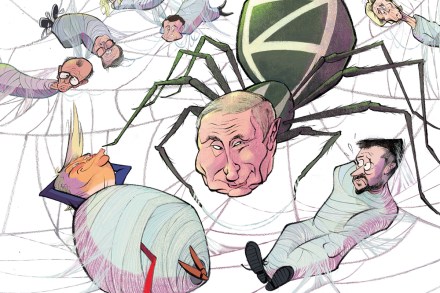
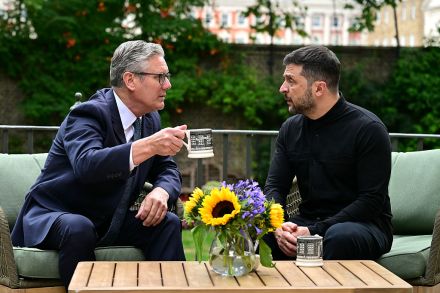
Ukraine's President Zelensky has spent today with Keir Starmer at Number 10. This is in anticipation of tomorrow's Alaska summit between Presidents Trump and Putin – where European leaders will be notably absent. Zelensky's visit to the UK is designed to project an image of solidarity with Starmer, and European leaders in general – but does it really matter? And is Putin really closer to accepting a ceasefire? Tim Shipman and James Heale join Lucy Dunn to discuss Plus – Tim talks about his article in the magazine this week, for which he spoke to George Finch, the 19 year old Reform councillor who is leader of Warwickshire County Council.

Who is the real Nicola Sturgeon?

From our UK edition

18 min listen

There has been a drip feed of stories over the past few days from Nicola Sturgeon's memoir Frankly which hits the shelves this week. In her book, the former First Minister of Scotland covers a slew of topics including SNP infighting and her relationship with the late Alex Salmond, her sexuality and the police probe into SNP finances, and the gender reform bill that contributed to her leaving frontline politics. Spectator writer and Scottish Daily Mail columnist Euan McColm and Isabel Hardman – who has reviewed the book for this week's Spectator – join Lucy Dunn to discuss. For Euan there is a humility in the prose that he just doesn't recognise in the Sturgeon of real life – is she trying to discover herself? Produced by Patrick Gibbons.

Motherland: how Reform is winning over women

From our UK edition

17 min listen

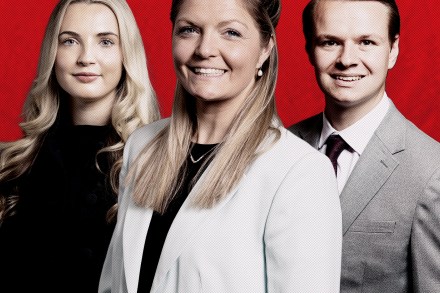
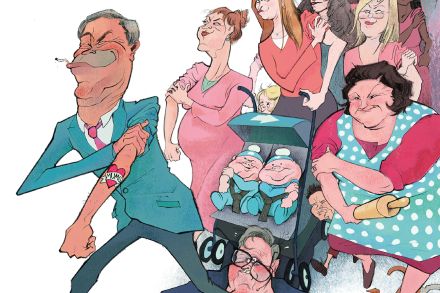
Does – or did – Nigel Farage have a woman problem? ‘Around me there’s always been a perception of a laddish culture,’ he tells political editor Tim Shipman, for the cover piece of the Spectator this week. In last year’s election, 58 per cent of Reform voters were men. But, Shipman argues, ‘that has begun to change’. According to More in Common, Reform has gained 14% among women, while Labour has lost 12%. ‘Women are ‘more likely than men… to worry that the country is broken.’ Many of Reform’s most recent victories have been by women: Andrea Jenkyns in the mayoral elections, Sarah Pochin to Parliament; plus, their most recent high profile defections include a former Tory Welsh Assembly member and a former Labour London councillor.

Kemi Badenoch’s God Delusion

From our UK edition

18 min listen

Conservative leader Kemi Badenoch has given a wide-ranging interview to the BBC’s Amol Rajan in which she touched upon her Nigerian upbringing, her feeling of identity and she even revealed she called out a peer for cheating at school. But perhaps her most interesting comments came when she revealed how she lost her belief in God. The Reverend Fergus Butler-Gallie, author of Twelve Churches, and Tim Shipman join Oscar Edmondson to discuss Kemi’s comments. Is it credible to call yourself a ‘cultural Christian’? And, with both an atheist Prime Minister and agnostic Leader of the Opposition, is the decline of religion in politics inevitable?

Has the Bank of England forgotten what its job is?

From our UK edition

15 min listen

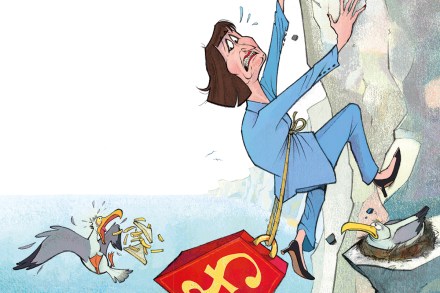
Some excitement on Threadneedle Street today after the Bank of England cut interest rates to 4 per cent. The Bank’s Monetary Policy Committee (MPC) has just voted five to four – after a revote – for what is the third cut this year. This takes interest rates back down to levels not seen since the beginning of 2023. Concerns about an increasingly slack labour market seem to have driven the MPC’s decision. This sounds like good news – and Starmer will welcome it as such – but the Bank’s apparent comfort with loosening policy in this context is baffling says Michael Simmons. Its own forecasts show inflation climbing back to 4 per cent by September – double the official target.

Reform’s motherland, Meloni’s Italian renaissance & the adults learning to swim

From our UK edition

46 min listen

First: Nigel Farage is winning over women Does – or did – Nigel Farage have a woman problem? ‘Around me there’s always been a perception of a laddish culture,’ he tells political editor Tim Shipman. In last year’s election, 58 per cent of Reform voters were men. But, Shipman argues, ‘that has begun to change’. According to More in Common, Reform has gained 14% among women, while Labour has lost 12%. ‘Women are ‘more likely than men… to worry that the country is broken.’ Many of Reform’s most recent victories have been by women: Andrea Jenkyns in the mayoral elections, Sarah Pochin to Parliament; plus, there most recent high profile defections include a former Tory Welsh Assembly member and a former Labour London councillor.

Vance & Farage’s budding bromance

From our UK edition

16 min listen

Nigel Farage hosted a press conference today as part of Reform's summer crime campaign 'Britain is lawless'. He unveiled the latest Tory defector: Leicestershire's Police & Crime Commissioner Rupert Matthews. Amidst all the noise of whether crime in the UK is falling or not, plus the impact of migration on crime, is Reform's messaging cutting through? Would US Vice President agree with Farage's message that Britain is lawless? Vance is in the UK, staying in the Cotswolds, as part of his summer holiday. Tim Shipman and Lucy Dunn are joined by James Orr, associate professor at Cambridge University, and a friend of Vance's to talk us through the dynamics between Trump, Vance, Starmer, Lammy and Farage. Does Farage have Vance's ear?

Is David Williams the MoD’s fall guy?

From our UK edition

Yesterday the Ministry of Defence (MoD) confirmed that its permanent secretary, David Williams, will be stepping down in a matter of weeks. He has served for just over four years, almost exactly the average tenure of his predecessors since the department was created in 1964, but it is difficult to regard the timing as a coincidence. It is still not yet three weeks since the catastrophic loss of data on Afghan nationals and others, and the MoD’s use of a super-injunction, were disclosed to parliament by defence secretary John Healey. This is not a failing individual. This is an ingrained, systemic, cultural malaise. And it has to be fixed. Williams is not explicitly being sacked: permanent secretaries very rarely are.

Online Safety Act: are Labour or the Tories worse on free speech?

From our UK edition

27 min listen

Is the Online Safety Act protecting children – or threatening free speech? Michael Simmons hosts John Power, who writes the Spectator's cover piece this week on how the Act has inadvertently created online censorship. Implemented and defended by the current Labour government, it is actually the result of legislation passed by the Conservatives in 2023 – which Labour did not support at the time, arguing it didn’t go far enough. Michael and John joined by former Conservative MP Miriam Cates who defends the core aims and principles at the heart of the Act. They debate the principles of Big Tech, the risks of government overreach and whether freedom of expression is under threat. Produced by Megan McElroy and Patrick Gibbons.

Why can’t we agree on data?

From our UK edition

12 min listen

John O’Neill and Sam McPhail, the Spectator’s research and data team, join economics editor Michael Simmons to re-introduce listeners to the Spectator’s data hub. They take us through the process between the data hub and how their work feeds into the weekly magazine. From crime to migration, which statistics are the most controversial? Why can’t we agree on data? Plus – whose data is presented better, the Americans or the French? For more from the Spectator’s data hub – which may, or may not look like the thumbnail photo – go to: data.spectator.co.uk Produced by Patrick Gibbons and Megan McElroy.

Will the junior doctors regret picking a fight with Wes?

From our UK edition

13 min listen

The dispute between the British Medical Association (BMA) – a trade union for doctors – and the government continues, following the five-day strike by junior doctors. Doctors argue that pay is still far below relative levels from almost two decades ago, combined with the cost of study, the cost of living and housing crises, as well as challenging conditions within the NHS. Nevertheless, with an average pay rise of 5.4% for resident doctors this year, support for the strikes appears to be falling – both with the public at large, and within the BMA. Health Secretary Wes Streeting has hit back at the BMA and said they 'will not win a war with this government'. Tim Shipman and Lucy Dunn join Natasha Feroze to discuss whether the junior doctors are wise to pick a fight with Wes.

Under ctrl, the Epping migrant protests & why is ‘romantasy’ so popular?

From our UK edition

39 min listen

First: the new era of censorship A year ago, John Power notes, the UK was consumed by race riots precipitated by online rumours about the perpetrator of the Southport atrocity. This summer, there have been protests, but ‘something is different’. With the introduction of the Online Safety Act, ‘the government is exerting far greater control over what can and can’t be viewed online’. While the act ‘promises to protect minors from harmful material’, he argues that it is ‘the most sweeping attempt by any liberal democracy to bring the online world under the control of the state’.

The air traffic control failure looks like cock-up rather than conspiracy

From our UK edition

The most remarkable thing about today’s air traffic control failure, which has led to at least 45 flights being cancelled and many more disrupted, is how few people are bothering even to question whether this could be the work of hackers employed by a foreign power. In recent years almost every systems failure that afflicts UK infrastructure has caused speculation that the Russians or Chinese are to blame – followed by the gradual realisation that, no, we did this to ourselves through our own incompetence. What does it say about the priorities of the industry when perfume shops at Heathrow seem to be more adequately staffed than air traffic control?

Could Reform’s Scottish surge provoke indyref2?

From our UK edition

20 min listen

Scotland's First Minister John Swinney unveiled his strategy for pursuing a second independence referendum this week, arguing that an SNP majority at next year's Holyrood elections is the only way to guarantee it. This is seen as an attempt to put Scottish independence back on the table as well as combat the rising popularity of Reform. Pollster Mark Diffley of Diffley Partnership joins Lucy Dunn to unpack the SNP's independence strategy. Mark points out that while Reform are consistently outperforming expectations, their support still primarily comes from ex-Conservatives. This, plus the unpopularity of the current UK Labour government, could provide the SNP with an opening to exploit and shore up nationalist support.

The Online Safety Act and Labour’s ‘ancient’ institutions

From our UK edition

After Reform promised to repeal the Online Safety Act, it didn’t take long for Labour to defend internet censorship. ‘And get rid of child protections online? Madness,’ Labour MP Chris Bryant tweeted. ‘Why would anyone want to grant strangers and paedophiles unfettered online access to children?’ asked Mike Tapp. Science Minister Peter Kyle went one step further, declaring that anyone opposing the Online Safety Act – including Reform leader Nigel Farage – is ‘on the side of Jimmy Savile’. Labour’s latest attack ad reads: ‘Farage’s Reform party would scrap laws keeping children safe online’. How dare Farage try to turn back the tide of progress like this, returning the UK to the dystopian hellscape of... last week?

How much pressure is Starmer facing over Gaza?

From our UK edition

20 min listen

Ministers have been recalled for a rare cabinet meeting during recess to discuss the deteriorating humanitarian situation in Gaza. As the UN warns of famine and aid agencies are raising concern about widespread starvation, countries are coming under pressure to change their approach and influence Israel. In the UK, the focus is on recognition of a Palestinian state, following Emmanuel Macron’s decision that France will do so in September and after more than 200 cross-party MPs signed a letter endorsing recognition. Political editor Tim Shipman and senior associate fellow at RUSI Michael Stephens join deputy political editor James Heale to discuss the situation, recognition and the UK’s role in the Middle East.

Katie Lam on immigration, benefits and the border: ‘generosity has become naivety’

From our UK edition

24 min listen

Katie Lam became an MP in 2024 after a career in finance. She's also an accomplished scriptwriter, having co-written five musicals. She's one of the most exciting new intake MPs, and she's ruffling feathers in Westminster and beyond. She joins political editor Tim Shipman to discuss everything from her vision for the country to the ECHR, and shares her political ambitions.

Can the left get its act together?

From our UK edition

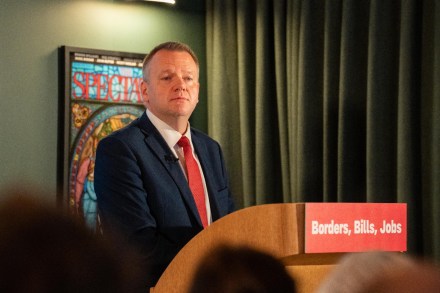
Jeremy Corbyn and Zarah Sultana have finally launched their new party, but it's off to a bumpy start. They unveiled 'Your Party', but had to quickly clarify that was not in fact the new party's name, and that will be decided on by a member's vote. He also had to play down claims of a split already. However, if the so-called Gaza independents join forced with Sultana and Corbyn, the organisation that's not called Your Party could have enough MPs to outnumber Reform UK. What does it mean for the left – and can they get their act together? Elsewhere, Tim discusses the slightly more organised Reform UK, the subject he wrote about in this week's magazine – and how it's no longer a case of can they win, but can anything stop them.

Keir’s Indian Summer

From our UK edition

The UK has finally signed a free-trade deal with India after three-and-a-half years of negotiation. The agreement will open up trade for cars, whisky, clothing and food products, with ministers claiming it will boost the British economy by £4.8 billion. For Keir Starmer, it offers much-needed economic and political good news. For Indian prime minister Narendra Modi, it shows that the £3 trillion Indian economy is willing to shake off its protectionist tradition and open up to international investors. Lucy Dunn discusses with James Heale and Michael Simmons.

How to write a political sketch – with Madeline Grant

From our UK edition

10 min listen

As MPs depart Westminster for parliamentary recess, The Spectator's political sketch writer Madeline Grant joins Natasha Feroze and economics editor Michael Simmons to talk about how to sketch PMQs and why Keir Starmer makes for the best sketches. Also on the podcast, Michael Simmons looks at the promising FTSE at record high following Trump's trade deal with Japan and the gloomy national debt figures announced yesterday.