Uk politics

What’s left of the Tories?

From our UK edition

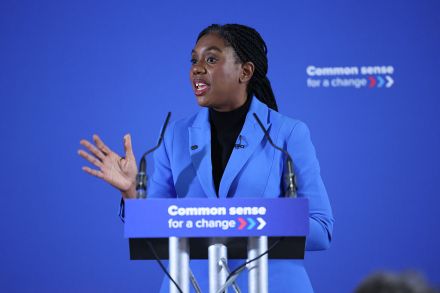
The Commons is closing down for the summer, but Kemi Badenoch has treated us to a shadow cabinet reshuffle. At the beginning of the year, Badenoch’s team were keen to stress stability, dismissing talk of an early reshuffle. But, as so often in politics, events have forced her hand. Ed Argar, the shadow health secretary, had a health scare earlier this summer. He has today stepped back from the frontbench to focus on his recovery. Badenoch is therefore using his departure as the chance to make what she calls ‘a few changes to my frontbench.’ The headline is that Sir James Cleverly, former foreign and home secretary, is returning to the front bench as shadow housing secretary. Is his new position designed to take on Angela Rayner?

Wes Streeting takes on the doctors

From our UK edition

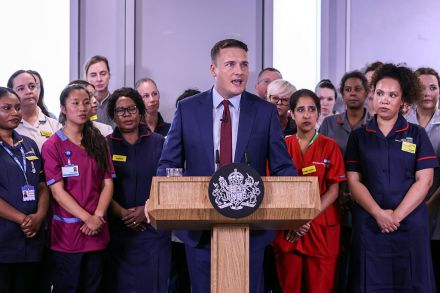
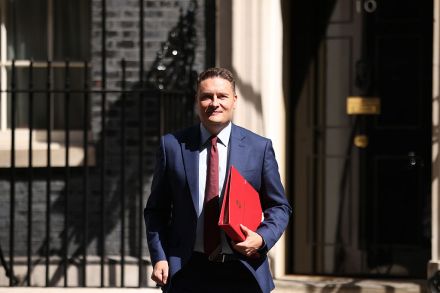
The public won’t forgive and nor will I, said Health Secretary Wes Streeting of plans by junior doctors to strike over his refusal to cave to demands for 29 per cent pay rises. Speaking to the Times he said: ‘There are no grounds for strike action now. Resident doctors have just received the highest pay award across the entire public sector. The Government can’t afford to offer more and it wouldn’t be fair to other NHS workers either, many of whom are paid less’.  Is Wes Streeting right? And who's going to come out on top – the Health Secretary or the junior doctors?

Labour’s first year (in review) with Tim Shipman & Quentin Letts

From our UK edition

22 min listen

Cast your mind back a year. Labour had just won a storming majority, promising ‘change’ to a stale Tory party that was struggling to govern. But have things got any better? In the magazine this week, Tim Shipman writes the cover piece to mark the occasion of Labour’s first year in government. He takes readers through three chapters: from Sue Gray (freebies scandal and winter fuel cut) to Morgan McSweeney (a degree of professionalisation and dealing with the Donald) to the point at which ‘things fall apart’ (assisted dying, the welfare vote and Reeves’s tears).

John Connolly, Gavin Mortimer, Dorian Lynskey, Steve Morris and Lloyd Evans

From our UK edition

26 min listen

On this week’s Spectator Out Loud: John Connolly argues that Labour should look to Andy Burnham for inspiration (1:51); Gavin Mortimer asks if Britain is ready for France’s most controversial novel – Jean Raspail’s The Camp of the Saints (4:55); Dorian Lynskey looks at the race to build the first nuclear weapons, as he reviews Frank Close’s Destroyer of Worlds (11:23); Steve Morris provides his notes on postcards (16:44); and, Lloyd Evans reflects on British and Irish history as he travels around Dublin (20:44).  Produced and presented by Patrick Gibbons.

Claws out for Keir, Mamdani’s poisoned apple & are most wedding toasts awful?

From our UK edition

46 min listen

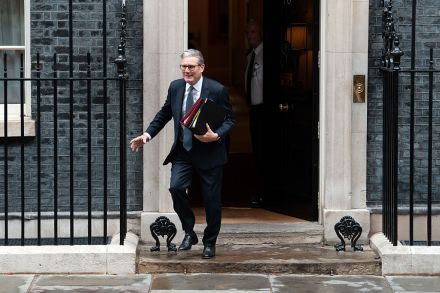
This week: one year of Labour – the verdict In the magazine this week Tim Shipman declares his verdict on Keir Starmer’s Labour government as we approach the first anniversary of their election victory. One year on, some of Labour’s most notable policies have been completely changed – from the u-turn over winter fuel allowance to the embarrassing climb-down over welfare this week. Starmer has appeared more confident on the world stage but, for domestic audiences, this is small consolation when the public has perceived little change on the problems that have faced Britain for years. Can Starmer turn it around? Tim joined the podcast alongside the Spectator’s editor Michael Gove.

Steve Baker on how to organise a successful rebellion

From our UK edition

25 min listen

As Labour rebels appear to have forced concessions from Keir Starmer over welfare this week, former Conservative MP Steve Baker joins James Heale to reflect on his own time as a rebel, and to provide some advice to Labour MPs. Steve, an MP for 14 years and a minister under Theresa May, Liz Truss and Rishi Sunak, tells James about the different rebellions he was a part of (from Brexit to Covid), explains how to organise a successful one and reveals how he has lost close friends when he has made the decision to compromise.

Peter Frankopan, Tim Shipman, Francis Pike, Hermione Eyre and George Young

From our UK edition

42 min listen

On this week’s Spectator Out Loud: Peter Frankopan argues that Israel’s attack on Iran has been planned for years (2:00); just how bad are things for Kemi Badenoch, asks Tim Shipman (13:34); Francis Pike says there are plenty of reasons to believe in ghosts (21:49); Hermione Eyre, wife of Alex Burghart MP, reviews Sarah Vine’s book How Not To Be a Political Wife: A Memoir, which deals with Vine’s marriage to ex-husband Michael Gove (28:46); and, George Young reports on the French sculptors building the new Statue of Liberty (34:45). Produced and presented by Patrick Gibbons.

Why is Britain’s economy so unhealthy?

From our UK edition

20 min listen

The Spectator’s economics editor Michael Simmons is joined by the outgoing boss of the Institute for Fiscal Studies Paul Johnson and the CEO of the Resolution Foundation Ruth Curtice to understand why Britain’s economy is in such a bad place. Given it feels like we are often in a doom loop of discussion about tax rises, does this point to a structural problem with the British economy? And why are the public’s expectations so out of line with the state’s capabilities? Michael, Paul and Ruth talk about whether it’s fair for Labour to claim they’ve been ending austerity, the extent to which the effects of the covid-19 pandemic are still being felt and if tax rises are inevitable.

Israel strikes Iran – how will Iran retaliate?

From our UK edition

14 min listen

Israel struck military and nuclear targets in Iran overnight in a major escalation of hostilities in the Middle East has begun further strikes on Friday. Iran has vowed retaliation though President Trump has warned Iran and encouraged the Iranians to continue negotiations over their nuclear programme. Further talks had been due to take place this weekend. What’s Israel’s objective? And does this underline the unpredictability of geopolitics, at a time when the UK has pledged significantly more money for defence?  Patrick Gibbons speaks to James Heale and Michael Stephens, associate fellow at RUSI. Plus: updates on assisted dying and the government’s plans for welfare. Produced by Patrick Gibbons.

Sean Thomas, John Power, Susie Mesure, Olivia Potts and Rory Sutherland

From our UK edition

22 min listen

On this week’s Spectator Out Loud: Sean Thomas reflects on the era of lads mags (1:07); John Power reveals those unfairly gaming the social housing system (6:15); Susie Moss reviews Ripeness by Sarah Moss (11:31); Olivia Potts explains the importance of sausage rolls (14:21); and, Rory Sutherland speaks in defence of the Trump playbook (18:09).  Produced and presented by Patrick Gibbons.

Is Rachel Reeves’s headroom shrinking?

From our UK edition

13 min listen

There were clear winners and losers in Rachel Reeves’s spending review yesterday but some of her announcements around capital spending and investment saw her dubbed the ‘Klarna Chancellor’ by LBC’s Nick Ferrari for her ‘buy now, pay later’ approach. Clearly trying to shake off the accusations of being ‘austerity-lite’, Labour point to longer term decisions made yesterday, such as over energy policy and infrastructure. But will voters see much benefit in the short-term? And, with the news today that Britain’s GDP shrank by 0.3% in April, will the decisions Rachel Reeves have to make only get harder before the October budget? Lucy Dunn speaks to Michael Simmons and Claire Ainsley, former director of policy to Keir Starmer and now at the Progressive Policy Institute.

Spending review: smoke, mirrors and no strategy

From our UK edition

10 min listen

There were few surprises in Rachel Reeves’s spending review today. Health was the big winner, with a £29bn increase in day-to-day spending and £39bn was announced to build social and affordable housing. The main eyebrow-raiser was the announcement that the Home Office will end the use of hotels for asylum seekers within this parliament; this could save £1bn or it could become Labour’s ‘stop the boats’ moment. The bigger picture was confusing – with increases measured against levels three years ago, is there really as much cash as Rachel Reeves wants you to think there is? And what’s the strategy behind it all?

Labour goes nuclear while Reform turns to coal

From our UK edition

17 min listen

Rachel Reeves has pledged a ‘new era of nuclear power’ as the government confirms a £14.2 billion investment in the Sizewell C nuclear plant in Suffolk. This comes on the eve of Labour’s spending review, with the government expected to highlight spending pledges designed to give a positive impression of Labour’s handling of the economy. However, as Michael Simmons tells James Heale and Lucy Dunn, there are signs that the government’s National Insurance hike is starting to bite. Plus – Nigel Farage has made two announcements in as many days. This morning, he unveiled Reform’s new chairman, former MEP Dr David Bull, taking over from the recently returned Zia Yusuf.

Labour try to silence ‘austerity-lite’ accusations

From our UK edition

13 min listen

James Nation, formerly a special adviser to Rishi Sunak and now an MD at Forefront Advisers, joins the Spectator’s deputy political editor James Heale and economics editor Michael Simmons, to talk through the latest on the government’s spending review, which is due to be announced on Wednesday. The last holdout appears to be Home Secretary Yvette Cooper, pushing for more police funding. But, against a tough fiscal landscape, what can we expect? And how much does it matter with the wider public? Plus – former chairman Zia Yusuf returned to Reform just two days after resigning, what’s going on? Produced by Patrick Gibbons.

Surprise Labour victory as Reform’s fallout continues

From our UK edition

14 min listen

Scottish Labour have a new MSP today as Davy Russell won the Hamilton, Larkhall and Stonehouse by-election, taking the seat from the SNP. Labour won with 31.6% of the vote with the SNP second on 29.4%, Reform close behind on 26.1% and the Conservatives a distance fourth with just 6% of the vote; this marks rare good news for both Keir Starmer and Scottish Labour leader Anas Sarwar. Both SNP and Reform will be disappointed not to have won, but Reform have been quick to highlight how close they came, considering how new the party is. Plus, there are signs that Reform took votes away from the incumbent SNP, demonstrating again that Reform can appeal to voters across the political spectrum – what does this mean for next year’s Holyrood elections?

Zia Yusuf resigns from Reform

From our UK edition

10 min listen

Zia Yusuf resigned this evening from his position as chairman of Reform UK, saying: ‘I no longer believe working to get a Reform government elected is a good use of my time.’ This comes after he tweeted yesterday that it was ‘dumb’ for Sarah Pochin, Reform’s newest MP, to urge the Prime Minister to ban the burka during PMQs. Did he jump before he was pushed? And can Reform UK really claim to have ‘professionalised’ when this is the second high profile departure this year?  Oscar Edmondson speaks to James Heale.

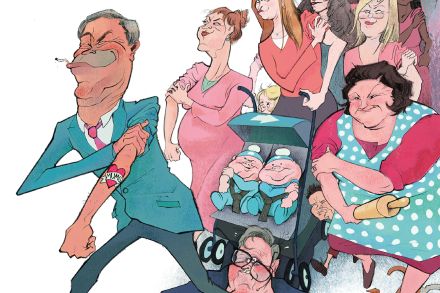
Nigel wants YOU, secularism vs spirituality & how novel is experimental fiction?

From our UK edition

52 min listen

How Reform plans to win Just a year ago, Nigel Farage ended his self-imposed exile from politics and returned to lead Reform. Since then, Reform have won more MPs than the Green Party, two new mayoralties, a parliamentary by-election, and numerous councils. Now the party leads in every poll and, as our deputy political editor James Heale reveals in our cover article, is already planning for government. The party’s chair, tech entrepreneur Zia Yusuf, describes the movement as a ‘start-up’; and like a start-up, Reform is scaling up at speed. Among the 676 councillors elected last month, a number are considered more than ready to stand as MPs.

From Thatcher to Truss, who’s haunting Mel Stride?

From our UK edition

17 min listen

Shadow Chancellor Mel Stride delivered a speech today where he attempted to banish the ghost of Liz Truss and improve the Conservatives' reputation over fiscal credibility. And he compared leader Kemi Badenoch to Thatcher, saying she too struggled at first and will 'get better' at the dispatch box. LBC broadcaster Iain Dale and the Spectator's economics editor Michael Simmons join deputy political editor James Heale to unpack Stride's speech, talk about Labour's latest policy announcement over free school meals and discuss why both the main parties are struggling with fiscal credibility. Plus, Iain talks about his new book Margaret Thatcher and the myths he seeks to dispel. Why does he think the former PM still endures 35 years after she left office? Produced by Patrick Gibbons.

Is the public ready for difficult decisions on defence?

From our UK edition

16 min listen

Former Commander of Joint Forces Command – and one of the authors of the Strategic Defence Review – General Sir Richard Barrons joins Lucy Dunn and James Heale to talk through the main conclusions of the review, and the questions it raises. Labour have talked up the fact that this is the first government in a generation to not reduce the size of the armed forces. But, as Sir Richard explains, difficult choices await politicians and the public if the UK wants to be more prepared, and faster, for potential threats. Produced by Patrick Gibbons.

Should cannabis be decriminalised?

From our UK edition

21 min listen

London Mayor Sir Sadiq Khan has called for possession of small amounts of cannabis to be decriminalised following a report by the London Drugs Commission. The report has made 42 recommendations, which include removing natural cannabis from the Misuse of Drugs Act. Former cabinet minister, now Labour peer, Charlie Falconer and Tory MP Dr Neil Shastri-Hurst join Lucy Dunn to discuss whether now is the time to decriminalise cannabis. For Lord Falconer, who chaired the Commission, the present law doesn’t work and he explains the principles behind the review; Neil, however, believes that the proposals send the wrong message that cannabis is harmless.