Lisa Haseldine, Roya Nikkhah & Lionel Shriver
From our UK edition
31 min listen
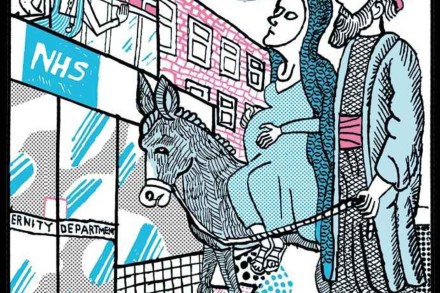
This week: Lisa Haseldine on Britain's failing maternity services, Roya Nikkhah writes the diary and Lionel Shriver on gerrymandering in America.
Natasha Feroze is The Spectator's broadcast and virtual events producer.
From our UK edition
31 min listen
This week: Lisa Haseldine on Britain's failing maternity services, Roya Nikkhah writes the diary and Lionel Shriver on gerrymandering in America.
From our UK edition
The long-debated assisted dying bill is expected to fail in the House of Lords today – described by the bill's leading advocate Lord Falconer as failing 'not on its merits' but 'due to procedural wrangling'. Natasha Feroze speaks to Tim Shipman and James Heale about whether that is a fair description of the bill. Plus the Telegraph investigation into Attorney General Lord Hermer's previous roles taking legal action against British troops who served in Iraq and what this means for his suitability to his role in government.
Artemis II departed on the most ambitious mission yet, something which has not been tried for 50 years. Four astronauts were launched into the air on a ten day expedition with the aim of travelling 5000 miles past the far side of the moon. Natasha Feroze is joined by David Whitehouse, astroscientist and writer to discuss the difficulty involved in the mission, how little we think about the significance of the moon and whether the US will beat China in its quest to have footsteps back on the moon.
From our UK edition
17 min listen
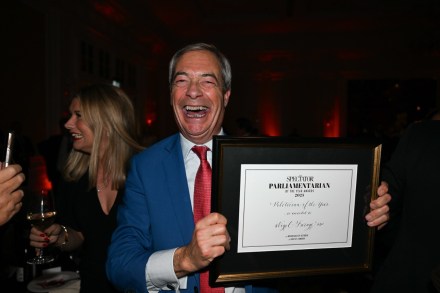
There are a few sore heads at 22 Old Queen Street this morning because it was The Spectator’s Parliamentarian of the Year Awards last night. From Lucy Powell’s jibe at Morgan McSweeney (and Tim Shipman, for that matter) to Robert Jenrick’s jokes falling flat, it was an eventful evening of good-natured hazing, naval-gazing and – of course – recognising the best and worst of Westminster. Who came out on top? Oscar Edmondson debriefs with Tim Shipman, Michael Simmons and Natasha Feroze. Produced by Oscar Edmondson and Megan McElroy.
From our UK edition
38 min listen
How did faith shape Margaret Thatcher’s politics? To mark the centenary month of Margaret Thatcher’s birth, Damian Thompson introduces a conversation between the Spectator’s Natasha Feroze, Thatcher’s biographer Lord Moore and Bishop Chartres who delivered the eulogy at her funeral. They discuss her relationship with faith, how both her family background and her training as a scientist influenced her beliefs and her understanding of the relationship between wealth and society based on Jesus’s parables. Plus – what would Thatcher have made of the much talked about ‘Christian revival’ in the West? Produced by Patrick Gibbons and Natasha Feroze.
From our UK edition
13 min listen
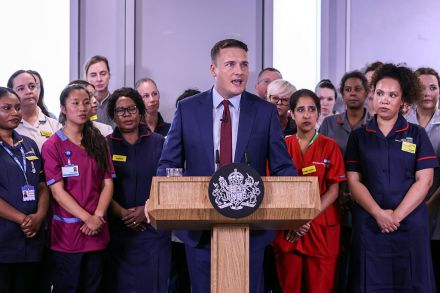
The dispute between the British Medical Association (BMA) – a trade union for doctors – and the government continues, following the five-day strike by junior doctors. Doctors argue that pay is still far below relative levels from almost two decades ago, combined with the cost of study, the cost of living and housing crises, as well as challenging conditions within the NHS. Nevertheless, with an average pay rise of 5.4% for resident doctors this year, support for the strikes appears to be falling – both with the public at large, and within the BMA. Health Secretary Wes Streeting has hit back at the BMA and said they 'will not win a war with this government'. Tim Shipman and Lucy Dunn join Natasha Feroze to discuss whether the junior doctors are wise to pick a fight with Wes.
From our UK edition
10 min listen
As MPs depart Westminster for parliamentary recess, The Spectator's political sketch writer Madeline Grant joins Natasha Feroze and economics editor Michael Simmons to talk about how to sketch PMQs and why Keir Starmer makes for the best sketches. Also on the podcast, Michael Simmons looks at the promising FTSE at record high following Trump's trade deal with Japan and the gloomy national debt figures announced yesterday.
From our UK edition
12 min listen
It can now be revealed that a Ministry of Defence data leak has cost the UK some £7 billion and put thousands of Afghans at risk of death. A dataset containing the details of nearly 19,000 people who applied to move to the UK following the Taliban takeover was released in error by a British defence official in February 2022. Ministers were informed of the debacle in August 2023; since then, an unprecedented super-injunction has been in place to stop the press from reporting details. What does this mean for successive governments?
From our UK edition
44 min listen
This week: Peerless – the purge of the hereditary peers For this week’s cover, Charles Moore declares that the hereditary principle in Parliament is dead. Even though he lacks ‘a New Model Army’ to enforce the chamber’s full abolition, Keir Starmer is removing the hereditary peers. In doing so, he creates more room, reduces the Conservatives’ numerical advantage, and improves ‘the sex and ethnic balance’. But 86 hard-working and dutiful peers ‘lacking worldly ambition or partisan passions’ will be lost. Also in the magazine, Sophia Falkner, researcher at The Spectator, sets out exactly what we stand to lose by profiling some of the most capable hereditary peers in the House. She warns that Labour’s purge is ripping the heart out of the Lords.
From our UK edition
20 min listen
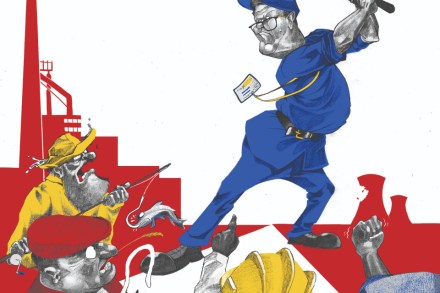
Spectator editor Michael Gove joins Natasha Feroze to talk about his cover article this week: 'Starmer vs the workers', the real Brexit betrayal. Michael puts forward his arguments for why Labour should learn to love Brexit, should take back control to protect British jobs and industries, and could use Brexit as an opportunity to harness AI and science & technology. Plus, has the UK-EU deal brought back 'happy memories' for the former prominent Brexiteer? Produced by Natasha Feroze and Patrick Gibbons.
From our UK edition
12 min listen
Parliament is back after the Easter holiday and the Supreme Court ruling over what is a woman continues to dominate talk in Westminster. The Prime Minister has changed his tune on trans, declaring he does not think that trans women are women. This has caused some disquiet in the party, with a number of senior MPs breaking rank over the weekend. Was Starmer right to row in behind the ruling? Also on the podcast, as we edge closer to the local elections, they look increasingly important for the two main parties. Pollsters are forecasting a good result for smaller insurgent parties such as Reform and the Greens, with big losses for Labour and the Conservatives. It is not an overstatement to suggest that these could be the most important local elections in recent history.
From our UK edition
16 min listen
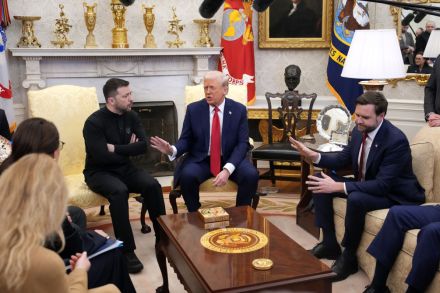
Zelensky's much anticipated meeting at the White House finished in an angry clash between the Ukrainian President, JD Vance and Donald Trump. The Vice President accused Zelensky of leading 'propaganda tours' and culminated in the Ukrainian President leaving the White House without a signed minerals deal. Was Zelensky ambushed? European leaders quickly scrambled to show their solidarity for Ukraine, whilst attempting to maintain good relations with America. How high are the stakes for Starmer ahead of the peace summit held by No.10 on Sunday?
From our UK edition
21 min listen
This week, MPs voted against a new national inquiry into grooming gangs. The vote followed weeks of pressure on Labour after Elon Musk brought grooming gangs back into the spotlight, after safeguarding minister Jess Phillips rejected a new national inquiry. If we did have a national inquiry, what would it achieve? We’ve had many in recent years; Iraq, Grenfell Covid, the Post Office. Do they achieve meaningful justice for victims, or are they a drawn-out way to avoid knotty legislative change? Does parliament have the mechanisms to enact the recommendations – have politicians ever done this in the past, and is there an appetite to do so in the future?
From our UK edition
12 min listen
Following news that President Bashar Al-Assad's regime in Syria has fallen, Natasha Feroze discusses what comes next with James Heale and Michael Stephens, senior associate fellow at RUSI. What does the Syrian conflict mean for Britain? Do we need to reconsider our counter-terrorism policy? And how will Britain's historic relationship with Syria shape our path going forward?
From our UK edition
14 min listen
Another 1100 prisoners have been released today through the early-release scheme. How has this measure landed? With the news that former Conservative minister David Gauke will lead a review of prison sentencing, new Spectator editor Michael Gove joins Natasha Feroze and Katy Balls to discuss Labour's long term strategy. Can Labour learn lessons from America? Produced by Megan McElroy and Patrick Gibbons. Join The Spectator's Deputy Editor Freddy Gray for a special live recording of Americano on Thursday 24 October. You can buy tickets at spectator.com/electionspecial.
From our UK edition
Jeremy Hunt is one of the few Tories at Conservative Party Conference willing to take the fight to Labour. In the second day, he sat down for an on-stage interview where the former Chancellor spoke about the winter fuel allowance, freebies, but also made some polite suggestions about where the Conservative party shouldn't go, and dropped a few hints about the former Prime Minister, Liz Truss. Natasha Feroze speaks to Kate Andrews and Isabel Hardman about Hunt's speech and some of the best bits from Liz Truss's own interview at conference.
From our UK edition
Minor royal and former rugby player Mike Tindall was criticised this week when his daughter was spotted wearing an Apple AirTag, a £35 digital disc that can be tracked from a phone. This was apparently an invasion of his 10-year-old’s privacy (nevermind the fact the photo that revealed his daughter’s accessory was taken by a press photographer). I have over 15 people on Find My Friends, including my parents I really don’t see what the fuss is about. Plenty of people happily sign up to allow their friends and family to track them in real time. There is Snapchat Maps, WhatsApp location, Life360, Google Family Link and GeoZilla – the list goes on. Microchips, like the one attached to the 10-year-old Tindall’s denim shorts, are for the seriously committed.
From our UK edition
36 min listen
This week: All hail Harris! As the Democratic National Convention approaches its climax, The Spectator’s deputy editor Freddy Gray explores vice president Kamala Harris’s remarkable rise to the top of the democratic ticket in his cover article this week. Freddy joins the podcast from Chicago (1:30).Next: live from the DNC. Freddy and Natasha Feroze, The Spectator’s deputy broadcast editor, have been out and about at the convention talking to delegates – and detractors – of the Democratic Party. What do these Americans think? And does Kamala Harris have ‘good vibes’? (7:56). Then: should misogyny really be classified under anti-terrorism laws?
From our UK edition
11 min listen
This week, Joe Biden has faced further calls to step down from some of the most senior characters in the Democratic party. The President is currently isolating having tested positive for Covid, but remains defiant that he has no intention of giving up yet. Natasha Feroze speaks to Kate Andrews and Freddy Gray about whether the party can get rid of Biden, and discuss what the JD Vance-Trump economic policies could look like.
From our UK edition
38 min listen
On this week’s Spectator Out Loud: Natasha Feroze reports on the return of ex-Labour MP Keith Vaz (1:10); Robert Ades presents the case against sociology A-level (7:39); Lucasta Miller reviews Katherine Bucknell’s book, Christopher Isherwood Inside Out (15:24); Sam McPhail provides his notes on the lager Madri (23:16); Toby Young explains why he will be voting Reform (26:23); and, Catriona Olding reflects on love and friendship (31:17). Presented by Patrick Gibbons.