Uk politics

Britain’s Brexit fate is now in Emmanuel Macron’s hands

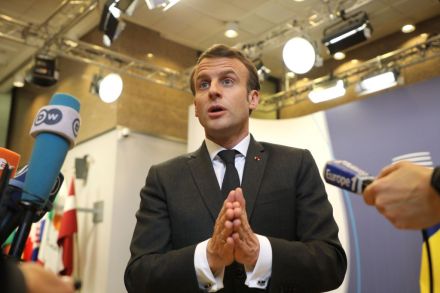
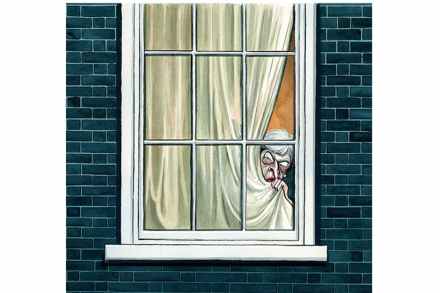
Our Brexit fate is in the hands of France's president Macron – which is "not a wholly comfortable state of affairs," in the euphemistic words of a minister. What this minister means is the Prime Minister and her close colleagues are a long way from being convinced Macron will underwrite EU president Donald Tusk's proposal for the UK to be granted a year's delay to Brexit, with a break clause to allow us to leave the EU earlier if all the political and legal niceties can be completed earlier.

It is now ‘transphobic’ to report doctors’ fears about trans’ children’s health

The Times today reports serious concerns about the functioning of the Gender Identity Development Service (GIDS) at the Tavistock & Portman NHS Foundation Trust. Lucy Bannerman, the Times reporter, writes: “The Times has spoken to five clinicians who resigned from the service because of concerns over the treatment of vulnerable children who come to the clinic presenting as transgender. “They believe that some gay children struggling with their sexuality are being wrongly diagnosed as “transgender” by the Gender Identity Development Service (GIDS) clinic.” “All five former staff were responsible for deciding which trans-identifying youngsters should be given hormone blockers to halt their sexual development.

Could Theresa May cancel Brexit?

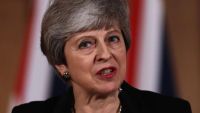
Is the de facto Brexit default now revoking Article 50 this week rather than a no-deal Brexit on 12 April? I ask because the Prime Minister is now explicitly saying the choice is a binary one between some version of her negotiated deal and not leaving at all (that is what she said in her sofa chat yesterday). The point is that she has no power to prevent a no-deal Brexit on 12 April by delaying Brexit; for a delay, she needs the unanimous agreement of the EU's 27 leaders. But she does have the unilateral power to prevent a no deal by cancelling Brexit altogether, by revoking the Article 50 application to leave the EU.

Are both May and Corbyn prepared to risk splitting their parties?

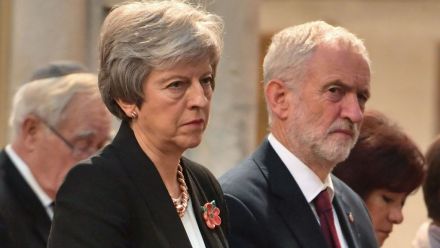
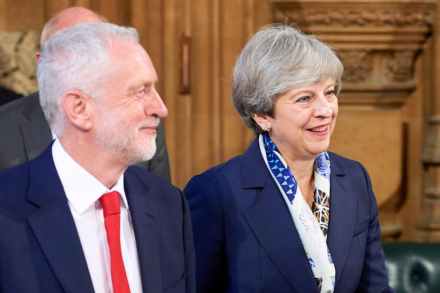
The irony of the stalemate in the cross-party Brexit talks is that Theresa May and Jeremy Corbyn are not that far apart on the issue, as I say in The Sun this morning. They might use different language, but what they want is really quite similar. But while they may not be that far apart, their parties are. A deal would require not one of them, but both of them to be prepared to split their parties. If Theresa May was to soften her deal to try and get Labour support, she would exacerbate the divide within her own party. I am told that in the talks, the government has tried to point out to Labour that the deal does, in the backstop, effectively include a customs union. But Labour has been insistent that the phrase ‘permanent customs union’ must be in any deal.

Has a Brexit breakthrough been reached at last?

There has been considerable and widespread cynicism about the talks between the Government and Labour about a compromise that could break the Brexit deadlock. But those close to the negotiations, led today by David Lidington and Keir Starmer, believe there is at last a "plan with a chance," of securing a positive vote from MPs for the PM’s Withdrawal Agreement, without which there can be no managed exit from the EU. It would involve a Government committing to staying in the Customs Union, "dynamic" alignment with EU rules covering workers’ rights and the environment and giving the Commons a vote on whether the whole package would be subject to confirmation in a referendum. "Is all this real?" I asked informed sources. "Yes," they said.

My encounter with Young Labour makes me fear for the party’s future

To understand the decay of the Labour Party since 2015, look no further than its London youth wing. London Young Labour (LYL) is the Momentum-controlled home of the capital’s under-27 Labour members. It is also a sparkling example of the worst kinds of regressive identity politics popping up on campuses across Britain. As a 26-year-old Labour member, albeit of a more moderate persuasion than those now running the show, I decided to go along to LYL’s Annual General Meeting last weekend. People talk of Labour as the party of young people. I hoped that the event might make me grow a newfound respect for a party I am quickly losing confidence in. Unfortunately, I left disappointed.

Brexit is exposing Nicola Sturgeon’s hypocrisy

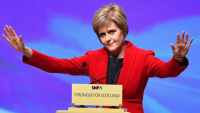
Like Mother Teresa on a message grid, Nicola Sturgeon loves nothing more than going among the poor and downtrodden with a hug, some hope, and an embargoed press release. EU nationals are the latest beneficiaries of the First Minister's ministrations. The SNP leader has penned an open letter to EU citizens resident north of the border as part of her ‘Stay in Scotland’ scheme to help them secure settled status. The language is as meticulously neutral as it always is in taxpayer-funded Scottish Government initiatives: ‘As EU citizens in the UK you have had to endure years of careless indecision on what the future holds for your lives, your careers and your families...

Theresa May requests a short Brexit delay – what will the EU say?

After two rounds of talks with the Leader of the Opposition aimed at finding a way to break the Brexit logjam, Theresa May has written a letter to EU Council president Donald Tusk on her next steps forward. In it, the Prime Minister expresses regret that the House is yet to approve a Brexit deal. On the prospect of leaving the EU without a deal, May says that the House has repeatedly expressed its opposition to a no deal Brexit and the government 'agrees that leaving with a deal is the best outcome'. It is for this reason that May goes on to request a second Article 50 extension – this time until June 30. The Prime Minister says the government accepts the EU's demand that the UK would need to take part in European elections if still a member on May 23.

May finds ministers to fill resignation holes: but does it really matter?

Theresa May has this evening found enough people to fill the various ministerial holes left in her government by the recent slew of resignations. Some of these holes have been gaping for rather a long time: there has been no Minister for Disabled People since 13 March, for instance. But their lack of replacements until now has excited very little attention, largely because it's not clear what else the government aspires to do at the moment other than exist. The appointments announced this evening are as follows: Justin Tomlinson MP to be a Minister of State at the Department for Work and Pensions. James Cleverly MP to be a Parliamentary Under Secretary of State at the Department for Exiting the European Union.

Why a leaky Commons and a Brexit crisis are symptoms of the same problem

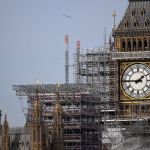
Oh look, there's water coming through the roof of the House of Commons! What a gift to those starved of metaphors for the mess that has been made of Brexit. The problem is that the water coming through the roof, which the House authorities are insisting is not a sewage leak (in a blow to fans of particularly crap metaphors), is far more than some kind of coincidental symbol of what's going on. It's actually just a different manifestation of the same problem afflicting British politics as the one that's led us into the Brexit crisis. The House of Commons Chamber is the bit of Parliament that the public notice the most, and it's doing pretty well compared to the rest of the estate.

Jeremy Corbyn has ditched his principles over Brexit

Remember when people would say things like, ‘Jeremy Corbyn might talk a lot of nonsense but at least he has principles’? We now know what rot that was. Corbyn is, in my view, the most unprincipled politician in the UK right now, and by some margin. Exhibit A: this man who was a devoted Eurosceptic his entire life has now effectively been employed by the establishment to keep us tied to the EU. This man who raged against the Brussels machine for years is now tasked with softening Brexit to such a degree that Britain will remain tied to the Brussels machine. For a taste of power, for a taste of influence, Corbyn has sold out everything he once believed in. It is a depressing and depraved spectacle.

One vote in it as Yvette Cooper’s bill passes

Yvette Cooper’s bill, requiring the Prime Minister to seek an Article 50 extension to avoid no deal, has passed by 1 vote—going through all its Common stages in a single evening.  The passage of this bill at such speed even though Theresa May has said she’ll ask for an extension, is another demonstration of how committed the anti no-deal majority in parliament is. But before these anti no-deal MPs pat themselves on the back, they should realise the limits to their action. Parliament is sovereign, but it isn’t sovereign over the EU27; and it is they who’ll decide whether to grant the UK an extension to the Article 50 process.

Theresa May and Jeremy Corbyn both want to frustrate Brexit

There is a logic in Theresa May’s late move to Labour. It is the same logic by which both parties, at the last general election, put forward very similar policies about Brexit. They need to stay together (while feigning disagreement for party reasons) to frustrate what people voted for. Just as they both said in 2017 that they wanted to leave the customs union, now both are working to stay in it. It is the same logic by which Mr Speaker Bercow has arranged for Sir Oliver Letwin to become prime minister on roughly alternate days. None of the main players really wants Brexit, but none can really say so.

Theresa May’s Brexit compromise won’t work

So, finally, we have a spirit of compromise. Jeremy Corbyn and Theresa May are going to sit down together and hammer out a deal on which both their respective parties can agree. Well, maybe not. There has been plenty of analysis over the past few hours predicting how it could all unwind – with further ministerial resignations and so on. But there is something more fundamentally wrong with what Theresa May has proposed. While searching for compromise might be a reasonable way to proceed on most political issues it simply doesn’t work in the case of Brexit.

What MPs decide about Brexit is becoming irrelevant

Maybe we will go for a Norway-Double Plus. Or A Canada-Minus. Or Common Market 2.0, or a WTO-Light, an EEA-Doubled, or an Enhanced EFTA or even a Singapore Sling or a White Russian. Okay, scratch those last two. I seem to have mixed up a list of options for leaving the European Union with a cocktail menu. But that pair aside – and who knows, maybe late on a Thursday night MPs will vote them through instead – they are all ways that we might eventually leave. Amid all the arguments over our departure, however, one point is easily overlooked. For the economy, after we sailed through the original deadline for getting out, it doesn’t make a lot of difference anymore. Leaving the EU was always going to do some damage to business, even if the impact was exaggerated.

Last night’s vote takes some of the pressure off Theresa May

The failure of any Brexit option to wield a majority in Monday's indicative votes appears to have eased the pressure on No. 10. Ministers had been expecting five hours of meetings today but the first cabinet has been delayed and there is an expectation that the meeting will not run on so long. One minister points out that there is now less pressure on the government to come up with an immediate decision on whether to pursue a softer Brexit, to attempt a no-deal Brexit or to go to the polls if May's deal fails a fourth time. That's not to say today's meeting will be a walk in the park. I understand the pre-reading material includes background for decisions that need to be taken soon regarding no-deal preparations.

Britain must follow Germany’s example to help end Yemen’s civil war

There is no civil war in the world today whose effects are so detrimental to civilians as the conflict engulfing Yemen. The war, pitting a Houthi rebellion in control of the Yemeni capital against the nominal Yemeni government in the south, just crossed its four-year anniversary last week. The United Nations is trying its best to end the fighting, with little to show for it other than a ceasefire in the Yemeni port city of Hodeida which may or (more likely) may not get peace talks off the ground. Unlike the United Kingdom, which has exported £5.7 billion of arms to the Saudi-led military coalition bombing Yemen to smithereens, Germany has largely been a passive spectator to the conflict.

Why Common Market 2.0 is the Brexit we need

In recent weeks, there has been a lot of inaccurate media coverage of Common Market 2.0, which proposes that the UK should remain a member of the European Economic Area (EEA) after Brexit. The fundamental purpose of the EEA Agreement is to extend the benefits of the single market to countries that are outside the European Union but members of the European Free Trade Association (Efta). EEA membership for non-EU states involves accepting the rules of the single market – including the four freedoms – but excludes other EU policies that many in the UK dislike, such as economic and monetary union, political union, the common agricultural policy, the common fisheries policy, and other common policies.