Uk politics

Falling net migration: a clear policy success?

The fall of one third in the net immigration statistics announced today is the most significant development since that number rose by 50 per cent in 2004 (unremarked, incidentally, by the BBC at the time). On this occasion the IPPR (and the Migration Observatory) seemed determined to play down the government’s achievement. Certainly there is still a distance to go from today’s 160,000 to the target of tens of thousands but there are another two years in which to reach it. Sarah Mulley argues that the government are laying a trap for themselves because a reduction in student arrivals will lead to a reduction in departures in a few years time.   That would only be true if the fall was in genuine students.
Dealing with ‘inappropriate behaviour’

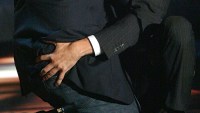
How should you deal with lechery? In this week's Spectator, Rod Liddle and Hugo Rifkind detail two instances of 'inappropriate behaviour' they either watched or, in Hugo's case, personally encountered. Rod describes the vocal response of one BBC production assistant to the appearance of a 'well-lubricated' reporter's hand on her inner thigh.

Lib Dems prepare for conference showdown on secret courts

Ken Clarke tabled a series of amendments to the Justice and Security Bill last night, aimed at getting the legislation through the Commons when it reaches Report Stage next week. This is the 'secret courts' bill, the one that has upset a group of Tory MPs, the Lib Dem grassroots (and, to a lesser extent, their parliamentarians), the Joint Committee on Human Rights and the Daily Mail. The changes are quite technical, but government sources insist that they should be sufficient to satisfy the critics. They are as follows: Claimants can apply for a secret hearing for material they don't hold themselves. The judge in the case must be satisfied that the government has considered whether to make a claim for public interest immunity before applying for a secret hearing.

Falling net migration: A trap for future governments?

Today’s migration statistics show a marked decline in net migration to the UK (down 34 per cent to 163,000 in the year to June 2012). Although this still leaves the Government some way off their target of reducing net migration to less than 100,000 by 2015, ministers will be pleased to be able to say that things are, in their terms, moving in the right direction. But there is a catch, and the simple maths of net migration mean that the current Government may be, wittingly or unwittingly, laying a trap for themselves, or for a future one. Net migration is the difference between immigration and emigration.  So net migration rises if immigration goes up, or if emigration goes down; and falls if immigration goes down, or if emigration goes up.

George Osborne to Tory MPs: I hear you on fuel duty

George Osborne spent an hour in front of the 1922 this evening. 40 Tory MPs took the opportunity to promote their own Budget ideas to him. From what I understand, the tone of the meeting was cordial with Osborne in relaxed form. A big theme was the cost of living with three MPs including Rob Halfon pushing the Chancellor on fuel duty. Osborne’s responses were non-committal but significantly he didn’t say that binning the fuel duty rise scheduled for September was unaffordable. Instead, a distinct vibe was given off that these MPs concerns would be accommodated. Two other MPs-- Steve Brine and Henry Smith—made the case for a cut in air passenger duty, something that the influential chairman of the ’22 Graham Brady has been a public advocate of.

PMQs sketch: Miliband has ‘one of those days’

What a strange PMQs. The house seemed half empty. The tug of elsewhere dominated proceedings. Richard Drax asked the prime minister if ‘prospective members of parliament’ should ever speak in support of terrorism.  David Cameron took this cue to rebuke John O’Farrell. Labour’s candidate at Eastleigh has admitted to feeling ‘a surge of excitement’ when he learned that the IRA had nearly assassinated Mrs Thatcher in the Brighton bomb. Cameron asked Ed Miliband to condemn his candidate. Miliband refused. ‘If he wants me to answer questions I’ll swap places any time.’ Miliband’s aim today was to turn the triple-A downgrade into a government-breaking issue. It didn’t work.

The Bank of England panics and misses the point

Wonders never cease. I awoke this morning to hear that the Deputy Governor, Paul Tucker, had announced that consideration should be given to the Bank of England setting negative interest rates. Whatever next? Anyone who had seen our current fiscal and monetary predicament, outlined in detail in my Centre for Policy Studies report today, is certainly likely to feel bemused. By international standards British monetary and fiscal policy has been extreme. Interest rates, at 0.5 per cent, are already at their lowest rate in the 300 plus year history of the Bank. The fiscal deficit, at over 8 per cent of GDP, is far worse than during the 1970s crisis and much greater than the Euro problem children of Spain, France and Italy.

Exclusive: Clegg ignored a sexual harassment complaint about a SECOND Lib Dem

In this week's Spectator, Julie Bindel explores the culture of 'inappropriate behaviour' in Parliament. Her piece, "Carry on Westminster", makes a number of revelations about the way parliamentarians behave towards women in the Westminster village, including the following: Nick Clegg was given a written complaint in March 2011 about Mike Hancock, Lib Dem MP for Portsmouth South. A constituent who told him that he 'cannot be trusted and is a liability to women, public, and your party'. Not only was there no investigation, but there was not even a reply. When the constituent took her complaint to the party, 'the Lib Dems did not want to know. If the police and Commons authorities had not acted, they told 'Annie' [not her real name], neither would they'.

The ‘bedroom tax’ shows Downing Street does need a Damian McBride character

MPs are debating that Cut With the Awkward Name, the Under-occupation of Social Housing: Housing Benefit Entitlement, also known by its opponents as the 'bedroom tax', this afternoon. I've already posted about some of the problems that this policy might throw up, however well-intentioned, but there's also an important political point here. When I talk to Tory MPs about this cut, some of them accept that there are problems with specific cases, and with the number of smaller homes that are actually available for people to move into (interestingly, one housing association has reclassified its properties so tenants can avoid being eligible for the cut), but what exercises them more is that the Coalition's spinning machine hasn't really moved at all on this cut.

Nick Clegg: Lord Rennard allegations were in the background when he stepped down

Nick Clegg's head is spinning, apparently, now that quite so many media outlets are involved in pursuing the allegations about Lord Rennard. That's what he told 'self-appointed detective' Cathy Newman when she managed to get through to his LBC phone-in this morning. Perhaps it was this dizzy sensation of his party being embroiled in a scandal that led the Lib Dem leader to change his tune rather on the issue of why Rennard left. He said: 'Of course these things were in the background but his health was the immediate reason why he stepped down.' Later, he added: 'Of course the issues of his inappropriate behaviour were in the background, of course they were.

Exclusive: Lord Rennard’s behaviour concerned Lib Dem staff in 2011

The Lib Dems say Danny Alexander spoke to Lord Rennard when 'indirect and non-specific concerns' about inappropriate behaviour reached Nick Clegg's office in 2008. But the alleged behaviour continued after that, too, I have learned. A well-placed source tells me that long after that 2008 conversation with Alexander in which the then chief executive was told that such behaviour was unacceptable, there was another incident. In late 2011, the peer (who was no longer chief executive by this point) attended a party with Lib Dem staff.

Scotland’s position in europe is weaker than the SNP would have you believe

Nicola Sturgeon, arguably the SNP's most effective asset at present, went to Brussels today to deliver a speech about Scotland's future relationship with the EU. Most of it was as bland and unobjectionable as you might expect. Move along, not very much to see here. And with some reason. I think it is all but inconceivable that the EU would make it difficult for an independent Scotland to join the club. I also think Spanish (and perhaps Belgian) fears that letting Scotland join would set a dangerous precedent are, for the most part, exaggerated. At the very least I doubt that the threat of a Spanish veto is a good argument for voting No. Nevertheless, the process of admission might not be quite as straightforward as the nationalists (understandably) suggest.

The government must cut or even scrap capital gains tax

When economists get things wrong– something rather easy, given the nature of their subject – they should admit that they got them wrong. Well, the Adam Smith Institute got it wrong. Two years ago we predicted that, if Vince Cable got his way and capital gains tax rates were increased to match income tax rates – up from 18 per cent to 40 per cent or even 50 per cent – the Treasury would not make anything out of it, and would actually lose £2.48bn in revenue. In the event, CGT was not raised to 40 per cent or 50 per cent. But it was raised to 28 per cent from 18 per cent for most asset sales. (The entrepreneurs’ rate, designed to encourage people to build up lifelong businesses, remained at 10 per cent.) The result? The Treasury is about £4.

Small By-Election in Hampshire; Not Many Dead

By-elections are catnip for the media. But they are also, almost invariably, subject to greater scrutiny than they can reasonably bear. Only occasionally do they herald a new era or political realignment. Eastleigh is unlikely to prove an exception to that general rule. True, as Brother Payne suggests, Labour's likely dismal showing may demonstrate that Ed Miliband's still struggling to "connect" with southern voters but - though as a Miliband Sceptic it pains me to say so -  I'm not sure we should make too much of this. Similarly, UKIP's good showing is likely to be over-interpreted too. So, for that matter, will the Conservatives' (predicted) failure to win the seat, though this failure will cheer the anti-Cameron brigade on the Tory right.

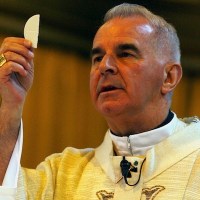
Keith O’Brien’s resignation is no good thing. But it might be good for the Catholic church

The downfall of Cardinal Keith O'Brien could not have been more complete if it had been orchestrated by Stonewall, which, if you recall, awarded him Bigot of the Year for his opposition to gay marriage. Actually, the one surprise is that it wasn't Stonewall that brought him down, but three Scottish priests, and one ex-priest, courtesy of The Observer.  The most senior Catholic cleric in Britain, the most forthright opponent of gay marriage; quite a scalp for secularists, gay rights activists and indeed for some Catholics of a liberal persuasion. One Catholic academic, when he heard the news, observed that this marked the end of the Church's authority on matters to do with sex - no more Rome in the bedroom. Which is one take on it.

Crisis handling the Lib Dem way

For the Liberal Democrats, the Rennard affair was bad enough, particularly blowing up in the middle of the Eastleigh by-election; the way it has so far been handled from a crisis management point of view has made it a lot worse. The problem for the party is that prevarication, twisting in the wind and changes of mind seem to have been far more in evidence than specific, decisive action. First, the line seemed to be that Mr Clegg did not know about the allegations, so presumably he couldn't have been expected to have taken action, then it seemed he did know but only about 'general concerns', now it is alleged many senior party figures were aware of more specific complaints.

Are British Doctors Paid Too Much?

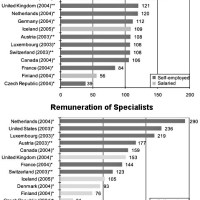
I knew that British doctors are well-paid but unti I saw, via Kevin Drum, this chart I had no idea they were so much better-paid than most of their peers in the western world.  This is culled from a 2004 OECD report (Pdf) and all figures are in PPP-adjusted dollars. Of course, doctors received significant pay increases during the Blair years. Specialists were not treated as kindly as (well-trained) GPs but even their wages increased by more than 30% in real terms. Which is fine. The constituency demanding pay cuts for doctors is very small. Nevertheless, these charts (which are not, I think, outdated in any significant sense) are worth recalling next time doctors try suggesting they are hard done by.