Uk politics

Labour turns on Starmer – inside the collapse, with Guto Harri, Tim Shipman & Toby Young

45 min listen

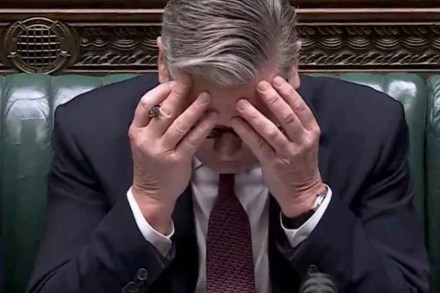
‘Authority is like virginity. Once it’s gone, it’s gone’ – that's just one of the damning quotes about Keir Starmer that Tim Shipman has extracted from sources inside the Labour government. Much of Starmer's bad luck this week is arguably of his own making, so why is he seemingly so bad at being the Prime Minister? For this week's Edition, host Lara Prendergast is joined by political editor Tim Shipman, associate editor – and Conservative peer – Toby Young, and the broadcaster Guto Harri, who – as a former director of communications at Number Ten himself – knows a thing or two about the brutal reality of being at the heart of government.

Starmer's downfall TBC

Is Starmer back from the brink?

13 min listen

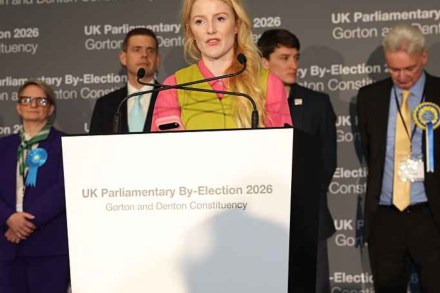
After a dramatic day in Westminster, the threat to Starmer appears to have receded – at least in the short term. But with the Gorton and Denton by-election less than three weeks away, (more) trouble could be on the horizon. Luke Tryl – from pollsters More in Common – and James Heale join Patrick Gibbons to discuss. Produced by Patrick Gibbons.

Is Starmer back from the brink?

Could the herd move on Starmer?

11 min listen

James Heale, Tim Shipman and Oscar Edmondson discuss the continuing fallout over the Mandelson scandal. The mood amongst Labour MPs is pretty dire – following a bruising PMQs and a government climbdown over the release of Mandelson's vetting files – but is it bad enough for Labour MPs to challenge Starmer? And could his chief of staff – and close Mandelson ally – Morgan McSweeney be in the firing line? How long ago the decision to block Andy Burnham seems now...

Could the herd move on Starmer?

How should the UK manage its relationship with China?

17 min listen

As Keir Starmer's visit to China draws to a close, Sam Olsen – who runs the States of Play substack – and Times columnist Cindy Yu join Patrick Gibbons to discuss how the UK should manage its relationship with China. Starmer's visit has drawn criticism from various China hawks – and from President Trump – but is there a way for the UK to balance legitimate security concerns with the need to trade with the world's second largest economic power? Plus, to what extent to the British public care about these geopolitical concerns? Cindy and Sam explain why is it important for policymakers to explain how these trips link back to domestic issues – and Cindy name checks James Cleverly as she highlights the importance of consistency amongst the political class.

How should the UK manage its relationship with China?

What does Starmer want to achieve in China?

19 min listen

Keir Starmer lands in China tonight as he becomes the first British Prime Minister to visit since Theresa May in 2018. Sam Hogg from the Oxford China Policy Lab and James Heale join Patrick Gibbons to assess the UK-China relationship right now, what Labour is hoping to get from the visit and whether there are risks for Starmer as well as rewards. Is the tight rope Starmer is walking between the UK & China a sign of weakness, or an extension of a pragmatic 'Starmerite' foreign policy? Produced by Patrick Gibbons.

What does Starmer want to achieve in China?

Does British politics reward traitors or faithfuls?

22 min listen

With the Conservatives on watch for further defectors, academic Richard Johnson and Conservative peer Danny Finkelstein join James Heale to discuss whether British politics rewards traitors or faithfuls. Richard points out that often personal success is dependent on whether the party goes on to be a major or minor player in British politics; Winston Churchill and Shaun Woodward fared better, while Shirley Williams and Mark Reckless had less success. Danny – whose political career began with the SDP in the 1980s – also takes us through his personal experience and the challenges of defecting, from ideology and demography to the perception of betrayal. How fundamental is the shift taking place in British politics? Produced by Patrick Gibbons.

The scandal of China’s ‘super embassy’

13 min listen

China's controversial ‘super embassy’ has been approved, after years of debate over the security risks. Campaigners had called on ministers not to give the site the green light, given its proximity to important internet cables that support the City of London. MI5 have admitted they can't 'wholly eliminate' the national security risks around the site. Megan McElroy is joined by James Heale and Sophia Gaston, research fellow at King's College London, to discuss. There's more international chaos for Keir Starmer too – overnight, Donald Trump described plans to hand over the sovereignty of the Chagos islands as 'an act of great stupidity.' Where on earth does this leave the special relationship?

The scandal of China’s ‘super embassy’

Debate: what’s the point of the Lib Dems?

24 min listen

As Ed Davey condemned Donald Trump's military manoeuvres abroad, Annabel Denham looked on and asked 'what's the point of the Liberal Democrats?'. Thinking about the Lib Dem's longstanding europhile stance, the senior political correspondent at the Telegraph wrote: 'the party that once stood on a tradition of civil liberties now wants us to rejoin a bloc which regulates everything'. Calum Miller MP – foreign affairs spokesperson for the Liberal Democrats – joins Annabel and deputy political editor James Heale to address Annabel's challenge that the party is defined more by opposition the other parties than by their own policies. So, from localism and the UK's place in the world to free markets and social care, what do the Lib Dems stand for? And what constitutes 'liberalism' today?

Iran’s useful idiots, Gordon Brown’s second term & the Right’s race obsession

43 min listen

As the world watches events in Iran, and wonders whether the US will intervene, the Spectator’s cover this week examines 'British complicity in Tehran’s terror’. When thinking about what could happen next in the crisis, there is a false dichotomy presented between regime survival and revolution; the reality is more complicated, though there is no doubt that this is the biggest threat to the theocratic regime in decades.  For this week’s Edition, host Lara Prendergast is joined by political editor Tim Shipman, columnist Rachel Johnson and features editor – and Edition co-host – William Moore. They commend the bravery of Iran’s protestors but criticise the ‘inept, naive and wrong’ response of the Foreign Office.

What’s the future of the Scottish Tories?

19 min listen

The leader of the Scottish Conservatives, Russell Findlay MSP, sits down with James Heale to look ahead to May's pivotal Holyrood elections. He pushes back against the threat from Reform, arguing that Nigel Farage is trying to be 'all things to all people', and he is scathing about the lack of loyalty shown by those who have defected from the party – not just to Reform, but to the Liberal Democrats too. But with the collapse of the support Labour received in the 2024 general election – which Findlay calls their 'loveless landslide' – why aren't the Tories benefitting more? Plus, how did being the victim of a vicious acid attack in 2015 shape his politics? Produced by Patrick Gibbons.

Compulsory digital ID is dropped

Keir Starmer has just made his 13th u-turn since taking the No. 10 keys. The government, this evening, decided that the digital ID scheme would no longer be compulsory. The IDs were to be used to verify if job applicants had the right to work in the UK – something that is currently done using passports and National Insurance numbers. But, according to the Times, Starmer has now dropped the compulsory aspect of the scheme because of fears it was causing distrust in the principle of digital ID. Under the changed plans there will be an entirely optional digital ID, or workers can use digital versions of existing documents – such as passports – to complete right-to-work checks.

Why Ed Davey is happy being boring

15 min listen

The Liberal Democrats have unveiled a new strategy on the NHS. Sir Ed set out his big, bold plan this morning: scrapping the UK–US pharmaceutical deal to redirect £1.5 billion into social care. It sounds like a substantial sum – until you remember it amounts to less than 1 per cent of the NHS’s annual budget. In today’s podcast, the team discuss why Ed Davey is leaning into being deliberately boring, in an effort to appeal to the perceived sensibilities of Middle England. Meanwhile, with the dust settling after Nadhim Zahawi’s defection, is Reform at risk of losing its outsider appeal, given that his resignation from government caused such a public outcry? Megan McElroy is joined by Luke Tryl, UK Director of More in Common, and James Heale.

Sunday shows round-up: Heidi Alexander: UK hoping for ‘peaceful transition’ in Iran

Protests have swept across Iran in the last couple of days, and reports suggest hundreds of people may now have been killed by the regime’s ensuing crackdown. On Sky News this morning, Transport Secretary Heidi Alexander said the UK government has ‘always viewed Iran as a hostile state’, and that the priority is to ‘stem the violence’ against protesters. She told Trevor Phillips that Iran has a ‘destabilising effect on the world’, and said the UK would like to see a peaceful transition where Iranians can enjoy ‘fundamental freedoms’ and ‘proper democratic values’.

Stormy seas, Trump’s revolution & Gen Z’s sex recession

43 min listen

Can Farage plot a route to Number 10, asks Tim Shipman in our cover article this week. He might be flanked by heavyweights – such as his head of policy Zia Yusuf and Conservative Party defector Danny Kruger MP – but he will need a lot more people to pull off his biggest upset for British politics yet. Where will they come from? And what’s the balance he needs to strike between being radical enough to win power but also without alienating significant chunks of the electorate? Plus, as former UK ambassador to the US Peter Mandelson breaks his silence – in this week's Spectator – to argue that Europe needs to adapt to a new reality, Freddy Gray ponders what Trump’s ‘Donroe Doctrine’ is actually all about. Immigration? Drugs? Oil? Or just plain chaos?

International statesman or ‘never here Keir’?

18 min listen

From 'regime change' in Venezuela to Russia's war in Ukraine, the Labour government is trying to navigate complicated situations across foreign affairs. Having appeared to weather the domestic reaction to the situation in Venezuela, Keir Starmer is in Paris today to discuss Ukraine alongside Chancellor Merz and Presidents Macron and Zelensky. This is undoubtably important – but to what extent will this fuel the criticism that the Prime Minister spends too much time abroad? And how can Starmer reconcile the demands of foreign affairs with his domestic priorities? James Heale and Tim Shipman join Patrick Gibbons to discuss. Produced by Patrick Gibbons.

The long history of kidnapping Latin American Chieftains

One of the few benefits of being an anthropologist is the uncanny exhilaration one feels watching novel current events as re-runs from previous episodes in the history of mankind. Donald Trump’s capture of Nicolas Maduro, President of Venezuela, is no exception. Kidnapping Latin American emperors is a continental tradition. It’s simply the most practical method for breaking the chain of command in the region. It triggers succession chaos, enables the extraction of resources, and keeps the rest of the hierarchy more or less intact. In earlier centuries, it was Spain and Portugal. Today, it’s the United States. In the colonial era, the objective was to secure enough gold to beat European rivals.

The ‘boring twenties’, population decline & happy new year

35 min listen

A far cry from the ‘roaring twenties' of the early 20th Century, the 2020s can be characterised as the ‘boring twenties’, argue Gus Carter and Rupert Hawksley in our new year edition of the Spectator. Record numbers of young people are out of work but even those with jobs face such a dire cost-of-living situation that they have no money left over to spend on fun. Traditional cultural outings – like going to the theatre – are increasingly confined to older, richer generations. This is long-standing issue, but compounded by Labour’s economic policies. A slightly downbeat start to the new year here at the Spectator, but at least the episode provides a free dose of fun.

From Porn Britannia to Political Chaos: The Spectator’s Year in Review

31 min listen

The Spectator’s senior editorial team – Michael Gove, Freddy Gray, Lara Prendergast and William Moore – sit down to reflect on 2025. From Trump’s inauguration to the calamitous year for Labour, a new Pope and a new Archbishop of Canterbury, and the ongoing wars in Gaza and Ukraine, the year has not been short of things to write about. The team take us through their favourite political and cultural topics highlighted in the magazine this year, from the Assisted Dying debate, the ongoing feud over Your Party and Reform’s plan for power, to Scuzz Nation, Broke Britain – and Porn Britannia. Produced by Patrick Gibbons.

Stephen Flynn on Reform, Sturgeon & a second referendum

26 min listen

The SNP’s Westminster leader Stephen Flynn, MP for Aberdeen South, joins Lucy Dunn for a special episode to assess the place of the SNP in British politics as we approach the end of 2025. The SNP were ‘decimated’ to just nine MPs at the 2024 general election – yet, if polls are to be believed, they are on course for another record win in the 2026 Holyrood elections. But can the SNP really frame this election as a ‘fresh start’? Flynn explains what he made of the ‘bleak fallout’ of 2024, why he is standing for election to Holyrood next year and what he makes of SNP heavyweights such as John Swinney and Nicola Sturgeon. Plus, could a push for a second independence referendum be on the cards soon? Produced by Patrick Gibbons and Oscar Edmondson.

With Michael Gove

30 min listen

Surely needing no introduction to Spectator listeners, Michael Gove has been a staple of British politics for almost two decades. As a Christmas treat, he joins Lara Prendergast to talk about his memories of food including: the 'brain food' he grew up on in Aberdeen, his favourite Oxford pubs and the dining culture of 1980s Fleet Street. He also shares his memorable moments from his time in politics from dining with Elizabeth Hurley and Donald Trump's first state visit to his reflections on food policy as a former Education and also Environment Secretary. Plus – what has he made of the Spectator's parties since joining as editor? Produced by Patrick Gibbons.