Uk politics

Why is Britain so exposed to rising energy prices?

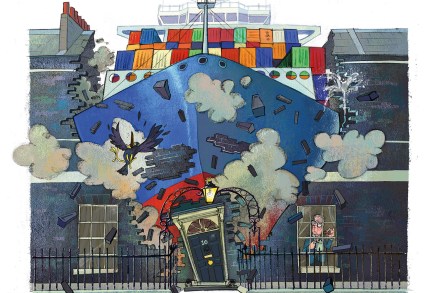
The IMF has warned Britain is particularly vulnerable to another spike in energy prices, and is more exposed than many of its European neighbours. Why is that the case? And does the government have any real plan to shield households and businesses from the fallout? With the Tories and Reform calling for the government to drill baby drill, why is the government avoiding a pretty obvious solution? James Heale speaks to Tim Shipman and Michael Simmons.

Why is Britain so exposed to rising energy prices?

Where does Labour’s centre of gravity lie?

30 min listen

Patrick Maguire, chief political writer at The Times, sits down with Tim Shipman for a reflection on Labour’s odd year so far. From potential leadership challengers, like Wes Streeting and Angela Rayner, to cabinet heavyweights, like Yvette Cooper and Ed Miliband – where does power in this Labour government really lie? What does Keir Starmer’s interview style and response to the Iran war reveal about him? And what are the implications of the local elections in just over a month – in what could be a historically disastrous night for the Party. Produced by Megan McElroy and Patrick Gibbons.

Where does Labour's centre of gravity lie?

Sunday shows round-up: Will Labour axe fuel duty hike?

Bridget Phillipson: We don’t need to act yet on fuel duty The war in Iran has now gone on for one month and concerns continue to grow over the effect the conflict will have on economies all over the world. On Sky News this morning, Bridget Phillipson played down fears of impending fuel shortages, telling British consumers to ‘continue as you are’. Trevor Phillips noted that more than half of the price of fuel goes to the government and asked the Education Secretary why the government isn’t scrapping the proposed 5p rise to fuel duty in September. Phillipson said the Chancellor is ‘absolutely committed’ to protecting British people from the

Does British politics have a problem with the ‘omnicause’?

51 min listen

It is undoubtable that – under the leadership of Zack Polanski – the Green Party have soared to new heights. Having won their first parliamentary by-election in February, polls consistently show them as a force to be reckoned with on the left of British politics. Much of their success has come at the detriment of Labour, with disgruntled further-left progressive voices opting to vote Green. This, though, is a brand of eco-populism that comes at the expense of the Green Party’s roots, or so argues Angus Colwell in the Spectator‘s cover article this week. Have the Greens ceded the issue of the environment? For this week’s Edition, host William Moore

Does British politics have a problem with the 'omnicause'?

To drill or not to drill, that is the question

15 min listen

In the final Prime Minister’s Questions before Easter recess, Kemi Badenoch pushed Keir Starmer to commit to new oil & gas drilling licences. The Conservatives spot an easy win here – cost of living concerns are rising as America’s war with Iran continues. Plus, with a burgeoning welfare bill, the trade-offs are even trickier for Labour to resolve. Who should Labour target? Tim Shipman and Michael Simmons join Patrick Gibbons to discuss. Come for Tim’s impression of the Prime Minister, and stay for Michael’s very strong response when asked if renewables are the answer. Produced by Patrick Gibbons.

To drill or not to drill, that is the question

Should we brace for another financial shock?

Britain’s response to the conflict in Iran is dominating Westminster – but is Keir Starmer really keeping the country out of war? After a tense Liaison Committee appearance exposed divisions over defence spending, pressure is also mounting on the government’s economic strategy. With energy prices rising, mortgage products disappearing and fears of inflation returning, how prepared is Labour for the fallout? James Heale speaks to Isabel Hardman and Michael Simmons.

Should we brace for another financial shock?

Does Nigel Farage really want to be Prime Minister?

45 min listen

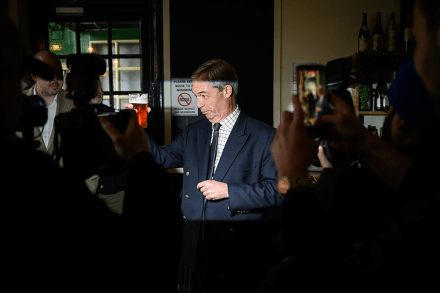
Nigel Farage is a shark – hell bent on devouring Britain’s political class, as illustrated with the Spectator‘s cover story this week, co-authored by James Heale and Tim Shipman. Yet, from rows over the pension triple lock to stagnation in the polls, it isn’t clear that Farage has a strategy for power. Reform may win the battle of the Right, but does its leader really want to be Prime Minister? For this week’s Edition, host Lara Prendergast is joined by the Spectator‘s Chairman Charles Moore, deputy political editor James Heale and Times Radio broadcaster Jo Coburn. The panel ponder the idea that Farage may crave power without responsibility. As James

Does Nigel Farage really want to be Prime Minister?

Net Zero vs AI: can Reeves convince Miliband?

16 min listen

The Chancellor will deliver the annual Mais lecture today and is expected to focus on closer alignment with the EU, AI and improving Britain’s economic geography (‘levelling up’ in all but name). While her comments on Europe might gain the most headlines, we’re more curious about what she will say over AI – given the current geopolitical context. Given the energy requirements of AI, the Iran crisis has only further exposed the holes in Britain’s energy policy – can Rachel Reeves convince Ed Miliband to adapt his policies? And is this about the Chancellor’s political headroom as much as the economic? Plus: President Zelensky is in town to sign a

Net Zero vs AI: can Reeves convince Miliband?

Is Labour sleepwalking back to the EU?

Two big topics on the agenda today as Keir Starmer has his pitch – again – on the cost of living. He told us towards the start of the year that every minute not spent tackling the cost of living was a minute wasted, so what has he been doing in all that time? Also today, ahead of her Mais Lecture this week, Rachel Reeves has been laying the groundwork for closer ties with the European Union. This does seem like a change of rhetoric from the Chancellor, who is openly suggesting that Brexit was a mistake. So what would closer ties look like? And is this the only lever

Is the government right to restrict jury trials?

23 min listen

The government’s plan to restrict jury trials passed its first parliamentary hurdle this week. It is one measure, amongst many, in a Bill designed to reduce the huge backlog currently facing the Courts. Labour MP Karl Turner and Danny Shaw, a former adviser, join Isabel Hardman to discuss why they have each come to their own, different conclusion about the merits of the Bill. For Danny, it is a pragmatic yet principled measure that will help mitigate an extreme situation. Karl, for his part, is – as you will hear – ferocious in his opposition, and argues that the evidence simply doesn’t back it up. Amongst the debate though, there

Is the government right to restrict jury trials?

Is the special relationship over?

The US Defense Secretary Pete Hegseth has said today will be the most intense day yet of American strikes on Iran. Over the weekend, Donald Trump claimed the war could soon be over – and suggested the US has already effectively won. He also took aim at Keir Starmer, accusing Britain of joining wars America has ‘already won’. Deputy and US editor Freddy Gray joins the podcast to explain what’s really happening in Washington and why he believes the ‘special relationship’ may be over – and not coming back. Economics editor Michael Simmons also joins to discuss the fallout. As oil prices surge and markets react, Reform UK is seizing

Is the special relationship over?

Green surge: could Labour lose London?

15 min listen

Deputy political editor James Heale and deputy editor of The House magazine Sienna Rodgers join Patrick Gibbons to discuss the challenge the Greens pose to Labour in London. James’s political column this week explains how the shockwaves of the Gorton and Denton by-election have reached the capital. Could Labour’s ‘strongest heartland’ fall to the Greens through their coalition of ‘urban professionals, young Muslims and the economically disaffected’? Plus: as Sienna reveals Zack Polanski’s podcast tastes – in an exclusive interview for The House‘s cover (out Monday) – we extend an interview to the Green Party leader to join us on Coffee House Shots. Produced by Patrick Gibbons.

Green surge: could Labour lose London?
China is next – Trump’s Iran strategy explained with Maurice Glasman

Iran: Why Trump’s ultimate target in this war is China – with Maurice Glasman

50 min listen

As the conflict in the Middle East escalates, what is Trump’s game plan? The Spectator’s cover piece this week, by Geoffrey Cain, argues that Trump’s ultimate target in this war is China; every dictator gone, weakens the Chinese regime. As Freddy Gray explains further on the podcast, Trump’s worldview is shaped by the events he grew up with – including then President Nixon’s visit to China in the 1970s. As well as making sense of Trump’s plan, the Spectator team take us through the dramatic events of the past week, including how Starmer appears to have alienated Britain’s allies over Iran. Plus – Lord Glasman makes the case for Reza Pahlavi, the Crown

LIVE: The Spectator’s Alternative Covid Inquiry

53 min listen

As the official Covid Inquiry comes to an end, the Spectator has convened a panel of our own experts to ask the questions that the Inquiry didn’t – or wouldn’t – answer. The Spectator’s commissioning editor Lara Brown is joined by science writer and Conservative peer Matt Ridley, Oxford professor of theoretical epidemiology Sunetra Gupta, former Supreme Court judge Jonathan Sumption, journalist Christopher Snowdon and science writer Tom Whipple. This is a condensed version of the event. Subscribers can access the full event via Spectator TV and you can find more events from the Spectator here.

LIVE: The Spectator’s Alternative Covid Inquiry

Green victory in Gorton and Denton

-19 min listen

The Greens have taken Gorton and Denton, defeating both Labour and Reform in the early hours of this morning. Hannah Spencer’s victory marks the first ever Green by-election gain – but the real shock is Labour’s collapse into third place in one of its safest seats. For Sir Keir Starmer, it’s hard to imagine a worse result. Labour MPs are up bright and early briefing against the Prime Minister, whose odds of a leadership challenge just soared. Tim Shipman and James Heale join Megan McElroy to discuss.

Green victory in Gorton and Denton
Is Labour too close to the City – with Lionel Shriver & Robert Hardman

Is Labour too close to the City – with Lionel Shriver & Robert Hardman

35 min listen

Britain’s banks have a hold over Rachel Reeves, declares Michael Simmons in the Spectator’s cover piece this week. Almost two decades on from the 2008 financial crash, the UK has failed to reform the system and – as ordinary people face a cost-of-living crisis – Labour is in hock to big business. Is the Chancellor too close to the City? For this week’s Edition, host Lara Prendergast is joined by economics editor Michael Simmons, columnist Lionel Shriver, and columnist from the Daily Mail Robert Hardman. As well as Labour’s relationship with the banking industry, they discuss: the hit BBC show Industry; how the Royals have frozen out (former Prince) Andrew – and

Peter Mandelson haunts Labour

13 min listen

Overnight, Peter Mandelson has been released on bail after being arrested on suspicion of misconduct in public office. He has not commented publicly in recent weeks, though he has previously denied any wrongdoing. How long will this row continue to haunt Labour? With more documents due to be released relating to his appointment as US ambassador, can the party contain the damage — or is this just the beginning? Elsewhere, Keir Starmer has made an unexpected visit to Gorton and Denton. Is this a show of confidence — or a last-ditch attempt to shore up support? Tim Shipman and John McTernan, former political secretary to Tony Blair, join Megan McElroy

Why by-elections matter – with Iain Dale & Jon Craig

17 min listen

Two titans of broadcasting – LBC’s Iain Dale and Sky’s Jon Craig – join deputy political editor James Heale for a whistle-stop tour of British by-elections. From Oxford City in 1938 to Chesterfield in 1984 right up to Runcorn in 2025, why do by-elections matter? When have they been most significant? And are longer vote counts the product of fractured politics in the modern age? Produced by Patrick Gibbons.

Britain is not ready for war – and Labour isn’t doing enough

38 min listen

Britain is defenceless, declares the Spectator’s cover piece this week. From the size of the armed forces to protection against cyber warfare, the government is not spending fast enough to meet the UK’s security challenges. But is the public ready to choose warfare over welfare? And can we blame the young people who don’t want to fight for their country? For this week’s Edition, host William Moore is joined by opinion editor Rupert Hawksley, columnist Matthew Parris, and Whitehall editor of the Financial Times Lucy Fisher. As well as meeting Britain’s defence challenge, they discuss: whether the Mandelson scandal is bigger than the Profumo affair; the organised gangs terrorising rural

Britain is not ready for war – and Labour isn’t doing enough

Nigel Farage unveils his shadow cabinet

12 min listen

Reform UK is no longer a one-man band. Nigel Farage has unveiled Reform’s four spokesmen for the “great offices of state” at a press conference in Westminster. Recent Tory defector Robert Jenrick has been given the Chancellor brief, Zia Yusuf is in charge of home affairs, Suella Braverman is responsible for education and Richard Tice will look after business and energy. The format resembled a game show like the ‘Weakest Link’ or ‘Take Me Out’. Each of the quartet was introduced, given a spotlight and then had it turned out when their time was up. Is this new ‘shadow cabinet’ ready for No. 10, or just Tory 2.0? Tim Shipman,

Nigel Farage unveils his shadow cabinet