Uk politics

How Boris’s opponents are making this week much easier for him

From our UK edition

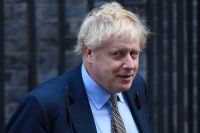
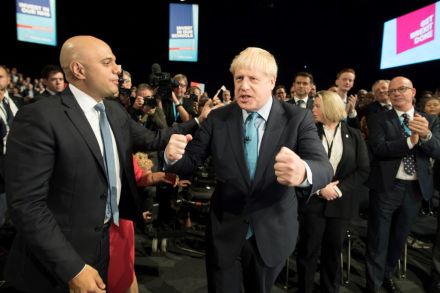
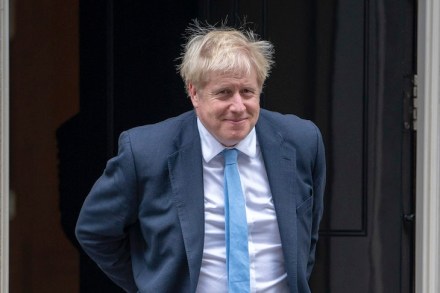
The stronger the prospect of a general election, the easier it will be for Boris Johnson to get through the week that Britain was supposed to be leaving the European Union. He had said he would rather 'be dead in a ditch' than miss the deadline, but is now taking a two-pronged approach to distracting everyone from the fact that Thursday will come and go, and Brexit will still not have happened. The first part of this plan is to make sure that it is clear parliament is to blame for missing the 31 October deadline, rather than the Prime Minister who placed so much emphasis on it. So the repeated message from Johnson and his allies is that 'this parliament is broken' and that the 'country is being held hostage'.

How Keith Vaz tried to avoid punishment by claiming male escorts were ‘decorators’

From our UK edition

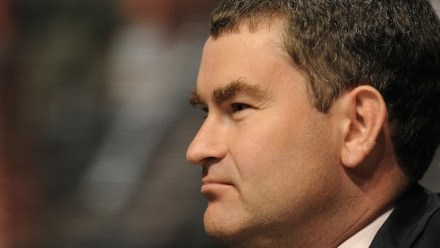
Keith Vaz is facing the longest suspension in history after the Commons Standards Committee found he had breached the MPs' Code of Conduct by paying two male escorts for sex and offering to cover the cost of cocaine for a third man. The Committee - which is made up of MPs and lay members, said he had 'caused significant damage to the reputation and integrity of the House of Commons as a whole', and said it represented 'a very serious breach of the Code'. This brings to an end a row which has gone on since August 2016, when Vaz met the two men in his flat. One of them was covertly recording the encounter, and the story was printed by The Sunday Mirror. It included Vaz describing himself as a washing machine salesman named Jim (which he spelt for the men).

Five reasons why the Brexit extension is bad news

From our UK edition

Some fiddly amendments from Sir Oliver Letwin that no one quite understands. A legal action against someone or other from Gina Miller. Lots of protest marches. A petition or two – and possibly even an unreadable novella from Ian McEwan/JK Rowling/John Le Carre (delete as applicable) ranting against Brexit. We don’t quite know yet how exactly we will fill up the latest three-month extension to the already protracted saga of our departure from the EU. It probably won’t be a great deal different from the last three months, or the three months before that. There is one thing we should know for sure by now, however. It will be very bad for the economy.

People’s Vote campaign descends into chaos

From our UK edition

Oh dear. As Boris Johnson attempts to call a general election, this could be the week that supporters of a second referendum get together and push for a so-called people's vote before any snap poll. One of the big Tory worries is that a majority of MPs could coalesce around such a position. However, that currently looks unlikely. Instead, the People's Vote campaign is consumed with infighting. On Sunday night, Roland Rudd – the outgoing chairman of Open Britain, one of the five groups that make up People's Vote – emailed staff to announce that he had asked People's Vote staff James McGrory, the director, and Tom Baldwin, the head of communications, to leave with immediate effect.

Rory Stewart’s gangster fail

From our UK edition

When Rory Stewart declared his candidacy for the London mayor, there was some concern in CCHQ that the former Conservative MP could eat into Tory candidate Shaun Bailey's vote share. Stewart has been keen to pitch himself as an outward looking politician in touch with modern Britain. While there's still some way to go to polling night, the initial signs suggest that Stewart's own efforts will be no walk in the park. Stewart has found himself under criticism after he described three East London men he met back when he was campaigning to be the next leader of the Conservatives as 'minor gangsters'. https://twitter.com/RoryStewartUK/status/1137811697027170309?ref_src=twsrc%5Etfw Stewart attempted to speak to the group as part of his trademark campaigning walks.

What is Boris Johnson’s plan?

From our UK edition

As Boris Johnson laid out his plan at political Cabinet on Thursday, it quickly became apparent how much of it was dependent on factors outside of his control. I write in The Sun this morning that he said that he still hoped that the EU would offer only the shortest of extensions, forcing parliament to get on with it. But he admitted that the EU was inclined to offer an extension to the end of January and that Emmanuel Macron was fighting a lonely battle against this. Earlier in the day, the Elysée had told Number 10 that the French President was too isolated on the issue in the EU to veto a longer extension. In a sign of how much he is relying on Macron, Boris Johnson then pleadingly recited the opening line of the carol ‘Oh come, oh come Emmanuel’.

Heidi Allen’s confusing political odyssey

From our UK edition

Update: Heidi Allen has announced that she will no longer stand at the next election. This weekend, Anthony Browne wrote about her confusing political odyssey: As I pound the streets of South Cambridgeshire where I am the Conservative candidate, the most common reaction I get from voters is “How did that happen?”. (That, at least, is an edited version to keep things family-friendly for Spectator readers). It is usually accompanied by a liberal dosage of decidedly unparliamentary language and the sort of words that if I repeated would lead to me being accused of inflaming passions in politics.

The Brexit extension waiting game

From our UK edition

The UK and Brussels are currently engaged in a waiting game – only no one is sure who is waiting for whom. EU leaders had been expected to announce the terms and length of an Article 50 extension this Friday. However, that decision has been put on hold in light of Boris Johnson's call for a general election – with MPs voting on a motion on Monday. Speaking in Brussels following a meeting of ambassadors, Michel Barnier – the EU’s chief negotiator – said 'no decision' had been made on a way forward. A decision is likely to be made on Monday or Tuesday. EU leaders want to wait and see what happens with the election vote.

Boris Johnson calls for December 12 election – will he succeed?

From our UK edition

Boris Johnson will make his third attempt to call a general election. In an interview with the BBC, the Prime Minister unveiled his new offer to opposition MPs: he will bring the Withdrawal Agreement Bill back to the Commons on the condition that there is a general election on 12 December. Explaining his decision, Johnson said that he believed the UK was heading for an extension – something he regretted. He said he was willing to bring his Withdrawal Agreement Bill back to the Commons so long as MPs agree that a general election will follow. The reason? 'In order to create a deadline that is credible in everybody's mind then there must be that hard stop of a general election.' But is it in Johnson's control when an election happens?

Boris Johnson is dodging scrutiny – but so are MPs

From our UK edition

Boris Johnson has cancelled his appearance before the Commons Liaison Committee tomorrow morning, arguing that he feels he should devote himself to trying to secure a Brexit deal. In a rather last-minute cancellation, the Prime Minister has written a personal note to the Committee's chair Dr Sarah Wollaston in which he argues that it would be much better for the MPs to question him when he has been in the job for five to six months, as it did with his predecessors. This is a valid argument, but it would carry more weight if Johnson had made it from the outset, rather than at the sort of time that students start trying to come up with slightly daft-sounding excuses for not handing in an essay that was set months ago.

MPs have plenty of time to read Boris’s Brexit bill

From our UK edition

The Withdrawal Bill that has been published is pretty dull stuff – even by my standards. There are nonetheless rather frantic efforts to pretend it is in any way terrible. It isn’t. For one reason and one reason only. Like the 1972 Act, all the Bill does is bring the Withdrawal Agreement into UK law. I find that conceptually interesting. The way these treaties are only international law. The way that international law is irrelevant and pointless, unless and until it gets enacted into domestic law. These things comfort me as a reminder that nation states, democracy and the people still matter. It rather penetrates the confected pomp of those who pretend EU law is a real thing and not merely international law in a moustache and dark glasses.

The Brexit party crack-up

From our UK edition

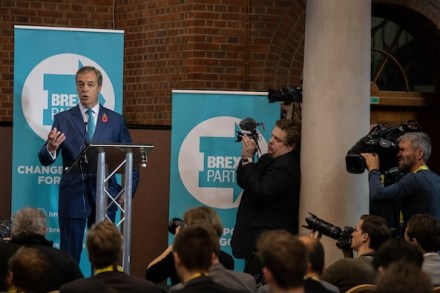
At the start of the year, the Brexit party didn't exist. When it roared to success a few months later in the European parliamentary elections, much was made of how unlike a normal party it was. Nigel Farage was fond of telling audiences that his MEPs included Tories and former members of the Revolutionary Communist party. What else could unite them, he would ask, but the need to leave the European Union? Yet that common cause is now proving to be the party's undoing in the wake of Boris Johnson's Brexit deal. While Theresa May's agreement was panned almost instantly, reaction to Boris Johnson's Brexit deal has been mostly positive. Tory Brexiteers queued up on the airwaves and in studios to condemn what amounted to 'vassalage' under May.

Boris Johnson’s Halloween deadline drifts further away

From our UK edition

Will the UK leave the EU on the 31 October? Barring the highly unlikely event of the EU refusing an extension, the answer to that question is no. This evening, MPs voted against the government's programme motion to push the Withdrawal Agreement Bill through the Commons at breakneck speed – at 308 to 322. This means it is hard to see how the bill can pass the Commons without an extension being agreed with the EU. On hearing the result, Boris Johnson told MPs that he would now put the bill on 'pause' and speak to EU leaders about the extension.

Watch: John Mann heckles Anna Soubry: ‘It’ll get rid of you’

From our UK edition

'A general election will solve nothing,' Anna Soubry has just told the Commons. But it seems not all of her parliamentary colleagues agree. Labour MP John Mann responded to Soubry by repeatedly yelling out: 'It will get rid of you' It's safe to say Soubry was not impressed: 'Can I just say actually, I don't mind losing my job but I do care about the jobs of my constituents...and that's why this matter must now go back for that people's vote now we have the clarity on Brexit and we see what a disaster it is.

Boris Johnson’s election threat to wavering Labour MPs

From our UK edition

The key Brexit vote tonight is on the programme motion. The sense is that the government has the votes to carry the second reading. But that wouldn’t guarantee the UK leaving on 31 October, as the committee and report stages could take weeks and see a slew of amendment added to the bill. If Boris Johnson is to meet his 31 October deadline, he’ll need to carry the programme motion which would see all the Commons stages of the bill done in the next 60 hours or so. Right now this vote is, as us nervous journalists like to say, ‘too close to call’.

What Caroline Flint’s Brexit critics fail to understand

From our UK edition

It must feel pretty lonely being Caroline Flint right now. The Labour MP has made herself unpopular with her comrades by backing Boris Johnson’s deal to leave the EU. Flint campaigned for Remain but accepts that her Don Valley constituency voted 68 per cent Leave. In the former mining towns of her South Yorkshire seat, Flint points out, the figure was closer to 80 per cent. ‘The voices in our mining villages remain unheard, despite their support for Labour over many decades,’ she records in her Labour case for respecting the outcome of the 2016 referendum.  Both Flint and her case have now felt the ire of the progressive Brexitariat, the analysts, academics and activists who frame elite debate on EU withdrawal.

Let’s be honest about what a second referendum means

From our UK edition

A second referendum would be a political abomination. And it’s about time more of us said so. We need to get real about what a second referendum would mean. If we have another referendum in which Remain is an option on the ballot paper, it will be one of the few times in the history of British democracy that the British people voted for something and it didn’t happen. It will be the first time we made a clear, mass democratic choice and the political class turned around to us and said: ‘Sorry, you can’t have that. You have to vote again.’ The precedent this would set would be dreadful. It would rip up the democratic contract itself.

Why the EU should listen to Boris Johnson – not Parliament

From our UK edition

Boris Johnson has been criticised for sending the European Union a letter conveying his real opinion about a Brexit extension along with a photocopy of the letter Parliament dictated and forced him to send. Yet the Prime Minister was entirely justified – and right – in doing so. Parliament certainly can – and should – decide what a Government is allowed to do. But no parliament can tell a prime minister what to think, what to feel or what to believe. And the consequences of MPs attempting to do that could quickly backfire.  Take the European Union. Dealing with the EU is the role of the executive. When my government decided to withdraw Iceland’s application for EU membership, it was an executive decision. Parliamentary approval was not sought.

This will be the make-or-break day for Boris Johnson’s Brexit

From our UK edition

The important vote today will be on the timetable, or programme motion, for the Withdrawal Agreement Bill, the law that must pass before Brexit. The government wants it on the statute book by 31 October. Labour will try to humiliate the PM by forcing a delay. One minister tells me that the programme motion is therefore the ‘real meaningful vote’. Tory rebels say they will probably back Boris Johnson’s timetable if he enshrines the protection of environmental standards and workers’ rights in the bill and if the bill transfers to parliament power to decide whether transition to full Brexit is to last 14 months, 26 months or 38 months. But if Johnson gives in to the Tory rebels he risks alienating the Brexit Spartans of the ERG.