Uk politics

What makes this election so unpredictable

From our UK edition

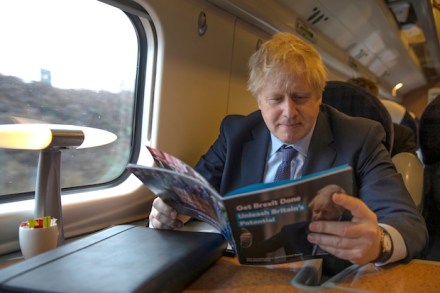
Every election campaign has a wobble. But the Tories broke new ground in managing to wobble before they’d even launched their campaign. However, the formal start of the Tory campaign on Wednesday night does appear to have stabilised things, I say in The Sun this morning. I understand that the Tories own polling still shows them on course to win the election and return with a working majority. But, in the assessment of one of Boris Johnson’s Cabinet allies, this contest is ‘the most complicated election we have had. Two minor parties that can take from both major parties’. This dynamic means that this election will be more unpredictable than usual. There won’t be a straightforward national swing, rather a series of regional contests.

Why the Tories remain optimistic despite a shaky campaign start

From our UK edition

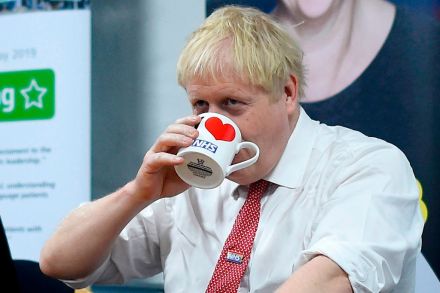
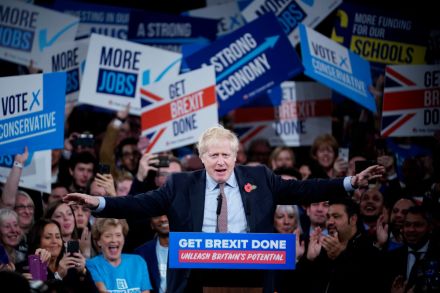
The first official week of the Conservatives' election campaign did not go as many inside CCHQ had hoped. A cabinet minister resigned, a row erupted over insensitive Tory comments on the Grenfell fire and a candidate stepped down over previous comments on rape. Despite this, the Conservatives end the week with a sense of cautious optimism about the next month. Tory MPs believe that Johnson steadied the ship on Wednesday evening with the party's official launch event in the Midlands. 'That calmed nerves,' says a member of government. 'Boris on form cheers up activists and candidates.' The Tories continue to hold a comfortable lead in the polls – and with parliament dissolved, they can now focus their efforts entirely on campaigning.

Will former Labour MPs help the Tories break the ‘red wall’?

From our UK edition

Will former Labour MPs help the Tories break the red wall? A key plank of the Tory path to a majority consists of winning seats in the Midlands and the North which have been Labour for generations. Many of these areas voted to leave in the EU referendum. The Tory hope is that a well-executed campaign in which they reinforce their Brexit message with increased public spending promises for domestic policies will lead to them winning Labour Leave voters over. However, as crucial to the strategy is how the vote splits between the various candidates standing in each constituency. Ian Austin – the independent MP for the key Tory target seat of Dudley North – has announced today that he will not seek re-election.

Labour deputy leader Tom Watson quits parliament

From our UK edition

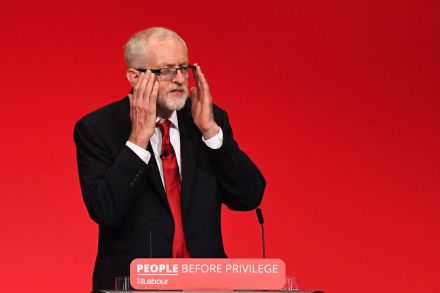
In the past few minutes, Tom Watson has announced that he is stepping down at this election. In a surprise letter, the Labour deputy leader says his decision is 'personal, not political' and that he is 'not leaving politics altogether'. In the meantime, he wants to spend more time campaigning on public health. https://twitter.com/tom_watson/status/1192169894479122433?s=21 There are some curious lines in this letter, and Jeremy Corbyn's response. The Labour leader picks up Watson's comment about not leaving politics, and writes: 'I am proud and glad to have worked with you over these four years and I know this is not the end of our work together.

How will the independent ex-Tory candidates cope in the election campaign?

From our UK edition

This election is going to be particularly discombobulating for the ex-Tory MPs who are now independents. Even though all three of them - David Gauke, Anne Milton and Dominic Grieve - have been through at least four elections each (Grieve has been an MP since 1997, while Gauke and Milton were elected in 2005), this is the first time they are standing without the help of a party apparatus. For Grieve and Gauke, this is the first time they will be fighting the sort of election campaign that their colleagues in marginal seats are perfectly used to: one full of uncertainty, very long hours, and never quite enough money, local support or sleep.

Scottish Tories find reasons to be cheerful on the campaign trail

From our UK edition

Will the Scottish Conservatives face near extinction in the snap election? In recent months, talk in the Tory party has turned to what seats the party can pick up in the Midlands, North and Wales to make up for the seats they will lose north of the border. The thinking goes that a combination of the departure of Ruth Davidson, the arrival of Boris Johnson (regarded as unpopular in Scotland) and a hard Brexit policy means that the Tories will shed voters. However, the mood among sitting Scottish Tory MPs has improved in recent weeks. The reason? The general election campaign in Scotland is being dominated by talk of a second independence referendum. 'It's becoming a proxy second independence referendum,' says one Tory out on the campaign trail.

Can Boris Johnson recover from the Tory campaign crisis?

From our UK edition

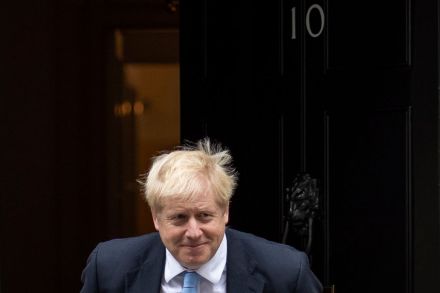
After a torrid 36 hours for the Tory party which has seen one Cabinet Minister resign and another have to apologise, Boris Johnson spoke from the steps of Downing Street before heading out on to the campaign trail. He argued that he didn’t want this election but it had to happen because Parliament was frustrating Brexit. He said that if there wasn’t an election, the UK wouldn’t even leave on the 31 January. This was designed to explain why Johnson has gone for an election, something that Theresa May never managed to adequately explain in 2017. Boris Johnson then launched into his usual stump speech. He criticised Labour for not understanding that you need a dynamic market economy to provide the revenue to fund public services.

Diane Abbott: Not all Jews think Corbyn is an anti-Semite

From our UK edition

Boris Johnson’s election campaign has got off to a dismal start but it seems Labour is determined to catch up. Diane Abbott appeared on the Today programme this morning to discuss her party’s anti-Semitism problem. But Mr S isn’t convinced her defence will convince many voters that things are all OK: Nick Robinson: Do you accept you haven’t done enough (to resolve the problem of anti-Semitism)? Diane Abbott: '…it’s not every element of the Jewish community that believes Jeremy is an anti-Semite.' NR: 'Well every major Jewish newspaper says it, every major Jewish representative body says it.' DA: 'Yeah, well, the Hasidic community in Stamford Hill doesn’t say that...' Hardly a vote-winning pitch to worried Jewish voters...

Boris Johnson’s election has got off to a dreadful start

From our UK edition

The cliche, from my memory already creaking under the political strain, is that oppositions never win elections, governments lose them. Well this election is only a few hours old and Boris Johnson and his team – who let's not forget – have been gagging for this election for months are doing a spectacular job of mucking it up. There's been Jacob Rees-Mogg and Andrew Bridgen engaging in a humiliating double act of insensitivity towards the victims of the Grenfell tragedy. There's been the Tory candidate in the Gower revealed to have said benefit claimants should be put down.

Jo Swinson’s Corbyn problem

From our UK edition

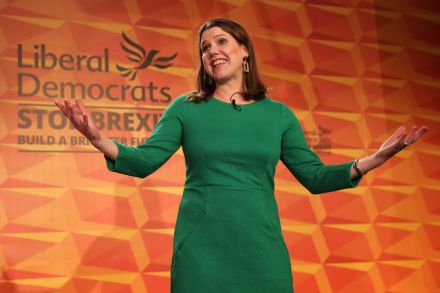
The Liberal Democrat election campaign launch was beset by technical difficulties which meant that Jo Swinson was at times hard to make out. However, the anti-Brexit message was loud and clear. The enthusiastic Liberal Democrat leader said she was 'excited' to stand as the Liberal Democrat candidate for Prime Minister. Swinson said there was a very real chance she could be the next inhabitant of 10 Downing Street as it was not about 'the red team or the blue team anymore'. Swinson was clear that only her party could be trusted to stop Brexit. She pitched the Liberal Democrats as the party of the centre ground – stuck between two extremes in Labour and the Tories. But she had a harder time when it came to the Q and A.

Lindsay Hoyle elected new Speaker of the House of Commons

From our UK edition

The era of John Bercow as Speaker is no more. This evening MPs voted for Sir Lindsay Hoyle to succeed Bercow as Speaker of the House of Commons. Elected by secret ballot through a series of knockout rounds, Hoyle was triumphant with 325 votes, following four rounds of voting. Chris Bryant came second with 213 votes. Although it was a crowded field, going into the contest Hoyle was the frontrunner. As deputy speaker under Bercow, the Labour MP for Chorley had impressed colleagues with his no frills approach to the role. Compared with Bercow's style, Hoyle earned a reputation as a fair and neutral speaker. During the hustings, Hoyle continued to show that he was a very different candidate to Bercow – refusing to say whether he voted leave or remain in the EU referendum.

The return of Nick Timothy

From our UK edition

When Tory MPs look for reasons to be optimistic about the incoming election, one thing they point to is the fact that this time around Nick Timothy is not involved. Theresa May's former aide is widely blamed within the Conservative party for the 2017 manifesto which saw the Tories shed popularity over the so-called dementia tax. However, those MPs looking ahead to a Timothy-free campaign may need to think again. ConservativeHome reports that Timothy is in the final three to be the Tory candidate for Meriden – a safe seat with a majority of 19,198. Should Timothy succeed, he will have reason to be optimistic.

Why both Boris Johnson and Jeremy Corbyn think they’ll benefit from this TV head to head

From our UK edition

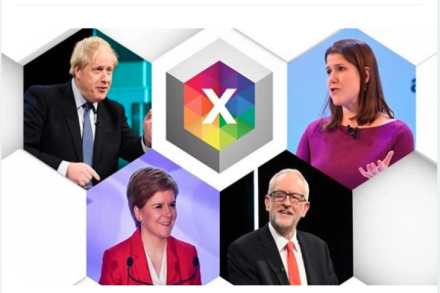
Normally wrangles about TV debates go on for weeks before one is agreed. Yet, before the election campaign has even formally started, ITV have announced a TV debate between Jeremy Corbyn and Boris Johnson on November 19th. This’ll be the first election head to heard this country has had. Agreement on this debate has been reached so fast, as I say in The Sun this morning, because  both Labour and the Tories think they benefit from this one on one format. On the Labour side, they hope that it helps them unite the anti-Tory vote behind Corbyn. While the Tories want a one on one debate because they think the question of who do you want to be Prime Minister—Boris Johnson or Jeremy Corbyn—favours them. During the 2017 campaign, Theresa May lost her lead on this question.

What Farage’s Brexit ultimatum means for the Tories

From our UK edition

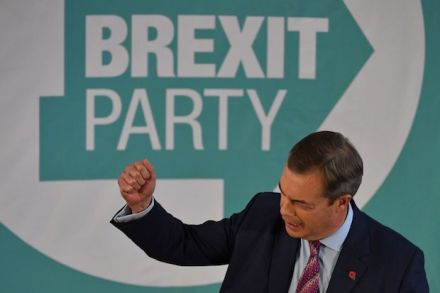
There's been much speculation this week about how the Brexit party will approach the incoming general election. Varying reports suggested Nigel Farage's party could choose to target anything from 20 to 100 seats. However, speaking in Westminster this morning, Farage made clear that he had bigger ambitions. The Brexit party leader said that unless Boris Johnson changed his Brexit position, his party would stand candidates in every seat in England, Wales and Scotland: 'We will contest every single seat in England, Scotland and Wales. Please don't doubt that we are ready. Do not underestimate our determination or organisation.

How the Tories plan to ramp up their digital operation

From our UK edition

As Jeremy Corbyn launches the Labour campaign today, talk has turned to the key battlegrounds that will decide the result of the general election. However, when it comes to where the most pivotal campaigning will take place, increasingly the answer is online. Digital campaigning has risen in importance with each election. With bad weather likely to put off some of the less enthusiastic campaigners this year, the efforts online will be particularly crucial. This poses a challenge to the Tories. In 2015, the Conservatives were praised for running a carefully planned digital campaign that focused on key voter groups. But in 2017 they dropped the ball.

Cabinet minister Nicky Morgan announces she’s quitting as an MP

From our UK edition

Nicky Morgan has announced she is standing down as a Conservative MP at the next election. She isn't the first to say she's off, but what's different about this resignation is that Morgan is a serving member of Boris Johnson's cabinet. In her resignation letter, she cites the need to send more time with her family - and the toxic political environment: 'But the clear impact on my family and the other sacrifices involved in, and the abuse for, doing the job of a modern MP can only be justified if, ultimately, Parliament does what it is supposed to do - represent those we serve in all areas of policy, respect votes cast by the electorate and make decisions in the overall national interest.

Corbyn reveals his election attack lines at PMQs

From our UK edition

The last PMQs before the general election offered a teaser for what to expect over the next six weeks. With Boris Johnson keen to fight the incoming election on a promise to get Brexit done so the UK can focus on domestic issues, it's clear Jeremy Corbyn plans to respond by suggesting the Prime Minister's Brexit would be damaging to public services. Top of that list is the NHS. The Labour leader used the final session to lead on the NHS – suggesting the Prime Minister's 'sell-out deal' with Donald Trump would mean NHS money going into private profit. Corbyn pointed to a recent Channel 4 Dispatches investigation to claim the government had been discussing the health service with US officials.

10 Tory rebels have the whip restored

From our UK edition

As a vote on the government's plan to hold an election beckons, the Prime Minister has made the decision to restore the Conservative whip to 10 of the 21 Brexit rebels. This group collectively lost the whip when they voted for the Benn bill which forced the government to seek an Article 50 extension rather than leave the EU with no deal. These MPs have been welcomed back following a meeting with Boris Johnson: Alastair Burt Caroline Nokes Nicholas Soames Greg Clarke Ed Vaizey Margot James Richard Benyon Stephen Hammond Steve Brine Richard Harrington Those who have returned to the fold have voted with the government on key votes: for the programme motion and against the Letwin amendment.

Why would anyone normal want to be an MP?

From our UK edition

Heidi Allen has announced she is standing down at the election, citing the culture of abuse and intimidation in politics as one of the reasons. In a letter to her constituents, she writes: 'I am exhausted by the invasion into my privacy and the nastiness and intimidation that has become commonplace. Nobody in any job should have to put up with threats, aggressive emails, being shouted at in the street, sworn at on social media, nor have to install panic alarms at home. Of course, public scrutiny is to be expected, but lines are all too regularly crossed and the effect is utterly dehumanising. In my very first election leaflet I remember writing "I will always be a person first and a politician second" - I want to stay that way.