Uk politics

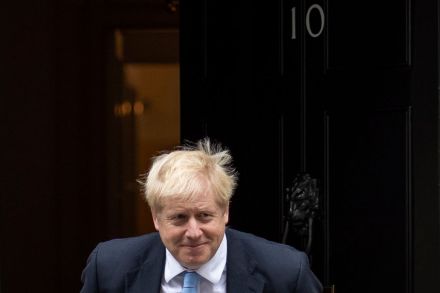
Boris Johnson must still keep no deal firmly in his mind

From our UK edition

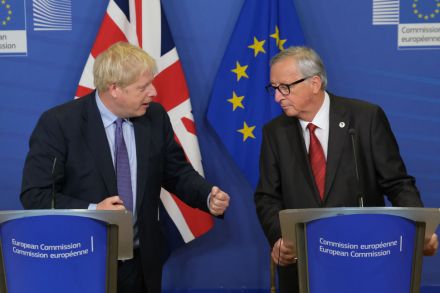
The Irish backstop and the arrangements to replace it are now the focus of the eleventh-hour Brexit talks. Their importance is not because of Ireland, but because of the battle for the UK’s constitutional freedom to decide the laws that govern this country’s economy and trade. Will the UK’s economic system break free of EU law allowing both an independent trade policy and the UK’s laws to diverge from the EU’s? ‘That is the point of our exit,’ as Boris Johnson told Donald Tusk in August. Or will there be continued subjugation or an eventual UK return to the bloc?

Watch: Mark Francois rebukes ‘stop Brexit’ protester

From our UK edition

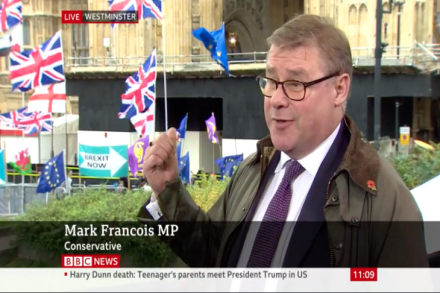
We're still waiting to hear what Mark Francois – and the rest of the ERG – make of Boris Johnson's Brexit deal. But while Westminster waits with bated breath, Francois has delivered a withering verdict on SW1's noisiest inhabitant: the 'stop Brexit' protester. Francois was about to give his answer during an interview on the BBC only to be loudly interrupted with yells of 'stop Brexit' and 'revoke Article 50'. The Tory MP's response? 'If we leave it will be delightful that this idiot will shut up'. Mr S isn't so sure that will happen...

Nicola Sturgeon’s Brexit bounce

From our UK edition

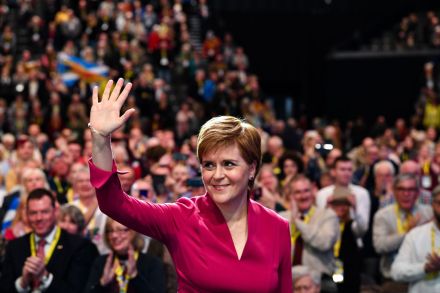
There was a fairytale quality to Nicola Sturgeon’s speech to the SNP conference this afternoon. On the one hand, she demanded a second referendum on independence next year; on the other, almost no-one in Scottish politics really believes there will be a referendum next year. In tandem with this rallying call for national liberation – an emancipation made ever more urgent by the looming Brexit fiasco – there ran another line of argument: conference delegates, like the wider nationalist movement, must be careful and canny and patient. Which is another way of saying that, whatever the headlines suggest, it’s probably not happening. At least not yet.

Is hate crime really on the rise?

From our UK edition

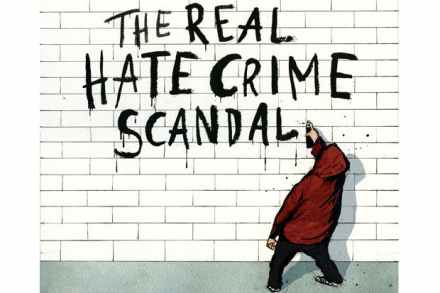
The Guardian ran a story on its website today headlined: ‘Hate crimes doubled in England and Wales in five years.’ Alarming if true, but is it? The story is based on some data released by the Home Office today which, on the face of it, does appear to show the number of hate crimes increasing. The number of hate crimes recorded by the police in England and Wales in 2018-19 was 103,397, up from 94,121 in 2017-18, a rise of ten per cent. But drill down into the report, and the picture becomes more hazy. The word doing most of the work here is ‘recorded’. Yes, the number of recorded hate crimes has increased year-on-year, but how do we know that isn’t due to the police being more likely to record hate crimes?

Watch: Emily Thornberry accused of sexism for Commons jibe

From our UK edition

Emily Thornberry has had a busy day in the Commons. Labour's shadow foreign secretary heckled her counterpart Dominic Raab this morning after he claimed Jeremy Corbyn wanted Britain to withdraw from Nato. Now, she's been at it again: apparently yelling the word 'bollocks' at international development secretary Alok Sharma during a testy exchange. John Bercow then stepped in to calm things down. Only for Tory MP Hugo Swire to accuse Thornberry of being sexist. Mr S wonders whether Boris Johnson might have been right to prorogue parliament after all...

On black privilege

From our UK edition

Discussions of ‘privilege’ have become one of the themes of this age. In a short space of time, the obsession with the subject has forced its way from the margins of the social sciences right into the centre of all cultural and political debate. Politics and office politics is increasingly consumed by it. One day it is Rory Stewart being asked to account for his privilege by that ghetto-denizen Cathy Newman. Another it is Don Lemon being talked over by a black trans woman at the mass asylum breakout that constituted last week’s Democrats LBGT Town Hall. Everywhere the privilege discussion is the same. Who has privilege? Who should give it up? Who should have more?

Did anyone take the Queen’s Speech seriously?

From our UK edition

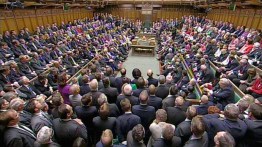
If today's Queen's Speech was meant to offer a preview of what the next general election and life after it will look like, you might be forgiven for wishing you were somewhere far, far away from British politics. The debate in the House of Commons this afternoon was turgid and pointless. It was almost as if everyone involved couldn't quite be bothered to rise to the occasion of a new legislative programme because they knew that it was more of a political messaging operation. Jeremy Corbyn gave one of his least convincing speeches as Leader of the Opposition, which is plumbing quite some depths. He managed to both dismiss the whole event as a charade, while indulging in line-by-line analysis of the Speech.

The myth of Britain’s air pollution pandemic

From our UK edition

It is a good thing that there is an air pollution bill in the Queen’s Speech today. We should not have to tolerate foul air. But the suggestion that this will be addressing some dramatic and growing crisis is misplaced. The idea that Britain is in the midst of a ‘silent pandemic’ of air pollution deaths – as claimed by a UN Special Rapporteur two years ago – is not even slightly aligned with the truth. In fact, air pollution in Britain has fallen dramatically over the past half century. A clean air act is about furthering huge progress that has already been made, not about challenging some growing problem.     London smogs were gone by 1970 – the reference date now used for air pollution in Britain.

The biggest risk with Boris Johnson’s Queen’s Speech

From our UK edition

This is more an election manifesto launch than a conventional Queen’s Speech, because Boris Johnson simply does not have the numbers in the Commons to legislate for all – or any – of the measures announced today. At the risk of being sexist and aide-ist, the legislative programme shows the strong influence on the PM of the two people who seem most influential on him: his partner Carrie Symonds and his chief aide Dominic Cummings, with a package of environment and animal welfare measures (Symonds’ passion) and a bunch of stuff to reinforce the UK’s science and research (Cummings’s).

Could Boris Johnson win an election but lose his seat?

From our UK edition

Is Boris safe in Uxbridge? The Lib Dems have an eye on the Prime Minister's 5000 vote majority and their candidate, Dr Liz Evenden-Kenyon, hopes to dislodge him at the general election. But she needs help. With the support of a new formation, Renew UK, she plans to ‘kick Johnson out of Uxbridge’. I went to a ‘meet and greet’ outside the tube station at the weekend only to find that the campaigners had packed up half an hour before the event was due to end. Perhaps it’s no surprise they hadn’t taken Uxbridge by storm. A Facebook announcement posted on 8 October had been shared just five times. My attempts to contact ‘Dr Liz’, (as she styles herself), drew a blank. So I plodded around in the drizzle accosting random strangers.

Can ministers really hold their nerve on Brexit this week?

From our UK edition

Boris Johnson is now in what's known in cricket as the 'Nervous Nineties', when a batsman becomes so anxious about reaching his century that he takes unusually conservative decisions - or is so nervous he accidentally gets himself out. We are now in what could be the final few days of the Brexit negotiations, and the Prime Minister is trying to be unusually cautious about what's said and done. Ministers are being urged to hold their nerve rather than make comments which could push the talks off course, and No. 10 is remaining very tight-lipped. In a cabinet call this afternoon which a number of ministers described as 'businesslike', Johnson updated his top team but made clear that there wasn't a great deal to say at this time.

The purpose of Boris Johnson’s Queen’s Speech

From our UK edition

Normally a Prime Minister uses a Queen's Speech to lay out their government's legislative agenda for the year ahead. However, with the government currently boasting a working majority in the region of -40, few ministers expect Boris Johnson to be able to even pass his first Queen's Speech as Prime Minister – let alone the individual bills. Instead, Johnson and his ministers hope Monday's set piece event will provide a public platform for the things the government would do were they to win a majority in a forthcoming election. Johnson plans to present an 'optimistic and ambitious' Queen's Speech that would make the UK 'the greatest place on earth'. There are 22 bills in total.

Sunday shows round-up: Corbyn says parliament should be ‘cautious’ about PM’s Brexit deal

From our UK edition

Sophy Ridge began her show with an interview with Jeremy Corbyn. Brexit negotiations are at a critical juncture with an elusive withdrawal deal seemingly in the government's reach ahead of the EU council summit on the 17th. Corbyn expressed doubts about backing any such deal, citing concerns about the Irish border and urged MPs from other parties not to wave through the deal out of relief that a no deal exit would be avoided: https://twitter.com/RidgeOnSunday/status/1183286306287296512?ref_src=twsrc%5Etfw JC: I think many in parliament - not necessarily Labour MPs but others - might be more inclined to support it even if they don't really agree with the deal.

If Boris does a Brexit deal, it will be because of the ‘Surrender Act’

From our UK edition

Will he strike a deal with the EU allowing Britain to leave this month? Will he compromise on the Irish border? I don’t know what Boris Johnson will do. I’ve thought for some time that he and the Conservatives would be quite willing to compromise on Northern Ireland’s future status, but I’ve also often wondered whether some people close to him would be quite happy to charge towards a no-deal exit in hope of smashing through all those who would stand in the way. Let us assume the current talks with the EU are being held in good faith on both sides. This does make sense: both sides’ best interests lie in a negotiated exit, after all. How to explain Johnson’s drive for a deal, his apparent willingness to compromise?

Is a deal really possible?

From our UK edition

It is one of the most remarkable turnarounds in recent political history. On Wednesday afternoon, the Brexit talks seemed pretty much dead—hence my piece in the magazine this week. Even the optimists in Downing Street were struggling to see anyway through. But by Friday lunchtime, the UK and the EU were agreeing to intensify negotiations as they searched for a deal. As I say in The Sun this morning, the negotiations going on in Brussels this weekend are serious: they aren’t just for the show. This doesn’t, though, mean that a deal will definitely be done. But things are on the move. Now, the sheer pace of this turnaround is a reason for caution.

Is Rory Stewart running to become London mayor because he’s bored?

From our UK edition

Rory Stewart's announcement that he would run as an independent candidate for Mayor for London was typically civilised. This was no political suicide bomb. Instead Stewart waited for his erstwhile party’s conference to finish before making his move. But this trademark decency does not render his decision any less barking to his detractors. I’m on friendly terms with Stewart and had enthusiastically supported his Conservative leadership campaign which, after this abrupt defection, does leave me feeling like a bit of an arse if I’m honest. But Rory is very hard to dislike, not least because his innate decency, ability and desire to listen and respond to ordinary people is clearly authentic.

John McDonnell suggests Labour could be open to referendum before election

From our UK edition

The Labour party is abuzz with talk that the party could back a second referendum before a general election. It's not that Jeremy Corbyn has suggested such a move is on the cards – in fact, this week he's been saying the exact opposite while setting out his stall for a general election. However, John McDonnell has used an interview with Alastair Campbell for GQ to open the door to the possibility of holding a second referendum first. Asked which ought to come first, McDonnell says while his preference remains a general election 'let's see what actually parliament will wear in the end': AC: Do you agree with me that there shouldn't be an election? JM: I'm more of the view that we've said up until now that we want a general election.

Brexit party voters will decide Boris Johnson’s fate

From our UK edition

The fate of Boris Johnson’s premiership will be determined by Nigel Farage and the Brexit party. Even if a Brexit deal can be agreed, another extension to the deadline of 31 October still seems possible. If the can is kicked down the road, the question of how Farage’s voters will react is key. Without the support of Brexit party voters, Boris Johnson could wake after the next election to find himself and his party still trapped in a hung parliament. But if he wins over half of Farage's supporters, while the Remain camp is divided between Labour and the Liberal Democrats, then he could land nearly 350 seats and a comfortable majority. Win over three-quarters and Johnson enters landslide territory.

Why I won’t miss Britain’s ‘chief nanny’ when she’s gone

From our UK edition

It’s time to say goodbye to Britain's so-called Chief Nanny, Dame Sally Davies. In her final report as Chief Medical Officer, Davies shows why she won't be missed. She proposes a ban on eating or drinking anything other than water on trains and buses. Davies also suggests that nothing fatty or sugary should be available to buy at certain sports stadiums. Goodbye matchday pies or a pint at the rugby. Dame Sally’s job is to focus on a narrow idea of health. But this remit is blind to a simple reality: most of us want to live a life that we think is worthwhile. Sometimes that means throwing caution and kale to the wind, downing that pint in the pub or sharing sugary popcorn with your kids. While Davies might scream ‘won’t somebody please think of the children?!