Uk politics

George Osborne: the politically homeless ex-chancellor

Did the 2007-08 financial crisis cause Brexit, the election of Donald Trump, the rise of Jeremy Corbyn? George Osborne’s answer, 10 years on from it all, echoed Zhou Enlai on the French revolution: it’s too early to say. But at a Spectator event at Cadogan Hall, in conversation with Andrew Neil, Osborne defended not only his policies as chancellor, but also – by implication, and rather unexpectedly – Gordon Brown’s. Looking back, he said, even if Britain wasn’t particularly well prepared for the collapse of Northern Rock and all that followed that autumn a decade ago, there was nothing ‘radically different’ that could have been done to respond to the

George Osborne: I’m just a journalist

Ten years on from the financial crash and Theresa May is Prime Minister, Jeremy Corbyn is leader of the opposition and George Osborne is editor of the Evening Standard. So, were the policies enacted by Osborne during his time in government partly to blame for this? Speaking to Andrew Neil at a Spectator event, Osborne suggested that this wasn’t the case, although he did admit that a historian looking back might see some link between the economic crash – and the response to it – and the rise of both Donald Trump and Jeremy Corbyn. The economic shock to the West has thrown up many political changes, suggested Osborne. ‘But

The Clean Growth Strategy is yet another dubious government target

In August I wrote here about the government’s pre-announced ban on the sale of new petrol and diesel cars by 2040, and how it could turn out to be a hostage to fortune if the necessary technology fails to be developed. Today, in its Clean Growth Strategy, the government announces another dubious target: insulating a million of the leakiest homes with the aid of £3.6 billion raised through the Energy Company Obligation – which is a levy on all energy customers’ bills. The proposal seems to work on the assumption that it is possible to insulate an old property,  bringing it close to the insulation standards of a new home, at

Watch: Lord Lawson says May should ditch Hammond

Philip Hammond’s refusal to spend money preparing for a Brexit no deal has not gone down well. Now, one of his predecessors as Chancellor  – Lord Lawson – has called on Theresa May to get rid of Hammond. On the Daily Politics, Lawson said it was ‘grossly irresponsible’ for the Chancellor not to prepare for a situation where Britain walks away from the EU without an agreement. When asked whether Hammond should stay on in his job, Lawson said: ‘I fear not…I fear he is unhelpful… what he is doing is very close to sabotage.’ Hammond isn’t a politician known for his smile. It seems he has even less reason to

Let’s resist the Corbynist mob and celebrate corporate capitalism

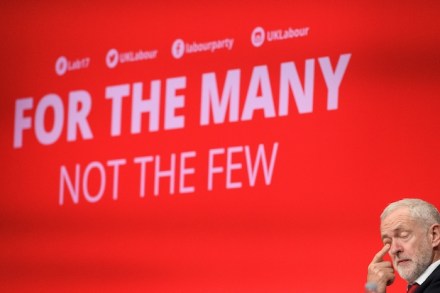
A reader in the FTSE boardroom world told me sternly the other day that I should resist the temptation to join the Corbynist mob and most of today’s media in sniping at corporate capitalism, and instead celebrate its positive achievements. So, here’s a parable designed to do just that.  The Kensington Aldridge Academy is a state-of-the-art secondary school that opened in 2014 next to Grenfell Tower in North Kensington, and now has 960 pupils. ‘Aldridge’ refers to a charitable foundation created by Sir Rod Aldridge, the multimillionaire former chairman of the outsourcing giant Capita, to sponsor schools with a special focus on entrepreneurship. Some locals resented the school being built

What the papers say: Britain’s chaotic approach to Brexit is helping the EU

Britain will now almost certainly have to wait until Christmas for the start of trade talks with the EU. This wasn’t the original plan, with the initial timetable suggesting these discussions could start in October. So what’s going wrong? Some are blaming the EU – and it’s true that the leaders of France and Germany are ‘behaving mulishly’ and ‘irrationally’, says the Daily Telegraph. But maybe the blame also lies closer to home. Deputy PM Damian Green has said he would still back ‘Remain’ if the referendum took place today, Theresa May ‘refused to say whether she would now vote for Brexit’ and the Chancellor is saying he won’t commit

Interview: Centrica CEO, Iain Conn, on the energy price cap

Theresa May had wanted Ofgem to introduce a energy price cap: it said this would require new legislation and today the Prime Minister will promise to create them by capping the Standard Variable Tariff. The case for the prosecution is simple: about 70 per cent of energy users are not on cheap tariffs, but the ‘standard’ variable tariff which is about £300 more expensive than the best deals. Competition works for those who switch, but for those who tend not to (especially the poor and the elderly) the system is demonstrably not working for them. Centrica thinks otherwise and it sponsored a podcast, which we released yesterday, where I ask

Donald Trump and Theresa May desperately need each other’s help

In June, I mooted the possibility that Theresa May might consider emigrating to the United States to join the Trump administration, preferably as chief of staff. I’m sorry to see that she has spurned my request and that the charms of No. 10 Downing Street are proving more alluring than decamping for the White House. But I am somewhat consoled by the Telegraph’s report yesterday that May and her advisers are contemplating something even more radical—British entry into NAFTA, an accord that President Trump has dubbed the worst in the history of the American republic. This move could help make not just America, but also Britain great again. A revived

Theresa May has yet another bad day at the office

Theresa May needed to play a blinder today. But she left herself looking heartless and complacent. Jeremy Corbyn attacked her on the Universal Credit system which seems as useful as a windmill on the moon. He said UC was leading to ‘debt, poverty and homelessness.’ Mrs May replied that tremendous improvements had been achieved since January. Only 20 per cent of initial payments are late, she trumpeted, (although she used the formula ’80 percent are on time’). Corbyn asked about delays twice more, and Mrs May’s patience dissolved. She did a little pantomime of being bored. Her eyes glazed over. Her chin tilted upwards. Her focus went into the middle-distance. A

Scottish nationalists need a plan B – but so do Unionists

The SNP has become so accustomed to setting the agenda that the situation in which it presently finds itself – one of uncertainty tinged with the mildest dose of ennui – is modestly disconcerting. Nicola Sturgeon played all the right notes during her conference speech yesterday but there was still something perfunctory about her address. The delegates liked it but it wasn’t greeted with the kind of joyous rapture prompted by Ms Sturgeon’s previous conference speeches. She still believes in a place called independence, of course, it’s just that she doesn’t know – and, worse, cannot say – when it will next be glimpsed. It exists, of course, but seeing

Theresa May’s bid to sound authoritative at PMQs falls flat

Today’s Prime Minister’s Questions wasn’t exactly comfortable for Theresa May, but neither was it catastrophic. The session has been running along the same lines since the snap election result: Jeremy Corbyn has plenty of material to play with in terms of a government in disarray that isn’t confronting some of the most important domestic issues, but he never really manages to leave May looking less authoritative than when the session started. Today he focused on the problems with the roll-out of Universal Credit, which is spreading from being the concern of welfare policy specialists in parliament to being a political row. Conveniently, the Tory rebel ringleader on this matter Heidi

Philip Hammond’s Brexit no-deal bind

Philip Hammond has got himself into something of a bind over planning for a Brexit ‘no deal’. The Chancellor has ruled out – at least for the time being – spending money on contingency plans for a scenario in which Britain walks away from the EU without an agreement. The problem with this strategy is that it undermines Theresa May’s ‘No deal is better than a bad deal’ approach. Put simply, how credible is the government’s line on being ready to walk away empty-handed if planning for such an outcome takes a back seat for now? It’s also surprising for the Chancellor to rule out preparing for a scenario seen

Listen: Karen Bradley’s internet blunder

Poor old Karen Bradley. This week it emerged the Culture Secretary was being investigated for not having a TV licence – and things aren’t getting any better for Bradley. This morning she unveiled the government’s plans to crack down on online abuse. But it seems Bradley got herself into something of a muddle when asked what she was hoping to achieve with the review. She told John Humphrys: ‘We want to make the internet the safest place to be online.’ Perhaps someone could explain to the Culture Secretary that ‘the internet’ and going ‘online’ are inextricably intertwined.

Grauniad’s sub-editing fail

Oh dear. Much excitement today among the commentariat over Rafael Behr’s op-ed in the Grauniad. The Guardian columnist says that for ‘hardline Brexiters, the lure of the cliff edge is irresistible’. Unfortunately for Behr, it’s his byline – rather than his words – that’s receiving the most attention: Perhaps the Fleet Street doom-mongers were right when they said newspaper sub-editors’ days are numbered…

What the papers say: A Brexit transition deal is a necessary evil

Theresa May’s admission that the European Court of Justice could continue to play a role during any Brexit transition deal has not gone down well with some Leave supporters. Jacob Rees-Mogg suggested that the Prime Minister had gone too far in trying to appease Brussels. But the Sun doesn’t see the PM’s comments as anything to be worried about. ‘Most sensible Leavers accept the need for a limited Brexit transition’, the paper says, even if this means a role for the ECJ. Such a transition will ensure that the impact on the economy will be minimised, the Sun says. It will also ‘buy businesses time to adjust’. But May must

Theresa May’s phoney race war is dangerous and divisive | 10 October 2017

Theresa May’s long-awaited audit into racial disparities in public services has finally launched. We were prepared for the worst. Unnamed Whitehall insiders had said that they had been ‘shocked’ by the picture it reveals of racial discrimination in the UK. The scene was set for another bout of political self-flagellation regarding the subject of race in Britain, in which half-truths are peddled by lobbyists and swallowed wholesale by officialdom. Several studies have already shown that some ethnic groups experience different outcomes in policing, health, employment and education. There are many causes behind these disparities but the evidence used by government to publicise the audit has been carefully selected and presented

Watch: Damian Green says Britain would be better if Remain had won

Oh dear. After Theresa May refused to say three times in an interview with Iain Dale on LBC whether she would back Leave in a second EU referendum, the Prime Minister has provoked the ire of some in the Brexit camp. But Brexiteers can take heart that May’s comments are positively eurosceptic compared with those of her First Secretary of State. Damian Green has been touring the television studios this evening to talk about the government’s race disparity audit. Also on the agenda is Brexit. First, the former Remain campaigner told Channel 4 News that he would vote Remain if another EU referendum was held. Now, he has just appeared on

Brexit could ensure social care gets the reform it badly needs

Theresa May had planned to move the political focus this autumn from Brexit to domestic priorities. That was always a tall order when the next round of negotiations and this month’s EU council are looming, but it’s particularly difficult given the Prime Minister managed to lose, not gain, authority with her conference speech. It’s also made harder given that her statement in the Commons yesterday seems to have enraged Brexiteer MPs, who were willing her on before the conference speech fiasco. One senior eurosceptic MP told Coffee House after the admission that the European Court of Justice would still have a role during the Brexit transition that he and colleagues