Uk politics

The Budget shows the Tories are still ignoring some big problems

From our UK edition

On Budget Day, MPs and journalists joke about it being a ‘quiet day’ and ‘not much going on’ as they pass one another in the corridors of Westminster (this is an accurate representation of how utterly hilarious the corridors of power normally are). Today’s Budget was in a number of respects rather quiet, especially in the things it totally missed out.  Philip Hammond didn’t even mention social care, despite the sector's concerns about whether it can afford a massive back pay bill that has come up partly as a result of a court judgement and partly as a result of government dithering.

Philip Hammond’s fiscal fix? A tax on cheap cider, fags and diesel cars

From our UK edition

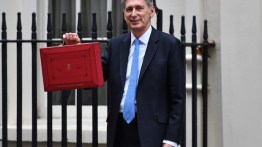
So where are the nasties? Philip Hammond’s Budget speech can be summed up as follows:  £2.8 billion for the NHS, £44 billion of capital funding and loan guarantees for housing, £400 million for a new charging infrastructure for electric cars, £2.3 billion investment in research and development, £1.5 billion worth of changes to Universal Credit, an extra £2 billion for Scotland – all to be paid for, apparently, with higher taxes on super-strength cider, fags, a few of the smokiest diesel cars and the end of indexation for allowances on corporate capital gains tax.

Five things you need to know about Hammond’s Budget

From our UK edition

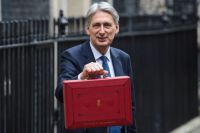
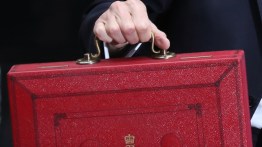
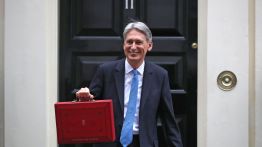
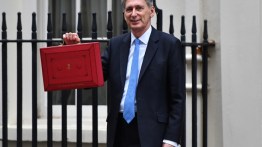
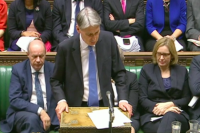
After months of Tory nerves, Philip Hammond has just finished presenting his Autumn Budget in the Chamber. Among the main giveaways, the Chancellor announced more funding for the NHS as well as pitching to the young with his housing proposals and 18-30 railcard. He also announced measures to ease out the rollout of Universal Credit – including a one week reduction to the wait time. However, although the Chancellor was at pains to sound optimistic and shake off his Eeyore image, this was made difficult thanks to some grim statistics from the OBR. The OBR has revised down its forecast for annual growth quite significantly –  lower than envisaged after the Brexit vote. It's the weakest official long term forecast for UK economic growth since at least 1983.

Jeremy Corbyn says the B word during PMQs

From our UK edition

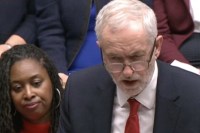
Jeremy Corbyn rarely talks about Brexit at Prime Minister’s Questions, and it is interesting that he chose today’s session, which will get little attention as a result of the Budget, to probe Theresa May on the matter. The Labour leader did have a good stint, quoting a number of European negotiators, Tory backbenchers and Cabinet Ministers who have made comments to the effect that the British government doesn’t know what it is doing on Brexit. He also accused the Tories of blocking measures protecting workers’ rights and acknowledging that animals are sentient beings. But Theresa May was on good form, too, continuing to appear as though she is regaining her confidence somewhat.

Live: Autumn Budget 2017

From our UK edition

Philip Hammond avoided any disasters in his second budget of 2017. Here are the headline announcements: Growth forecasts downgraded: Britain's economy is now expected to grow by 1.5 per cent in 2017, down from the prediction of 2 per cent made in March Stamp duty scrapped for first time buyers on homes costing up to £300,000 £3bn set aside for Brexit preparations Millenials' railcard confirmed; National Living Wage up; VAT threshold for small businesses maintained; £2.8bn more for the NHS; 100 per cent council tax on empty homes; target to build 300,000 new homes by 2020s Tobacco duty up; beer and wine duty frozen; No fuel duty rise for petrol and diesel cars next year Annual borrowing is £49.

What the papers say: Hammond must beware the danger of playing it safe

From our UK edition

Philip Hammond’s second Budget of the year will mean that the Chancellor has another 'bite at a not especially flavoursome cherry’, says the Daily Telegraph. The last time, his announcements ‘misfired’; since then Hammond's ‘room for manoeuvre’ has become even more limited. This means that many in the Tory ranks are not filled with ‘great expectations’ about what Hammond might say and instead, says the Telegraph, they ’are just anxious to see Mr Hammond through the day without mishap’. But playing it safe won't be enough for the Tories, according to the paper, which argues in its editorial that it doing so would ‘throw away the opportunity’ for the government to ‘take the initiative’.

Revealed: Universal Credit director wins award for… project management

From our UK edition

You don't have to be a member of Her Majesty's Opposition to conclude that something has gone wrong with the Universal Credit rollout. After a series of issues including a six week wait for first payment and an expensive helpline to supposedly deal with said issues, the government is under pressure to put the scheme on pause. Matters weren't helped in recent weeks when Neil Couling – the man in charge of the Universal Credit programme – tweeted pictures of cakes celebrating the scheme at a time when some claimants on are said to be living on the breadline as a result of the bungled rollout. So, Mr S was curious to learn that Couling won a gong at this week's Association for Project Management awards.

Watch: David Davis crashes out

From our UK edition

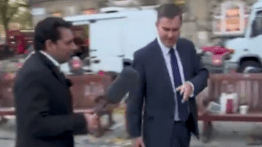
David Davis has just given a speech on the Brexit transition period – intended to prevent Britain from crashing out of the EU in a disorderly manner. But at the end of his address, it seems that he was personally advocating a different type of transition. As Davis said his goodbyes, he took a tumble. Mr S hopes it's not a sign of things to come...

What the papers say: The EU is in the grip of chaos

From our UK edition

Donald Tusk’s jibe that Britain was no longer attempting to have its cake and eat it in Brexit talks was a clear dig at the Foreign Secretary. But now the EU is guilty of adopting the same approach, according to the Sun. Michel Barnier said yesterday that ‘he wants all his demands met’ on various issues, and also ‘wants a monstrous exit bung from Britain’. Theresa May has reportedly received the backing of her Cabinet to up this payment to £40bn. Yet this ‘won’t nearly suffice’ for the EU, says the Sun. And even if Brussels does agree, what will we get in return?

The tin-eared chancellor: Philip Hammond’s ten worst gaffes

From our UK edition

Tomorrow is D-day for Philip Hammond. As the Chancellor puts the finishing touches to his Budget, Tory MPs wait nervously – hoping it will be a day free of gaffes. Unfortunately, history suggests that this is unlikely. Over the years Hammond has earned a reputation for being tin-eared and ham-fisted. To get readers in the mood for his Budget, Mr S has compiled a list of the Chancellor's worst gaffes: 1. There are no unemployed people Just this weekend, Hammond proved why he makes his colleagues nervous. Appearing on the Andrew Marr show, the Chancellor managed to turn one of his party’s top achievements into a toxic issue. Asked about unemployment – which is at a 42-year low – Hammond claimed that ‘there are no unemployed people’.

Sarah Olney causes a stir at Lib Dem HQ

From our UK edition

Oh dear. Trouble is brewing at Lib Dem HQ over Sarah Olney. After losing her seat by 45 votes in the snap election, Olney was quickly appointed as Vince Cable’s Chief of Staff – beating several more conventional candidates (i.e. trained press officers) to the coveted job. At the time, Olney made a verbal agreement with Cable that she would not stand as a Parliamentary candidate – given that this would mean she would be unable to continue as Chief of Staff. So there was much surprise this month when Olney stepped down from the role so she could campaign to retake her old seat.

Atkins’ confident start as a minister bodes well for tricky bill

From our UK edition

Vicky Atkins was the first MP from the 2015 intake to become a minister, and had been preparing assiduously for doing so. She asked loyal questions of the Prime Minister and beavered away on the Home Affairs Committee and the joint committee examining the Draft Investigatory Powers Bill. But it was obvious that this very capable backbencher wanted to join the government - and that she was very likely to do well as a minister. Today’s Home Office questions marked her first outing on the frontbench in the Commons - and therefore the first glimpse of what someone who has been auditioning to be a minister is going to be like now she’s got the part. Atkins was greeted with a huge cheer from her colleagues as she stood up to answer a question.

Michel Barnier’s Brexit trade deal warning

From our UK edition

The furore over the Brexit divorce bill has been such that it is easy to forget that it isn't the only major sticking point in talks with the EU. Theresa May looks set to up Britain’s offer this week (from €20bn to around €40bn), in the hope that more cash on the table will unlock the next stage of negotiations. But Michel Barnier’s speech today should serve as a warning to the British government: things won’t necessarily get easier when the Brexit divorce bill is sorted. In fact, Barnier makes it clear that talks could get even more difficult. The EU’s chief negotiator hinted that Britain would still miss out on a trade deal if it doesn’t agree to tie itself down to a ‘European model’ after Brexit.

Scottish Labour leader: If it’s England vs Scotland, I support England

From our UK edition

This weekend, Richard Leonard proved that an Englishman can succeed in Scottish politics. The Corbyn ally – who hails from Yorkshire – beat Anas Sarwar to be crowned the leader of Scottish Labour. However, it remains to be seen whether an Englishman can ever be First Minister. While Scottish Labour members may be over to get over their leader having an English accent, Mr S wonders if the latest confession by Leonard will prove a step too far when it comes to the general public. With England and Scotland enjoying a fierce rivalry in sport, Leonard was asked today, on Radio 5live, what side he was on when it comes to football and rugby: 'If it's England vs Scotland, I do support England. Every other game I'll support either Scotland or England.

Can you distinguish between a bot and a human?

From our UK edition

We’ve all gone a bit bot-mad in the past few weeks. Automated accounts have invaded our civic life – especially pesky Russian ones – and politicians on both sides of the Atlantic have woken up to the fact that a new propaganda war is taking place online. Bots – which is of course short for robot – are essentially accounts which can be programmed to automatically post, share, re-tweet, or do whatever the programmer chooses. Creating a bot is extremely easy, and huge amounts of cheap bots are available on dark net markets for next to nothing. There are millions of harmless bots out there doing all sorts of helpful and funny things, including breaking news stories. But Russia twigged early that bots can also be usefully deployed to influence public opinion.

Germany’s political crisis puts Merkel’s future in doubt

From our UK edition

When I had lunch with a senior CDU politician in Düsseldorf on Saturday, there was no sign that Germany’s coalition talks were about to break down so abruptly, plunging the Bundesrepublik into a political crisis with no solution in sight. Sure, negotiations had dragged on for weeks, said the man from Merkel’s party, but that wasn’t unusual here in Germany. They’d probably drag on until January, but the participants would eventually work something out. The next day his comfortable prediction was confounded, as Christian Lindner’s Free Democratic Party walked out of the coalition talks. ‘It became clear that the parties weren’t able to develop a common idea of how to modernise Germany,’ said Lindner.

The riddle of Theresa May’s Russia policy

From our UK edition

It is just a week since Theresa May used her Mansion House speech to launch a broadside on Russia. During a wide-ranging survey of the international horizon, it was Russia she singled out for special criticism and it was her Russia attack that attracted (and was surely intended to attract) the headlines. Just a reminder of what she said. Russia was 'chief' among those who seek to undermine 'our open economies and free societies'. Not only had it annexed Crimea illegally, but it had fomented conflict in the Donbas, repeatedly violated the national airspace of several European countries, and waged a 'sustained campaign of cyber espionage and disruption'. And this was the climax: 'It is seeking to weaponise information.