Uk politics

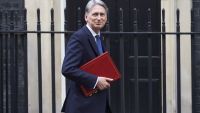
What should Philip Hammond announce in his Budget?

From our UK edition

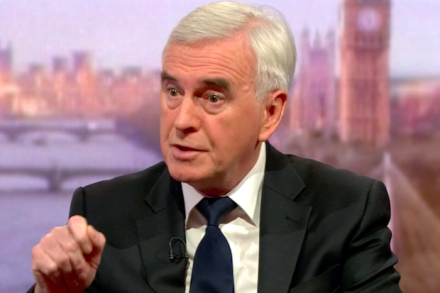
Next week’s Budget could be the government – and Philip Hammond’s – last chance to snatch the political momentum away from Labour. So what should he announce? Today’s newspaper editorials have some advice for the Chancellor: Not too long ago, John McDonnell’s ‘alternative budget’ would have been announced ‘in complete obscurity’, says the Daily Telegraph. Not so now, and the Tories clearly need ‘big ideas’ to see off a resurgent Labour party. This should not mean they resort to borrowing the party’s ‘Left-wing solutions’ – or, indeed, trying to outspend Labour, however. But they cannot rest on their laurels. On housing, for instance, Hammond must ‘do far more’.

Will the Tories really grasp the nettle on two of the biggest domestic crises?

From our UK edition

Two of the biggest unsolved domestic crises in this country are surely social care and housing. Both have creaked from ‘in trouble’ to ‘already in crisis’ without much in the way of serious policy or money from successive governments. Today, ministers turned their attention to both matters, making rather different announcements on how they might deal with them. First up, social care.

The Spectator Podcast: Corbyn 2.0

From our UK edition

On this week’s episode we look at the social media revolution which could sweep the Tories away. We also discuss next week’s budget and agonise about the state of the nation with Jeffrey Archer. Whether it’s Jeremy Corbyn, Donald Trump or the Brexiteers, successful politicians seem to have one thing in common: a command of social media. But what about Theresa May and her party? In the magazine this week, Robert Peston is concerned that the Prime Minister might be left behind if she fails to grasp the importance of the internet. He joins the podcast along with Jamie Bartlett, Director of the Centre for the Analysis of Social Media at Demos and a tech blogger for Coffee House, and Joe Todd, from Momentum. As Robert writes: "The crude stats are humiliating for Theresa May.

Will Salmond ask questions of Putin’s interest in Scottish independence?

From our UK edition

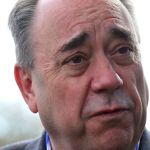
Should the British government be more suspicious of Russia? Theresa May obviously thinks so, telling Vladimir Putin in a speech this week that ‘we know what you are doing and you will not succeed’. Jeremy Corbyn is less keen, with his spokesman telling journalists that ‘I think we need to see more evidence of what’s being talked about… [but] Jeremy has made clear on a number of occasions that we need to see an attempt through dialogue to ratchet down tensions with Russia.’  Meanwhile, Alex Salmond’s decision to host a chat show on Kremlin-backed channel Russia Today last week ratcheted up tensions with his own party, with Nicola Sturgeon distancing herself from Salmond and saying she wouldn’t have advised him to do such a thing.

Michael Gove’s cabinet critics should go and do some reading

From our UK edition

The Times' Matt Chorley has succeeded in getting everyone talking with his story about Michael Gove supposedly using cabinet meeting to audition for the role of chancellor. Gove reportedly talked about ‘the obscure Markets in Financial Instruments Directives’ two weeks ago and has cabinet sources complaining that at this week’s meeting he used ‘lots of long, economicky words’.  So, what were those ‘long, economicky words’? Well, according to one cabinet minister present, Gove talked about Schumpeter and creative destruction and raised the question of whether the Bank of England’s monetary policy was creating zombie companies.

John McDonnell’s Today interview shows the economy remains Labour’s Achilles heel

From our UK edition

John McDonnell has busied himself today on the airwaves setting out Labour's five key demands for the budget. His call for an end to austerity would mean pausing the roll-out of Universal Credit, ditching the public sector pay cap, more money into infrastructure, health, education, and local government along with a large-scale house-building programme. All very well. Only the shadow chancellor's Today programme interview took a turn for the worse when McDonnell tried to explain how his party would fund this. He appeared to concede this would mean borrowing – along with a mega-crackdown on tax avoidance and changes to corporation tax.

It’s nonsense to claim Russia influenced the Brexit vote

From our UK edition

Q: How many Remainers does it take to fix a light bulb? A: Why should we fix it? It's Russia's fault it's broken An old joke; I think the original concerned Arabs and Israel, but then there are numerous parts of the world where all manner of events are attributed to historic enemies. I remember a few years ago, after reading an article about how Poles tended to think the Russians were behind everything bad, a journalist explaining that this is the historic result of being ruled by tyrannical regimes, low social capital and little trust in government. That's eastern Europe for you; luckily we north-west Europeans, with our long history of open government and self-rule, were not susceptible to such second-world paranoia.

What the papers say: In defence of the Brexit ‘mutineers’

From our UK edition

The EU withdrawal bill survived its first test at its commons committee stage this week – but there is still a long way to go. And it seems some on the Tory back benches are determined not to make it plain sailing for the government. Theresa May’s ‘mandate for a hard Brexit is weak’, says the FT, which argues that parliament is well within its rights to scrutinise the EU withdrawal bill closely. ‘If ever there was a case for parliament exercising its sovereign powers, this is it,’ says the paper. So why the backlash against those in the Tory ranks who are not happy with certain parts of the bill? ‘Parliament’s admirers’ are likely to be ‘dismayed’ at this reaction to elected politicians doing their job, says the FT.

When will Jeremy Corbyn admit he was wrong about Venezuela?

From our UK edition

The socialist thugs who run Venezuela have made such a pig’s ear of running the economy that the country has now been declared in ‘selective default’ on its international debt. This week, Standard & Poor’s, the credit ratings agency, said Venezuela had failed to make $200m (£152m) in repayments on its foreign debt and that it was in ‘selective default’. Fitch and Moody's have declared PDVSA, the country’s state-run oil company, in default, as well. Venezuela's regime has already indicated that it wants to restructure its £100bn of international debt, including the £30bn or so that it owes Russia and China. Investors fear the worst and the haircut could be more than 50 per cent.

Theresa May’s political problems on housebuilding might not be as big as she thinks

From our UK edition

Does Theresa May want to build more homes? The problems that the Prime Minister faces on this matter were summed up very neatly by two different Tory backbenchers at Prime Minister’s Questions today. She was asked by Tom Tughendhat whether she would ‘take the chance to build more homes’, to which she replied that ‘my hon. friend makes a very important point about investing in infrastructure, particularly in housing. We are doing exactly that, which is why we have seen more than a quarter of a trillion pounds in infrastructure spending since 2010’, though she didn’t specifically mention housing. Later, Theresa Villiers asked the Prime Minister to ‘assure the House that the Government she leads will never weaken protection for the green belt’.

Frank Field throws stones from an inherited glass house

From our UK edition

This week, there was a rare sight for the post snap-election political landscape: two Labour MPs having a barney. On the first day of the Committee Stage of the EU Withdrawal Bill, Frank Field and Hilary Benn became engaged in an argument after Field, a 'reluctant Brexiteer', used a house analogy to argue in favour of the government amendment calling for the date of Britain's departure from the EU in the bill. He said he had never bought a house 'without having in the contract the date when it’s mine'. Benn, the son of Tony Benn, hit back by saying the analogy was lacking as 'nobody commits to a date to buy a house before they know what it is that they’re buying'.

Theresa May gets the upper hand at PMQs for a change

From our UK edition

In the last few weeks, we have got used to Jeremy Corbyn getting the better of Theresa May at PMQs. But today, May had the upper hand in their exchanges. Now, this isn’t because the political weather has suddenly changed—May has lost two Cabinet Ministers already this month and a third, who happens to be her closest political ally, remains under Cabinet Office investigation. So, what’s the explanation for the improvement in her performance? Well, I think it’s that Corbyn’s first question was on May’s old Home Office turf. When May talks about her old brief she sounds and looks far more confident than on any other subject. The confidence that flowed from that first answer kept May going through the rest of their exchanges.

The Tory tide is turning against austerity

From our UK edition

Tom Tugendhat, the Tory MP for Tonbridge sometimes called a rising star, finds himself making front page news today as a 'Brexit mutineer'. That strikes me as a novel term for a man who spent several years in the British Army fighting in Iraq and Afghanistan, but such are the terms of British political debate these days, I suppose. The MP hasn’t responded to that headline, but used a question at PMQs to talk about something else, which I think is worth a little more attention than the latest round of name-calling over Brexit. Given that Britain’s deficit is well down from crisis levels, and given that gilt auctions are oversubscribed, Mr Tugendhat asked Theresa May, is this not a good time for the government to invest more?

Scottish Labour is plunged into chaos – again

From our UK edition

When Kezia Dugdale quit as Scottish Labour leader in August, she said it was time to 'pass on the baton' to someone else, handing power to her deputy, Alex Rowley. Today, Rowley has stepped aside, leaving a leaderless party following allegations – which he denies – that he was abusive to his former partner.  The Corbyn ally recused himself after he was accused of 'emotional blackmail and abuse’. The woman, who has not been named, alleges that Rowley was controlling and sent her insulting text messages after she broke off the relationship. One is alleged to have read: 'You are one horrible nasty piece of work and I am going to expose you’; another: 'You are the most rotten b*****d I have had the misfortune to become involved with.

Theresa May’s Scotland blunder

From our UK edition

Although it's widely accepted that Theresa May's decision to call a snap election was disastrous, one of the few upshots for the Tories was that it managed to stave off calls from the SNP for a second independence referendum. Alas, whoever is running the Prime Minister's Twitter account doesn't appear to be on the same page when it comes to preserving the 'precious union'. Following May's meeting with Nicola Sturgeon, the Prime Minister tweeted that 'the UK and Scotland must continue to work together to ensure businesses and consumers have the certainty they need as we leave the EU'. Only there's a problem. Unless Nicola Sturgeon gets her wish for independence, Scotland is – and will remain – part of the United Kingdom.

What the papers say: Tory Brexit rebels have some explaining to do

From our UK edition

The EU withdrawal bill survived its first Parliamentary test last night. But it still has a long way to go, and a group of Tory MPs are likely to ensure that it is far from plain sailing for the government. For those on the Conservative back benches plotting to defy the Prime Minister on this Brexit bill, the Daily Telegraph has a message: why? The paper says that Labour MPs hoping to ‘put every obstacle in the path of Brexit’ can at least make the point they are in opposition. Rebel Tory MPs have no such excuse, according to the Telegraph, pointing out that many of this group backed the triggering of Article 50 and yet now appear to have changed their minds.

The latest ICM poll shows Corbyn is failing to capitalise on May’s misfortune

From our UK edition

After a grim few weeks for Theresa May and her government – which has seen the Prime Minister lose two Cabinet ministers, another put under investigation and calls for Boris Johnson to resign – today's ICM/Guardian poll certainly makes for interesting reading. Rather than the Conservatives falling behind, it shows that Labour and the Tories remain neck and neck. While the Conservatives have gone down by one-point after last week's shenanigans, May can take heart that so has Corbyn's Labour: https://twitter.com/AndrewSparrow/status/930752043823910912 It's a recurring theme. A poll on Friday suggested a beleaguered May is the more popular choice for Prime Minister – actually gaining a point following last week's shenanigans.

Theresa May has outmanoeuvred herself with amendment 381

From our UK edition

This week a Conservative politician managed to get both the SNP and Labour to applaud them in the Chamber. Unfortunately for Theresa May, it wasn't in response to government policy. Instead it was Europhile – and Tory grandee – Ken Clarke, who took the opportunity to explain why he thinks Nigel Farage is the 'most successful politician' of his generation, why bent bananas won't be making a comeback and, most importantly, why MPs ought to oppose Theresa May's Brexit date amendment (also known as amendment 381) to the EU Withdrawal Bill. https://www.youtube.com/watch?