Uk politics

What the papers say: How to convince Brits the Brexit divorce bill is worth it

From our UK edition

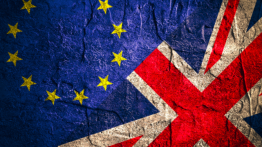
Britain’s Brexit divorce bill offer has now risen again, if today’s reports are to be believed. 'At the very least’, says the Daily Telegraph, Britain is looking at handing over £40billion. It’s a ‘lot of money’, the paper concedes, and even though the ‘complex formula’ used to calculate the final bill will allow the government to ‘fudge’ the exact payment, ‘it will require a concerted Cabinet effort to explain to voters why it is necessary’. Doing so could be helped by presenting the bill ‘as part of an overall package’, argues the Telegraph, and the government should enforce this message by sticking to its view that ‘nothing is agreed until everything is agreed’.

Even at £50 billion, the ‘divorce’ bill from the EU is a price well worth paying

From our UK edition

There will be howls of outrage in some quarters if it is confirmed that the government has offered the EU a ‘divorce’ bill of £50 billion or so. Some on the leave side of the debate have insisted that the bill should be zero. They ask: does the EU not owe us some money for our share of all the bridges we have helped build in Spain and railway lines in Poland. But it was never realistic to think that we could leave the EU and maintain good relations with the bloc without paying a penny – even if a House of Lords report did seem to suggest that that would be legally possible. We are in the process of  creating a new relationship with the EU, not ending it altogether.

Ireland’s domestic problems are overshadowed by Brexit

From our UK edition

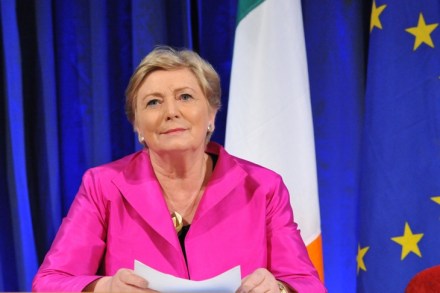
The Irish government has just survived a precarious wobble which would have plunged Britain and Ireland into further chaos over a future Northern Ireland border. Until the resignation of Tánaiste (deputy prime minister) Frances Fitzgerald earlier today, there was a clear and present danger of Leo Varadkar’s minority administration falling apart – all because of a police corruption imbroglio nobody in mainstream Irish politics seems prepared to grasp with both hands. Hours ahead of a no-confidence motion Varadkar looked certain to lose, Fitzgerald declared she would be stepping aside 'in the national interest'.

Watch: Tulip Siddiq asked by Channel 4 to help abducted barrister

From our UK edition

The case of Nazanin Zaghari-Ratcliffe, the British mother jailed in Iran, has attracted cross party support after Boris Johnson's comments at a select committee led to the Iran government re-examining her sentence. Of all the MPs to call on the Foreign Secretary to do more to help improve her situation, few have been as vocal as Tulip Siddiq. Only the the Hampstead MP appears to be less forthcoming on other issues. On Tuesday night, Channel 4 news aired a segment in which they asked her to use her influence to free another person who campaigners say has been locked up illegally – a British-trained barrister in Bangladesh who was abducted by men thought to be working for the government.

Brexit means… a £40bn divorce bill

From our UK edition

Ahead of the crunch EU council meeting next month, the government is doing everything it can to try and ensure the UK is given the green light from Brussels to move the negotiations on to trade. As part of this, talk has been rife that Theresa May is ready to considerably up her financial offer for the so-called Brexit bill. This afternoon, Peter Foster, the Telegraph's Europe Editor, reports that British and EU negotiators have reached a deal over the bill in good time for Theresa May's lunch with Jean-Claude Juncker on Monday. British and EU negotiators have reportedly agreed that the final figure, deliberately left vague, will be somewhere between €45bn and €55bn.

Ministers have created their own mess in the Brexit impact assessments row

From our UK edition

Nobody said Brexit was going to be easy, did they? It turns out that even talking about how difficult Brexit is going to be is pretty tricky, and the person feeling that most keenly is David Davis. Today the Brexit Secretary came under fire from all parts of the House of Commons for the heavy editing of some impact assessments on Brexit which it wasn’t entirely clear had ever actually been written in a form long enough for them to be edited down. Last year, Davis told MPs that ‘we’ve carried out or are in the midst of carrying out about 57, I think, sectoral analyses, each of which has implications for individual parts of 85 per cent of the economy, and some of those are still to be concluded.

Brexit is the new low point of British democracy

From our UK edition

As faith wanes in democracy, arguments against it have more power than arguments for the status quo. People still quote Churchill’s line about democracy being the worst system of government apart from all the others as if it settles the matter. For what it is worth, I think it is true. But as memories of the cataclysms of the 20th century fade, it sounds exhausted. ‘Our system is better than the Nazis’ has lost its purchase. Soon we will be living in a world where no one alive can remember the Nazis in power. The law of diminishing returns applies equally to the argument that at least our system is better than communism or Western imperialism. Maybe democracy is like peace: the longer a society lives with it, the more likely it becomes to disparage it.

The focus on ‘deprived’ areas has failed Britain’s forgotten poor

From our UK edition

Can anyone really be surprised that among the worst districts for social mobility identified by Alan Milburn’s Social Mobility Commission are some of the wealthiest areas in Britain? Ranked out of 324 districts in England West Berkshire comes in at 265, Cotswold at 268, Herefordshire 271, Chichester 287 and West Somerset bottom at 324. Surely it can’t really come as that much of a shock given how governments of both colours have thrown educational resources at ‘deprived’ areas. It might look good politically to sprinkle extra resources on places which the public associates with deprivation, but it rather overlooks the fact that while some areas of the country have high overall wealth there are plenty of low-income families who inhabit them.

How not to waste your time as a backbench MP

From our UK edition

Being a backbench MP can be pretty dull. In recent times, former members of the government have found the experience of merely being a member of the legislature so upsetting that they’ve downed tools and left Parliament altogether: David Cameron made a big show of saying he’d stay on and serve Witney from the backbenches, before finding himself on those backbenches sooner than he’d thought and scarpering. George Osborne, similarly, ended up as a backbencher, then quickly amassed as many other jobs as he could, before quitting politics ‘for now’. Perhaps these were rational individual choices given the comparatively lower pay and considerably lower prestige of the backbenches compared to government.

Will Labour practise what they preach on commercial confidentiality?

From our UK edition

Today MPs are working themselves into a bother over the government's Brexit impact reports. Although David Davis has handed them to the Brexit select committee – as ordered by the Speaker – MPs have been left disappointed given that the document in question is rather sparse on details as it does not include anything the government has deemed market sensitive or damaging to the UK’s negotiations with the EU27. With Keir Starmer to ask an Urgent Question on the issue, Labour is expected to criticise the government for keeping out relevant information. However, Mr S suspects the Labour party ought to tread with caution before going on the offensive.

Changing lifestyles, not zombie companies, are the reason for low productivity

From our UK edition

The zombie company concept was developed in Japan, to suggest that persistent low interest rates allowed heavily indebted companies (who might, at more normal rates of interest, have been liquidated) to stay in business, thus preventing the Schumpeterian creative destruction that allows the business sector to innovate and improve. It has since been applied to the UK as a possible explanation of low productivity, most recently by Liam Halligan in the Sunday Telegraph. There are three problems with the claim. The first is that in the UK stagnant low productivity companies tend not to be heavily indebted but instead sit on cash. So low interest rates hinder, not help, them.

Priti Patel: I would have told the EU to sod off

From our UK edition

After Priti Patel had to resign as International Development Secretary over unofficial meetings with Israelis ministers, the MP promised to continue to be 'a strong voice for Witham and Britain'. At tonight's Spectator panel discussion 'What is the future of the Tory party?' at the Emmanuel Centre, she certainly seemed intent on doing the latter. Now able to speak freely from the backbench, Patel pulled no punches. The Brexiteer MP appeared to criticise Theresa May's Brexit strategy – claiming the government lacked 'conviction and clarity in terms of our end state'. And she did not stop there.

Emma Dent Coad’s mistake is to think sneering makes a person seem bigger

From our UK edition

Why does Emma Dent Coad continually get into trouble for spiteful comments, tweets and jokes about her political opponents and those with a privileged accident of birth such as members of the royal family? Perhaps the Kensington MP is suffering from a strange cognitive dissonance resulting from having to represent a fair few people whose accidents of birth have enabled them to live in the many prestigious parts of the constituency she won in this year’s election. Or perhaps she thinks she is being clever. The latest row that the Labour backbencher has sparked is over a retweet from a strange Twitter account called ‘Rachael Swindon’, which boasts that it has been ‘blocked by 85 Tory MPs’ and sends a remarkable number of angry tweets on a daily basis.

Can the government stop its industrial strategy from turning into a Brexit row?

From our UK edition

Why is a Conservative government publishing an industrial strategy? This afternoon, Business Secretary Greg Clark tried to insist to MPs that the white paper he was presenting wasn’t a return to the mistakes of previous governments in picking winners and constraining businesses, but a means of ensuring that Britain was able to compete with other countries to solve some of the great challenges of our time. ‘This isn’t about protecting the past, it’s about taking control of our future as a nation,’ he argued in his statement, telling the Commons that the government had struck four sector deals in life sciences, construction, artificial intelligence and the automotive industry.

Gavin Williamson’s spiky debut at the despatch box

From our UK edition

Speaking for the first time at the despatch box is a nerve-wracking experience for any politician. But speaking for the first time at the despatch box while also making your debut as a Secretary of State is enough to give most people cause for an impromptu sick day. Add to that the small matter of a threatened backbench rebellion if you don't manage to reverse planned cuts to your department and one could be forgiven for feeling a little bit sorry for Gavin Williamson today. Following weeks of controversy about his surprise promotion, this afternoon the former Chief Whip made his debut as Defence Secretary.

Kensington MP picks on a woman over her appearance

From our UK edition

Dawn Butler caused a stir at the weekend when she claimed to John Pienaar that Theresa May is 'no friend of women'. That came as news to the female Conservative MPs who were helped to get where they are today through Women2Win, the campaign group May co-founded. Still, if Butler is really going to focus in on which women are and aren't 'friends' to women, Mr S advises her to look at the most recent social media activity of her Labour comrade Emma Dent Coad. The MP for Kensington – who has been in the news for a series of comments on 'ghetto boys' – took to Twitter last night to share a meme of a flattering picture of Jeremy Corbyn and an unflattering picture of Theresa May.

What the papers say: It’s now or never for Labour moderates

From our UK edition

The warnings about Brexit could not have been clearer: leaving the EU would lead to an exodus of foreign workers and students from Britain. So far though the reality hasn’t quite matched that prediction. The Sun picks up on news today that a record number of overseas students – 70,900 – applied to study in Britain last year. ‘NHS workers from the EU are on the up, too’, says the paper, which argues that, despite the warnings, Britain will remain ‘attractive for those wanting to better their lot’. Yet the large number of people who do want to come to Britain also means ‘it is right that we take control of our borders once we leave the EU’. ‘Taking in a city the size of Newcastle every year is not sustainable’, says the Sun.

Johnson becomes PM

From our UK edition

It's no secret that the Johnson family is an ambitious one – particularly when it comes to politics. So, with two Johnsons currently in government – Boris and Jo – it was only a matter of time until one became Prime Minister. Step forward Stanley Johnson. Boris Johnson's father Stanley has been elected Prime Minister. Unfortunately for him, it's not Prime Minister of the UK (yet), but Prime Minister of the I'm a celebrity... get me out of here camp in Australia, where the Johnson patriarch is competing against the likes of Kezia Dugdale and Amir Khan to be crowned king of the jungle. The segment led Khan – the Olympic champion boxer – to ask: 'Has there ever been a woman Prime Minister?' Should someone tell him?