Uk politics

No, the Kremlin is not behind Legatum – or Brexit

From our UK edition

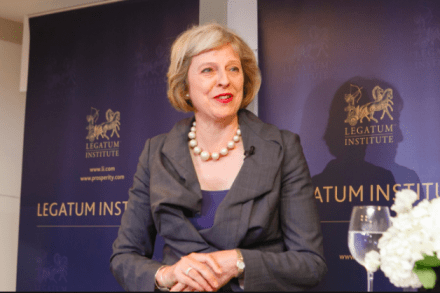
Given that most think tanks and universities are heavily against Brexit, the recent arrival of the Legatum Institute into the arena of trade policy mattered. It was filling a a gap in the market: proper research into potential trade relationships, on the basis that Brexit might not be a disaster. It has also acquired the services of Shanker Singham, an experienced trade lawyer. Both he and Legatum have come under the microscope today with a Mail on Sunday splash suggesting that the Kremlin might be behind it all. Its headline: ‘Putin link to Boris and Gove Brexit “coup”’. Did this relationship go too far, and did Singham end up advising Michael Gove and Boris Johnson on a private (now leaked) memo to the PM?

Sunday shows round-up: Borrowing and Brexit

From our UK edition

Liam Fox: EU trade deal must be settled before Irish border The International Trade Secretary has stated today that no final decision can be reached on the border between Ireland and the UK until a trade deal is settled, defying an EU ultimatum that the border question must be settled within the next ten days. The Irish Taoiseach, Leo Varadkar, has requested that the UK government gives a guarantee in writing that there would be no ‘hard’ border as a result of Brexit. Speaking to Sky's Niall Paterson, Liam Fox asserted that the UK would be leaving the single market and customs union, but argued that this did not necessarily mean the appearance of a hard border between Northern Ireland and the Republic: https://twitter.

Cull the lawyers – there are too many for democracy to work

From our UK edition

Last week the Daily Telegraph’s front page showed the 15 Tory MPs who had voted against the government under the headline ‘The Brexit Mutineers’. One of the first things pointed out was that two thirds of the group were lawyers. (In fact, only nine of the 15 are barristers or solicitors; a tenth is the son of a High Court judge, but in the hereditary meritocracy in which we live, that counts as the same thing.) This seemed to be taken as a point in their favour — who wouldn’t want our politicians to be sensible lawyers? Certainly, it contrasted with the disdain shown for journalist-politicians, like Michael Gove or Boris Johnson. Would we really rather our MPs were lawyers than hacks?

Theresa May’s inner Cabinet is considering a role for the ECJ after Brexit

From our UK edition

‘It’ll be curtains for the process’ if the Brexit talks don’t move on to trade and transition in December, according to one of those familiar with the UK government’s negotiating strategy. In Downing Street, there is a feeling that Theresa May has twice made significant compromises—in the Florence speech and the enhanced financial offer the inner Cabinet agreed on Monday—and if the EU again pockets the concession and says still more is needed, it’ll be hard to see how the UK can stay at the table. Even one of the Cabinet Ministers most keen on a deal with the EU says that ‘we have to get through in December’.

Ireland has punctured Brexiteers’ wishful thinking

From our UK edition

In his column this week, James Forsyth reports there is ‘mounting anger’ inside the government at the way the Irish government are behaving over Brexit. I am sure there is, though it still surprises me that people are surprised to discover that the Irish government is defending its own interests. Doubtless this is why you will sometimes find exuberant Brexiteers suggesting that the answer to the Irish problem is for the Irish to leave the EU too. That might work in theory; it doesn’t do so in practice. I’m afraid things are a little more complicated than that. Now it is, of course, tiresome that Brexit is being complicated by the Hibernians. But none of this was unforeseeable and none of it should be a surprise.

It’s time for more schools to have an ‘unsafe space’

From our UK edition

A school’s decision to create an ‘unsafe space’ – where controversial ideas and works be discussed by pupils – has resulted in the predictable backlash. Simon Langton Grammar School for Boys, in Canterbury, has been accused of providing a platform for people to be xenophobic, sexist and racist. This is not the case. The ‘unsafe space’ is not about lecturing or ramming ideas down peoples’ throats, but actually debating them. Students will be encouraged to respond and argue with what they hear. Surely doing so is better than shutting away unsavoury views? Apart from anything else, taking that approach and burying one's head in the sand does not make ideas you don’t like disappear.

Budget leaves Universal Credit claimants in precarious position over Christmas

From our UK edition

If Philip Hammond’s Budget was designed to stave off any particularly pressing problems, rather than really building the Britain that he suggested he was going to build in his introductory remarks, then it’s not yet clear whether he’s managed that with Universal credit. Yesterday the Chancellor told the Commons that ‘I recognise the genuine concerns on both sides of the House about the operational delivery of this benefit’. He announced a series of changes, including the end of the seven day waiting period at the beginning of a claim before someone is deemed to be entitled to Universal Credit, which will lead to a shortening of the six week initial wait to five.

David Gauke taunts John McDonnell over Russia Today

From our UK edition

Alex Salmond has been in the firing line of late over his decision to host a chat show on Russia Today. The former First Minister of Scotland has come under difficulty as numerous politicians have declined an invitation to appear on the channel. However, Mr S suggests he give John McDonnell a call. David Gauke has had much fun today on Twitter, where the Cabinet minister recalled an incident that occurred on College Green on Wednesday: 'Yesterday, on College Green, RT reporter and camera crew came up to me asking questions. ME: I don't do interviews with RT. INTERVIEWER: Why not? ME: You're a propaganda station. Reputable politicians don't do interviews with RT. INTERVIEWER: We've just had John McDonnell on.' Helpfully RT have shared the video of the incident online: https://twitter.

Five things we learnt from the IFS Budget briefing

From our UK edition

It's the day after Philip Hammond's Budget and so far the Chancellor has managed to avoid disaster. Broadly speaking, his Budget has been well-received. The Prime Minister this morning went so far as to say the Chancellor 'did a very good job'. Meanwhile, another of Hammond's old foes softened its stance, with the Daily Mail celebrating Hammond's newfound optimism and the end of the Eeyore chancellor. However, this afternoon's Budget briefing from the Institute of Fiscal Studies offered some grim analysis. Paul Johnson and his number-crunching team ran through the figures in the Autumn Budget in detail.

Stop Appeasing Stupidity

From our UK edition

I've always thought of the Daily Mail as catering to a sort of Roundhead English tradition, the inheritors of low Protestantism, the solid middle class, high in conscientiousness and below average in openness. That's not my tradition, personally; I identify with the Cavalier inheritance, more Catholic, more reactionary-but-in-a-jokey-way (or is it?), represented by the Daily Telegraph, a long line of heroes from Prince Rupert to Michael Wharton. So it's not my paper of choice, but it's good at what it does and people I know and care for read it – almost all of them women, unsurprisingly, considering it has the highest female readership of any newspaper.

Listen: John McDonnell fails the numbers test

From our UK edition

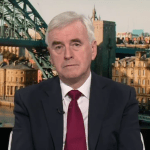
It’s something of a terrifying thought, but if Labour defeat the Tories at the next election, John McDonnell will be the new occupant of No.11 Downing Street. One of his main roles as chancellor will be to have a grasp of the numbers that matter. But it seems that may be too much to ask from McDonnell. On the Today programme, he was quizzed on the amount it costs Britain to service its debt. Given that Labour wants to up borrowing, this seems like a particularly important thing for the shadow chancellor to know. Unfortunately, it would seem he doesn't have a clue. McDonnell initially tried to bat the question away by saying that being asked that was a 'trite form of journalism'. 'That's why we have iPads and that's why we have advisers etc', he added.

The driverless car revolution will open up all sorts of dilemmas

From our UK edition

Philip Hammond wants fully autonomous driverless cars on our roads by 2021. That’s not too far away, is it? I know it sounds like a science fiction year, but it’s only about fifty months off. Technologically, it’s plausible. Earlier this year I travelled over 100 miles in a driverless truck across Florida with the BBC. True, it was on long straight highways and not through Slough town centre in the rain, but still. Millions are being spent on this technology, and in the race between Google, Uber, Tesla and the rest, there will be rapid progress. And there is no doubt that driverless cars will be safer than these killing machines being operated by texting, confused and tired humans. Thousands are killed every year by human drivers.

Philip Hammond’s Budget: the newspaper verdict

From our UK edition

Only a month ago, in its damning editorial the Daily Mail said Philip Hammond was a ‘dismal, defeatist, relentlessly negative’ Eeyore. Today, they ‘rescind’ the Chancellor’s nickname, and the paper isn’t the only one to praise Hammond’s Budget: The Sun says that Hammond delivered his first Budget for its readers. While the paper admits that it has ‘not been kind to his previous efforts’, the Chancellor’s announcement yesterday ‘will put more cash’ in peoples’ pockets. His freezes on fuel and alcohol duty go down well with the Sun; and so, too, do the ‘decent hikes’ to the minimum wage and tax-free allowance.

Are the Tories giving up on balancing the books?

From our UK edition

Today's budget forecasts a £20bn reduction in the tax receipts by 2021-22. That's the cost of the productivity downgrade: The Treasury got a £9bn windfall this year from a lower borrowing forecast. That's the same as the £9bn peak fiscal loosening in 2019-20: The £14bn higher borrowing by the end of the period is roughly the same as £13bn higher borrowing in 2019-20. But in 2019-20, most of that is £9bn of giveaways (which fall away in the final two years). By the end, the fiscal deterioration is, basically, lower tax receipts as a result of slower growth: So we have fiscal loosening and higher borrowing. Still, the deficit is still forecast to be low as a percentage of GDP – below two per cent and falling towards one per cent.

Funeral Phil has a sense of comedy that goes unnoticed

From our UK edition

Odd-looking chap, the chancellor. Give him a moustache and a top hat and he could be Neville Chamberlain. Or a funeral director. With his stooping frame and his watchful hook-nosed features he has the air of a vulture about to feast on carrion. But he struck a kindlier note at the Budget as he set out his vision of a thrusting, modern economy. ‘Every one of our citizens,’ he trilled, ‘can contribute to – and share in – the benefits of prosperity.’ The UK, he said, ‘is a beacon of creativity, a civilised and tolerant place that cares for the vulnerable and nurtures the talented.’ Was he practising a voice-over for a housing development in paradise?

Philip Hammond is not the man to take the battle to Jeremy Corbyn

From our UK edition

Philip Hammond began his first Budget, in March, by playing down its importance — for his big ideas on fiscal policy, he suggested we would have to wait until the autumn. It was a wait which was very nearly extended to eternity as he narrowly avoided losing his job in a post--election reshuffle. We found out this week that it was a bluff: he doesn’t have many big ideas, just a selection of small ones. Which, under the circumstances, is something of a relief. The Chancellor is getting better at telling Britain’s story, boasting about record employment and how the best-paid 1 per cent pay 27 per cent of all income tax. He didn’t say why (that tax rates for the best-paid were reduced), nor did he double down on more tax cuts that could have stimulated growth.

Stamp duty was already a mess – but we just made it worse

From our UK edition

We could have given them free Spotify subscriptions. Or Just Eat vouchers. Instead, the government’s pitch to Jezza-loving twenty-somethings was a cut in stamp duty for first-time buyers. The levy on buying a home will be abolished completely up to £300,000, and, for the trainee bankers and tech moguls buying in the better parts of London, the first three hundred grand when you are spending half a million will be let off the tax. On the surface, that might seem like a good wheeze. If young people are angry that they can’t get a first foot on the housing ladder, then it will now be a little easier for them. It comes with a cost, however. It takes a housing policy that was already a mess, and achieves the almost unimaginable feat of making it even worse. Take stamp duty.

Corbyn’s anger gets the better of him in his Budget response

From our UK edition

If we accept the usual caveat that it’s difficult for any Opposition leader, no matter how good, to respond well to a Budget straight after it has been delivered only in its broad-brush form, then we might conclude that Jeremy Corbyn’s response today was pretty good, all things considered. The Labour leader was angry and passionate, drawing a strong contrast with the endless wisecracks from Philip Hammond in his own statement. He decided to focus on how people would still be feeling after this Budget, which is a useful device when you simply have not had time to go through the small print that trips a chancellor up.