Uk politics

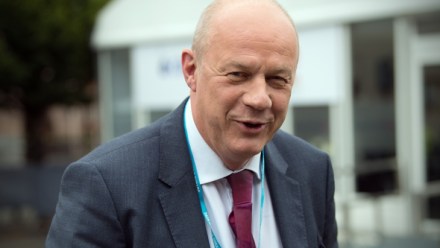
Damian Green’s private life is not a police matter

From our UK edition

So, a former Met detective, Neil Lewis, professes himself 'shocked' – yes 'shocked' – by the amount of pornography allegedly found on the computer of the Deputy Prime Minister, Damian Green, in 2008. He had analysed the way the computer in question had been used and declared he had 'no doubt whatever' that it was Mr Green, then opposition Home Affairs spokesman, who had used it. 'The computer was in Mr Green’s office...logged in, his account, his name', said Mr Lewis (at the time working as a computer forensics examiner for counter terrorism operations). 'It was ridiculous to suggest anybody else could have done it,' he added.

Jeremy Corbyn: I’m a centrist dad

From our UK edition

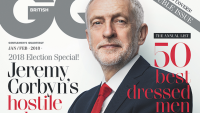
Jeremy Corbyn caused a social media flurry on Thursday after it was revealed that he is the cover star of the new issue of GQ magazine. Sticking to his socialist values, the Labour leader managed not to fall in the trap of other comrades (like Owen Jones) who put on designer gear for the glossy magazine shoot – opting to wear an M&S suit. So, what did Corbyn have to say? Well, the Labour leader discusses Corbynista slang – and specifically the term 'centrist dad' which is used to describe someone stuffy and out of touch – often a Blairite. However, Corbyn claims that he is a 'centrist dad' just one that has been 'radicalised'. It turns out that 'radicalised' centrist dads don't bother with the Today programme, opting instead for Classic FM in the mornings.

What the papers say: Should Trump’s state visit go ahead?

From our UK edition

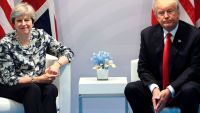
Donald Trump’s January visit to Britain now looks to be in doubt following the furore over his tweets. Diplomats in the United States are said to have put the plans on ice, according to the Daily Telegraph. Good, says the Guardian in its editorial this morning: it’s time to ditch the state visit. Tump’s decision to retweet anti-Muslim videos shows ‘again that he panders to bigots and is no friend of this country’, the paper argues. Brexit already makes this a ‘dangerous’ moment for Britain, says the paper, which goes on to suggest that further allying ourselves to a ‘thuggish narcissist’ will hardly help matters.

Tulip Siddiq’s shameful silence on Bangladesh’s missing people

From our UK edition

‘Just heartbreaking', wrote the Labour MP Tulip Siddiq this week as she shared a picture of the daughter of Nazanin Zaghari-Ratcliffe, the British-Iranian mum who is currently imprisoned in Iran on trumped-up charges of espionage. Tulip has, quite rightly, dedicated much time to trying to free Zaghari-Ratcliffe. It's a pity though that she doesn't go to the same lengths to lobby Bangladesh, another repressive country, over the hundreds of people that have been secretly detained there in recent years.

Immigration figures show that ‘Brexodus’ is still a myth

From our UK edition

Government figures today show a sharp fall in net migration – 230,000 over the year to June, compared with 336,000 in the previous 12 months. If it keeps falling at that rate for another 18 months, Theresa May will have fulfilled David Cameron’s rash promise to reduce net migration to tens of thousands – if that, indeed, is an achievement worth trumpeting. For many it isn’t. The fall has reignited claims that the NHS, business and other employers are suffering a Brexit-induced drought of qualified staff, as EU workers desert ‘xenophobic’ Britain and are not replaced.

British Europhiles should welcome Brexit. Here’s why

From our UK edition

In the historic heart of Luxembourg, around the corner from the Grand Ducal Palace, there is a site which demonstrates why Britons will never be good Europeans. The Maison de l’Union Européenne houses the information centre for the various European institutions here in Luxembourg, and even British Remainers will find its attitudes entirely different from their own. The vision it presents is pan European, an entire continent without borders. These are the ‘citizens of nowhere’ that Mrs May warned us about. Since the referendum, British attitudes towards the EU have polarised.

What the papers say: The cracks could soon show in the EU’s Brexit stance

From our UK edition

‘At last’, says the FT, Britain has ‘accepted it must pay its dues to Europe’. ‘It has been a tortuous journey’ to get to this stage and ‘months have been wasted’ along the way. Yet while progress has been made at last, the government has still failed ‘to explain to the public the…cost of leaving’. It’s also the case that while the Brexit divorce offer is now more acceptable to the EU, the bill is ‘only one of three areas in which agreement is needed to unlock talks on the future relationship’. Avoiding a hard border between Ireland and Northern Ireland remains the trickiest of these problems to find a solution to, and it remains an issue without a ‘simple resolution’.

Tim Farron is wrong about liberalism

From our UK edition

Tim Farron is not the ideal person to explain Christianity’s relationship to liberalism. When he resigned as leader of his party, after a poor election result, he complained about the culture’s anti-Christian bias. It’s a complicated enough issue, without sour grapes being added to the brew. He now says that British liberalism has become empty because it has departed from its Christian roots. Despite outward conformity to liberal principles, there is now ‘no unifying set of British values.’ Look under the surface and people are selfish, tribal and intolerant of difference. True liberalism is rare, and, he implies, it is part of a deeper commitment than secular people are capable of.

This EU ‘divorce bill’ is more like a ransom | 29 November 2017

From our UK edition

A ‘bill’ is not commonly subject to negotiation. It arrives after a customer has contracted for the purchase of goods or services, whose price — with the unique exception of American health care bills, which are more like muggings by gangs on mopeds — has been established in advance. For the average upstanding Briton, a bill is not a starting point, subject to haggling. It is something you pay. The Lisbon Treaty’s Article 50 makes no mention of paying financial liabilities in order to leave the EU. Once the post-­referendum conversation turned immediately to the ‘divorce bill’, the May government’s big mistake from the off was bickering about its size. A better opening strategy would run not ‘How much?

Watch: Scottish Conservatives vs SNP

From our UK edition

It's Opposition day and the SNP's motion calling for improved transitional measures for the 'waspi' women has been the cause of much commotion in the Chamber this afternoon. Although both sides intended to make important points on a pressing issue, it soon descended into a shouting match between the SNP's Mhairi Black and the new Scottish Conservative MPs: https://twitter.com/estwebber/status/935920519882461185 Just as well it was Rosie Winterton not John Bercow in the Speaker's chair...

Jeremy Corbyn could learn a lot from Emily Thornberry’s PMQs performance

From our UK edition

Today was a reminder of the lost art of how to construct a series of questions at PMQs. Emily Thornberry started off by asking Damian Green if he was prepared to be held to the same standard as he held government ministers when he was in opposition. Sensing a bear trap, a clearly wary Green rose to answer—and you could see he was dreading the prospect of five questions on the Cabinet Office’s investigation into his personal conduct. But Thornberry’s follow-up was cleverer than that. She instead asked him a question about retention rates among nurses that he had asked John Prescott 17 years ago. Predictably, Green had no answer. Score one to Thornberry: or at least the person prepping her for PMQs, a certain Damian McBride.

How did Damian Green ever reach the Cabinet?

From our UK edition

The PM is in the middle-east on her ‘strong and stable leadership’ tour. Replacing her at PMQs stood Damian Green, a hesitant, avuncular figure who seems ill-suited to front-line politics. He’s uncomfortably tall, and he dips his chin as he speaks to make his troubled, slender jowls less conspicuous. His hair has quit the fray and left a dignified grassless dome as its memorial. His demeanour is all antiquarian gentleness. He might be the head of parchments at a museum of medical history. How he reached the cabinet is a mystery. His opponent, Emily Thornberry, is a resourceful court-room performer who started the session by getting the jury (that is, us,) on her side with a few self-deprecating jokes.

The Brexit divorce bill is ghastly but we can still make it work to our advantage

From our UK edition

There is much outrage, among both Leave and Remain voters, at the size of the ‘divorce bill’ ministers have reportedly agreed to pay the EU. Figures of €60-65bn (£53-58bn) – more than one and a half times’ the UK’s annual defence budget – are being presented as fact. I share much of this outrage. The sheer range of numbers floated – not least the notorious €100bn figure reportedly demanded by Brussels – show that the cash-strapped EU is simply chancing its arm. The amount the UK will pay clearly has little to do with our provable liabilities. It is all about how much Brussels thinks it can extract. The strict legal position is that the UK owes zilch.

Here’s what we should get from Brussels for our £40 billion

From our UK edition

A high speed rail line from Manchester to Glasgow. Three of the shiny new Elizabeth lines crossing London. Thirty or forty hospitals, almost sixty Manchester City squads, and perhaps a dozen Bitcoins (although it might be only eleven by the time you are reading this). There is still a lot you can get for 40 to 50 billion euros. In the Brexit negotiations, the UK now seems to have increased its offer to the European Union to that range. If that is indeed the final settlement, we can expect to hear lots about all the other things we could have done with the money. Remainers will gloat over the cost, and furiously tweet pictures of that red bus, while Leavers will fume about how the cliff edge would have been better. And yet, there is a more important question.

Watch: Damian Green makes a lemon of himself at PMQs

From our UK edition

Theresa May left it to Damian Green to fill in for her at PMQs today and it’s fair to say that things didn’t go entirely smoothly. The deputy PM remains the subject of a Cabinet Office investigation into his behaviour and there was silence in the Commons when he was asked by Labour MP John Mann to apologise to victims of sexual harassment on behalf of the government. Green stopped short of issuing an apology but it wasn’t only what Green didn’t say that makes his stand-in performance memorable. Speaking about the plight of the people of Yemen, the deputy PM appeared to refer to the country as ‘lemon’.

David Trimble: the Taoiseach should stop trying to out-Sinn Fein Sinn Fein

From our UK edition

When I negotiated the Good Friday Agreement nearly 20 years ago, no one foresaw a day when the United Kingdom would be leaving the European Union. It was impossible to imagine how the issue of the border between Northern Ireland and the Irish Republic, from which the barriers were removed as part of the agreement, would again become an issue of such political importance. We have the Taoiseach, Leo Varadkar, threatening to veto the Brexit negotiations unless Theresa May gives a formal written guarantee that there will be no hard border, and we keep hearing the argument that a departure of the UK from the single market and the customs union would put at risk the peace process and Good Friday Agreement. In other words, if the border gates go back up again we will be back into the Troubles.

Labour’s Brexit strategy remains as confused as ever

From our UK edition

All eyes this morning are on Britain’s Brexit divorce bill, but meanwhile Labour’s Brexit strategy remains as confused as ever. Diane Abbott is the latest figure from the party’s frontbench to hint at the possibility of a second referendum, despite this being ruled out by Jeremy Corbyn in the run-up to June’s snap election. In a letter to two constituents this month, the shadow home secretary wrote: ‘I will argue for the right of the electorate to vote on any deal that is finally agreed.’ Abbott is now suggesting those remarks were ‘poorly worded’. This seems hard to believe; indeed, that sentence couldn’t have been much clearer: voters should get another say.

Andrew Bridgen’s bad day at the office

From our UK edition

Oh dear. You can tell a meeting has gone badly if you leave £15,000 poorer then you were when you went in. So, spare a thought for Andrew Bridgen at yesterday's meeting of the Regulatory Reform Select Committee on Tuesday. Bridgen is chair of the committee – with select committee chairs earning an extra income of £15,025 – and thought he would continue to be chair for the foreseeable. Only his fellow MPs had other ideas. The MP for North West Leicestershire walked in to find there would be a vote for the chairmanship. Rather than re-elect him, the committee voted to elect his fellow Tory Stephen McPartland. Observers say Bridgen was none too pleased and now two theories as to what happened are doing the rounds.