Trieste

Riddled with contradictions: the enigma of Jan Morris

Jan Morris was driven by almost super-human levels of energy and ambition, producing more than 40 books as well as news and travel articles, introductions, interviews, reviews and essays, travelling incessantly and taking on every job that was offered. That’s as far as I can go without a pronoun, because of course Morris’s life is divided into two parts. For the first half he was James, for the second she was Jan. James Morris was born in 1926, aware from early on that she was female, trapped in a male body. The transition to Jan, made in the early 1970s, remains at the heart of our fascination with Morris. Sara
A philosophical quest: A Fictional Inquiry, by Daniele del Giudice, reviewed

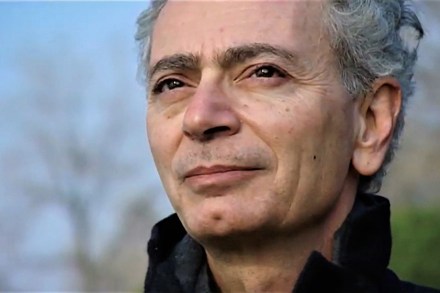
A researcher arrives in Trieste to piece together the life of a well-known literary figure. In cafés, bookshops and hospitals he visits the friends and lovers who were part of the writer’s circle. Now dying themselves, they share echoes of a literary scene that has long since dispersed. Women recall how they were celebrated in poetry; men how their conversation sparkled. Someone remembers how the writer once asked if he might immortalise one of his witticisms in his work: ‘Forty years ago I made a joke in a bar, and he said “Oh that’s good! Will you give it to me? I want to put it in my novel.’” But

Faith – and why mountains move us

Sylvain Tesson’s White unfolds the story of a gruelling ski journey across the Alps during which the author aims to fulfil ‘a long-held dream of transforming travel into prayer’. Born in Paris in 1973, Tesson is a well-known adventure writer whose previous books include The Consolations of the Forest: Alone in a Cabin on the Siberian Taiga, which won awards on both sides of the Channel and was made into a film. As a public figure associated with the far right, Tesson remains divisive in his homeland. His political views do not seem to have dented book sales or literary coverage: one wonders if the same would be true if

The enlightened rule of the Empress Maria Theresa

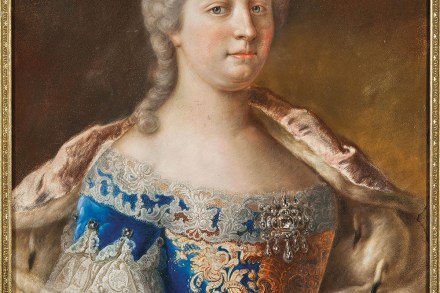
The role of personality and charm in running a state is one theme of Richard Bassett’s superb book, the first English biography of the Empress Maria Theresa since Edward Crankshaw’s in 1969. The different parts of the Habsburg monarchy – Austria, Tyrol, Bohemia, Hungary, Croatia and Milan – had little in common except dynasty, geography and Catholicism. Yet, partly owing to Maria Theresa’s force of character, this complex tapestry of nationalities remained a great power After she came to the throne in 1740, she felt ‘forsaken by the whole world’. Encouraged by France, Austria’s neighbours Prussia, Saxony and Bavaria invaded the monarchy in order to divide it between them. By