Tories

Nick Clegg got coalition wrong. Tomorrow, he’ll pay the price

It’s hard not to feel a bit sorry for Nick Clegg. He’s a decent man who took a tough decision to put his party into coalition with the Conservatives, and lost half of his support as a result. Tomorrow, his party will be hammered. His great miscalculation was imagining that in England the Lib Dems would emerge with a list of achievements voters would applaud – as they did in the 2003 Holyrood elections when, after four years of coalition, the Lib Dems overtook the Scottish Conservatives to become the third-largest party. On the radio the other day Clegg vainly paraded his boast list, his own version of Kelly Clarkson’s Because of You. 'It’s because of us that 27 million people have received huge tax cuts.
Sell your Tory glory story: The Sun offers cash for Conservative testimonials

Mr S reported over the weekend that Rupert Murdoch has jetted in to Britain ahead of the election. Now in the UK, the media mogul, and arch rival of Ed Miliband, is expected to be running a tight ship across all News UK titles as polling day approaches. So Mr S couldn't help but wonder which bright spark thought it was a good idea to place an advert from the Sun with a press agency offering money in return for a 'good-news story' about the Conservatives: https://twitter.com/montie/status/595597162030956545 The advert, which conveniently expired at 4.00pm today, offered Tory voters £100 for such stories but also required them to be available to be photographed within the next two hours.

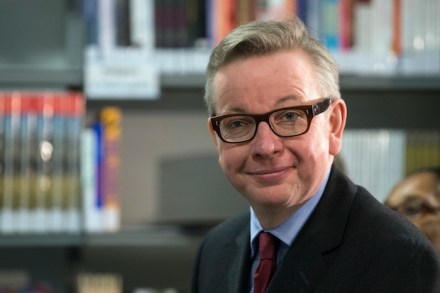
Michael Gove: Tories could still work with the Lib Dems

The Tories were less than pleased last week when Danny Alexander revealed confidential communications between the coalition partners regarding child benefit to a paper, as part of an election campaign ambush. The disclosure brought back up old tensions in the coalition, with Michael Gove claiming that it simply served as a reminder of the party's true colours. 'I don’t think it took the leak from Danny Alexander to make us aware of what the Liberal Democrats are really like,' he told Mr S. Still, with no majority in sight for the Tories ahead of polling day, the party are in a forgiving mood with regards to working with the party in the future .

The right choice

When election day dawns, it’s worth bearing in mind that two million more people will be going to work than when David Cameron came to power. On an average day in Britain, there are 1,500 fewer reported crimes than there were before Theresa May was made Home Secretary. Some 2.2 million pupils now attend independent schools within the state system — schools given freedom through Michael Gove’s reforms. There is nothing theoretical about the advantages of Conservatism: they can be seen in classrooms, workplaces and streets all over Britain. But all this progress could be brought to a halt within the next week. If Ed Miliband is elected, it will not be the richest who suffer most. They may pay more in tax — but, on the whole, they can afford to.

A (partial) defence of the spin room

Tonight’s ‘Question Time’-style TV debates will be followed by what has become probably the most hated aspect of this rather uninspiring general election campaign: the spin room. This spectacle of journalists interviewing journalists as they listen to frontbenchers from all the parties parroting lines about how their leader was the best (or, in the Tory case, how well Nicola Sturgeon has been doing) is odd enough inside the room, let alone for those watching at home. The way the politicians spinning talk is even less natural than usual: it’s like a Westminster version of Made In Chelsea, stuffed with people acting at being actors.

Cameron needs to keep the momentum going in tonight’s Question Time

Tonight’s Question Time is, probably, the most important TV event of the campaign. The fact that it is on BBC1 in prime time means that it is likely to attract a bigger audience than the previous debates. That it is on the BBC also means that any newsworthy moments will be pumped out across the BBC’s entire network from local radio to the world wide web. But what really makes tonight so important is how many undecided voters there still are. Today’s Mail poll has 40% of those going to vote saying that they are either undecided or might yet change their mind. The parties seem to agree that around 1 in 5 voters are genuinely undecided. Which way these voters end up going will determine the result of this election. So, the question is: who can appeal to them tonight?

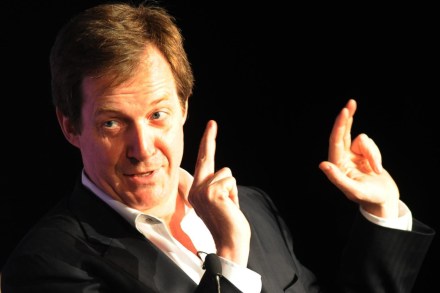
Alastair Campbell finds old habits die hard

Post Blair’s government, Alastair Campbell has billed himself as a pious, ethical commentator on the state of the media and politics. If there’s one thing he can’t stand, it’s the negative campaigning from the Tories, and especially from his old foe Lynton Crosby: ‘Meanwhile lest anyone dare to say the Tories are only fighting a negative campaign against Labour, perish the thought... I have seen some dire campaigns in my time. Crosby’s Michael Howard 2005 vintage springs to mind. But this one is taking all the awards for the direst. They are not so much making it up as they go along as going along not sure what they just made up. It is squalid and pathetic. It is not even worth calling it a campaign.

Rural people have been let down by both Labour and the Conservatives

In 1997, Labour could assert with a straight face that it was ‘the party of the countryside’, because it genuinely competed with the Tories for rural votes. Today, an electoral map of England is a sea of blue rural constituencies dotted with clusters of urban red. Looking forward to May, the latest polls have the two main parties neck and neck, with the Tories on 34 per cent and Labour one point behind. This reflects an unhealthy urban-rural political divide that has rarely been more extreme. Labour is as unlikely to make in-roads into rural Conservative heartlands as the Tories are to win large numbers of seats in northern urban seats, making a clear victory for either party almost impossible.

The polls could decide the fate of the Lib Dems

A Lib Dem West Country MP told me at the start of the year that he thought his party would keep his seat if the Tories were broadly ahead in the national polls on polling day but lose it if they were level or behind. His thinking was that if it looked like Cameron was going to continue as Prime Minister his constituents would both feel it was safe to vote for a local champion and would want some protection against the Tories cutting public services too far. But if the Tories were behind, he feared that these swing voters would feel that they had to vote Tory to try and stop Labour. This is what makes the current polls particularly concerning for the Lib Dems. If they don’t move, then they could face a bigger squeeze than expected in their Tory facing seats.

The coming battle for legitimacy

Jonathan Freedland has written a compelling column on the challenge that Ed Miliband will face to establish his legitimacy if he becomes Prime Minister despite Labour not having won the most seats or votes. But I suspect that whoever becomes the government after May the 8th will have difficulty in persuading everyone that they have a right to govern. The Tory-Liberal Democrat coalition could claim that 59 per cent of voters had backed its constituent parts. It also had a comfortable majority in the House of Commons with 364 out of 650 seats. Now, unless something dramatic happens, no governing combination is likely to have anything like that kind of support this time round.

Tories are left playing by Aussie rules

Tory campaign boss Lynton Crosby invited the former Australian Prime Minister John Howard into Conservative Party HQ on Thursday afternoon to give staff and ministers a mid-campaign pep talk. Firing up his audience with tales of beating Labour down under, Mr S hears the bit where Crosby's one-time client lost both the 2007 election and his own seat, did not make it into the speech. After the Conservatives manifesto cover was lifted from the Aussie Liberal Party - another Crosby client - MPs are wondering what else will be 'borrowed' by the antipodean guru. 'He'll have us in cork hats by polling day,' sighs one member of the old guard.

Matthew Hanc**k’s election leaflets send out the wrong message

Earlier this year Mr S revealed how plans for a set of campaign posters for the Conservative candidate Flick Drummond had to be revised after the Tories realised that from a distance the poster could be misread as another word starting with F. Now Matthew Hancock has fallen victim to an unforeseeable error in his own campaign literature. A Lib Dem supporter has noticed an unfortunate fault that occurs on folding the Tory MP's campaign leaflet: Mr S hopes no one gets the wrong idea.

Death by politics

Dead Sheep is a curious dramatic half-breed that examines Geoffrey Howe’s troubled relationship with Margaret Thatcher. Structurally it’s a Mexican bean. It leaps all over the 1980s and it keeps shifting genre from cabaret to tragedy via cheesy political satire. Some actors are impersonators, some are caricaturists, some are neither. James Wilby’s study of Howe avoids his personal mannerisms, the pensive shabbiness, the punctilious, worried eyes, and the soft beguiling purr of his vocal chords. Instead Wilby presents him as a bewildered monk tiptoeing around a lion’s den. Steve Nallon does Mrs Thatcher as a drag-queen which looks pretty odd next to Wilby’s straightforward Howe but Nallon is a master vocalist.

Tories try to use their lead on the economy to bolster their position on the NHS

The Tories believe that their record in government and their lead on economic competence means that they can set out spending commitments without having to set out precisely how they would pay for them. George Osborne’s interview on Marr this morning was a demonstration of this strategy. Challenged repeatedly over where the £8 billion for the NHS that he and Cameron pledged yesterday would come from, Osborne simply pointed out that they have managed to increase the amount of money going into the health service every year over the last five years despite having to make significant spending cuts. However much it infuriates their opponents, I suspect that this Tory tactic is quite effective.

Have the Tories made an ‘electoral pact’ with Ukip?

This week David Cameron invited Ukip voters to 'come home' to the Conservative party. 'Come with us, come back home to us rather than risk all of this good work being undone by Labour,' he pleaded at a campaign event. However for all of Cameron's talk, Labour sources claim that the Tories would be quite happy to form a coalition with Ukip after the election. Now, Jonathan Reynolds, the Labour MP for Stalybridge and Hyde, says that a pact has been made in Tameside, the Greater Manchester borough, between Ukip and the Tories. It's claimed that the parties have agreed not to stand against each other in a number of wards for the local election in order to increase their chances of beating Labour.

The election result that everyone expects – and no one wants

To form a coalition, David Cameron had to give up the Prime Ministerial prerogative to determine when the election was called. But it is hard to imagine that, given the choice, he would have gone to the Palace any earlier than Monday. The Tories have merely drawn level with Labour in recent weeks and there hasn’t been a poll yet which points to him winning a majority. This will be the most polled campaign in British history. On the day it started, depending on your choice of pollster, the Tories were four points ahead of Labour, four points behind or dead level. But one clear theme is emerging from this cacophony of data: a hung parliament is the most likely election result. The polls suggested a hung parliament for most of the 2010 campaign. But they were not taken seriously.

Will there be a late swing to the Tories?

Perhaps, the biggest question of this campaign is whether the Tories will gain support in the next five and a bit weeks. If they don't, Cameron will almost certainly lose and Ed Miliband will become Prime Minister. In his column today, Danny Finkelstein looks at polling data produced by Andrew Cooper of Populus to see what the chances are of a late surge. Cooper looked at those who prefer Cameron to Miliband as Prime Minister and also think that the Tories would manage the economy better than Labour but are currently not saying they’ll vote Tory. In Cooper’s poll of 10,000 voters, conducted in five waves, this group made up 18% of those likely to vote.

Channel 4’s The Coalition reviewed: heroically free of cynicism

In a late schedule change, Channel 4’s Coalition was shifted from Thursday to Saturday to make room for Jeremy Paxman interviewing the party leaders. With most dramas, that would mean I’d have to issue the sternest of spoiler alerts for anybody reading before the programme goes out. In this case, though, you know the story already — because Coalition was a dramatisation of what happened in Westminster in the days after the last general election. Fortunately, one of the programme’s many qualities was its Day of the Jackal ability to keep us gripped even though we were always aware of the outcome — largely by reminding us that the characters weren’t.

Debate deal finally reached

After months of negotiations, a final deal on debates has now been reached. There will be no head to head debate between Cameron and Miliband. Instead, there will be one seven way debate on April 2nd broadcast on ITV. There will also be an opposition leaders’ debate on the 16th of April on the BBC featuring Labour, the SNP, UKIP, the Greens and Plaid Cymru. On top of these debates, David Cameron and Ed Miliband will both do separate interviews, taking questions from a studio audience on Thursday for a Channel 4 / Sky programme. Then, on 3oth of April, Cameron, Miliband and Nick Clegg will appear separately on a special edition of Question Time.

Are the Tories already planning how to push through their next coalition?

Are CCHQ already planning how to push through their next coalition? Mr S only asks as word reaches Steerpike that Conservative backbenchers have been urged to return to London immediately after the General Election in the potential event of a snap vote. The pressure is on for any future coalition to be put to the parliamentary party after this failed to happen in 2010. 'There is a lot of soreness about how the party was bounced last time around into accepting the last deal, and we shall not be bounced this time around,' a 1922 Committee source recently told the BBC.