Tories

The Spectator’s Notes | 3 December 2015

Speaking on the Today programme on Monday, Sir David Attenborough, who wants a global agreement to control carbon emissions, pointed out that ‘Never in the history of humanity have all the people of the world got together to deal with a particular problem and agreed what the solution could be. Never, ever, ever.’ He is right. But he seemed to defy the logic of his own observation. They never have. Probably, since the truth is best arrived at through disagreement, they never should. The key point is that they never will. So it is a waste of time to try. When someone commits suicide, those close to that person naturally reproach themselves. In politics, and similarly contested areas of life, people reproach others too.

Strange young things

[audioplayer src="http://rss.acast.com/viewfrom22/thegreendelusion/media.mp3" title="Douglas Murray and Steph Smith discuss whether all young politicians are oddballs" startat=1130] Listen [/audioplayer]Whenever the curtain is pulled back on youthful political activism, the picture is ugly. Three years ago, in Young, Bright and On the Right, the BBC followed students at Oxbridge fighting like vipers to get ahead in their university Conservative clubs. Along with the inevitable three-piece suits, wildly invented accents and endless talk of what ‘the party’ expected, there was also that characteristic lack of awareness that ‘the party’, like the rest of the world, remained largely indifferent to them.

Robert Halfon earns himself a new nickname

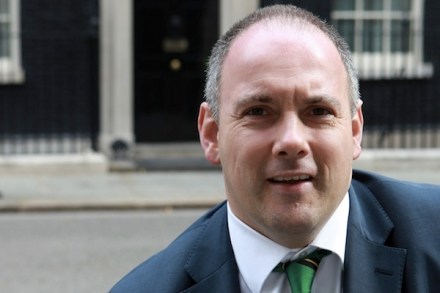
Last week Robert Halfon made headlines after he confessed to an affair with a Tory activist, claiming that Mark Clarke -- the Tatler Tory currently facing allegations of blackmail and bullying (which Clarke denies) -- had planned to film him leaving a hotel with his mistress as part of a blackmail plot. While Halfon has since promised Tory officials that there are no more embarrassing revelations to come out relating to him, Steerpike understands that the Minister without Portfolio has been given a new nickname by colleagues. 'He's now known as "red hot Rob".' Mr S's No.10 mole whispers.

Cameron to make his case for war to the Commons next week

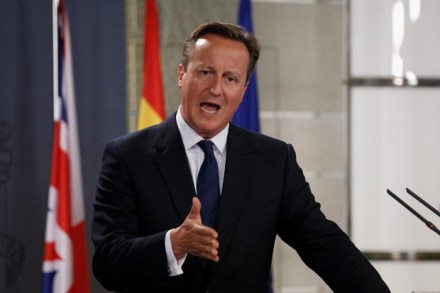
David Cameron will set out his case for air strikes against IS in Syria to the Commons late next week. Cameron is, as I say in my Sun column today, immensely frustrated by the current British position of only bombing Islamic State in Iraq and not Syria. But he knows that it would be politically back breaking for him to lose another Commons vote on a matter of war and peace, so is proceeding cautiously.   But last night’s UN resolution has strengthened Cameron’s hand. Even before that, 30 Labour MPs were certain to back Cameron on this issue and another 30 were highly likely to. With a UN resolution now in place, these numbers are only likely to increase.

Heidi Allen mistaken for a Labour MP by national radio station

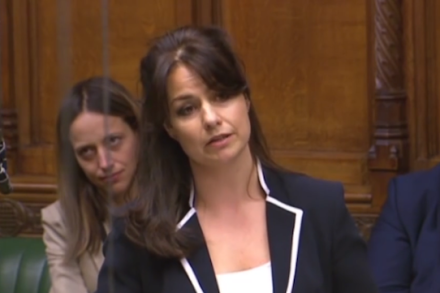
After Heidi Allen gave a barnstorming maiden speech last week criticising her own party over tax credit cuts, the Tory MP has found herself in the firing line within her own party. Mr S's colleague Isabel Hardman writes in today's Times that a number of Tory MPs are even refusing to speak to her over concerns that 'her careless talk could cost them their majorities'. Now to make matters worse, it appears that even journalists are struggling to work out which side Allen is on. Word reaches Steerpike that a producer for a national radio station -- thought to be one of the BBC's radio stations -- contacted the Labour party to ask if they would put Allen forward to speak on tax credits...

Revealed: Zac Goldsmith’s new campaign genius

Given that Ivan Massow failed to be picked as one of the four final candidates in the race to be the Conservative candidate for London mayor despite a flashy campaign, it's safe to say that Massow still has some work to do when it comes to mastering how to succeed in politics. So Mr S was surprised to hear that the business mogul is now assisting Zac Goldsmith with his campaign. Speaking at Josh Spero's Second Hand Stories book launch party at Bonhams, Massow said he was working with the Conservative mayoral candidate when it came to the policy side of things: 'I’m working with Zac. I speak to him a lot but you know it’s hard to get him to return anything. London’s in for a treat! I deal with the people on the policy side.

Tory harmony is threatened by the EU referendum

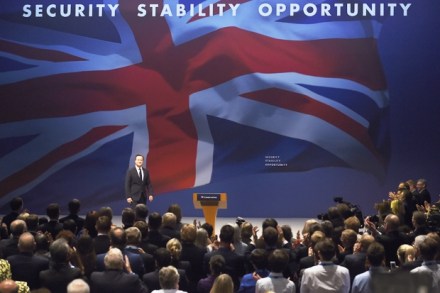
For all the leadership positioning, one of the striking things about Tory conference in Manchester was the level of agreement about what the party’s strategy should be. There was almost no one calling for the party to move right. Instead, the emphasis was on how the party could expand its electoral coalition. Boris Johnson and George Osborne may have very different styles, but the argument of their speeches was essentially the same: the Tories have to show that they are the party for low paid workers. This determination to look for new converts, which was the defining feature of David Cameron’s speech too, is a product of the election campaign.

This is the Tories’ golden chance to seize the centre ground

Political party conferences have, in recent years, felt like an empty ritual. They used to be convened in seaside towns, so grassroots activists could find affordable accommodation. Now they are usually held in cities, so lobbyists can find better restaurants. Activists have been supplanted by members of the political class who are charged £500 a ticket. In the fringe debates, speakers face a volley of questions from people paid to ask them — on pensions, subsidies for green energy and the like. Politicians spend all day talking to journalists, and real politics vanishes. This year, however, politics has returned.

BoJo gets his mojo back

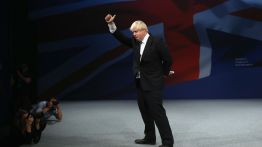
The Tories had a good few days in Manchester. But one Tory had a particularly good week, Boris Johnson. A week ago, Boris looked becalmed. As we said in the Spectator, he was struggling to make the transition from being Mayor of London to being both the Mayor and an MP. But this week, he has delivered the best speech of his political life, shown new Tory MPs his talents, and renewed his relationship with Tory activists. It was telling that when Cameron paid tribute to Boris during the leader’s speech, the hall gave him a standing ovation. Now, the tricky thing for Boris will be coming up with a follow up to this and he still has several months where he has to be in two places at once, City Hall and the Commons. But he finds himself in a far better position than he did a week ago.

The Tories are still anxious to reach out. And that’s a very good sign

Post-election party conferences usually follow a standard pattern. The winning party slaps itself on the back while the losers fret about how to put together an election-winning coalition. But this year, there’s been no talk of compromise or coalition from Labour. They seem happy to be a protest party, unbothered that voters disagree with them on the economy, welfare and immigration. And the Tories, instead of relaxing or moving to the right, have obsessed anxiously about how to broaden their appeal, to make their majority permanent. This determination to look for new converts is a product of the election campaign. Weeks of looking at polls that indicated they were on course for defeat served as a near- death experience for the Tories.

Spittle is the only thing Labour has left

I have started salivating excessively at night. I wake each morning in a pillowed swamp of my own effluvium, a noisome pond which is — I suspect — redolent of rapidly approaching death. I have done the hypochondriac thing and googled the possible causes and there’s a whole bunch of stuff — pancreatitis, close exposure to ionising radiation, rabies, pregnancy, serotonin disease and liver failure, to name but a few. My suspicion is it’s either rabies or pregnancy because I exhibit other symptoms common to both conditions, according to the internet. I cannot abide drinking water, for example, which suggests that I might be hydrophobic, a key indicator of rabies.

Cameron repositions the Tories as the party of ‘true equality’

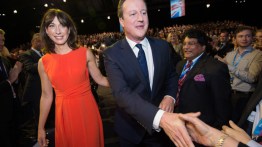
This speech was authentic Cameron. It was the most modernising speech that he has given since becoming Prime Minister and an attempt to reposition the Tories as the party of ‘true equality’. It was a return to the approach that characterised his leadership before the financial crash of 2008. Traditional Tory thinking has always been that if you work hard you get on, that you can pull yourselves up by your bootstraps. But this speech argued that for some people in society this simply isn’t true, that they find their opportunities blocked at every turn. Cameron cited the example of a black girl who had to change her name to Elizabeth before she got any job interviews.

My mission: buy lunch for a protestor outside Conservative party conference

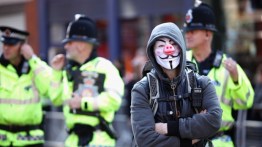
The mood at the Conservative party conference this week was a little subdued, and no wonder. As those who watched the television coverage will know, everyone entering the secure zone had to run a gauntlet of potty-mouthed protestors, their faces twisted into masks of hate. It’s not easy to celebrate after you’ve just been showered with spit and called a ‘Tory murderer’. Jeremy Corbyn made a point in his conference speech last week of asking his supporters to treat their opponents with respect and not descend to personal abuse, but I’m not sure how many of them got the message.

Chris Bryant: government ‘fibbing’ about Channel 4 privatisation

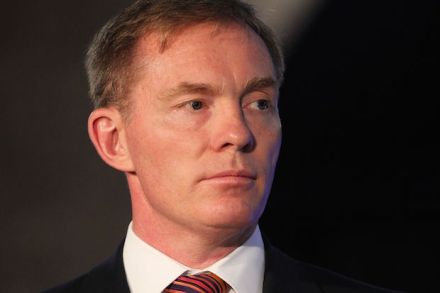
Although Michael Dugher is now Labour's shadow culture secretary, his predecessor Chris Bryant is still keeping a close eye on the issues. He took part in a panel discussion on the future of the BBC as part of the Labour fringe. During the talk Bryant was asked about reports last week that Channel 4 is to be privatised. The news broke after a government official was photographed entering 10 Downing Street with a document about privatisation proposals. Bryant says the document is proof that the government have 'been fibbing throughout the summer' about Channel 4.

Do English Tories care more about the EU than the UK?

This morning Ruth Davidson, leader of the Scottish Conservative and Unionist party, outlined the extent to which she agrees with Nicola Sturgeon, leader of the Scottish National Party. Both wish Scotland, and indeed the United Kingdom, to remain a member of the European Union. It is true, as Ms Davidson noted, that the SNP oppose even holding a referendum on the terms of British membership but it is also the case that, at least notionally, each wish, or are on record as desiring, a broadly comparable set of EU-wide reforms. Now, as Mark Wallace rightly observes, Davidson's case for continued EU membership is a purely practical one. The emotional and historical arguments for maintaining the integrity of the British union do not apply to continuing membership of the EU.

The right answer

David Cameron might not be remembered as the best prime minister in modern British history but he will probably be remembered as the luckiest. Jeremy Corbyn’s election as leader of the Labour party is proving worse — or, for the Tories, better — than anyone could have imagined. His wrecking ball is busy destroying everything that was built by Labour’s modernisers. He does not lack authenticity, belief and passion — but his beliefs are ones which would be more at home in a 1920s plenary meeting of the Moscow Soviet than in contemporary British living rooms. The Chancellor sees Corbyn’s leadership as a chance to further blacken Labour’s name.

Why I left

[audioplayer src="http://rss.acast.com/viewfrom22/thedeathoftheleft/media.mp3" title="Nick Cohen and Fraser Nelson discuss the death of the left" startat=32] Listen [/audioplayer]‘Tory, Tory, Tory. You’re a Tory.’ The level of hatred directed by the Corbyn left at Labour people who have fought Tories all their lives is as menacing as it is ridiculous. If you are a woman, you face misogyny. Kate Godfrey, the centrist Labour candidate in Stafford, told the Times she had received death threats and pornographic hate mail after challenging her local left. If you are a man, you are condemned in language not heard since the fall of Marxist Leninism.

PMQs: Corbyn’s defensive performance gets him through unscathed

After the 72 hours that he has had, I suspect that Jeremy Corbyn is quite relieved to have got through his exchanges with David Cameron unscathed. The evening news tonight will be far better for Corbyn than it was yesterday. Corbyn, who was making his debut at the dispatch box, began by announcing that he wanted to change the style of PMQs and that he had got members of the public to email in questions. He proceeded to ask Cameron half a dozen of them. Cameron, who could hardly attack the question in these circumstances, answered respectfully and with only the odd jab at Corbyn which will have been a relief to many on the Labour benches.

Spectator’s Notes | 3 September 2015

Was there ever a more unilluminating political idea — for voters rather than practitioners — than triangulation? For those readers so pure and high-minded that they have not followed politics for 20 years, I should explain that triangulation came from Bill Clinton, was imported by Tony Blair, and is now practised by David Cameron. Clinton’s adviser, Dick Morris, put it thus: ‘The President needed to take a position that not only blended the best of each party’s views but also transcended them to constitute a third force in the debate.’ The Tories’ adoption of the Living Wage is the latest example.

What a Corbyn victory will mean for the Tories

A Jeremy Corbyn victory in the Labour leadership race now seems like a racing certainty. The consequences of this for Labour have been much discussed but in the magazine this week, I look at what it would mean for the Tories. The first, and most obvious, thing to say is that it would make 2020 the Tories’ election to lose — and they would have to make an epoch defining mistake to do so. But some Tories are worried about the prospect of a Corbyn victory. This isn’t just because they fear that bad opposition leads to bad government. But because they fret that Cameron and Osborne’s response to it will be to tack hard to the centre to try and pick up those voters disillusioned by Labour’s lurch to the left.