Time

Reflections on the Winter Solstice

From our US edition

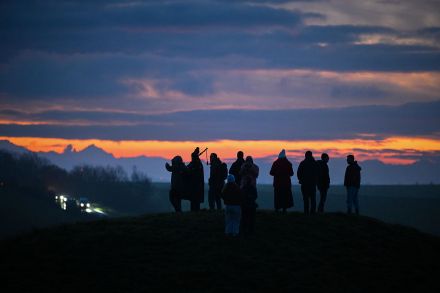
According to the handy timeanddate.com website, the Sun rose over our patch of Long Island Sound today at 7:18 this morning. It will set this afternoon at 4:28. From beginning to end, we will enjoy 9 hours, 12 minutes and 53 seconds of full daylight (not counting the prefatory and subsequent periods of twilight) in this bit of New England today. That may seem like a gyp. In high summer, we get more than 15 hours of daylight. But look on the bright side. Yesterday was the Winter Solstice, the shortest day of the year. We had just 9 hours, 12 minutes and 50 seconds of daylight. So you see today is fully three seconds longer than yesterday. Gutta cavat lapidem. I can’t quite see it yet, but today the Sun began its leisurely trek back north.

winter solstice

Three great minds explore the enigmas of the universe

It sounds like a Tom Stoppard play. A big-shot philosopher meets a big-shot boffin by way of a big-shot writer to descant on the biggest of big-shot debates – what The Rigor of Angels’s subtitle calls ‘the Ultimate Nature of Reality’.True, William Egginton can’t match Stoppard for punchy one-liners, nor for puns and pratfalls and persiflage. But while his book is as demanding a read as anything published this year, it still leaves you smiling. Over and over again the author reminds you of the shimmering weirdness beneath the experiential surface of what we are pleased to call the real world. There is no shortage of books that pit one thinker against another to tell the history of an argument.

Now imagine a white hole – a black hole’s time-reversed twin…

There are many ways to measure the course of human history and each will give an insight into one or more of the various qualities that have made us the most successful great ape. Every major advance, whether in war or art or literature, requires imagination, that most amazing of human capacities, and the ability to ask ‘What if?’ – to take the world from a different perspective. Nowhere is this more apparent than in the history of science. While there is an inherent provincialism in revolutions in art and literature, progress in science is universal, and moves, like Dante’s Hell, in concentric circles of ever deeper understanding.

Seize the moment: Undercurrent, by Barney Norris, reviewed

Barney Norris’s third novel opens with a wedding in April. The couple tying the knot don’t matter; it’s the occasion that does, paving the way for a story about love, family and stories themselves, which is apt from a writer who is known for his dramas on the stage as much as on the page. Ed, who narrates half the novel, is there with his girlfriend Juliet, wondering why they’re yet to get married. It’s the expense, he supposes, and the not knowing what sort of ring to buy. And so he allows time to drift by, ‘just letting it happen to me, rather than me doing very much with it’. But then the wedding photographer, Amy, recognises Ed from a chance encounter as children and his story starts to change.

The Democratic media hate Trump more than they love Iran — or America

From our US edition

If you need help talking with the children in your life about the aftermath of the ethical collapse of most of the American media, here’s a guide to explaining the topic.I refer, of course, to TIME’s offer of scripts for concerned parents: ‘If you need help talking with the children in your life’ — as opposed to the children you’ve casually seeded in other people’s lives — ‘about the aftermath of Iranian Gen. Qasem Soleimani’s killing.

media iran