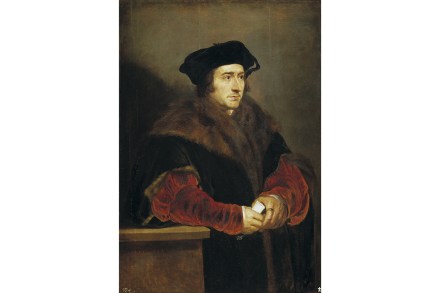
Thomas more

How Hans Holbein brought portraiture to England

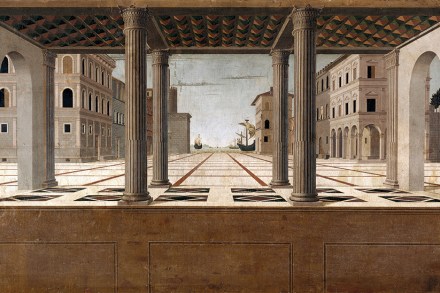
On the evening of 6 May 1527, Henry VIII entertained an embassy from France at a lavish party in Greenwich. The festivities took place in a banqueting house and a theatre, both built for the occasion. At the feast’s end, Henry led his guests out through a great archway. After a moment, he invited the French to turn around and look at a painting which hung behind them. It was a vast panorama of the 1513 siege of Thérouanne – ‘very connyngly wrought’, a chronicler reported. As Henry knew, the siege was a sour memory for his guests. Henry himself, in league with Maximilian I, the Holy Roman Emperor, had routed them there. So great had been their humiliation that it was known as the Battle of the Spurs, after the spectacle of the French cavalry fleeing the field.

Searching for the best of all possible worlds – in London

Utopia can never exist, literally, since the word, which Sir Thomas More coined in his 1516 book of that name, comes from the Greek for ‘not’ and ‘place’. For the avoidance of doubt, More doubled down on the wordplay, naming the governor of his fictional island Ademos, meaning ‘no people’, and the river that runs through it Anyder, meaning ‘no water’. Interrupting your steak to recite from Leviticus isn’t everyone’s idea of fun Yet there’s more to it than this, because it turns out that one man’s idea of an ideal society is often very different from another’s. More’s vision was proto-communist. Houses in his Utopia are allocated by lot, and re-allocated every ten years.

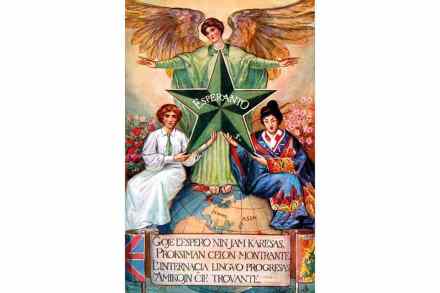
A universal language will always be an unattainable dream

The comedian Sacha Baron Cohen, in his stage persona as the dim-witted interviewer Ali G, once asked Noam Chomsky if a person could simply invent a new language from scratch. The renowned linguist gave him short shrift: ‘You can do it if you like and nobody would pay the slightest attention to you because it would just be a waste of time.’ Throughout history, however, a motley array of eccentrics has done just this, and received a fair bit of attention.

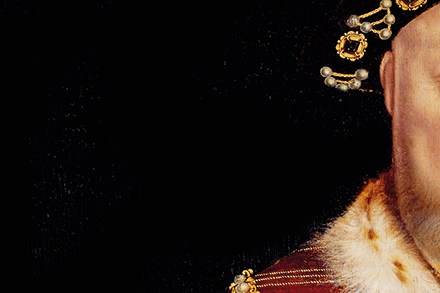
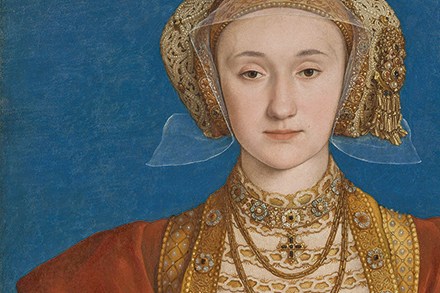
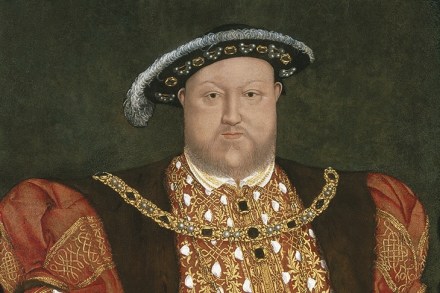
It is impossible to imagine Henrician England except through the eyes of Hans Holbein

‘Holbein redeemed a whole era for us from oblivion,’ remarks the author of a trilogy of novels set at Henry VIII’s court. ‘He has forced us to believe that his vision of it was the only feasible one.’ This is a bit of a tease. It’s not written by Hilary Mantel, as you might be expecting, but by Ford Madox Ford, who, a century before Wolf Hall, published a sequence of novels about Henry’s fifth queen, Katharine Howard. Nevertheless, Ford’s point is irrefutable. It is impossible to imagine the England of Henry VIII except through the eyes of ‘the King’s Painter’, Hans Holbein.