Theresa may

What the papers say: Should the Tories be panicking?

From our UK edition

A YouGov poll suggesting we could be heading for a hung parliament caused a furore in Westminster yesterday - but should we believe it? The Times defends the estimate in its leader this morning, saying that while it’s right to treat the poll with ‘scepticism’, it says ‘the figures are based on interviews with many thousands of people and (uses) sophisticated statistical techniques’. The results might be ‘surprising’, the paper concedes, but that’s ‘precisely why they need to be scrutinised'. Admittedly, there are a few ‘caveats’: ‘the model takes only a snapshot’ - and voters ‘can still change their minds’. But one thing is clear: ‘the direction of travel’.

Weak and wobbly

From our UK edition

When Theresa May decided to go for an early election, she transformed the nature of her premiership. Up to that point she had been the steady hand on the tiller, righting a ship of state buffeted by the Brexit referendum. By going to the country to win her own mandate, she sought to become more than that. She wanted her own sizeable majority and, in so doing, invited comparison with the two prime ministers who have done the most to shape modern Britain: Margaret Thatcher and Tony Blair. She was asking to be judged against their electoral triumphs. At the start of this campaign, May looked comfortable in this company. The polls suggested that she would get a higher vote share than either Thatcher or Blair and win a majority to stand any comparison with their landslides.

Jeremy Corbyn’s one true virtue

From our UK edition

Enough of all these vital, apocalyptic, existential elections. They don’t half wear you out. The Scottish referendum was vital and apocalyptic, so they said, because the wrong decision would have seen Britain crack like a plate, and Scotland spiral off into insane debt, and residual Britain fade in geopolitical importance. Or, on other side, Tory rule for a millennium, which no Scot could ever want. Hmmm. Then the 2015 election was vital and apocalyptic, too, because Ed Miliband… Ed Miliband… Hang on. What was the big problem with Ed Miliband? There definitely was one. Ah yes, his dad hated Britain. Also he was incompetent. Didn’t even know how many kitchens he had. Couldn’t eat a sandwich. Or hold a banana. Unless that was somebody else.

After Theresa May’s missteps, a Corbyn victory is no longer inconceivable

From our UK edition

On the eve of the US presidential election, experts at Princeton university decided that Donald Trump had a 1 per cent chance of being elected. Before the last general election, Populus, the opinion poll firm, gave David Cameron a 0.5 per cent chance of winning a majority. Much is made of the need to look at ‘the data’ when considering political arguments, but so often it is a wildly inaccurate guess with a decimal point at the end to give an aura of scientific specificity. So when we read that Jeremy Corbyn has just a 17 per cent chance of becoming prime minister, this does not mean that the election is in the bag. The Tories are still quite capable of blowing it. It’s understandable that voters have misgivings about Theresa May.

Listen: YouGov’s Joe Twyman defends shock election poll

From our UK edition

Can we trust the pollsters? Bruised by Brexit and caught out by Trump, the psephologists claim they’ve finally learnt their lesson. If so, that’s a big problem for the Tories: today’s YouGov poll predicts that the party is on course for an electoral upset which could see them lose their majority. YouGov have been busy defending the numbers behind the headline this morning, and the company's Joe Twyman has been doing just that on the Spectator's Coffee House Shots podcast. So, given YouGov failed to get it right in 2015, why should we believe them this time? And will the pollsters end up tweaking their assumptions? Here's Joe Twyman: 'We are confident in the power of our data and the smart of our data scientists, that we have something that works.

YouGov poll suggests Tories could fall 16 seats short of overall majority

From our UK edition

There’s a nasty shock for the Tories in the Times this morning, with the paper publishing a YouGov poll suggesting the party could lose 20 seats at next week’s election. The estimate says that we could be heading for a hung parliament and that the Conservatives might fall 16 seats short of an overall majority. Even more remarkably, YouGov’s numbers indicate Labour could up their tally of seats by almost 30. It’s difficult to overestimate just what a disaster such an outcome would be for Theresa May. The Prime Minister made the decision to call this election herself with only the guidance of her tightly-knit Downing Street team; if she fails next Thursday, May would have no one else to blame but herself.

George Osborne finds that revenge is a dish best served daily

From our UK edition

With Theresa May currently experiencing a rough patch in her election campaign, the Prime Minister is discovering fast who her friends really are. Unfortunately for May, her old Cabinet colleague George Osborne doesn't appear to be on that list. Now that the former Chancellor is the editor of the London Evening Standard, the paper's editorials have become a constant source of criticism for the government. Today's was no exception. On the state of the Conservative campaign, the paper says the 'campaign has meandered from an abortive attempt to launch a personality cult around Mrs May'.

Theresa May’s willingness to change her mind is a good thing

From our UK edition

'When the facts change, I change my mind,' John Maynard Keynes is (wrongly) claimed to have said. Whatever the origin of the quote, Theresa May seems to be taking it to heart - and, as a floating voter, I’m delighted. But it seems there aren't many who share that view, given that May's shifting stance on certain issues became such a major focus of her interview with Jeremy Paxman last night. I used to be a Lib Dem so I am fully aware of the kind of horror that a U-turn on major policy can bring. However, sometimes it can also show a quite sensible approach. After all, we all regularly change our opinions based on new information and experience. Why should we not afford politicians that same right? In fact, if we should want anyone to adapt, it should be them.

Jeremy Paxman has become a national bore

From our UK edition

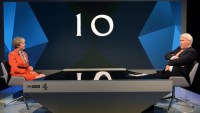
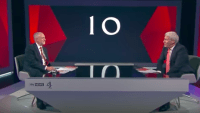
So who came off worse in The Battle for Number 10, last night’s Channel 4 / Sky stand-off between Theresa May and Jeremy Corbyn? It was Jeremy Paxman. May and Corbyn were paragons of patience and sense in contrast with this oafish, boorish barker of rude and even pointless questions. Watching Paxo was squirm-inducing. He’s the angry drunk uncle who ruins every barbecue by yelling ‘BALLS’ at anyone who disagrees with him. I’m convinced Corbyn or May would have instantly won tens of thousands of new voters if they had told him to bugger off. It’s amazing how knackered Paxman’s schtick felt. Did we really lap this guff up in the 2000s, when he was anchor of Newsnight?

Jeremy Corbyn now finds the IRA question easy to answer

From our UK edition

A week ago, in the immediate aftermath of the Manchester bombing, it would have been impossible to imagine that Jeremy Corbyn, rather than Theresa May, might benefit most from the interruption in the campaign. Corbyn is supposed to be weak on security and vulnerable to his terrorist-supporting past. Meanwhile, May stood to gain from the switch off the subject of social care, where she was fumbling badly. Yet after last night’s Channel 4 debate it is beginning to look a little different. The concentration on security and terrorism is beginning to play into Corbyn’s hands. He has been challenged so many times on the subject that he has worked out how to neutralise the subject.

Theresa May gets her election campaign back on track

From our UK edition

Tonight there will be sighs of relief in CCHQ after Theresa May put in a solid – if imperfect – performance in the Sky / Channel 4 ‘Battle for Number 10’ programme. After a difficult week which saw the Tory lead drop to five points, the Prime Minister navigated her way through a range of tricky topics from her dementia tax U-turn to cuts to school funding. Answering questions from the audience, May had the dubious honour of receiving the first heckle of the night for her claim that Labour's manifesto was un-costed. However, despite some initial audience hostility, May managed to keep her cool.

Spread your bets on Theresa May’s majority

From our UK edition

Where’s all the unpredictability in politics gone? After the hubbub about a ‘crisis of liberalism’ and the thrills of punting on Trump and Brexit, election betting in 2017 is beginning to look almost boring. Everybody who wasn’t crazy — or excessively paranoid about the return of fascism — knew that Emmanuel Macron would beat Marine le Pen in the second round of the French presidential election. He did. That funny-looking anti-Islamist Geert Wilders did not triumph in Holland. And now it looks as if Angela Merkel will win re-election in Germany in September. Closer to home, Theresa May looks all but certain to win a majority on 8 June — unless our polling companies have somehow become even more useless since 2015.

Revealed: Conservatives revise down their internal election projections

From our UK edition

The news that the Tory lead has dropped to just five points, according to a Times/YouGov poll yesterday, has been dismissed in some quarters as an exception to the polls, rather than the rule. However, even if you don't buy that the Tory lead over Labour is now at its lowest since Theresa May came to power, it can't be denied that the Conservative campaign has hit a wobble. I understand projections for the election result have shifted dramatically. The internal 'ceiling' (the best case scenario) has gone from a majority of near 200 in week one, to a majority around the 80 mark. The 'floor' is now a hung Parliament -- which is a worse case scenario and still an unlikely one.

A proper discussion about terrorism is the best way to honour Manchester’s dead

From our UK edition

Until last week, it was thought that the jihadi threat was subsiding and the security services were increasingly able to disrupt any serious plot. The recent attacks involved knives or rented cars – deadly in the wrong hands but a far cry from the 7/7 attacks, or the seven-aircraft Heathrow aircraft bomb plot thwarted in 2006. Yet now, for the second time in our history, a suicide bomb attack has been perpetrated against the public. And this might show that things are getting worse. That as Isis is forced into retreat in Iraq and Syria, the jihadists are preparing to return to Britain with deadlier skills and tactics. While al-Qaeda focused on military and economic targets, Isis considers young girls at a pop concert to be ‘crusaders’.

Jeremy Corbyn’s speech is a trap for the Tories

From our UK edition

The most dangerous thing about Jeremy Corbyn’s speech today, blaming terror attacks in Britain on wars we have fought abroad, is that it is partly true. The temptation for the Conservatives will be to show outrage at the words: 'Many experts, including professionals in our intelligence and security services, have pointed to the connections between wars our government has supported or fought in other countries and terrorism here at home' and to accuse Corbyn of exploiting the Manchester bombing for his own political gain. But they would be extremely foolish to do so because they will be unable to argue away the assertion that British military involvement in the Middle East has increased the risk of terror attacks at home.

Could Theresa May blow this general election?

From our UK edition

Until recently, the prospect of Theresa May flopping in this general election would have been absurd - but today’s YouGov poll shows her lead cut to just five points, less than a quarter of its peak. Converted into seats, that would mean a majority of just two MPs, down from the 17-strong majority achieved by David Cameron against Ed Miliband. At a time when the extraordinary is happening all the time, it is impossible to dismiss this opinion poll. The public like her style, but her shambolic U-turn over the so-called ‘dementia tax’ has given everyone cause to doubt whether she is as ‘strong and stable’ as she says she is. In fact, she can look indecisive and a bit dozy. She repeatedly promised us that she would not hold a general election, but then did.

Is Corbyn really closing in on May?

From our UK edition

Corbyn is closing in on May, the Times reports this morning, as a poll from YouGov shows the gap between the two parties is down to just five points with less than two weeks to go until election day. The latest numbers show the Conservatives have, once again, seen their support drop: this time by one point, down to 43 per cent. Labour meanwhile have enjoyed a three point bump, up to 38 per cent. If this were replicated come June 8th, it would be bad news for Theresa May: she would be a Prime Minister under pressure, with her party’s majority slimmed down to just two. Talk of a Tory landslide would be a distant memory and May would be forced to defend her decision to call a snap election.

Portrait of the week | 25 May 2017

From our UK edition

Home  Twenty-two people were killed and 59 wounded by a man who blew himself up, with a bomb containing metal fragments, in the foyer of Manchester Arena as crowds were leaving a concert by the American singer Ariana Grande, aged 23, who has a strong following among young girls. Of the wounded, 12 were children. Police named the suspected murderer as Salman Ramadan Abedi, aged 22, a Mancunian whose family come from Libya, which he had recently visited. Isis said it was behind the attack. A 23-year-old man was arrested the next day. The official threat level was raised to ‘critical’, meaning that an attack was expected imminently. Soldiers were deployed in the streets to support armed police.

Fraternity, solidarity and the spirit of 1945

From our UK edition

My father worked as a fire warden during the Blitz, trying to contain the damage done by the Luftwaffe, and he witnessed more death and devastation than most soldiers saw on the frontline. Over a million houses in London were destroyed and nearly 20,000 civilians killed. But the horrors of the night were made more endurable by the atmosphere in the capital as day broke. All the petty distinctions that normally characterise life in a large city had fallen away. Strangers would stop and talk to each other. If anyone looked lost or confused, people would offer to help. Most adults had been up all night in makeshift air-raid shelters, often having to cope with restless children, but instead of being tetchy and short-tempered they were full of jokes and good cheer.