Theresa may

Theresa May’s Downing Street statement – ‘I will now form a government’

From our UK edition

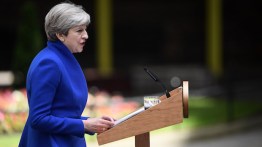
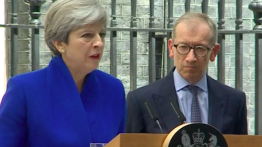
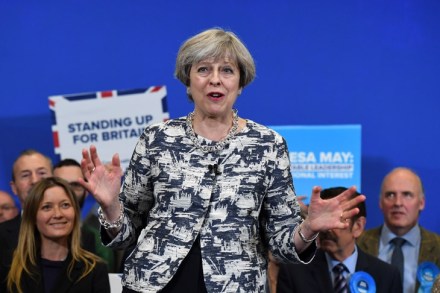
Theresa May has just appeared on the steps of Downing Street to give a statement following her meeting with the Queen. Here is the full text. I have just been to see Her Majesty the Queen, and I will now form a government – a government that can provide certainty and lead Britain forward at this critical time for our country. This Government will guide the country through the crucial Brexit talks that begin in just 10 days and deliver on the will of the British people by taking the United Kingdom out of the European Union. https://www.youtube.com/watch?

It would have been wiser of Theresa May to show some contrition and humility

From our UK edition

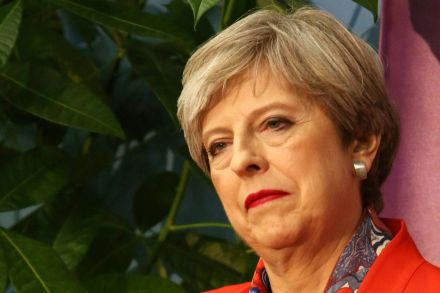
Theresa May was determined to suggest that nothing had really changed in her statement outside Downing Street after seeing the Queen. She talked about her plans for the next five years, which is—to put it mildly—ambitious. She emphasised the mandate that came from the Brexit referendum, but made no real reference to last night’s events. She emphasised certainty and indicated it was all business as usual.  Tonally, May’s approach was a mistake. It would have been better to level with voters about what had happened, to tell the country that she would work to regain its trust. It is jarring to talk about how the country needs certainty, when the election that you called has injected huge uncertainty into the political system.

The DUP’s wildest dreams have just come true

From our UK edition

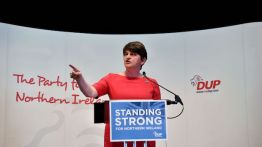
If the election result has severely weakened Theresa May, it has correspondingly strengthened another female politician – Arlene Foster, the Democratic Unionist Party leader, who could be seen beaming with delighted party colleagues at the election count in Northern Ireland.

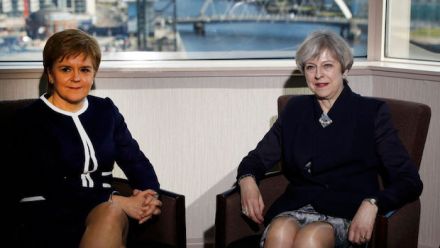
If Theresa May was the election’s biggest loser, Nicola Sturgeon was its second greatest loser

From our UK edition

Comeuppance is a dish best served scalding hot. That’s the first thing to be said about this glorious election result. Like Ted Heath, Theresa May asked 'Who governs Britain?' and received the answer 'Preferably not you'. Her election campaign – a word that grants it greater dignity than it merits – will be remembered for decades to come as a classic example of what not to do.  Until yesterday we had thought her victory would be tainted by the fact she had only beaten Jeremy Corbyn; now we might reappraise our view to note that poor Jeremy Corbyn has been such a hapless leader of the Labour party he couldn’t even beat Theresa May.  One lesson is clear: never, ever, take the voters for granted. Never, ever, presume only one result is possible.

To survive, Tories must compromise with Remainers – and Corbynism

From our UK edition

Regardless of who leads it, the Conservative Party now has the opportunity to cling to office, possibly even for the rest of this five-year Parliament. They're the biggest party and a deal with the DUP is the basis for forming a new government. But that's only the start. To remain in office, the Conservatives are going to have to accept a lot of compromises. They're going to have to compromise on Brexit, and thus on immigration. They're going to have to compromise on economic policy (spend more, cut less) and markets (intervene more). They're going to have to compromise with the Scottish voters who threw them a parliamentary lifeline by endorsing Ruth Davidson's humane, moderate Conservatism.

What went wrong for the Tories?

From our UK edition

Inside CCHQ there is a sense that three things cost them their majority in this election. First, the public were fed up with austerity. With the Tories taking the deficit off the table as an issue, they had no plan to balance the books in the next five years, and they had no response to Jeremy Corbyn’s promise to spend more on pretty much everything. Second, there was a Brexit backlash. Those who had voted Remain turned up in great numbers at this election and voted against the Tory candidate. Third, Theresa May turned out not to be who the voters thought she was. Voters liked her because they thought she was a different kind of politician.

Revealed: Tories’ hung Parliament briefing lines

From our UK edition

Senior Conservatives insist that they don't recognise the exit poll, which predicts a hung Parliament. But privately they appear to concede a hung Parliament is a possibility – and they are trying to get on the front foot. In a briefing to Conservative candidates, the party has issued lines to take on the exit poll. They say to state that in the event of a hung Parliament, it is the Tories who would have the first opportunity try and form a parliamentary majority: 'If it is right then the Conservative Party has won the most seats and probably won the most votes. The constitutional guidance is clear that it’s up to the sitting Prime Minister to see if they can form a parliamentary majority first.

Catastrophe for the Conservatives as Theresa May blows her majority

From our UK edition

Tories lose their majority, falling eight seats short. Labour achieve 40 per cent of the vote, up 9.6pc. This is the biggest increase in vote share since Attlee in 1945. Theresa May has been to Buckingham Palace and sought permission to form a new government, working with the DUP... …in spite of personally engineering a cock-up of historic proportions. The main five Cabinet ministers have all retained their positions; no further appointments will be announced until tomorrow. Paul Nuttall has resigned as Ukip leader, stepping down with immediate effect. SNP lose 21 seats, as Scottish Tories take 12 seats, Scottish Labour takes 7 and LibDems 4. Ousted: Nick Clegg, Alex Salmond, Angus Robertson. Ben Gummer (who compiled the Tory manifesto).

May needs her party

From our UK edition

As if we needed reminding, this past week has shown that the Islamist threat is a truly global problem. In the space of a few days, Isis claimed responsibility for attacks on London Bridge and Borough Market; and elsewhere, for the attack on the Iranian Parliament and the tomb of Ayatollah Khomeini in Tehran. It would be hard to think of more diverse targets than drinkers at London pubs on a Saturday night and the tomb of the theocratic Shia cleric who inspired the 1979 Iranian revolution. Yet for Isis there is logic. All are enemies: infidels, heretics, apostates. The Tehran atrocity shows again that what we are witnessing is a civil war within Islam. To the Sunni militant, the enemy could be a girl at a music concert or a worshipper at a Shia mosque.

The pound plunges as markets start to take in the enormity of May’s blunder

From our UK edition

The pound has plunged sharply on the exit poll, as markets start to come to terms with the idea that Theresa May might have blown it. It's 1.7 per cent down against the dollar, 1.8 per cent against the Euro - expect those gains to deepen if tonight's results confirm the results of the exit poll. For a simple reason: Theresa May asked for a general election to strengthen her hand in Brexit negotiations. If the public refuses to do so, she will be hugely weakened in the biggest negotiation that any Prime Minister has had to undertake. If, indeed, she survives long enough to undertake it - which is by no means certain if she does worse than David Cameron managed to do against Ed Miliband.

How I lost my Tory-voting virginity in the name of democracy and press freedom

From our UK edition

Today, for the first time in my life, I voted Tory. And somewhat disappointingly I haven’t sprouted horns yet. I haven’t been overcome by an urge to pour champagne on homeless people’s heads or to close down my local library and guffaw at any rosy-cheeked child who pleads: ‘But I want books, mister.’ I don’t feel evil. Maybe that stuff comes later. Maybe it takes a few days before you turn into a living, breathing Momentum meme, screaming ‘Screw the poor!’ as you ping your red braces. In fact I feel good. It always feels good to vote, of course, to hold the fate of the political class in your hands.

Why hasn’t the Remain dog barked in this election?

From our UK edition

The hopes of those who want Britain to stay in the EU have been dashed by this election. There has been no Brexit backlash. The party that wanted to overturn the result, the Liberal Democrats, have had a minimal impact on the campaign. By the time Britain next goes to the polls in a general election, the deed will have been done: this country will have left both the EU and the single market. Straight after the referendum last year, some Leavers feared victory would be snatched from them. They worried that a general election could lead to a parliament that was prepared to go back on the result. Instead, this election has served to confirm that Brexit is happening. It now has the endorsement not only of a referendum, but of a general election too.

Is enough enough? Then let’s start deporting

From our UK edition

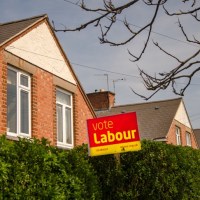
I divide my time between two constituencies, the first a rock-solid Conservative seat in the south-east of England, the other a Labour-held marginal (which the Tories expected to take) in the north-east of England. And the thing I have not seen in either place is a nice blue placard or poster saying ‘Conservative’. Not one anywhere — completely absent. There are loads of them about for the other parties — mainly Labour, but a fairly broad scattering of that vacuous washed-out orange favoured by the Lib Dems and, in the southern constituency, a fair few for the Greens. I suppose you might argue that Conservative voters think it vulgar to advertise their political allegiances.

The Tories have been diminished by this election

From our UK edition

There’s an expression used in football to describe an approach to the game that discounts the virtues of elegance, style, beauty, originality and daring, and — concentrates on blocking, frustrating and grinding down. It’s called ‘winning ugly’. While degrading the game, it often works. But having won a match, a football team does not have to govern the country for five years. It does not need our love, our patience or our intellectual respect. The Conservative party attempted to win the general election by winning ugly, and in doing so, they have lost some of our love and our respect. That, I reflect, is what, without direction from the top, ‘professional’ modern campaigning risks achieving.

If Corbyn wins, the markets will be in full-scale panic

From our UK edition

Friday morning. A humbled looking Theresa May is muttering about how 'defeat means defeat', while Boris Johnson readies his leadership bid. Nicola Sturgeon is flying down to London with a list of demands for supporting a Labour-led coalition. And Jeremy Corbyn is finishing off some work on his allotment before hopping on a bus to the Palace. It might sound far-fetched. But the polls are so all over the place, it is no longer impossible that the Tories will lose their majority. If it happens, one point has been overlooked. Over in the City, stocks will be getting trashed, and the pound will be in free-fall. The markets have only just begun to contemplate what a Corbyn-led Labour Government would be like, but have hardly paused to give it any serious consideration.

The Spectator’s complete election guide: what to look out for and when

From our UK edition

'Strong and stable', 'weak and wobbly', 'coalition of chaos': you've heard enough of the slogans. Now, election day is nearly upon us. Here's the Spectator's guide to what to watch out for on the night as we find out whether Theresa May is heading for a big win - or an historic blunder: 10pm All eyes will be on the joint exit poll from the BBC, ITV and Sky. In 2015, this was the key moment for the Tories with the poll suggesting that the party was heading for a surprise majority. 11pm Houghton & Sunderland South – where Labour upped its majority in 2015 - is likely to be the first seat to declare. We’ll also get the result from Sunderland Central – likely to be another Labour hold - at around 11.

Will the Tory majority be bigger than expected?

From our UK edition

The overall result of the general election isn’t really in doubt: the Tories will be returned to government tomorrow with an increased majority. But just how big that majority is will have a huge impact on what happens at Westminster over the next few years—and that is much less clear. There are two reasons for this. First, the British polling industry remains in crisis; meaning that it is hard to have confidence in the numbers they are pumping out today. Second, in this election, there isn’t going to be a national swing, but a series of regional swings. For example, I hear that the Tories are sending extra resources into Battersea, a seat where they have an almost 8,000 majority.

Why I’m voting Tory for the first time ever

From our UK edition

This is the first election in my life in which I shall vote Conservative. I voted Labour in the last local elections as a sort of last fling at the ballot box. But not this time. This time I’m going to go all the way with Theresa May. Like a lot of Eurosceptic Labour voters, I was drawn to May by her declaration that Brexit would mean Brexit. But Brexit has hardly come up in this campaign, and while the PM is said to have floundered, Labour has supposedly surged. Nevertheless, for me, and countless voters like me, the issues might have changed but the dynamic hasn’t. I don’t like Labour anymore. I do like Theresa May. This is the hardest thing to write. You see, I was born Labour and when you’re born Labour you’re supposed to bloody stay that way.