Theatre

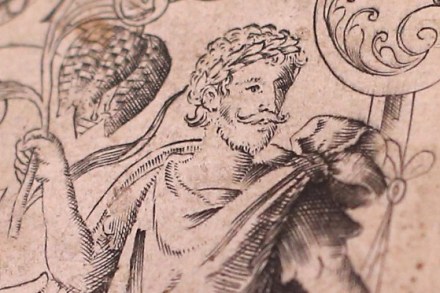
This ‘new image of Shakespeare’ is obviously not Shakespeare – but I’ll tell you who it might be

In its issue dated 20 May, Country Life has published a long article by the botanical historian Mark Griffiths claiming that a figure on the magnificent title page of John Gerard’s great and prodigally illustrated Herball, of 1587, represents Shakespeare. The magazine also promises, as a follow-up, what it calls a new play by Shakespeare along with fresh information about his early career. In fact the ‘play’, identified in the article, is a really rather boring speech of welcome delivered by a hermit along with a dialogue between a gardener and a molecatcher, both long known to scholars, and both of unknown authorship, which formed part of an entertainment given before Queen Elizabeth I at Theobalds in May 1591.

Yank bait

Here come the Yanks. As the summer jumbos disgorge their cargoes of wealthy, courteous, culture-hungry Americans, the West End prepares to bag a fortune. Death of a Salesman is just the kind of timeless post-war classic that Americans adore, isn’t it? Not quite. Arthur Miller is mistrusted in his homeland. For starters he was a closet pinko who kept the closet door wide open. He was wooed by Hollywood but spurned every inducement. He married Marilyn Monroe and failed to make her happy. And top of the chargesheet is this play, which proposes that the American dream is a con, a swindle, a diabolical cruelty that hounds mortals to death by engorging their bellies with fantasies of happiness. It’s a superb artefact but relentlessly uncomfortable to sit through.

Reality check | 21 May 2015

Gore Vidal once famously said that ‘Television is for appearing on, not watching.’ I feel the opposite. I’ve just turned down a financial offer from Celebrity Big Brother for this summer’s series so big it made my eyes water — and I’m not easily impressed, size-wise. Verbal people just don’t do well in such a visual medium — and speech is my second language, anyhow. It would be easier to go in if I was guaranteed first eviction — but Liz Jones was stuck in there for weeks, and I’m a good deal more entertaining and lovable than she is. There’s a chance I would end up walking out, thus losing my fee. I would miss my husband, being alone (a textbook only child, I feel like murdering someone if can’t be by myself for six waking hours each day), and reading.

Funny business

A lot of people ask what it takes to be a stand-up comic — I’ll be honest, I have absolutely no idea. What I do know is that whatever it is, a lot of people love to think they’ve either got it or they can get it. I was honoured to be in six Royal Command Performances and so of course I met Her Majesty the Queen a few times. After about the third time, she started to talk like me, tell a few jokes. Now, I’m not saying she owes her popularity to me — God forbid — but let’s be honest, when you add together the number of people who come to see her when she’s touring the world and the crowds that come to watch my show ...that’s a lot of people.

Four play | 14 May 2015

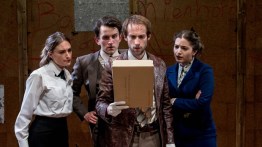
If Julian, Dick, George and Anne had become terrorists they’d have called themselves The Angry Brigade. It’s such a Wendy house name. The quartet of violent outcasts met in a Camden squat in the late Sixties and moved to Stoke Newington where they rented a house to deflect unwanted attention. They began planting bombs around London in the hope of jerking the proles from their consumerist trance and sparking a communist war. They preferred catchy locations for their fireworks: the Albert Hall, a BBC film unit, an MP’s garden. And it took the cops ages to track them down and sling them in jail. James Graham’s new play uses a neat staging device. There are four terrorists and four detectives, and the same actors play both hunters and quarry.

Shakespeare’s duds

I love Shakespeare. But when he pulls on his wellies and hikes into the forest I yearn for the exit. A Midsummer Night’s Dream has a moonlit, sylvan location populated by a syrupy crew of hectic fairies, humourless bumpkins, panting maidens and swooning aristocrats in disguise. Shakespeare wrote it during his apprenticeship and he had yet to learn that several romances are far less interesting than just one. The result is a cloying, over-busy fantasy whose highlight is a love potion that makes a sprite called Titania fall in love with a donkey called Bottom. If you find the passion that flowers between a Sloane-y dryad and a pack animal hilarious then poor you.

All the men and women merely players

How many books are there about Shakespeare? A study published in the 1970s claimed a figure of 11,000, and today a search of the British Library catalogue yields 12,554 titles that contain the playwright’s name. But good short introductions to Shakespeare’s life and work are not exactly plentiful. Students and teachers are therefore likely to welcome this up-to-date overview from Paul Edmondson, a Church of England priest who works for the Shakespeare Birthplace Trust. Although Edmondson covers the biographical ground succinctly, as well as discussing the plays and poetry in a style that’s discreetly authoritative, his approach is unconventional.

Channel 4’s The Vote reviewed: ‘complex, acute, very funny and oddly moving’

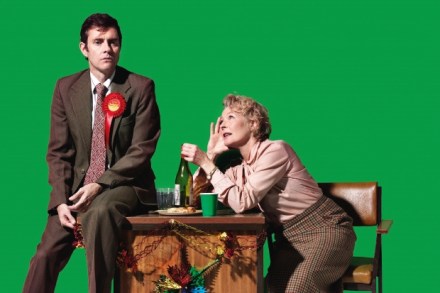
He’s back on top form. James Graham has taken the unlikeliest setting, a polling station during the last hour of a general election, and turned it into a beautifully crafted comedy drama. The Vote at the Donmar was broadcast on Channel 4 last night at 8.30 p.m. We’re in a knife-edge London marginal constituency where a polling blunder has been uncovered. A wizened pensioner voted twice by accident. Once in his brother’s name, once in his own. Panic stations. Democracy is threatened. Kirsty, an excitable teller, tries to even up the score by persuading a relative who hasn’t voted to cast his ballot under her discreet direction. This he does. But he votes for the wrong party. Now two extra votes are needed.

Pinter without the bus routes

David Mamet is Pinter without the Pinteresque indulgences, the absurdities and obscurities, the pauses, the Number 38 bus routes. American Buffalo, from the 1970s, is one of Mamet’s early triumphs. Don is a junkshop owner who believes a customer cheated him over a rare nickel so he gets his young pal Bob to steal it back. An older friend, Teach, persuades Don to ditch Bob and let him commit the burglary. That’s it. That’s all that happens in this narrow, gripping thriller, which takes the brutal male culture of the Wild West and imports it to the Chicago slums where three lonely outcasts fight desperately for scraps of cash and friendship. On paper it all sounds grey, miserable and petty. On stage it’s magnificent, multicoloured, vast and tragic.

State of play

Writers and producers have shown little appetite for putting the coalition on stage. Several reasons suggest themselves. In 2010 wise pundits assured us all that the Rose Garden duo would squabble and part long before the five-year term expired, and theatre folk were persuaded not to gamble on a ship that might sail at any moment. And the conduct of parliamentarians has been pretty unhelpful to dramatists. Chastened by the expenses scandal, MPs have reinvented themselves as models of probity and self-restraint. The Commons has been all but free of sin. Eric Joyce cracked a few skulls. Nadine Dorries bunked off for a fortnight in the jungle. The occasional ex-minister has been caught hustling undercover hacks for a day or two’s work. Even the cabinet have behaved like nuns.

Losing the plot | 30 April 2015

Enter Rufus Norris. The new National Theatre boss is perfectly on-message with this debut effort by Caryl Churchill. Her 1976 play about inequality screams, ‘Vote Ed’ at triple-klaxon volume. Not that anyone in the audience was won over. They’d made up their minds long ago. Which is just as well because the play is hopelessly ineffective on every level. Churchill must be the most over-rated writer the English theatre has produced. She has virtually no dramatic skills. She can knock out humourless preachy rhetoric by the yard but as for the rest of it she hasn’t a clue. She can’t write a plot. She can’t create a human individual or differentiate one character from another with quirks of thought, word or deed.

Stage fright

The smash hit Matilda, based on a Roald Dahl story, has spawned a copycat effort, The Twits. Charm, sweetness and mystery aren’t Dahl’s strong points. He specialises in suburban grotesques who commit infantile barbarities. But his prose is sensational. No ‘style’ at all, just the simplicity and clarity of a master copywriter. He’s as good as Orwell. Mr and Mrs Twit are a pair of malignant outcasts who enjoy tormenting innocents. They keep a family of monkeys in a cage and they glue birds to trees and shoot them. You can read the story in about 20 minutes. It probably took Dahl a bit longer than that to write. And Enda Walsh’s essay-crisis adaptation may have delayed him for a day or two.

Death by politics

Dead Sheep is a curious dramatic half-breed that examines Geoffrey Howe’s troubled relationship with Margaret Thatcher. Structurally it’s a Mexican bean. It leaps all over the 1980s and it keeps shifting genre from cabaret to tragedy via cheesy political satire. Some actors are impersonators, some are caricaturists, some are neither. James Wilby’s study of Howe avoids his personal mannerisms, the pensive shabbiness, the punctilious, worried eyes, and the soft beguiling purr of his vocal chords. Instead Wilby presents him as a bewildered monk tiptoeing around a lion’s den. Steve Nallon does Mrs Thatcher as a drag-queen which looks pretty odd next to Wilby’s straightforward Howe but Nallon is a master vocalist.

Ayckbourn again

Experts are concerned that Alan Ayckbourn’s plays may soon face extinction. Fewer than 80 of these precious beasts still exist in their natural habitat, so theatre-goers will be cheered to know that the National Theatre has created a genetically identical replica and released it into the wild. Rules for Living, fashioned by Sam Holcroft from the Acykbourn blueprint, is a bourgeois natter-fest in which bickering couples meet for a fractious Christmas summit. The characters are a bit nice and a bit nasty. Stephen Mangan plays a failed cricket star married to a soak in a frock. They have an only child who suffers from this year’s must-have mental disorder.

Bad Jews at the Arts Theatre reviewed: strange, raw, obsessive and brilliant

Bad Jews has completed its long trek from a smallish out-of-town venue to a full-scale West End berth. Billed as a ‘hilarious’ family comedy it opens on a low-key note in a New York apartment where three cousins have gathered for grandpa’s funeral. Daphna is a puritanical vegan Jewess, training as a rabbi, who wants to move to Israel, marry a soldier and serve in the IDF. She’s insanely jealous of Jonah and Shlomo, whose parents have bought them a flat before either has found a job. Shlomo (who calls himself Liam) is a ‘bad Jew’ obsessed with Japanese culture who intends to marry out.

Blunt and bloody: ENO’s Sweeney Todd reviewed

A wicked deception is sprung in the opening moments of this New York-originated concert staging of Stephen Sondheim and Hugh Wheeler’s Sweeney Todd. The English National Opera orchestra, liberated from the pit, is duly assembled on stage at the London Coliseum; flower arrangements and a Steinway grand add to the formality, and right on cue the conductor and cast, suitably attired in evening wear and with scores in hand, take their places behind a line of music stands. The applause dies and Bryn Terfel turns to the conductor, clears his throat and nods. The whirring ostinato introducing ‘The Ballad of Sweeney Todd’ begins — furtively — and Sweeney, of course, has the first word.

Sweeney Todd, ENO, review: blunt and bloody

Sweeney Todd English National Opera, in rep until 9 April A wicked deception is sprung in the opening moments of this New York-originated concert staging of Stephen Sondheim and Hugh Wheeler’s Sweeney Todd. The English National Opera orchestra, liberated from the pit, is duly assembled on stage at the London Coliseum; flower arrangements and a Steinway grand add to the formality, and right on cue the conductor and cast, suitably attired in evening wear and with scores in hand, take their places behind a line of music stands. The applause dies and Bryn Terfel turns to the conductor, clears his throat and nods. The whirring ostinato introducing ‘The Ballad of Sweeney Todd’ begins — furtively — and Sweeney, of course, has the first word.

Shrapnel at the Arcola works for the slayers, not the slain

Quite a hit factory these days, the Hampstead Theatre. The latest candidate for West End glory is Hugh Whitemore’s bio-drama about Stevie Smith. Not an obvious choice. The script, from the 1970s, recreates the atmosphere of Stevie’s life with effortless accuracy. Her vocabulary, her taste in clothes, her habits of thought and expression appear by magic as if drawn from the evidence of intimate friends. Yet Whitemore never met his subject. Zoë Wanamaker plays her as an adorable suburban eccentric, whose razor-sharp intellect peeps out from behind a façade of emerald pinafores and sherry decanters. Stevie (Florence Margaret Smith) was born in Hull in 1902 and lived nearly all her life in Palmers Green.

Radiant Vermin at the Soho Theatre reviewed: a barmy little sketch posing as a revolutionary satire

Philip Ridley is best known as the screenwriter of The Krays, in which Gary and Martin Kemp played Ronnie and Reggie as a pair of tanned and lisping choirboys. Ridley loves to bang his own gong. And he’s got enough gongs to raise quite a racket. The Smarties Prize, the W.H. Smith Mind-Boggling Book Award, the George Sadoul prize, the best director award at the Porto Film Festival. His action-packed CV even features trophies he nearly won but didn’t: the London Fringe Best Play Award (nominated); the Carnegie Medal (shortlisted). And no London writer has shown more literary potential than Ridley. He remains the only earthling ever to receive the Evening Standard’s ‘most promising’ award in both film and stage categories. How are those promises shaping up?

Wolf Hall gets an American makeover

Hilary Mantel's Wolf Hall documents the rise of Thomas Cromwell, one of history's most famous anti-heroes. Chronicling Henry VIII's ill-fated marriage to Anne Boleyn, it is just one of many accounts of life in Tudor times under Henry VIII. However as well known as the story may be, Mr S hears that there are fears it could be lost on Americans when the Royal Shakespeare Company's production of Wolf Hall transfers from the West End to Broadway next month. The New York Post reports that producers have made some changes to the play in an attempt to make it more palatable to American audiences.